
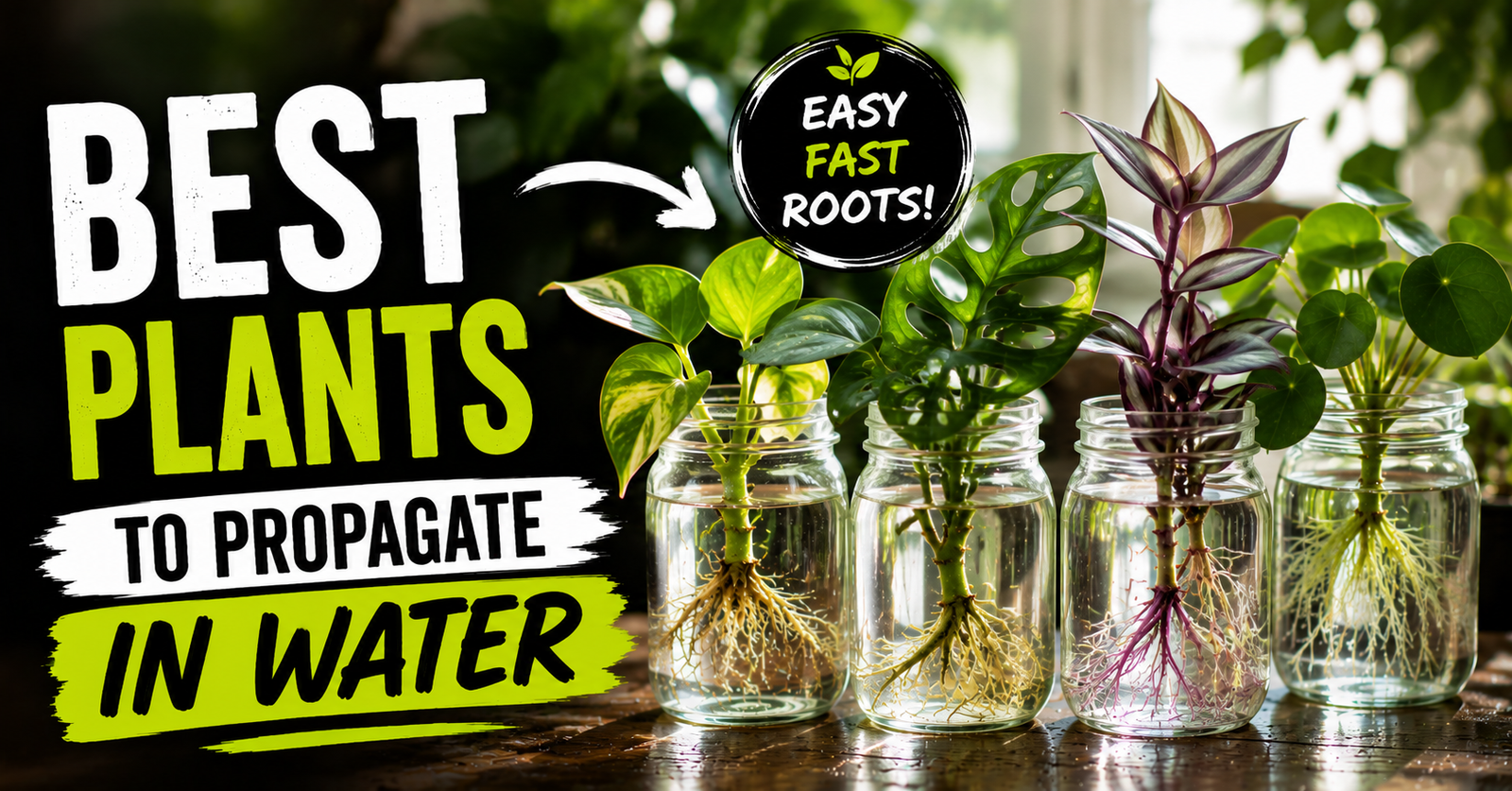
If someone asked me which plants are easiest to propagate, my answer would almost always begin with the same few names.
Pothos.
Philodendrons.
Tradescantia.
Spider plants.
Not because they’re trendy, but because they genuinely want to grow.
I’ve propagated thousands of cuttings over the years—from houseplants sitting on a kitchen windowsill to hardwood shrubs growing outside—and one lesson has become obvious.
Choosing the right plant is far more important than buying expensive propagation supplies.
I’ve watched beginners successfully root pothos on their very first try using nothing more than a drinking glass filled with tap water.
I’ve also watched experienced gardeners struggle for months trying to root plants that simply aren’t well suited for water propagation.
The difference usually isn’t skill.
It’s biology.
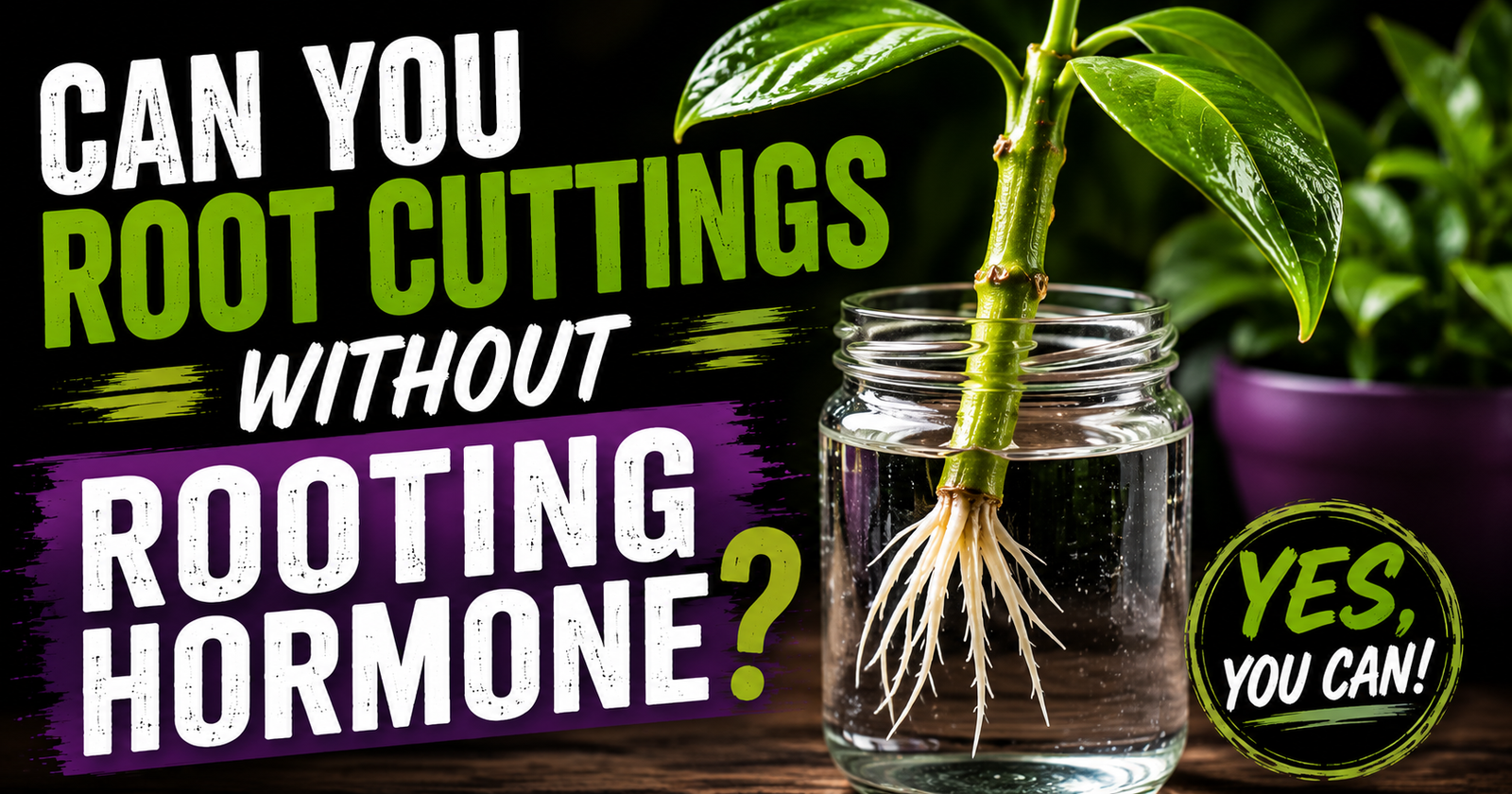
Some plants naturally produce roots whenever a stem touches water. The basics of Can You Root Plant Cuttings in Water? explain why these plants respond so readily to moisture.
Others evolved to root in moist soil, leaf litter, or forest floors where oxygen surrounds the stem.
Understanding that difference makes propagation much less frustrating.
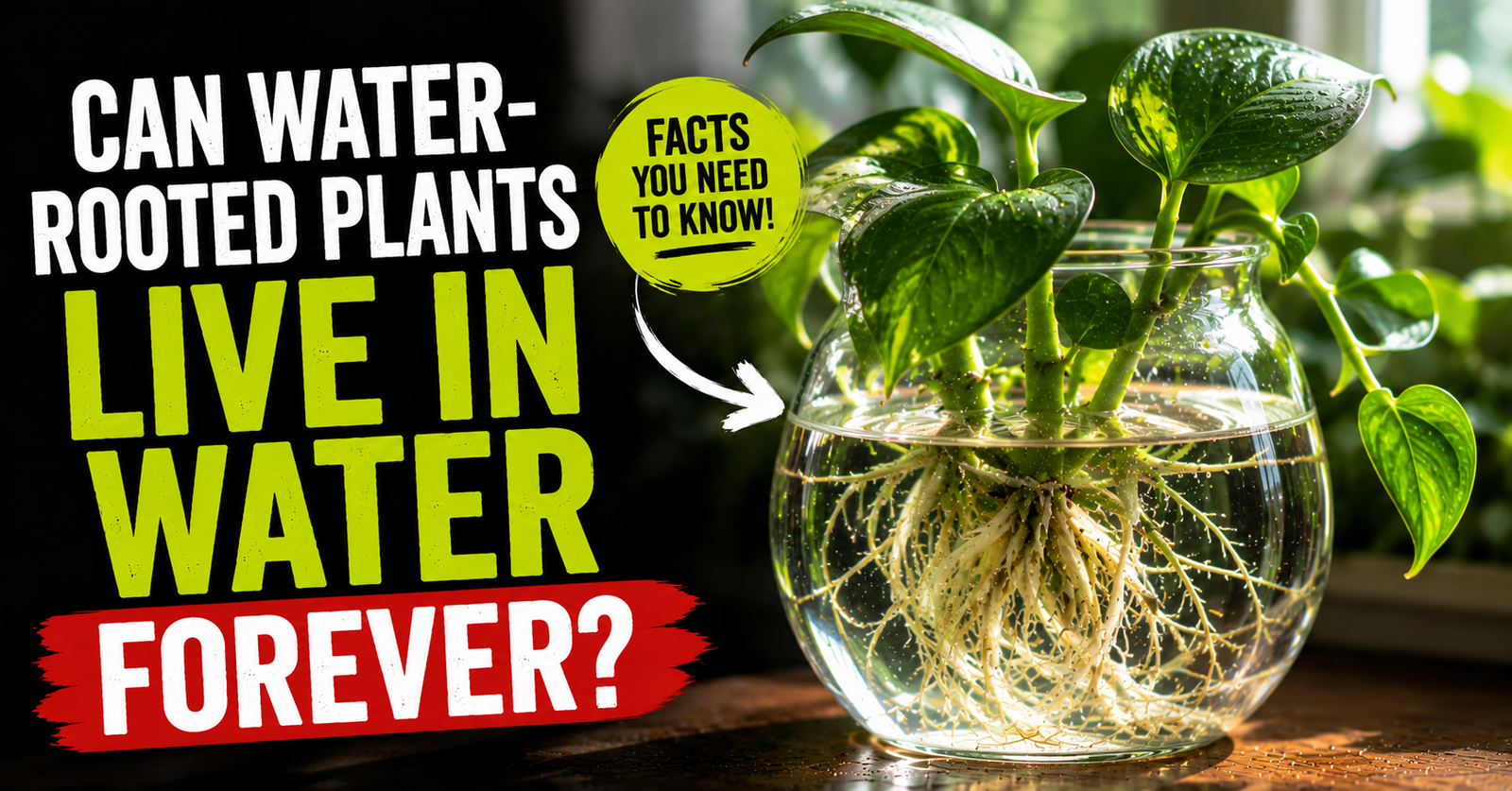
In this guide, I’ll walk through the plants I recommend most often, the ones I’d avoid putting in water, and why certain species almost always outperform others. Suitability for water propagation is only part of the question; Can Water-Rooted Plants Live in Water Forever? explains which plants may also tolerate living in water permanently.
Why Some Plants Root So Easily in Water
One question I’ve always found interesting is why certain plants seem almost impossible to kill while others refuse to root no matter what you do.
It comes down to survival.
Many fast-growing vines and tropical plants evolved to spread quickly.
When part of the stem touches a moist surface, producing new roots gives the plant another chance to climb, spread, and survive.
Those same traits make them excellent candidates for water propagation.
Other plants have a completely different strategy.
Many shrubs, trees, and woody perennials invest far more energy into thick stems, bark, and long-term growth.
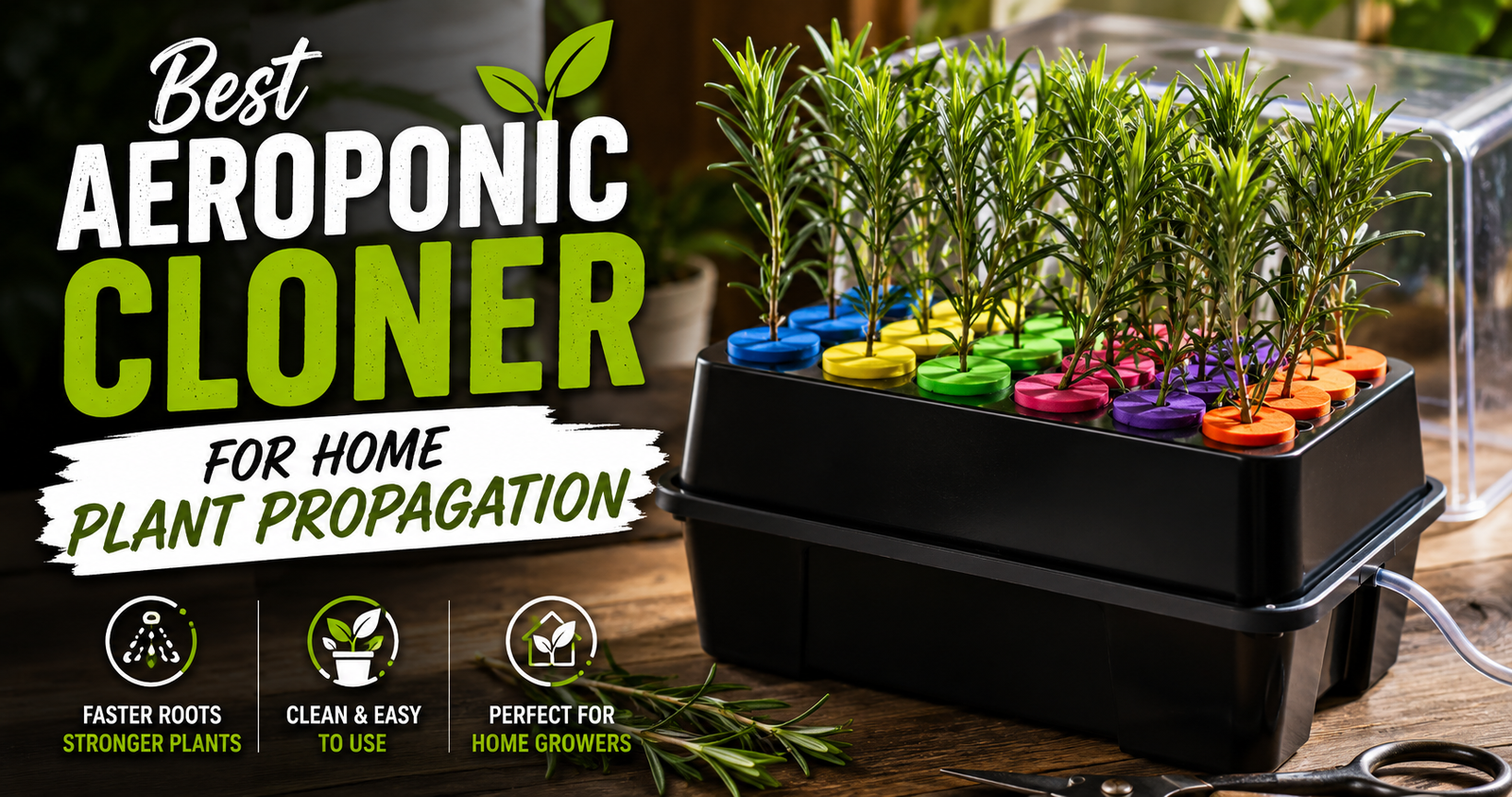
They’re certainly capable of producing roots from cuttings, but they usually prefer much more oxygen around the stem than a jar of water can provide. For plants that need consistently high oxygen around the stem, aeroponic rooting system can be a more suitable alternative to water propagation.
Once I understood that, propagation became much less about luck and much more about choosing the right method for each plant.
Before You Take Your First Cutting
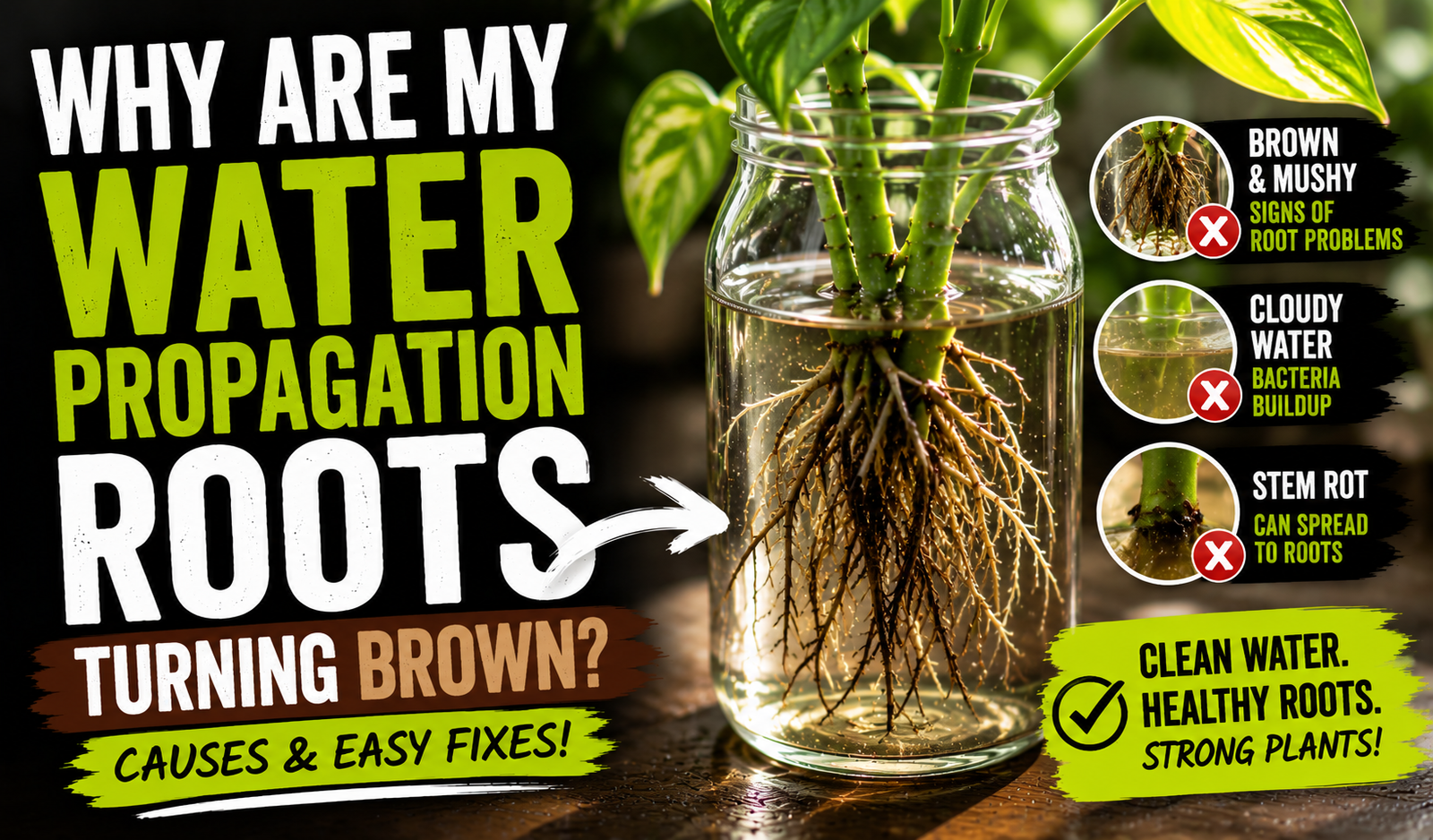
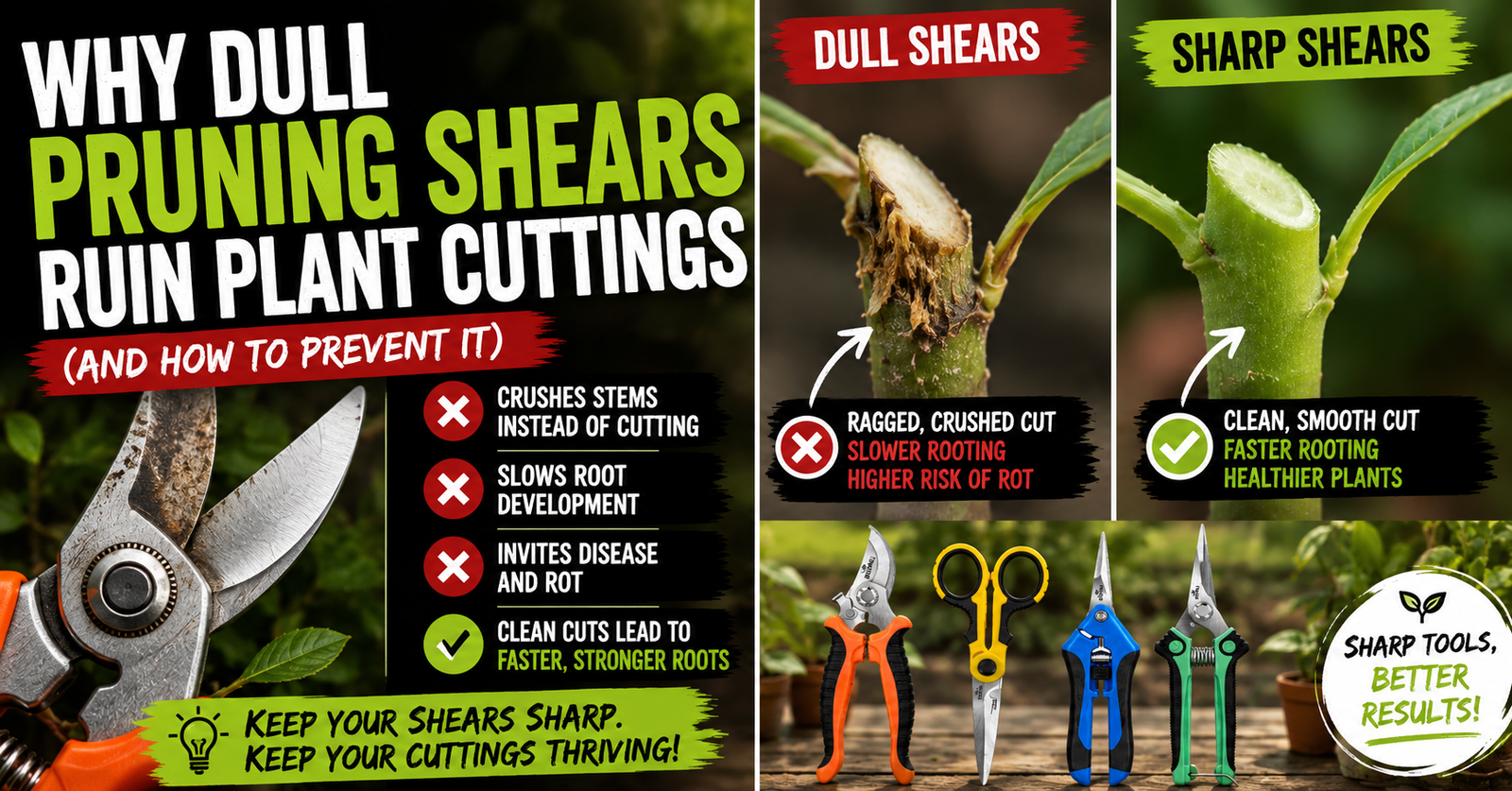
Even the easiest plant won’t root if the cutting isn’t prepared correctly.
Whenever I propagate in water, I follow the same routine.
- I start with a healthy, actively growing plant.
- I make a clean cut just below a node.
- I remove any leaves that would sit underwater.
- I use a clean propagation container.
- I place the cutting in bright, indirect light.
- I replace the water every few days.
Those simple habits matter far more than fancy equipment.
A healthy cutting in clean water almost always outperforms a poor cutting with expensive supplies.
What Makes a Plant Perfect for Water Propagation?
Over the years, I’ve noticed the easiest plants usually share several characteristics.
They typically have:
- Soft, flexible stems
- Easily visible nodes
- Fast natural growth
- High moisture tolerance
- A strong tendency to produce adventitious roots
When a plant checks most of those boxes, there’s a good chance it’ll root well in water.
The Best Plants to Propagate in Water
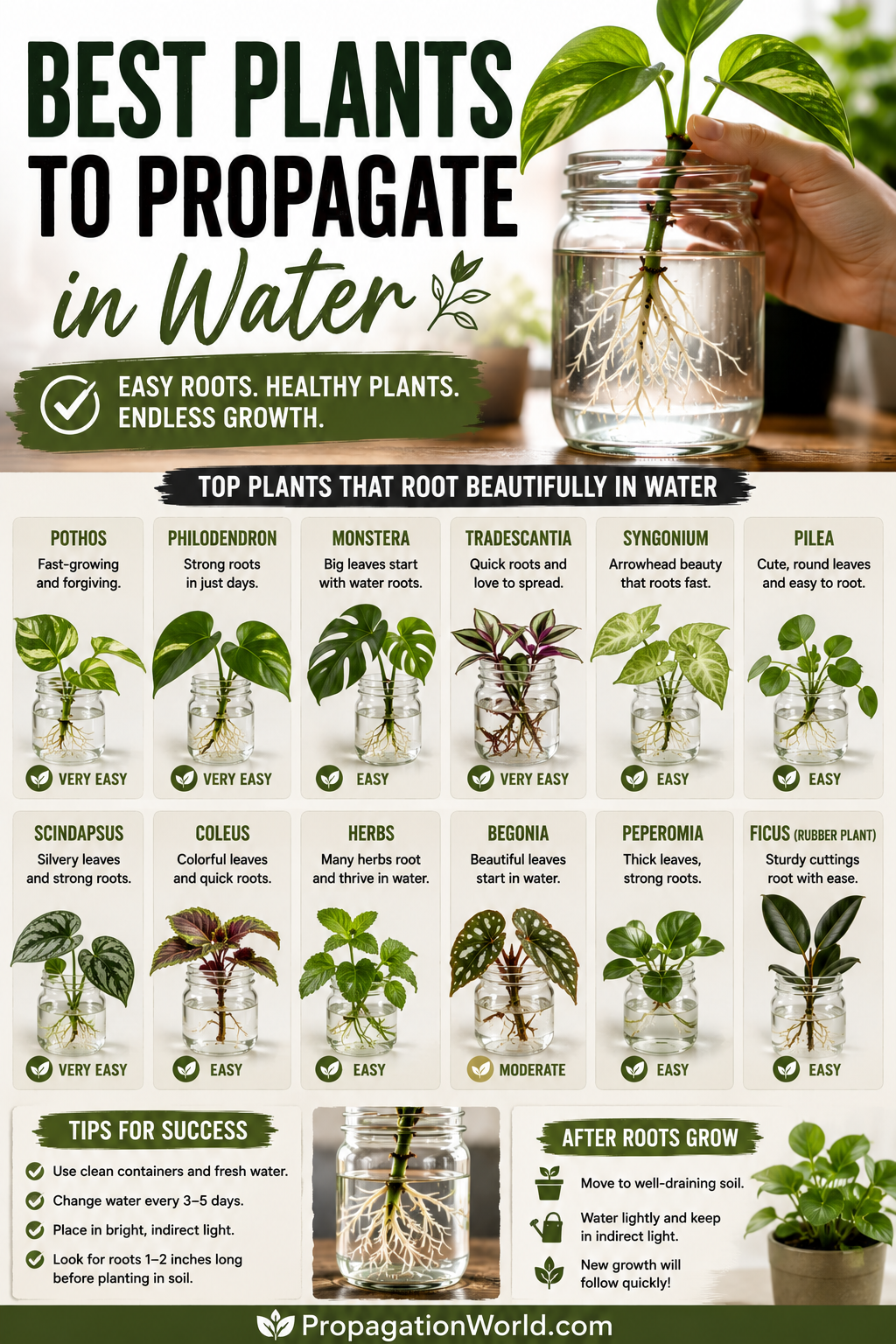
Instead of simply giving you a list, I’m going to explain why each plant works well, how long it usually takes to root, and what I’ve learned from propagating each one.
That way you’ll know what to expect instead of guessing.
My Favorite Plants for Beginners
If you’ve never propagated a plant before, don’t make your first project harder than it needs to be.
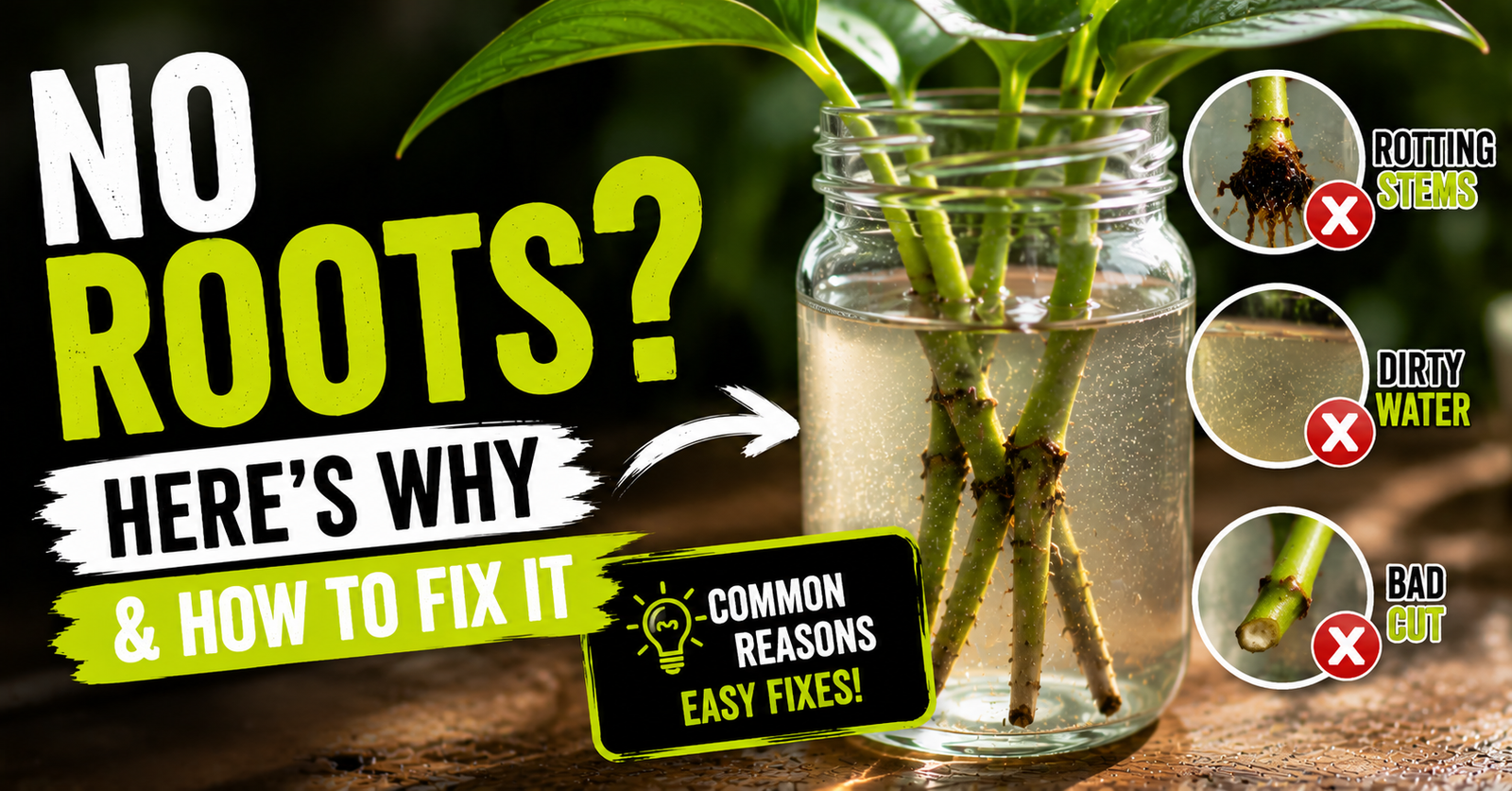
One mistake I see all the time is someone trying to root a difficult woody shrub after watching a short social media video. A few weeks later they’re convinced they have a “black thumb.” If a suitable-looking cutting still fails, Why Won’t My Cuttings Root in Water? Common Reasons & Fixes can help distinguish plant choice from correctable propagation problems.
The reality is they simply picked the wrong plant.
If you’re just getting started, these are the plants I’d recommend first.
- Pothos – Probably the easiest plant you’ll ever propagate.
- Heartleaf Philodendron – Extremely forgiving and roots quickly.
- Tradescantia (Wandering Dude) – One of the fastest plants I’ve ever rooted.
- Spider Plant – Baby plantlets make propagation incredibly simple.
- Coleus – Produces roots surprisingly fast during the growing season.
- Mint – Almost always succeeds in water.
- Basil – One of the easiest herbs to multiply.
- Syngonium (Arrowhead Plant) – Great beginner houseplant.
- Swedish Ivy – Reliable and quick to root.
- Peperomia – Slightly slower, but still beginner-friendly.
Once you’ve had success with these, you’ll have the confidence to experiment with more challenging plants later.
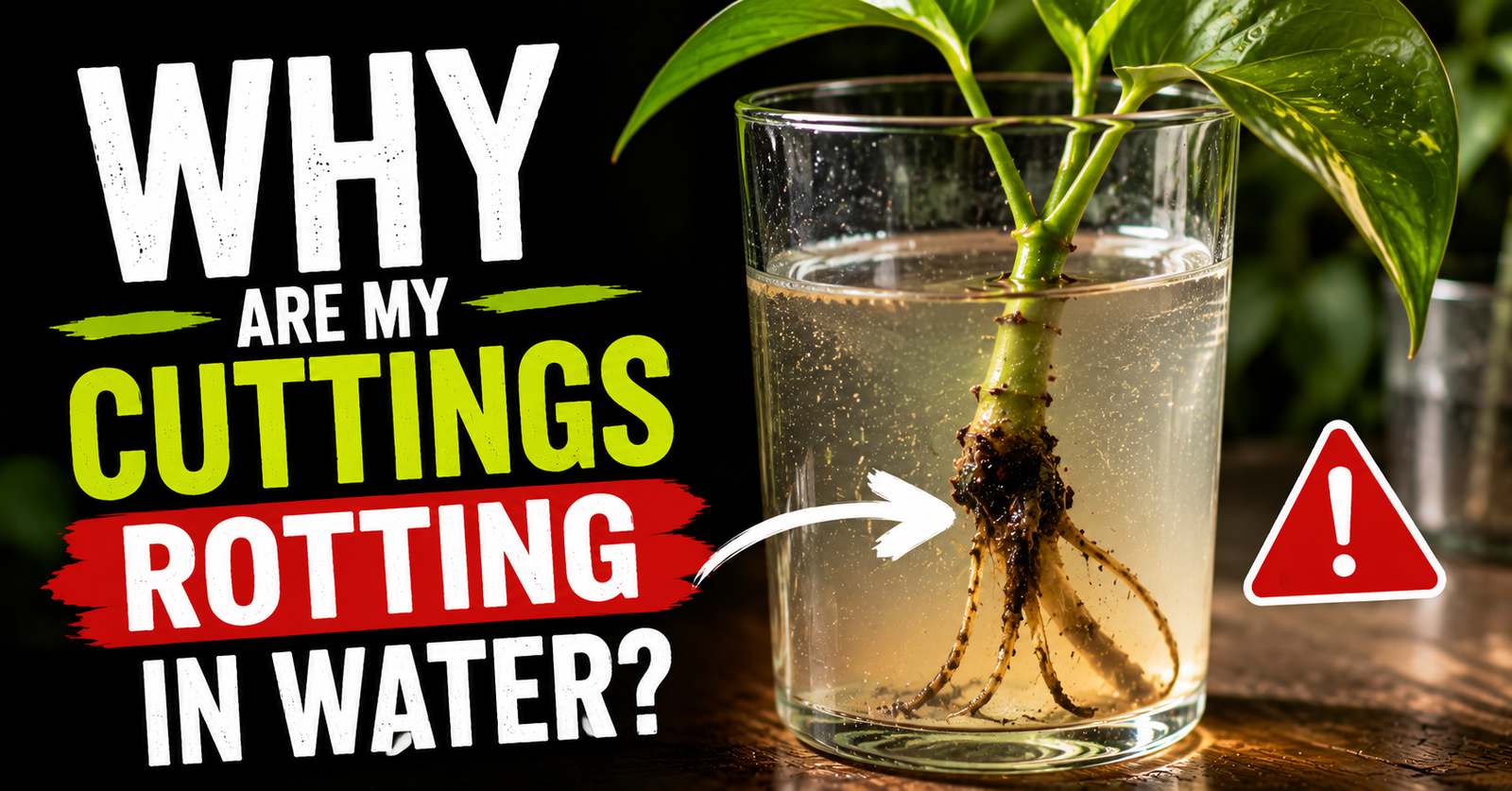
Houseplants That Root Extremely Well in Water
Pothos
If propagation had a mascot, I think it would be pothos.
I’ve propagated this plant more times than I can count, and it’s still the first one I recommend to beginners.
It’s forgiving, grows quickly, and rarely complains if conditions aren’t perfect.
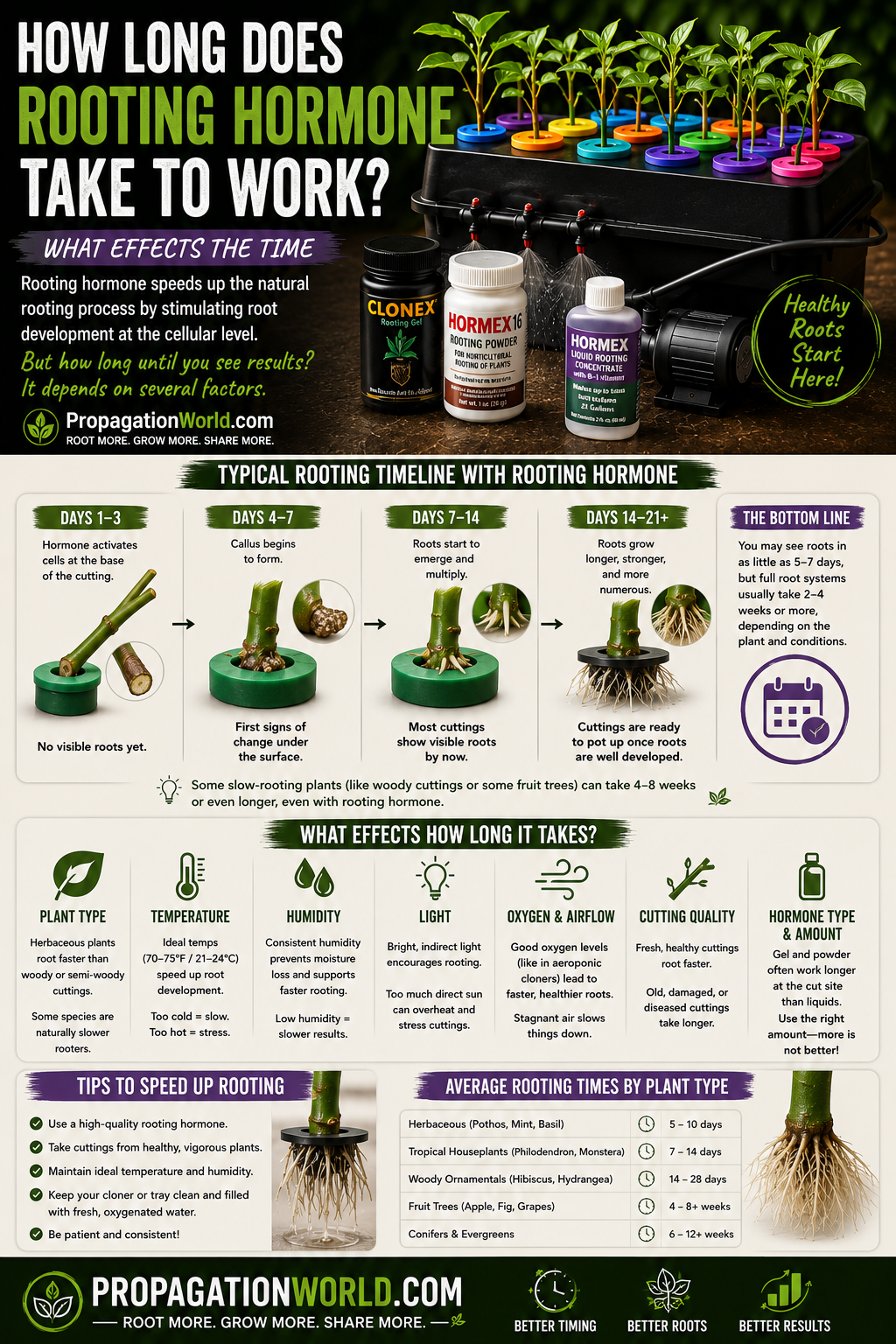
As long as your cutting includes at least one healthy node below the water, you’ll often see roots begin forming within a couple of weeks. For cuttings treated with hormone, rooting hormone response time offers useful context for interpreting that waiting period.
Typical Rooting Time
1 to 3 weeks
Does Rooting Hormone Help?
Not much.
Pothos naturally produces roots so easily that I rarely bother using rooting hormone.
My Advice
Don’t wait until the roots fill the entire jar before planting.
Once you have several healthy roots that are a couple of inches long, they’re usually ready for potting soil.
Heartleaf Philodendron
Heartleaf philodendrons are another favorite of mine because they’re both attractive and incredibly easy to propagate.
Their growth habit is very similar to pothos, making them ideal for water propagation.
A healthy cutting with one or two nodes usually roots without much effort.
Typical Rooting Time
2 to 4 weeks
Does Rooting Hormone Help?
Usually not.
Healthy cuttings root very reliably on their own.
My Advice
Avoid stuffing five or six cuttings into a tiny jar.
Giving each stem a little breathing room helps reduce bacterial problems and makes it much easier to monitor root development.
Tradescantia (Wandering Dude)
Tradescantia almost seems determined to survive.
I’ve had stems accidentally break off while pruning, land in a bucket of water, and begin rooting before I even realized they were there.
It’s one of the fastest plants I’ve ever propagated.
Typical Rooting Time
5 to 14 days
Does Rooting Hormone Help?
I’ve never found it necessary.
My Advice
Transplant while the roots are still young.
There’s no advantage to leaving tradescantia sitting in water for months.
Spider Plant
Spider plants make propagation almost unfairly easy.
Instead of taking ordinary stem cuttings, you’re usually rooting baby plantlets that the mother plant has already produced.
Those babies already contain tiny root beginnings, so you’re simply encouraging them to continue growing.
Typical Rooting Time
1 to 2 weeks
Does Rooting Hormone Help?
No.
I’ve never noticed enough improvement to justify using it.
My Advice
Choose the largest baby plants you can.
Larger plantlets almost always establish themselves more quickly after transplanting.
Syngonium (Arrowhead Plant)
Syngoniums are another excellent choice if you’re still building confidence.
As long as your cutting includes a healthy node, roots usually appear without much trouble.
I also like that pruning encourages the parent plant to become fuller while giving me new plants at the same time.
Typical Rooting Time
2 to 4 weeks
Does Rooting Hormone Help?
Usually unnecessary.
My Advice
Don’t leave huge amounts of foliage on the cutting.
Smaller cuttings often spend more energy producing roots instead of supporting extra leaves.
Peperomia
Peperomias are interesting because different varieties can be propagated in different ways.
Some root from stem cuttings.
Others can even grow from healthy leaves.
They’re generally slower than pothos, but they’re still rewarding if you’re willing to be patient.
Typical Rooting Time
3 to 6 weeks
Does Rooting Hormone Help?
Sometimes.
It can help with slower varieties, but it certainly isn’t required.
My Advice
Don’t assume nothing is happening just because you can’t see roots after two weeks.
Peperomias often take their time before suddenly taking off.
Monstera
Monsteras have become one of the most popular houseplants in the world, and fortunately they’re also excellent candidates for water propagation.
The biggest mistake people make is cutting a leaf without including a node.
A beautiful leaf alone won’t produce a new plant.
Typical Rooting Time
2 to 6 weeks
Does Rooting Hormone Help?
Sometimes, but healthy monstera cuttings usually root well without it.
My Advice
If your cutting has several very large leaves, consider removing one.
Reducing the amount of foliage helps the cutting focus more of its energy on developing roots.
Lucky Bamboo
Lucky bamboo is somewhat unique because many people actually grow it in water permanently.
While it isn’t true bamboo, it’s incredibly well adapted to life in water when cared for properly.
Typical Rooting Time
Several weeks
Does Rooting Hormone Help?
Generally no.
My Advice
Fresh water matters much more than rooting hormone.
Regular water changes and indirect light will usually produce much better results than adding supplements.
Herbs That Root Easily in Water
Houseplants usually get most of the attention when people talk about water propagation, but many herbs are just as easy—if not easier—to root.
In fact, if someone wants quick results, I often recommend starting with herbs. They’re fast-growing, inexpensive to replace if something goes wrong, and many can be harvested again within a few weeks after planting.
One thing I always keep in mind is that herbs grow best when the cuttings come from fresh, actively growing stems. Older, woody growth is usually much slower to produce roots.
Basil
Basil is one of the fastest herbs I’ve ever propagated.
I’ve taken cuttings while cooking dinner, placed them in a glass of water, and watched roots begin appearing just a week later. It’s a great way to keep your favorite basil variety growing all season without buying more plants.
Typical Rooting Time
About 7 to 14 days
Does Rooting Hormone Help?
Not in my experience.
Basil usually roots so easily that rooting hormone doesn’t make enough difference to justify using it.
My Advice
Pinch off any flowers before taking your cutting.
Once basil starts flowering, it naturally shifts more energy toward producing seeds instead of growing new roots and leaves.
Mint
If there’s one herb that’s almost impossible to stop growing, it’s mint.
Fortunately, that vigorous growth also makes it one of the easiest plants to propagate in water.
Healthy stems usually produce roots quickly, and once transplanted into soil, they often take off almost immediately.
Typical Rooting Time
About 7 to 14 days
Does Rooting Hormone Help?
No.
I’ve never found it necessary.
My Advice
Only propagate mint if you actually have room for it.
It spreads aggressively once planted outdoors, so I always keep mine contained in pots or dedicated beds.
Oregano
Oregano roots well in water, although it’s usually a little slower than basil or mint.
Once established, though, it becomes an excellent perennial herb that’s easy to multiply year after year.
Typical Rooting Time
Around 2 to 4 weeks
Does Rooting Hormone Help?
It can help a little with older stems, but younger growth generally roots well without it.
My Advice
Choose soft green stems instead of older woody ones.
You’ll usually see roots much sooner.
Lemon Balm
Lemon balm belongs to the mint family, so it’s no surprise that it’s also very cooperative when propagated in water.
Its fresh citrus scent makes it one of my favorite herbs to grow around the garden.
Typical Rooting Time
About 2 weeks
Does Rooting Hormone Help?
Usually unnecessary.
My Advice
Harvest regularly after planting.
Frequent trimming encourages a fuller, bushier plant.
Sage
Sage can be propagated in water, but I don’t find it nearly as dependable as basil or mint.
Young spring growth performs much better than older stems.
Typical Rooting Time
3 to 6 weeks
Does Rooting Hormone Help?
Sometimes.

With sage, rooting hormone can noticeably improve success rates, especially on semi-woody stems. For semi-woody cuttings where hormone support may help, rooting gel is one product option to consider.
My Advice
Be patient.
Sage often looks like nothing is happening for several weeks before roots suddenly begin to appear.
Rosemary
Rosemary is probably the herb people ask me about most.
Yes, it can root in water.
Would I choose water as my first method?
Honestly, no.

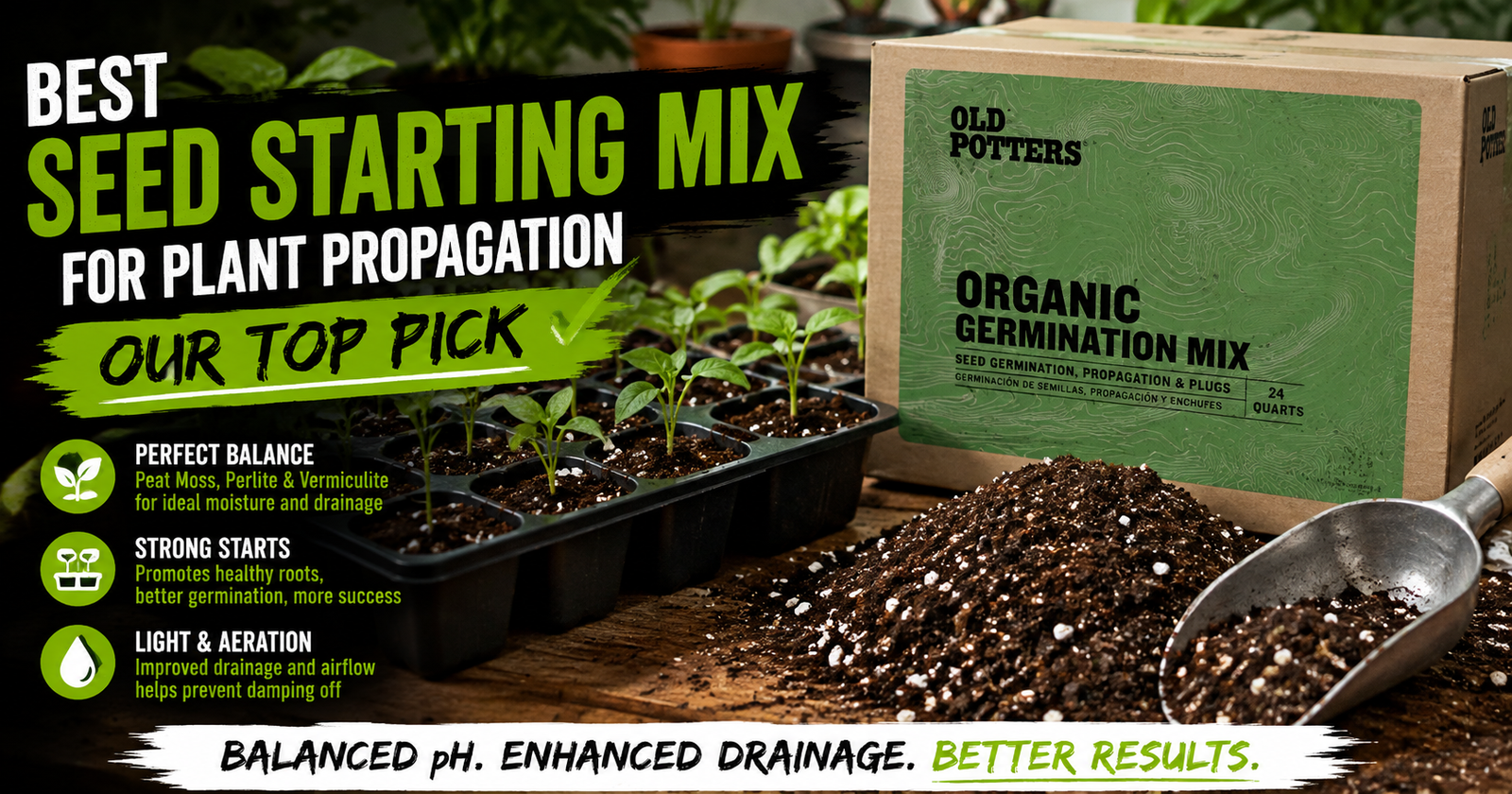
I’ve rooted rosemary in water before, but I’ve consistently had better success using a well-draining propagation mix that provides plenty of oxygen around the stem. Readers moving rosemary cuttings into a medium can compare the propagation mix I trust for both seeds and cuttings on Amazon.
If you do decide to use water, choose soft new growth rather than thick woody stems.
Typical Rooting Time
3 to 8 weeks
Does Rooting Hormone Help?
Yes.
Out of all the herbs on this list, rosemary is one where rooting hormone is most likely to improve your results.
My Advice
Don’t get discouraged if rosemary takes much longer than basil or mint.
It’s naturally a slower plant to propagate, even under ideal conditions.
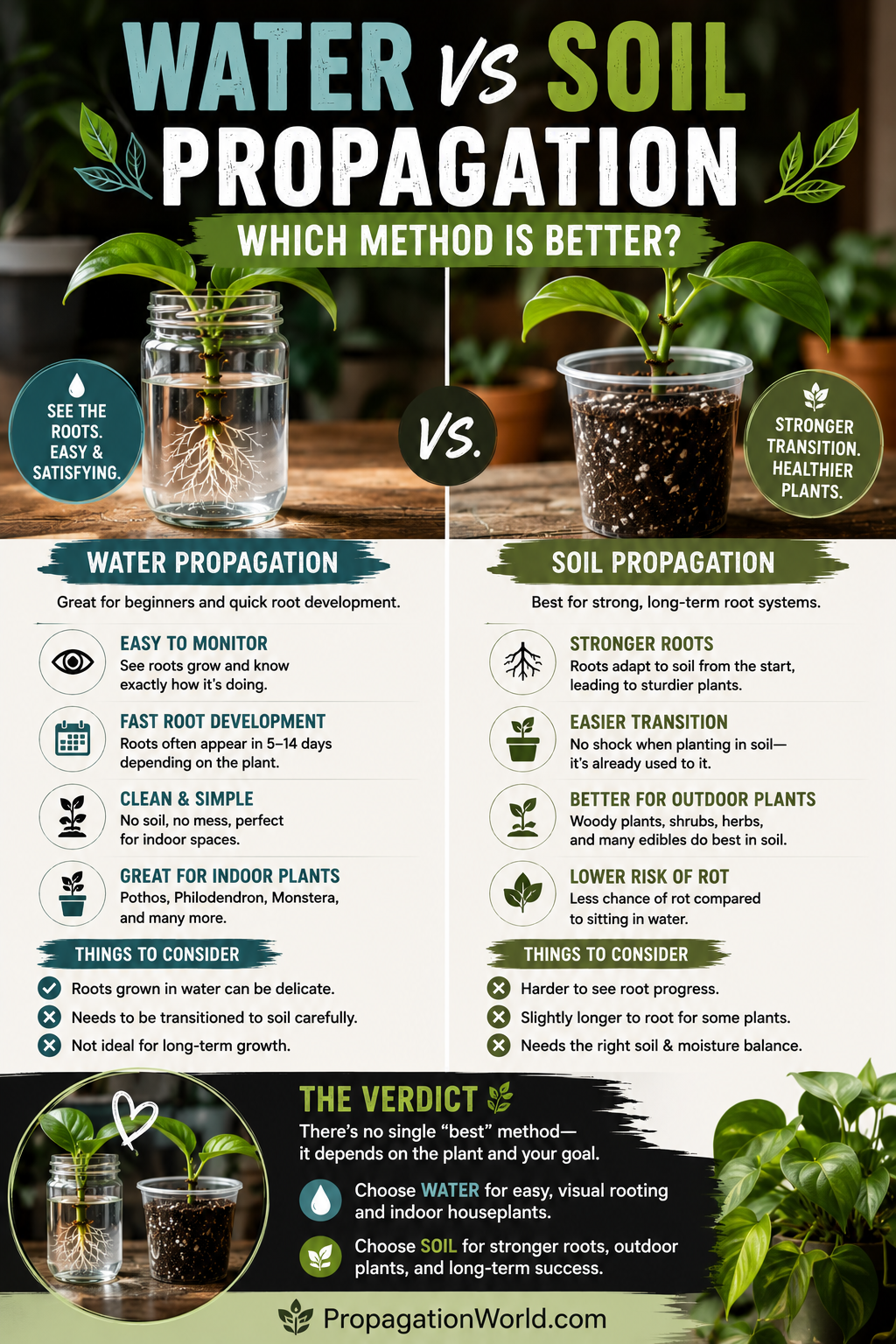
As I explain in my guide on water propagation vs. soil propagation, some species simply perform better when propagated in a well-aerated growing medium instead of a jar of water.
Flowering Plants That Propagate Well in Water
Not every flowering plant is a good candidate for water propagation, but there are quite a few that root surprisingly well.
In my experience, the biggest factor is whether the plant has soft, actively growing stems. Those tender stems usually produce roots much faster than older woody growth.
If you’re hoping to multiply your favorite flowers without spending money at the garden center, these are some of the first plants I’d recommend trying.
Coleus
Coleus is one of the easiest flowering annuals to propagate.
I’ve taken cuttings throughout the summer and rarely had one fail as long as the stem was healthy.
It’s actually one of those plants where pruning makes the original plant look better while also giving you free new plants.
Typical Rooting Time
About 1 to 2 weeks
Does Rooting Hormone Help?
No.
Coleus naturally roots so quickly that I’ve never found rooting hormone necessary.
My Advice
Remove any flower spikes before placing the cutting in water.
The plant will put much more energy into growing roots instead of producing seeds.
Begonia
Many begonias root very well in water, although the exact method depends on the variety.
Cane begonias are among the easiest, while some rex begonias are often propagated from leaf sections instead of stem cuttings.
Typical Rooting Time
2 to 5 weeks
Does Rooting Hormone Help?
Usually not, although it can help with slower varieties.
My Advice
Don’t panic if begonias seem slow at first.
Some varieties spend several weeks developing tiny roots before suddenly taking off.
Impatiens
Impatiens are another annual that responds extremely well to water propagation.
If you’ve ever wished you could save your favorite plant before frost arrives, taking a few cuttings is an easy way to keep that variety going.
Typical Rooting Time
About 1 to 2 weeks
Does Rooting Hormone Help?
No.
Healthy cuttings generally root without any extra help.
My Advice
Choose stems that haven’t started producing flowers yet.
Vegetative growth almost always roots faster than flowering stems.
Fuchsia
Fuchsia cuttings root surprisingly well when taken during active growth.
The stems stay hydrated easily, and healthy cuttings usually develop roots within a few weeks.
Typical Rooting Time
2 to 4 weeks
Does Rooting Hormone Help?
Usually unnecessary.
My Advice
Keep fuchsia out of direct afternoon sun while it’s rooting.
Too much heat can cause the cutting to wilt before roots have time to develop.
Geranium
Geraniums can root in water, but they’re one of those plants where my experience hasn’t matched what you often see online.
I’ve had success, but I’ve also had more stems rot than I’d like.
Personally, I get much more consistent results by rooting geraniums in a light propagation mix rather than water.
Typical Rooting Time
3 to 6 weeks
Does Rooting Hormone Help?
It can improve your chances, especially when rooting in soil or another propagation medium.
My Advice
If your goal is simply the highest success rate, I’d skip the water and use a loose, well-draining rooting medium instead.
Houseplants That Can Root in Water but Require More Patience
Not every houseplant falls into the “easy” category.
Some are perfectly capable of rooting in water, but they usually test your patience a little more.
The good news is that slower doesn’t necessarily mean difficult.
It just means you shouldn’t expect roots to appear within a week.
Rubber Plant
Rubber plants can absolutely be propagated in water, but they tend to move much more slowly than pothos or philodendrons.
Because the stems are thicker and woodier, they naturally take longer to produce roots.
Typical Rooting Time
4 to 8 weeks
Does Rooting Hormone Help?
Yes.
I’ve found it noticeably improves rooting on rubber plants.
My Advice
Take cuttings during spring or early summer when the plant is actively growing.
You’ll usually have much better success than trying during winter.
Fiddle Leaf Fig
People are often surprised to learn that fiddle leaf figs can root in water.
The catch is that they usually require quite a bit of patience.
They’re nowhere near as forgiving as pothos.
Typical Rooting Time
4 to 8 weeks or longer
Does Rooting Hormone Help?
Yes.
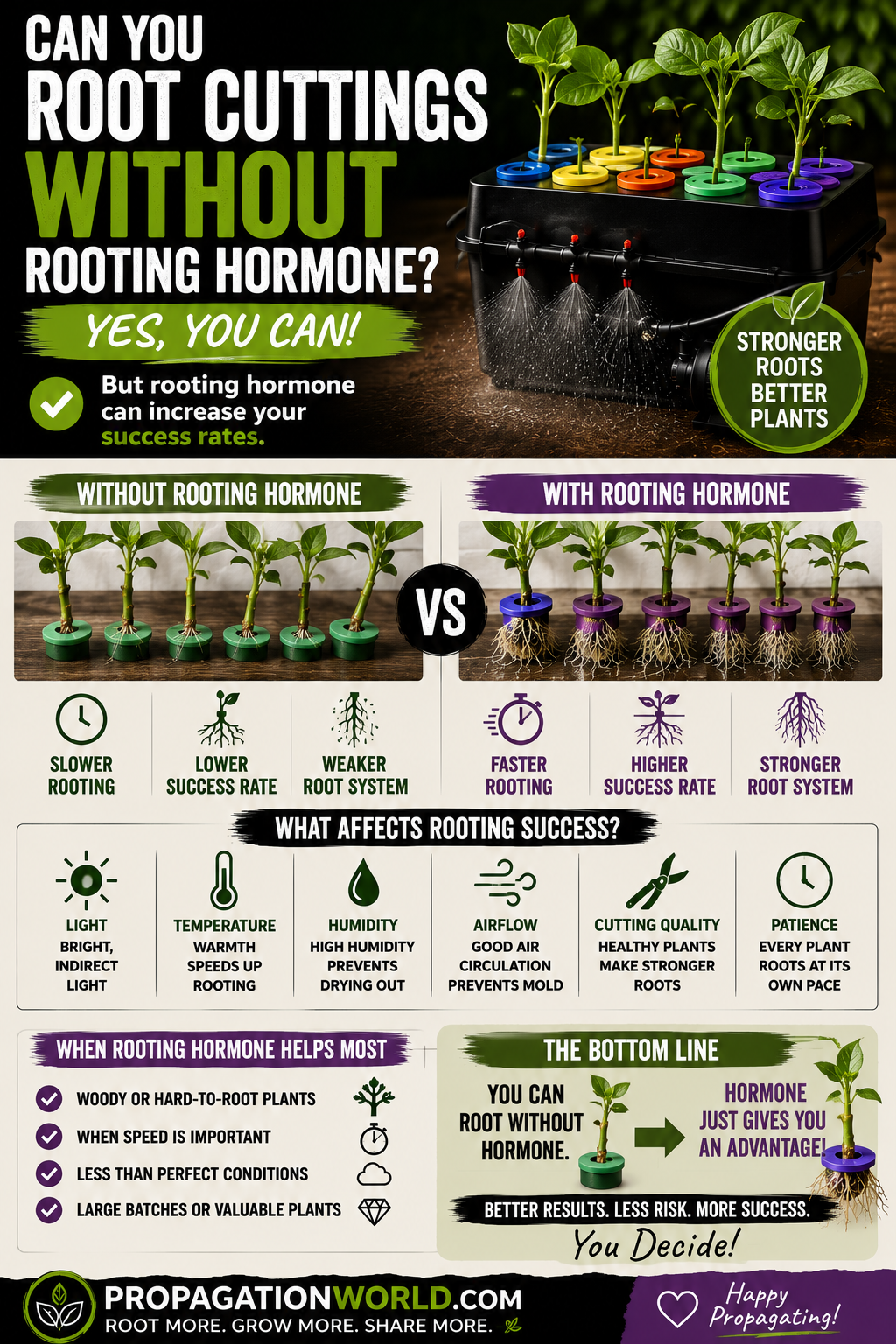
While it’s still not required, rooting hormone can improve success on woody stems. The broader question of when that extra help is unnecessary is answered in rooting cuttings without hormone.
My Advice
Don’t judge the cutting too quickly.
As long as the stem remains firm and healthy, there’s still a good chance roots are developing even if you can’t see them yet.
Dracaena
Dracaenas are among the easiest woody houseplants to propagate.
They aren’t especially fast, but they’re generally dependable.
Even older cane sections can often produce both roots and new shoots with enough time.
Typical Rooting Time
3 to 6 weeks
Does Rooting Hormone Help?
Sometimes.
It’s helpful but not essential.
My Advice
Warm temperatures make a noticeable difference.
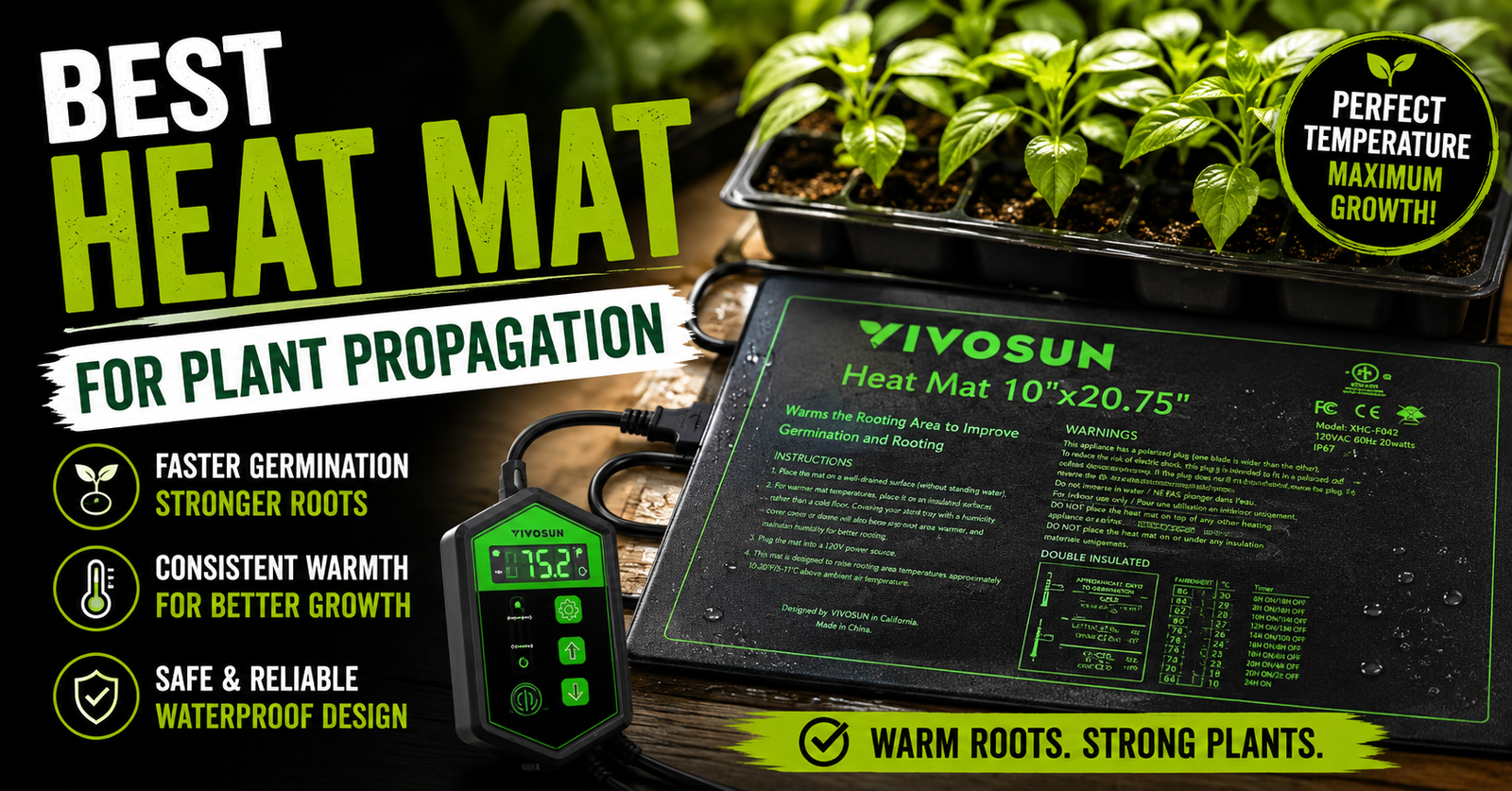
A dracaena cutting sitting in a cool room may take nearly twice as long to root as one kept in ideal growing conditions. When room temperatures stay low, bottom heat for faster rooting may provide the steadier conditions dracaena cuttings need.
Plants That Usually Don’t Root Well in Water
This is probably the section I wish more propagation guides included.
The internet can make it seem like every plant will root if you simply drop a cutting into a glass of water and wait long enough.
That’s just not true.
Can you occasionally get difficult plants to root in water?
Absolutely.
But if your goal is to get the highest success rate with the least amount of frustration, there are quite a few plants I’d skip altogether.
Over the years, I’ve learned that it’s usually better to choose the propagation method that naturally fits the plant instead of trying to force every species into water.
Here are some of the biggest offenders.
Blueberries
Blueberries are one of the plants people ask me about most.
While it isn’t impossible to root blueberry cuttings in water, I don’t recommend it.
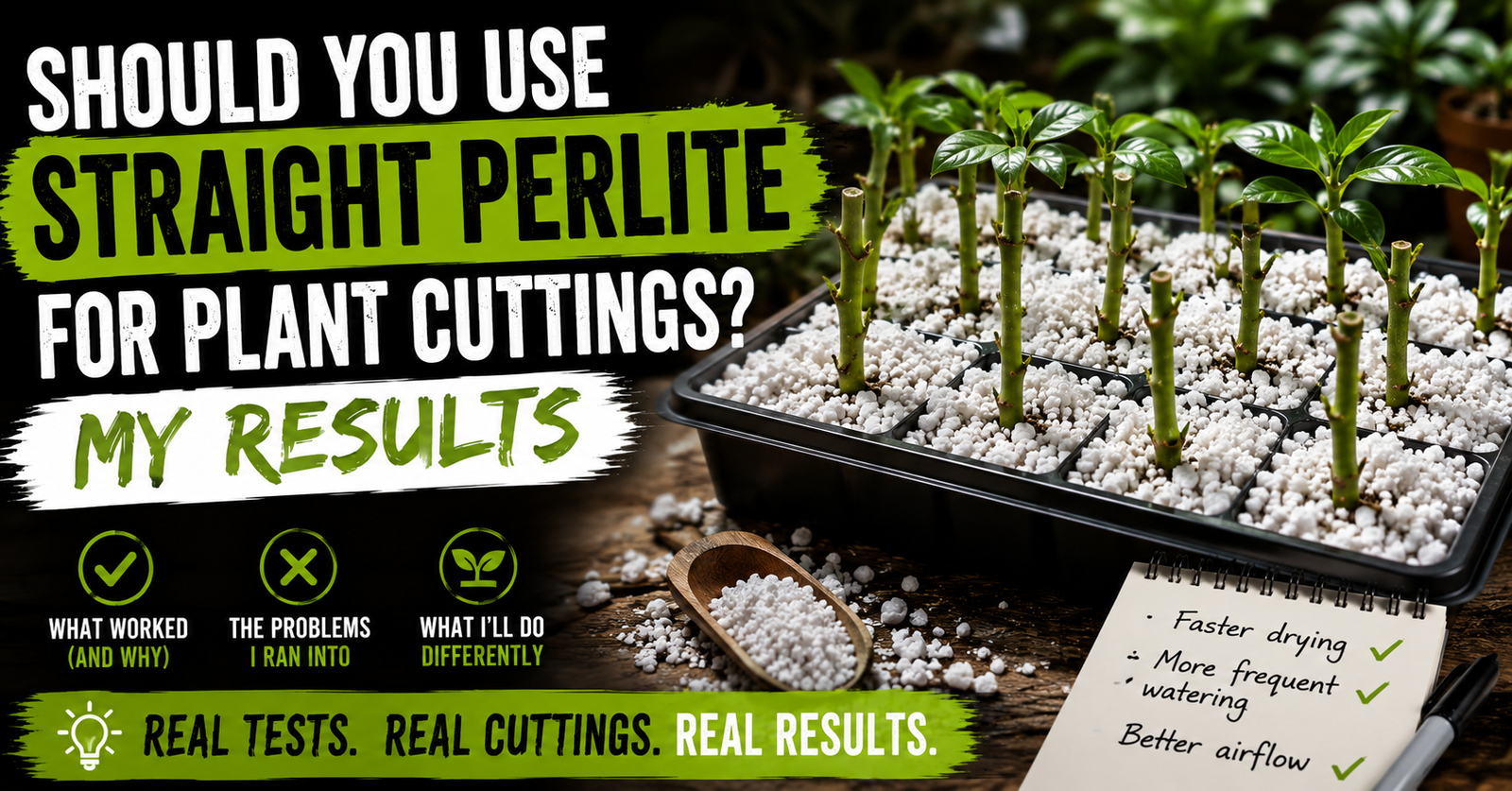
Blueberries naturally prefer a well-drained, highly oxygenated rooting environment. In water, they’re much more likely to sit for weeks without doing much at all, and the longer they stay submerged, the greater the chance of stem rot.
Better Method
Softwood cuttings rooted in a loose propagation mix or perlite.
My Advice
If I’m propagating blueberries, I skip the water completely.
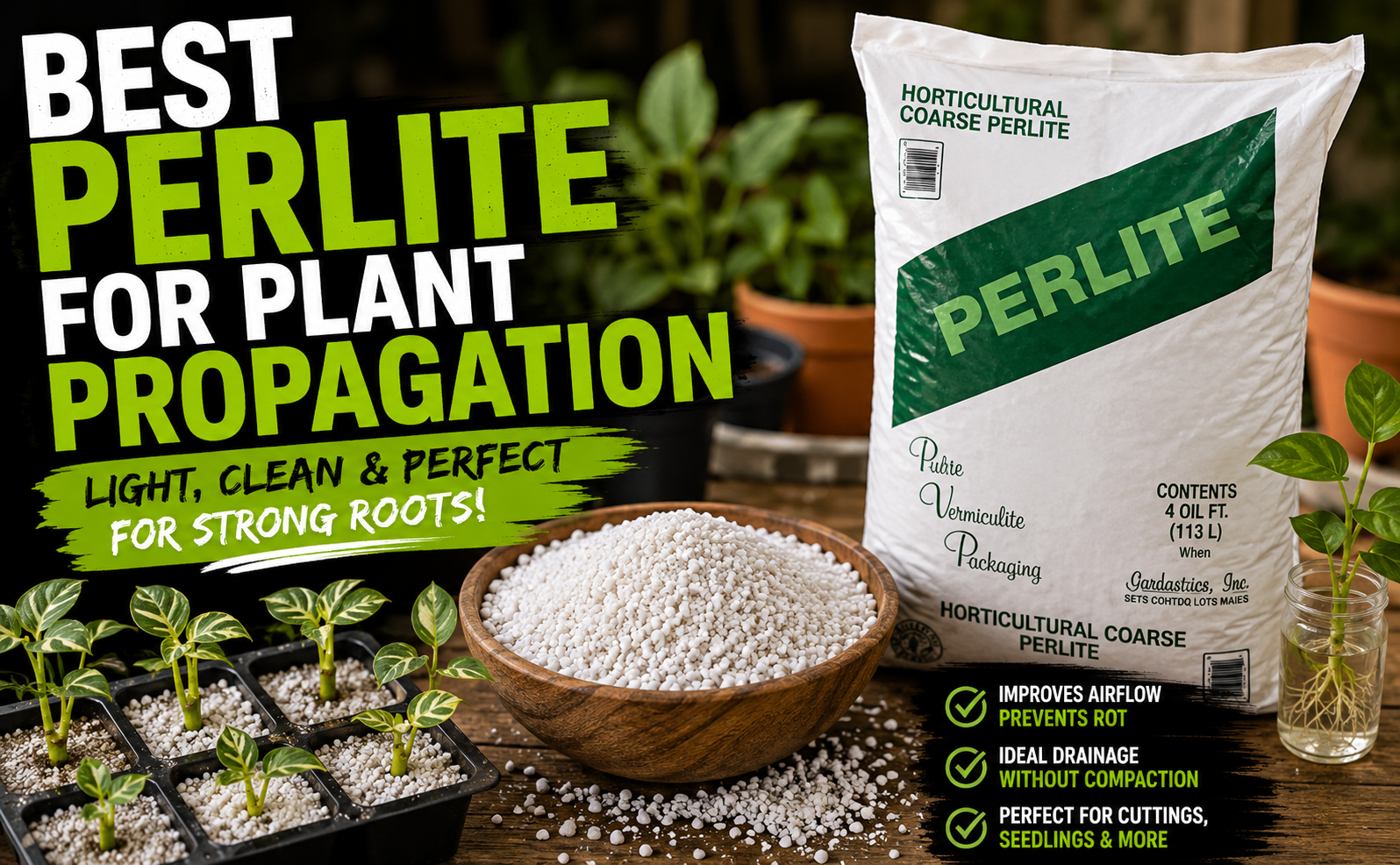
I’ve consistently had much better success using propagation media that keeps the stem moist while still allowing plenty of air to reach the developing roots. A quality perlite mix can help create that balance of moisture and airflow for developing roots: perlite for plant propagation.
Roses
People love the idea of rooting a bouquet rose in water.
Sometimes it works.
Most of the time, it doesn’t.
Even when roots do form, they often aren’t as vigorous as those produced in a proper rooting medium.
Better Method
Rooting mix with high humidity.
My Advice
Take fresh cuttings from healthy garden roses instead of florist roses whenever possible.
Fresh growth almost always performs better.
Fruit Trees
Apple, pear, peach, plum, cherry, and many other fruit trees rarely perform well in water.
These trees produce woody stems that generally root much more successfully when they have access to both moisture and oxygen.
Better Method
Softwood or hardwood cuttings rooted in propagation media, depending on the species.
My Advice
Don’t waste months waiting for fruit tree cuttings sitting in a jar of water.
Choose the propagation method recommended for that specific tree instead.
Lavender
Lavender surprises a lot of gardeners.
Because it’s such a common herb, many people assume it behaves like basil or mint.
It doesn’t.
Lavender has woody stems that simply don’t enjoy sitting underwater for extended periods.
Better Method
Well-draining propagation mix.
My Advice
Take soft spring growth and use rooting hormone for the best chance of success.
Mature Rosemary
Earlier, I mentioned that rosemary can root in water.
That’s true.
But mature woody rosemary is a completely different story.
Older stems become much slower and much less reliable.
Better Method
Fresh green tip cuttings rooted in propagation mix.
My Advice
The younger the stem, the better your chances.
Hydrangeas
Hydrangeas are another plant surrounded by conflicting advice online.
Some gardeners swear by rooting them in water.
Others say it never works.
My experience falls somewhere in the middle.
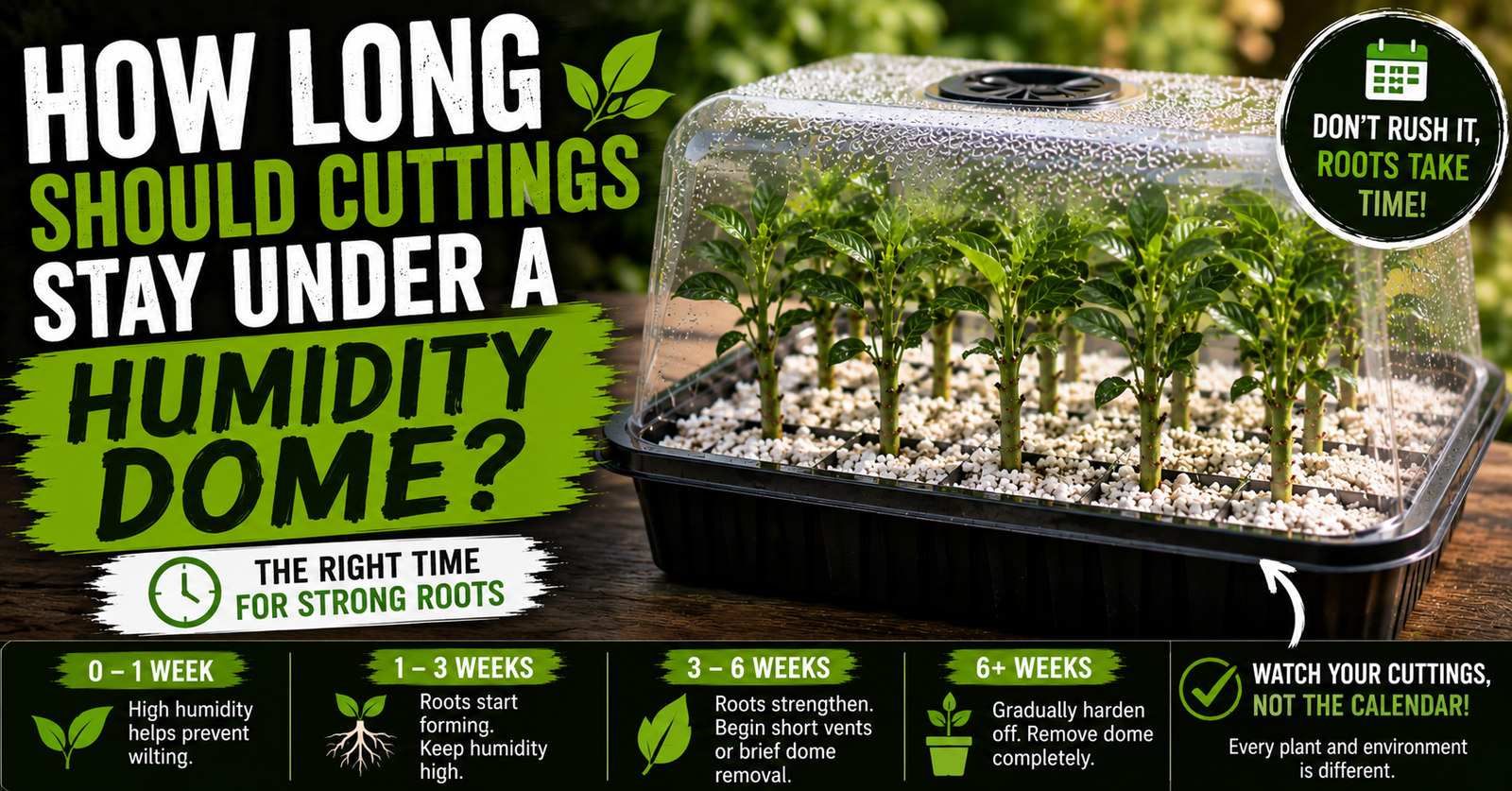
I’ve rooted hydrangeas in water before, but I’ve had significantly higher success rates using a moist propagation mix under high humidity.
Better Method
Softwood cuttings in propagation media.
My Advice
If you’re only propagating one or two valuable cuttings, don’t gamble on water.
Use the method with the highest success rate instead.
Most Conifers
Pines, spruces, firs, cedars, junipers, and similar evergreens are among the most difficult plants to propagate from water cuttings.
Even experienced propagators rarely use water for these species.
Better Method
Species-specific propagation methods, often involving rooting hormone, mist systems, and carefully controlled conditions.
My Advice
Water propagation is simply the wrong tool for this job.
Why Some Plants Root in Days While Others Take Months
One of the biggest misconceptions about propagation is that every plant follows the same timeline.
They don’t.
I’ve had tradescantia begin producing roots in less than a week.
On the other hand, I’ve waited more than a month for perfectly healthy rubber plant cuttings before seeing much of anything.
That doesn’t mean something is wrong.
Different plants have evolved at different speeds.
Fast-growing vines naturally produce new roots quickly because that’s how they spread through forests and climb toward sunlight.
Woody shrubs and trees, however, invest far more energy into building strong stems and long-term growth. Producing roots from a cutting simply isn’t as urgent for them.
Temperature also plays a huge role.
A cutting sitting in a warm room with bright indirect light will often root much faster than the exact same cutting kept in a cool basement or dark corner of the house.
Patience is part of propagation.
One of the hardest lessons I learned early on was resisting the urge to keep pulling cuttings out of the water to check for roots.
Every time you disturb a developing root system, you increase the chance of damaging those delicate new roots.
Sometimes the best thing you can do is leave the cutting alone, change the water regularly, and let nature do the work.
Common Mistakes That Slow Down Water Propagation
Most propagation failures aren’t caused by bad luck.
They’re caused by one or two small mistakes that are easy to fix once you know what to look for.
I’ve certainly made my share over the years, and almost every failed cutting taught me something that helped improve my success later.
If your cuttings aren’t rooting, I’d check these issues before assuming the plant simply can’t be propagated.
Taking a Cutting Without a Node
This is probably the most common mistake beginners make.
A stem node is the point where leaves, branches, or buds grow from the stem. It’s also where many plants produce new roots.
Without a node, most stem cuttings simply won’t grow into a new plant.
I’ve seen beautiful monstera leaves sitting in water for months because someone accidentally cut above the node instead of below it.
Before placing any cutting in water, always make sure at least one healthy node will remain submerged.
Leaving Too Many Leaves on the Cutting
More leaves aren’t always better.
Every leaf loses moisture through transpiration, and before roots develop, the cutting has no way to replace that lost water.
Large cuttings with lots of foliage often wilt long before roots have time to form.
I usually remove the lower leaves and sometimes even trim back a larger leaf if the cutting seems oversized.
The goal is to help the cutting focus on producing roots instead of trying to support excessive foliage.
Forgetting to Change the Water
Fresh water supplies oxygen.
Old water doesn’t.
As water sits, oxygen levels gradually decrease while bacteria and algae begin multiplying.
Healthy roots need oxygen just as much as they need moisture.
I try to replace the water every few days, especially during warm weather.
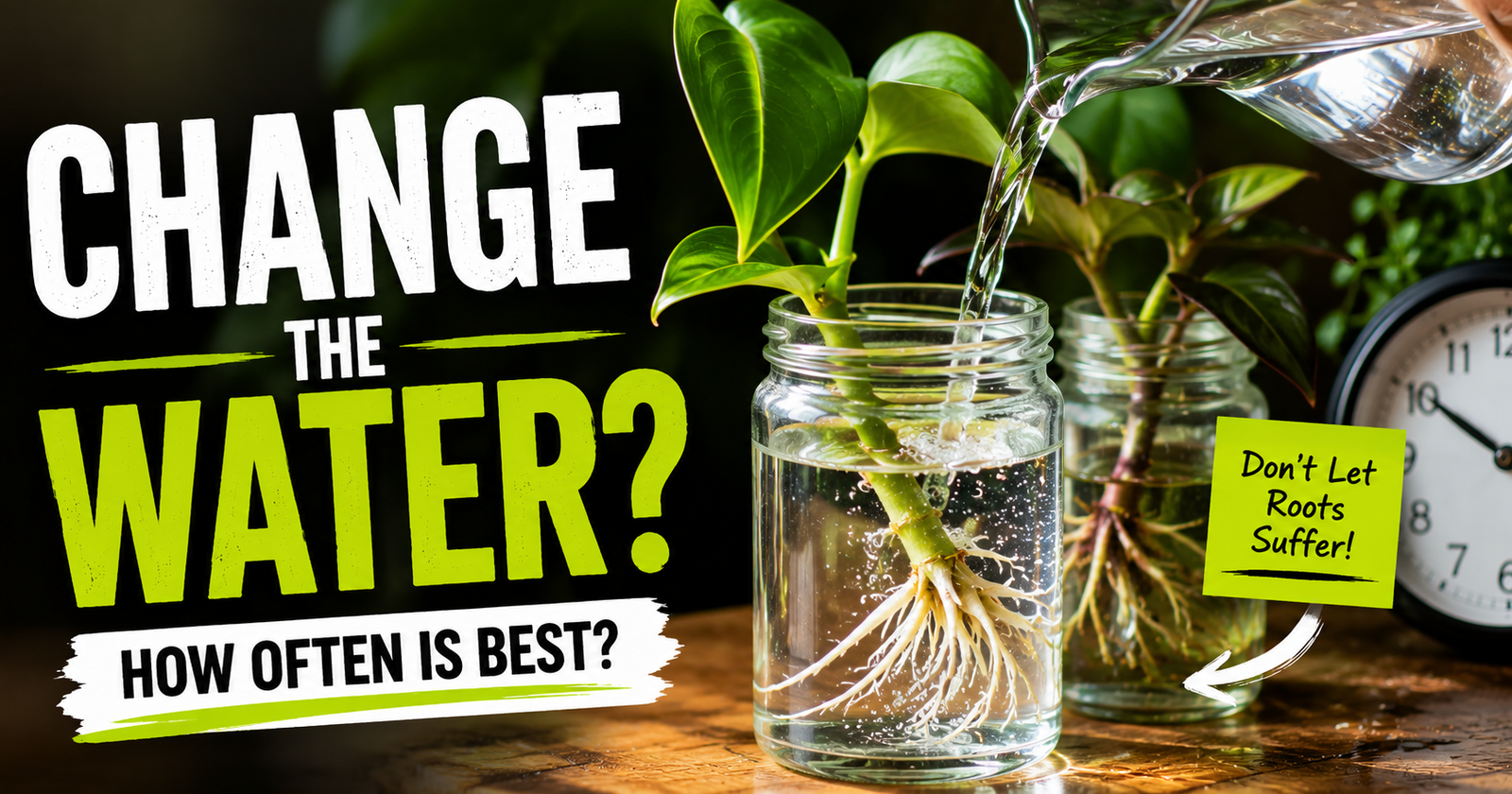
If you’re wondering exactly how often you should do this, I cover it in more detail in my article about how often to change water when propagating cuttings.
Using Dirty Containers
You don’t need expensive propagation stations.
I’ve rooted countless plants in ordinary drinking glasses and mason jars.
What matters is that they’re clean.
Residue left behind from old water or previous cuttings can introduce bacteria and fungi that increase the risk of stem rot.
A quick wash with hot, soapy water before each use is usually enough.
Placing Cuttings in Direct Sunlight
Bright light is important.
Direct afternoon sun usually isn’t.
Without roots to replace lost moisture, cuttings can quickly overheat and wilt.
I almost always place mine near a bright window where they receive plenty of indirect light throughout the day.
They stay healthier, lose less moisture, and generally root more consistently.
Waiting Too Long to Plant
This mistake surprises a lot of people.
Seeing a jar full of long white roots feels satisfying, so it’s tempting to leave the cutting there indefinitely.
Unfortunately, water roots and soil roots aren’t exactly the same.
The longer a cutting remains in water, the more adjustment it often needs after transplanting.
Personally, I like moving most cuttings into potting mix once they have several healthy roots that are roughly 2 to 3 inches long.
At that stage, they’re usually well established but still adapt to soil without much trouble.
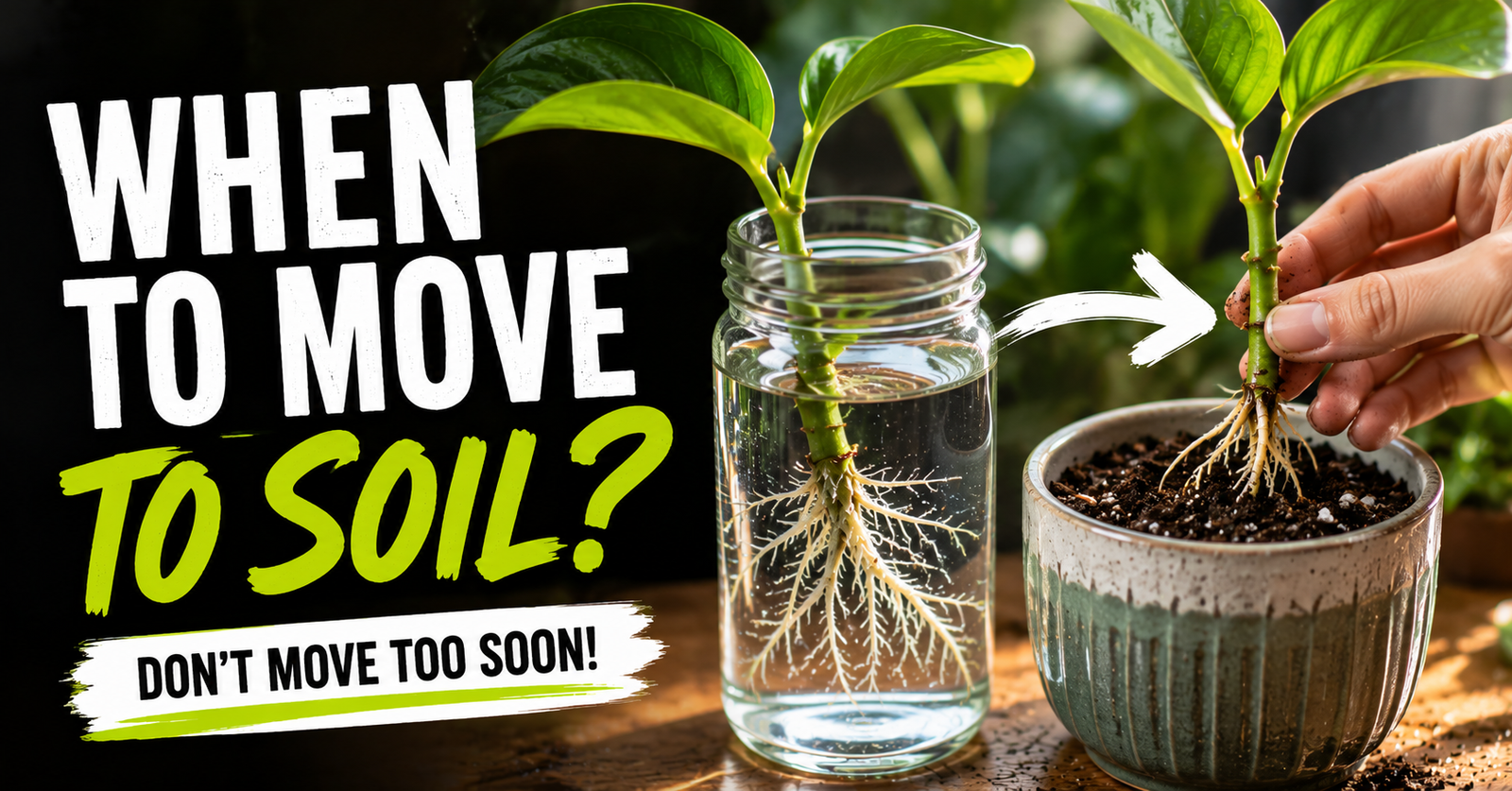
If you’re unsure when that point arrives, my guide on when to move water-rooted cuttings to soil explains the signs I watch for before transplanting.
Assuming Every Plant Likes Water
This might be the biggest lesson I’ve learned over the years.
Water propagation isn’t the “best” method.
It’s simply the best method for certain plants.
Whenever a cutting struggles, I don’t automatically assume I did something wrong.
Instead, I ask myself whether I’m using the right propagation method for that particular species.
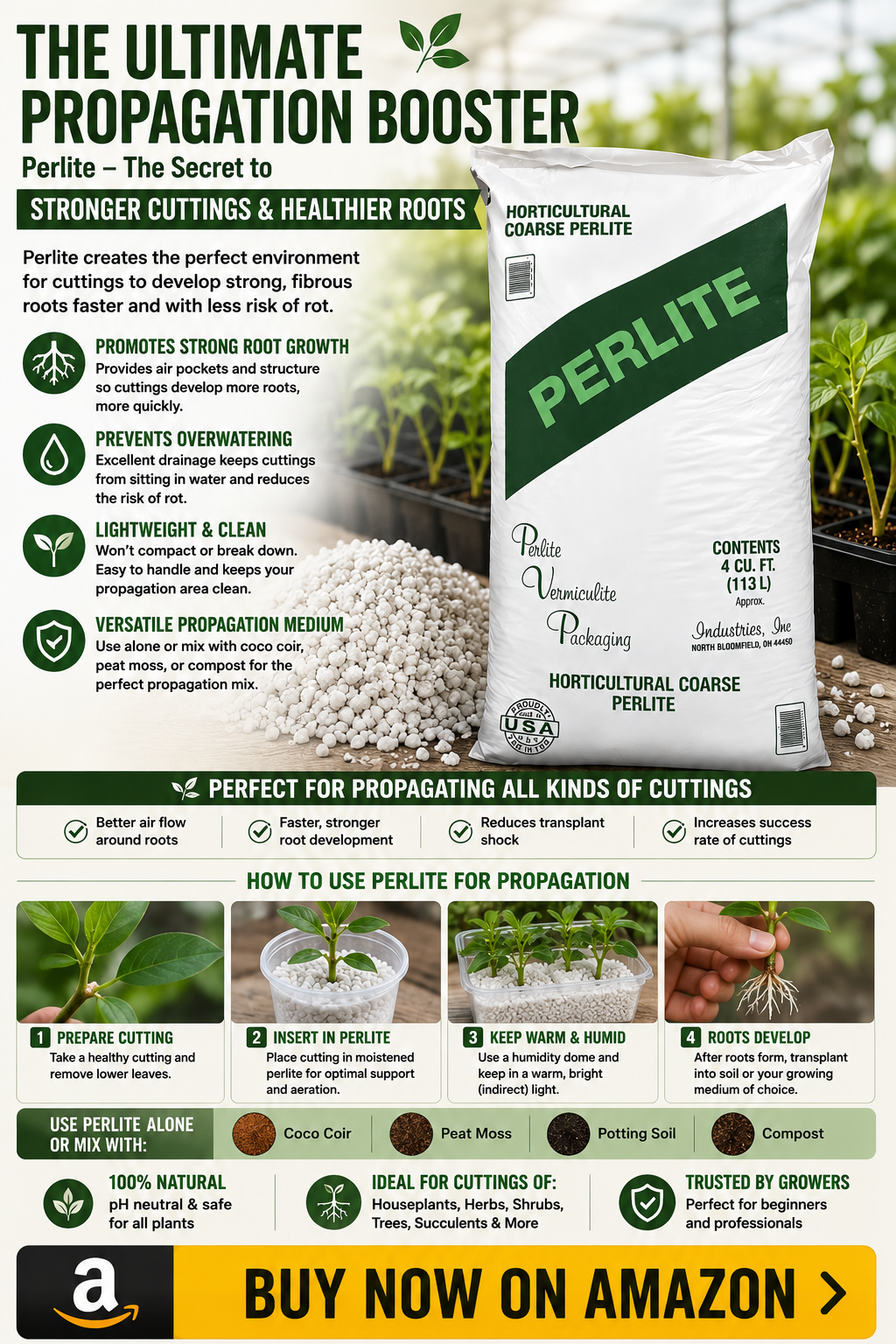
Sometimes changing from water to perlite, sphagnum moss, or a propagation mix makes all the difference. When water propagation stalls, horticultural perlite for rooting cuttings can provide a more aerated rooting medium.
Can Water-Rooted Plants Stay in Water Forever?
This is another question I hear quite a bit.
The answer depends entirely on the plant.
Some species, such as lucky bamboo, can grow in water for years with proper care.
Many aquarium plants also spend their entire lives growing in water.
Most common houseplants, however, eventually perform better after being transplanted into soil or another growing medium.
While they’ll often survive in water for a long time, they usually won’t grow as vigorously because water alone doesn’t provide the nutrients, stability, and oxygen that soil-based roots prefer.
For that reason, I generally view water as a propagation tool rather than a permanent home.
Once the roots are well established, I transplant the cutting and let it continue growing normally.
That simple step usually leads to stronger growth, healthier foliage, and a much more vigorous plant over the long term.
Frequently Asked Questions
Can any plant be propagated in water?
No.
While many popular houseplants and herbs root readily in water, plenty of plants don’t. Trees, woody shrubs, many conifers, and some perennial plants usually have much higher success rates when rooted in a propagation mix, perlite, or another well-aerated medium.
If a cutting refuses to root, it doesn’t always mean you’re doing something wrong. Sometimes the propagation method simply isn’t the right fit for that species.
Is water propagation better than soil propagation?
Neither method is better for every plant.
Some plants naturally root faster in water because their stems readily produce new roots when submerged.
Others develop stronger root systems when they’re surrounded by a moist growing medium with plenty of oxygen.
I always choose the method that best matches the plant I’m propagating rather than trying to use the same technique for everything.
Do I need rooting hormone?
Not always.
Plants like pothos, tradescantia, spider plants, basil, and mint usually root so easily that I don’t bother using rooting hormone.
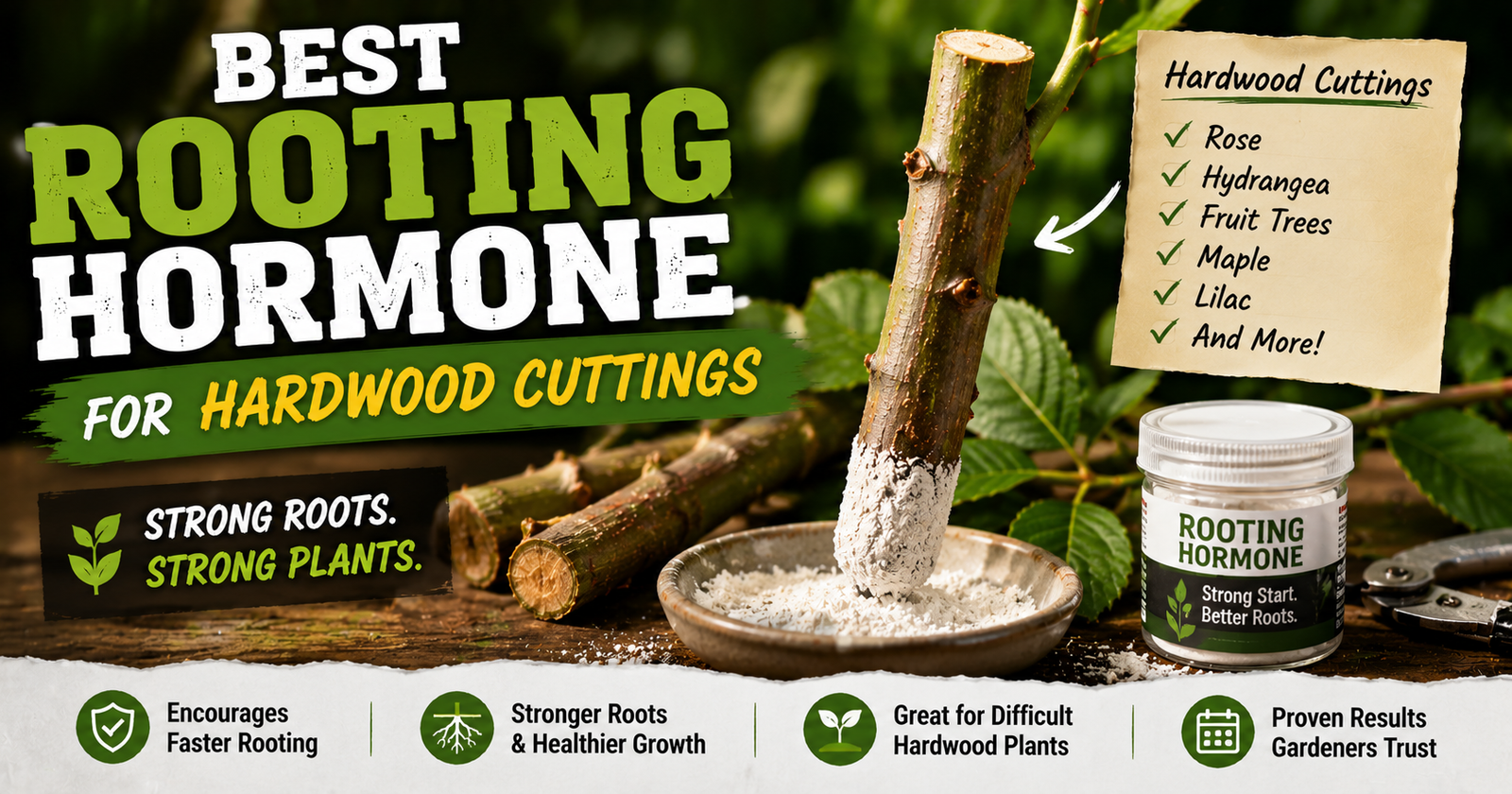
For slower or woodier plants like rosemary, rubber plants, hydrangeas, or many shrubs, rooting hormone can noticeably improve your chances of success. Those plants are good candidates for reviewing the available hormone choices for woody plants before propagation begins.
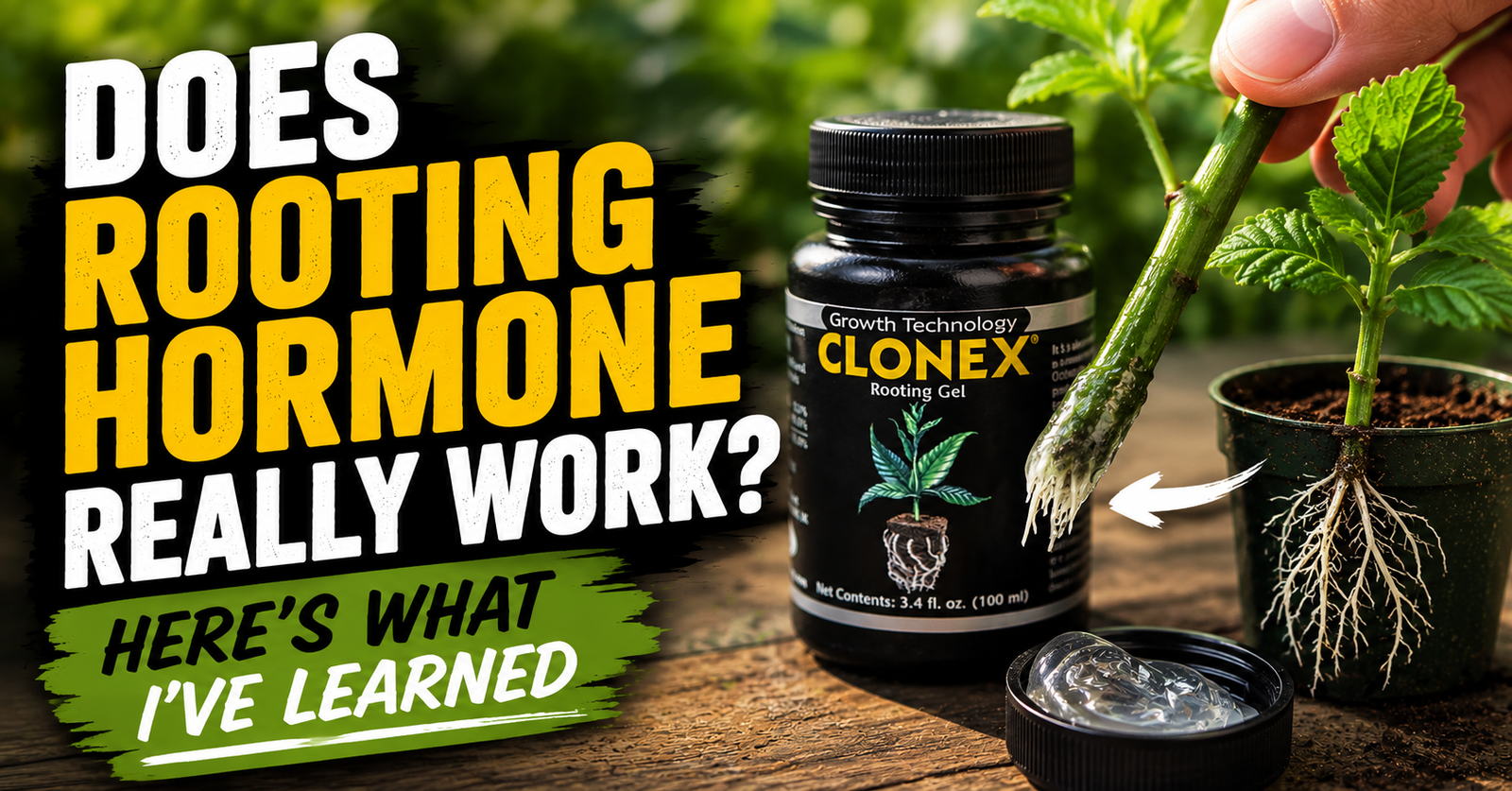
If you’re unsure whether it’s worth using, I explain the pros and cons in my article about whether rooting hormone really works.
Should I use tap water or distilled water?
I’ve successfully propagated thousands of cuttings using ordinary tap water.
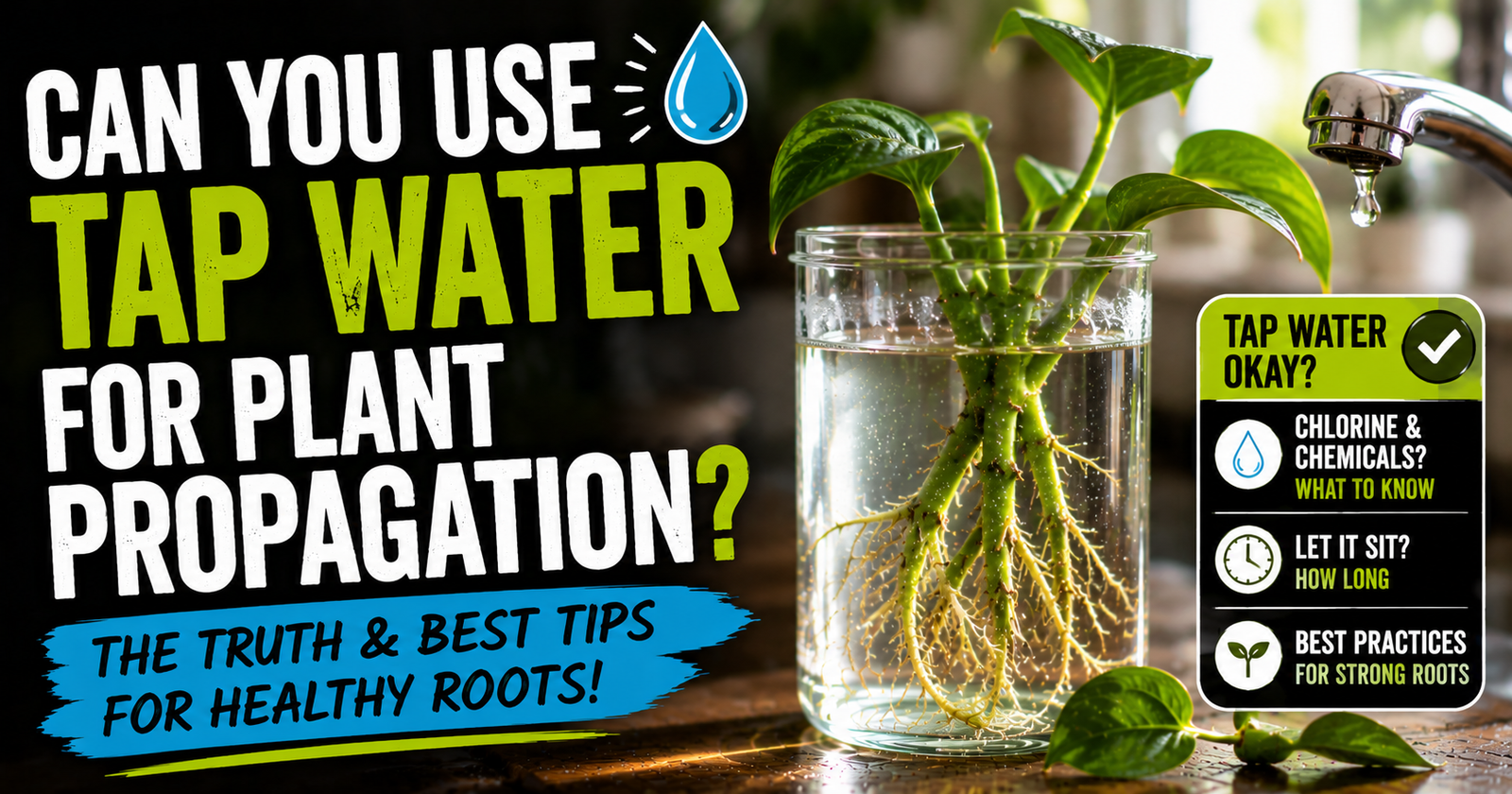
If your local water is extremely hard or heavily chlorinated, filtered or distilled water may produce better results, but for most gardeners, clean tap water works just fine. The broader question of when ordinary faucet water is suitable is covered in this guide to tap water for propagation.
The biggest factor isn’t the type of water.
It’s keeping it fresh.
How often should I change the water?
I normally replace the water every few days.
Fresh water helps replenish oxygen, reduces bacteria, and keeps algae from becoming a problem.
If the water starts looking cloudy or develops an odor, I change it immediately rather than waiting for my normal schedule.
Why aren’t my cuttings growing roots?
There are several possible reasons.
The cutting may not include a node.
The stem may have been taken from unhealthy or dormant growth.
The plant may simply root very slowly.
Or you could be trying to propagate a species that doesn’t perform well in water.
Before giving up, make sure you’re using healthy, actively growing stems and giving the cutting bright, indirect light.
Can I put fertilizer in the water?
I don’t recommend it.
Fresh cuttings don’t need fertilizer before they have roots.
Adding nutrients too early can actually encourage algae growth or stress delicate tissues.
I wait until the cutting has developed a healthy root system and has been transplanted into potting mix before worrying about fertilizing.
Can I leave the same water in the jar until roots appear?
You can, but I wouldn’t.
Standing water gradually loses oxygen and becomes a much better environment for bacteria and algae.
Changing the water regularly is one of the easiest ways to improve your chances of success.
It only takes a minute, and I’ve found it’s well worth the effort.
What’s the easiest plant to propagate in water?
If I had to recommend just one, it would be pothos.
It’s incredibly forgiving, roots quickly, and doesn’t require any special equipment.
If you’ve never propagated a plant before, pothos is one of the best confidence builders you can choose.
What you should know before you go…
After propagating plants for years, I’ve become convinced that successful propagation isn’t about having the fanciest equipment or the most expensive supplies.
It’s about understanding the plant in front of you.
Some species seem determined to grow no matter what you do.
Others require a little more patience and a different approach.
Once you stop expecting every cutting to behave the same way, propagation becomes much less frustrating and much more enjoyable.
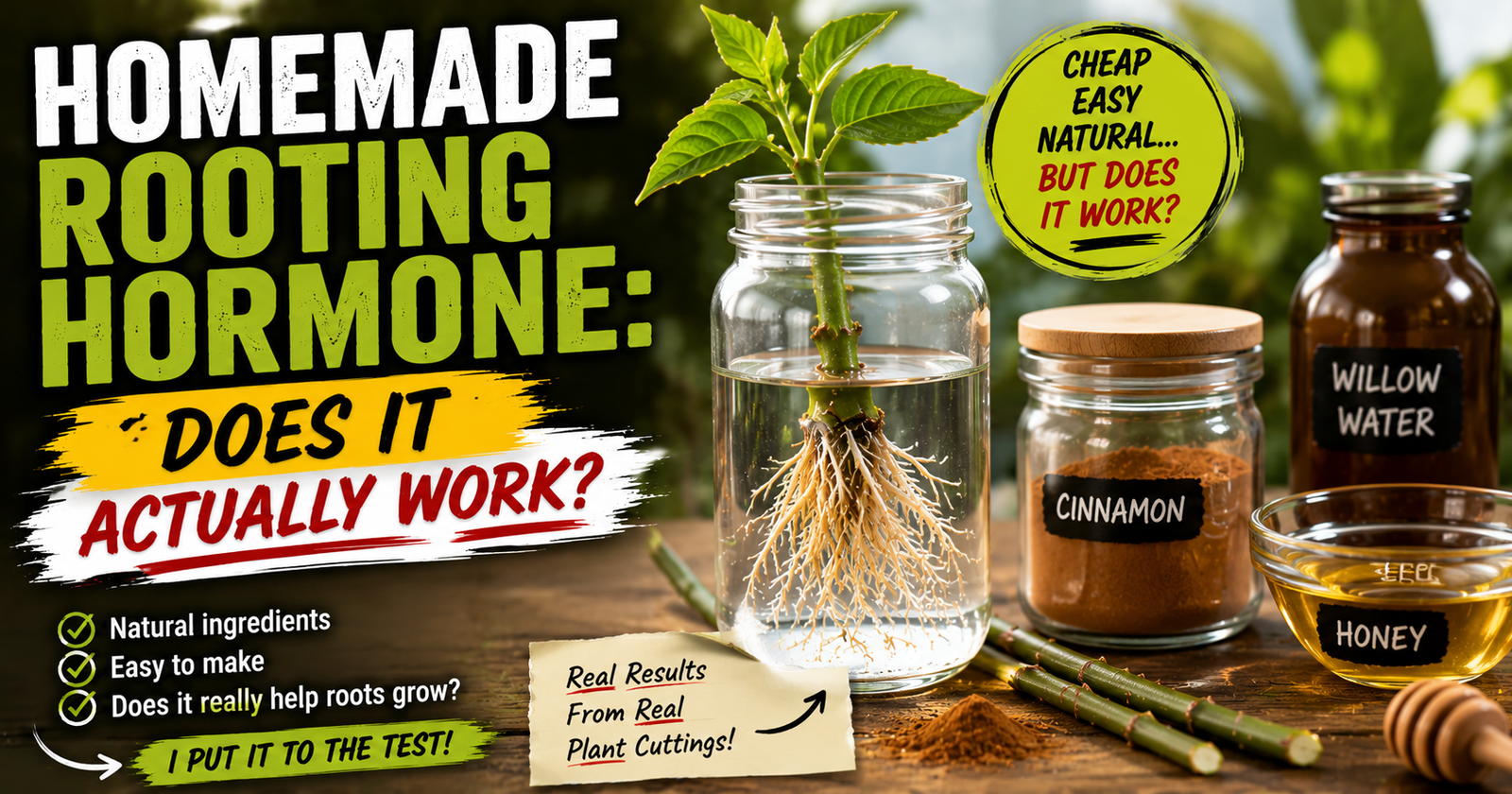
If you’re just getting started, begin with one of the easier plants on this list. Pothos, philodendrons, spider plants, basil, and mint are all excellent choices because they reward you with quick results and build confidence for more challenging projects later. For these beginner-friendly cuttings, rooting hormone for easy plants can help you decide whether an homemade treatment is necessary at all.
Before long, you’ll start recognizing which plants are likely to root well just by looking at the stems, and that’s when propagation becomes even more rewarding.
About the Author
Daxon Weaver is the founder of PropagationWorld.com and has spent years propagating everything from houseplants and herbs to shrubs and trees. Through trial, error, and thousands of rooted cuttings, he’s learned which methods consistently work and which popular propagation tips are better left on social media. His goal is to help gardeners skip the frustration, improve their success rates, and enjoy the process of growing more plants from the ones they already have.