If you’ve spent any time reading about plant propagation online, you’ve probably seen completely opposite advice.
One article says tap water is perfectly fine.
Another insists you should only use distilled water.
Then someone else claims rainwater is the only way to get healthy roots.
So who’s actually right?
After propagating thousands of cuttings over the years, I’ve used just about every type of water you can think of.
Straight from the kitchen faucet.
Rainwater collected from barrels.
Filtered water.
Well water.
Even distilled water when I happened to have it around.
What I’ve learned is that the answer isn’t nearly as complicated as the internet sometimes makes it sound.
For the average gardener, tap water works perfectly well most of the time.
There are situations where another type of water may be the better choice, but they’re much less common than people think.
Before you spend money buying bottled water for your cuttings, it’s worth understanding what actually matters.
The Short Answer
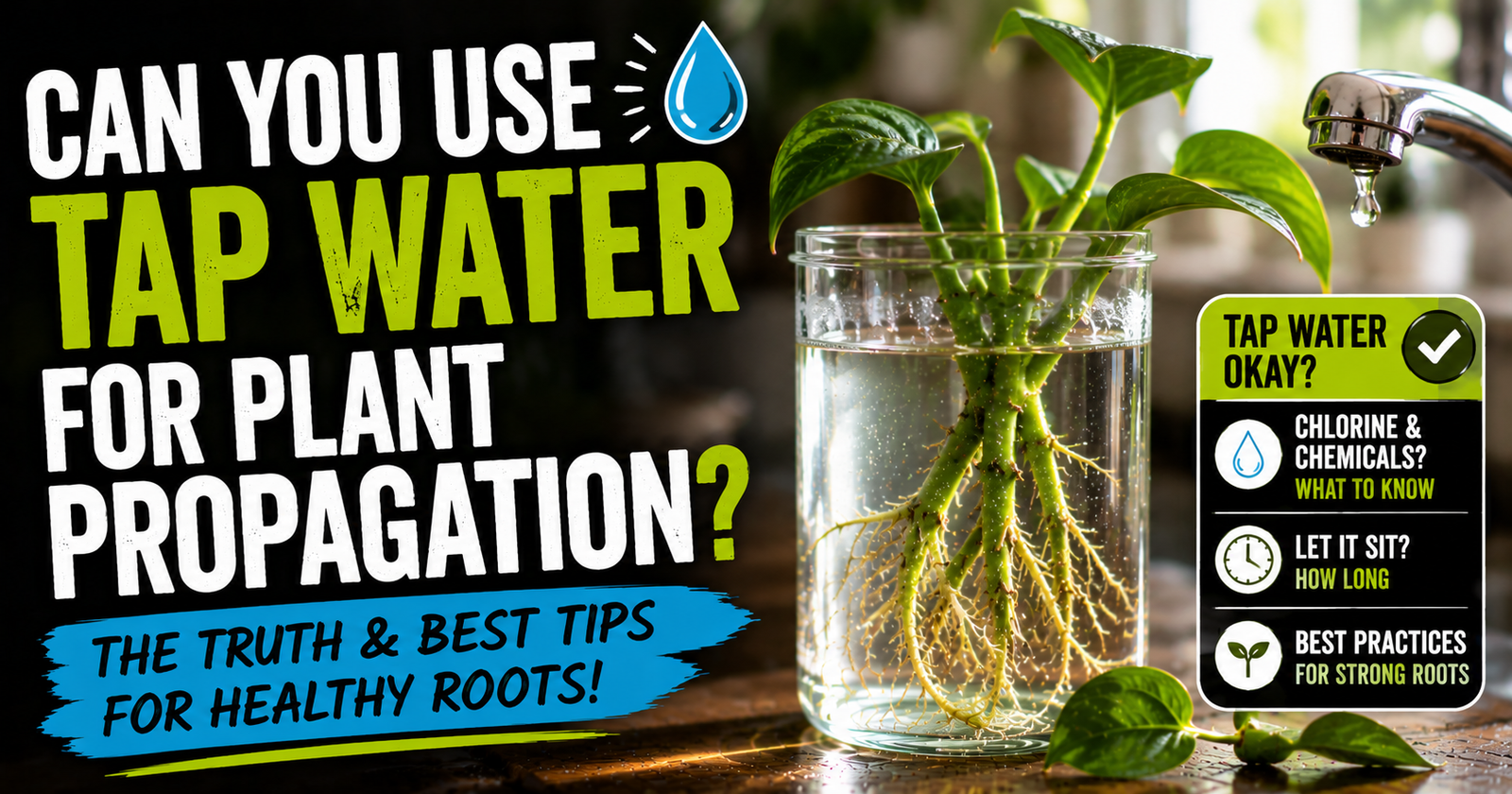
Yes, you can usually use tap water for plant propagation.
I’ve rooted countless houseplants, herbs, and ornamental plants using ordinary tap water with excellent results.
The biggest factors in successful propagation are taking healthy cuttings, using clean containers, providing bright indirect light, and replacing the water regularly.
For most gardeners, those things matter far more than whether the water came from the faucet or a bottle.
Why Tap Water Works for Most Gardeners
Municipal tap water is already clean enough for people to drink.
Because of that, it’s generally clean enough for most plant cuttings too.
Healthy cuttings don’t need purified laboratory water.
They simply need a clean environment where they can begin producing roots.
I’ve propagated pothos, philodendrons, tradescantia, basil, mint, coleus, spider plants, and many other species using nothing but tap water.
Most rooted without any issues at all.
That’s why I tell beginners not to overcomplicate things.
Start with what you already have.
If you later notice a problem that points toward your water supply, you can always experiment with another option.
The Quality of Your Local Water Matters
Not all tap water is exactly the same.
Someone living in one part of the country may have very soft water.
Someone else may have extremely hard water that’s rich in dissolved minerals.
Others rely on private wells rather than municipal water systems.
Those differences can occasionally affect propagation, but they’re usually gradual rather than immediate.
Most cuttings won’t suddenly fail simply because they’re sitting in ordinary tap water.
Instead, you may notice slower growth, mineral buildup inside the container, or staining on the roots after a long period.
That’s why I pay attention to how the cuttings respond rather than assuming every water source behaves exactly the same.
Hard Water Isn’t Always a Problem
One topic that comes up often is hard water.
Hard water contains higher amounts of dissolved minerals like calcium and magnesium.
Many gardeners assume those minerals automatically damage cuttings.
In my experience, that usually isn’t the case.
I’ve successfully propagated plenty of plants using moderately hard tap water.
The most noticeable effect is often cosmetic.
You might see white mineral deposits forming inside the jar or a slight tan coloring on older roots.
That doesn’t automatically mean the roots are unhealthy.
If they’re still firm and producing new growth, I generally don’t worry about a little discoloration.
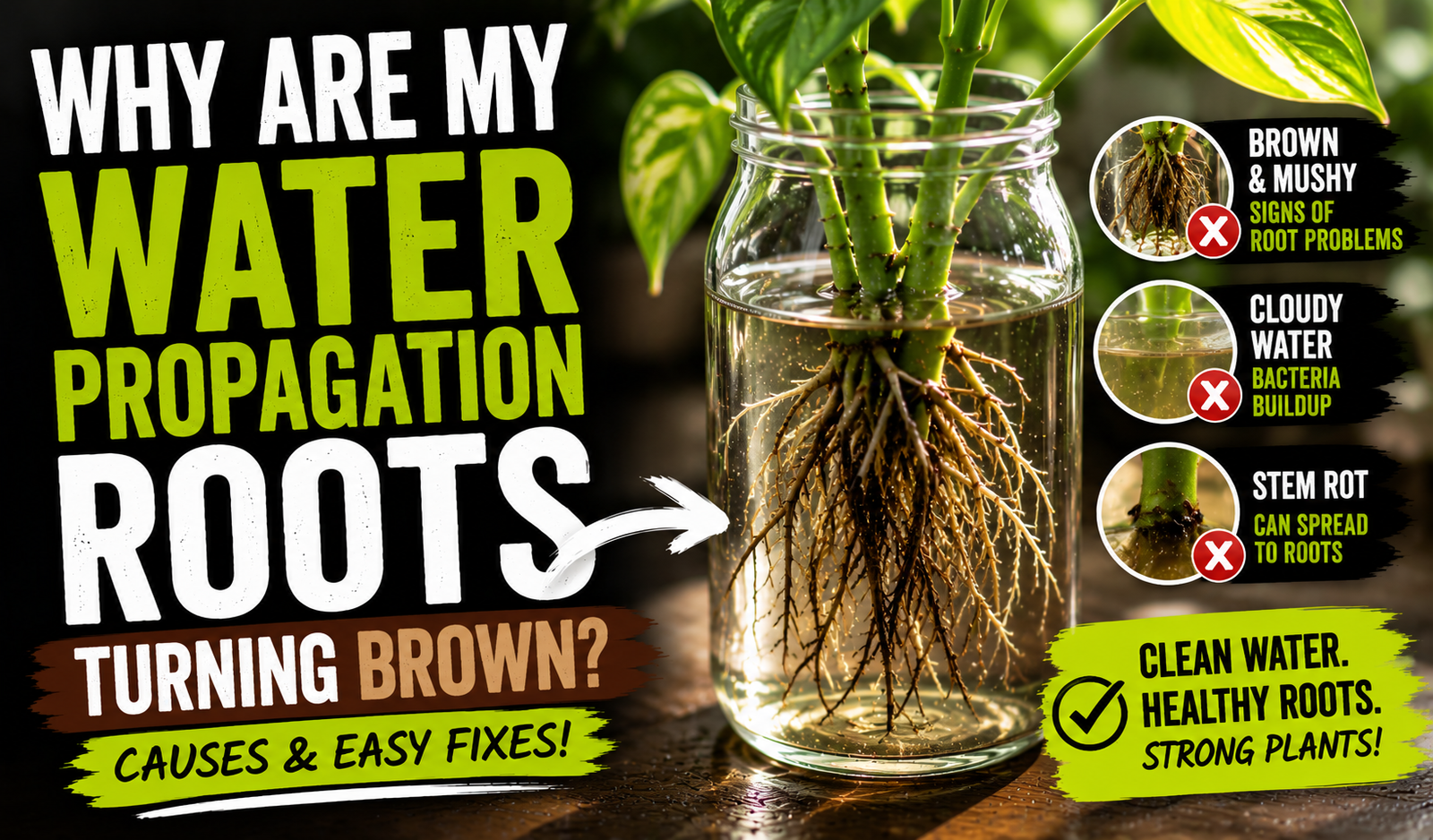
If you’ve noticed darker roots and aren’t sure whether they’re healthy, my article on Why Are My Water Propagation Roots Turning Brown? explains how I tell the difference between harmless discoloration and root rot.
What About Chlorine?
Chlorine is probably the ingredient people worry about most.
Yes, many municipal water systems add chlorine to help keep drinking water safe.
Fortunately, the amount is usually low enough that it doesn’t cause problems for most propagated cuttings.
I’ve rooted plants in chlorinated tap water for years without seeing widespread failures because of chlorine alone.
If you’re still concerned, there’s an easy solution.
Simply fill your propagation container and let it sit uncovered overnight before adding your cutting.
Some of the chlorine will naturally dissipate into the air.
Is it absolutely necessary?
For most gardeners, probably not.
But it’s a simple step if it gives you a little extra peace of mind.
Chloramine Is Different
Some cities use chloramine instead of chlorine.
Unlike chlorine, chloramine doesn’t evaporate after sitting overnight.
If your local water supplier uses chloramine and you’re having unexplained propagation issues across many different plants, trying filtered water or rainwater may be worth the experiment.
That said, I still wouldn’t assume chloramine is automatically the culprit.
Poor lighting, unhealthy cuttings, dirty containers, and infrequent water changes are all much more common reasons propagation fails.
Before changing your water source, make sure you’ve ruled out the basics first.
Is Distilled Water Better?
Distilled water often gets recommended because it’s free of minerals, chlorine, and many other dissolved substances.
That sounds great on paper.
In reality, I’ve never found distilled water to dramatically improve my propagation success.
If I already have distilled water in the house, I’ll happily use it.
If I don’t, I certainly don’t make a special trip to the store just for plant cuttings.
Healthy cuttings don’t usually fail because they weren’t given distilled water.
They fail because of poor lighting, unhealthy stems, dirty containers, lack of oxygen, or simply because the plant isn’t well suited for water propagation.
For the average gardener, distilled water is a perfectly acceptable option, but I wouldn’t call it a necessity.
Rainwater Is Excellent if You Have It
If you collect rainwater for your garden, it can be an excellent choice for propagation.
Rainwater is naturally soft and doesn’t contain the chlorine or chloramine found in many municipal water supplies.
I’ve used rainwater on countless propagation projects over the years with excellent results.
The only caution is making sure it’s actually clean.
Water that’s been sitting for months in a dirty barrel full of leaves, algae, or insects isn’t the same as fresh rainwater.
If you’re collecting rainwater, keep the storage container reasonably clean and covered whenever possible.
Can You Use Well Water?
Absolutely.
Millions of gardeners rely entirely on well water.
Whether it’s ideal depends on what’s naturally present in your groundwater.
Some wells produce beautifully clean water that’s perfect for propagation.
Others contain large amounts of minerals like iron, sulfur, or calcium.
If you’ve been using well water for years and your houseplants are healthy, I’d feel perfectly comfortable using that same water for propagation.
If you suspect your well water has unusually high mineral levels, trying filtered or rainwater for a few cuttings is an easy comparison.
There’s no harm in experimenting.
Is Filtered Water Worth It?
Filtered water sits somewhere in the middle.
It removes some impurities while still being convenient if you already have a refrigerator filter or countertop filtration system.
I occasionally use filtered water simply because it’s what comes out of my refrigerator.
Do I notice a dramatic improvement compared to tap water?
Honestly, no.
If filtered water is already available, use it.
If not, I wouldn’t buy an expensive filtration system solely for propagating plants.
Bottled Water Usually Isn’t Necessary
I’ve heard gardeners recommend bottled spring water because they believe it’s “healthier” for cuttings.
Personally, I think that’s an unnecessary expense for most propagation projects.
If your tap water is safe for drinking and your local water isn’t unusually problematic, bottled water probably won’t produce noticeably better results.
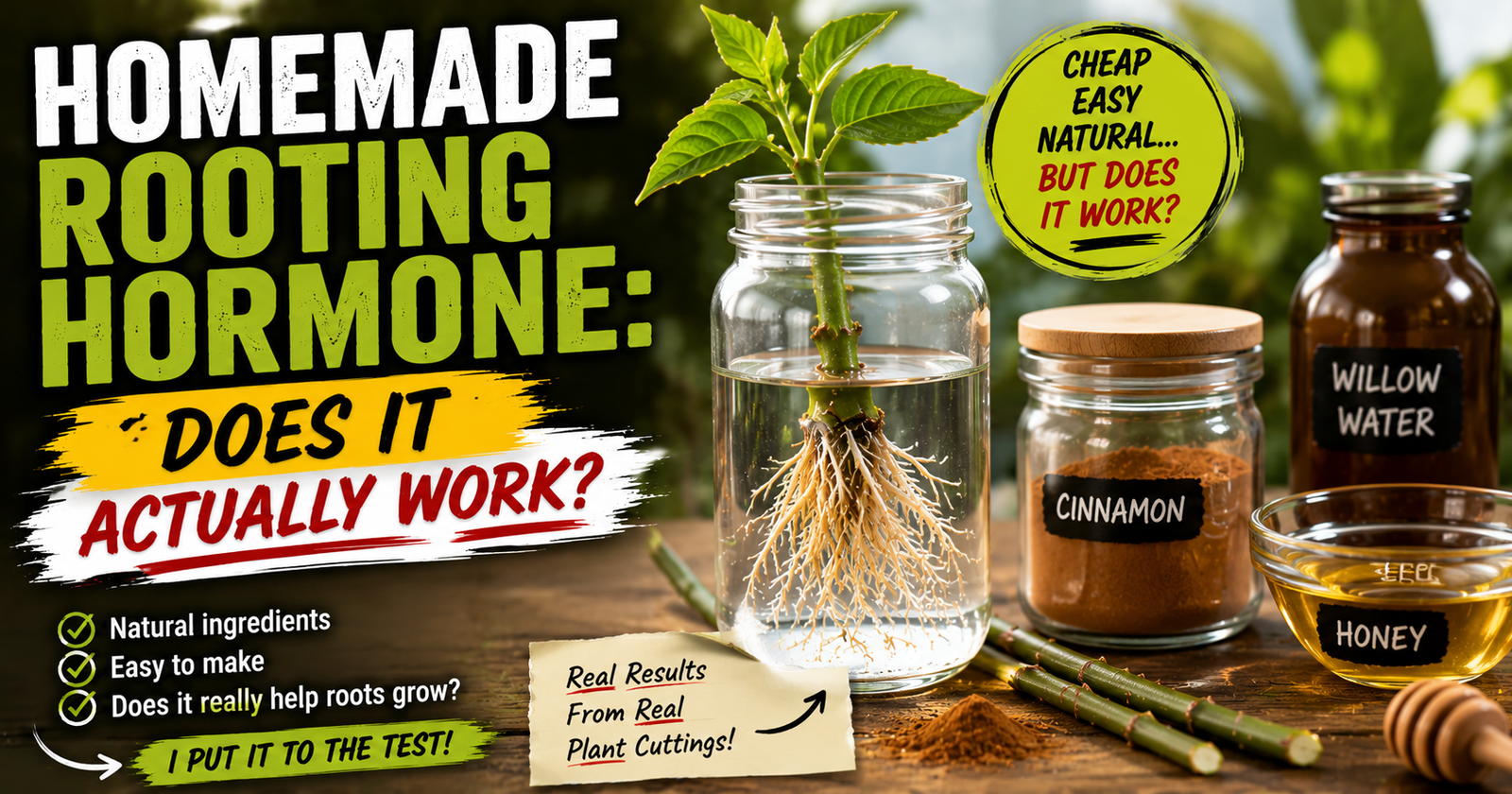
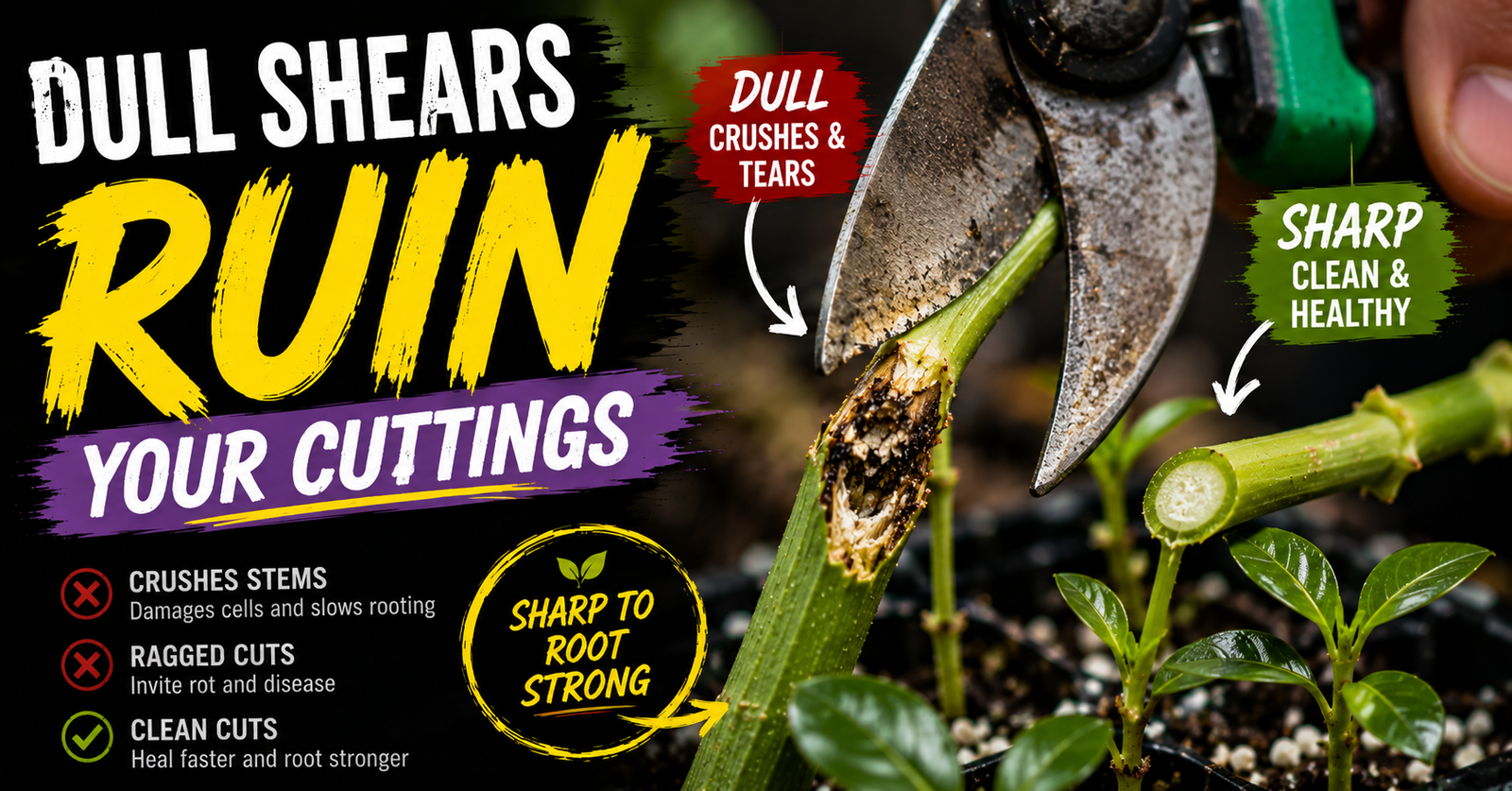
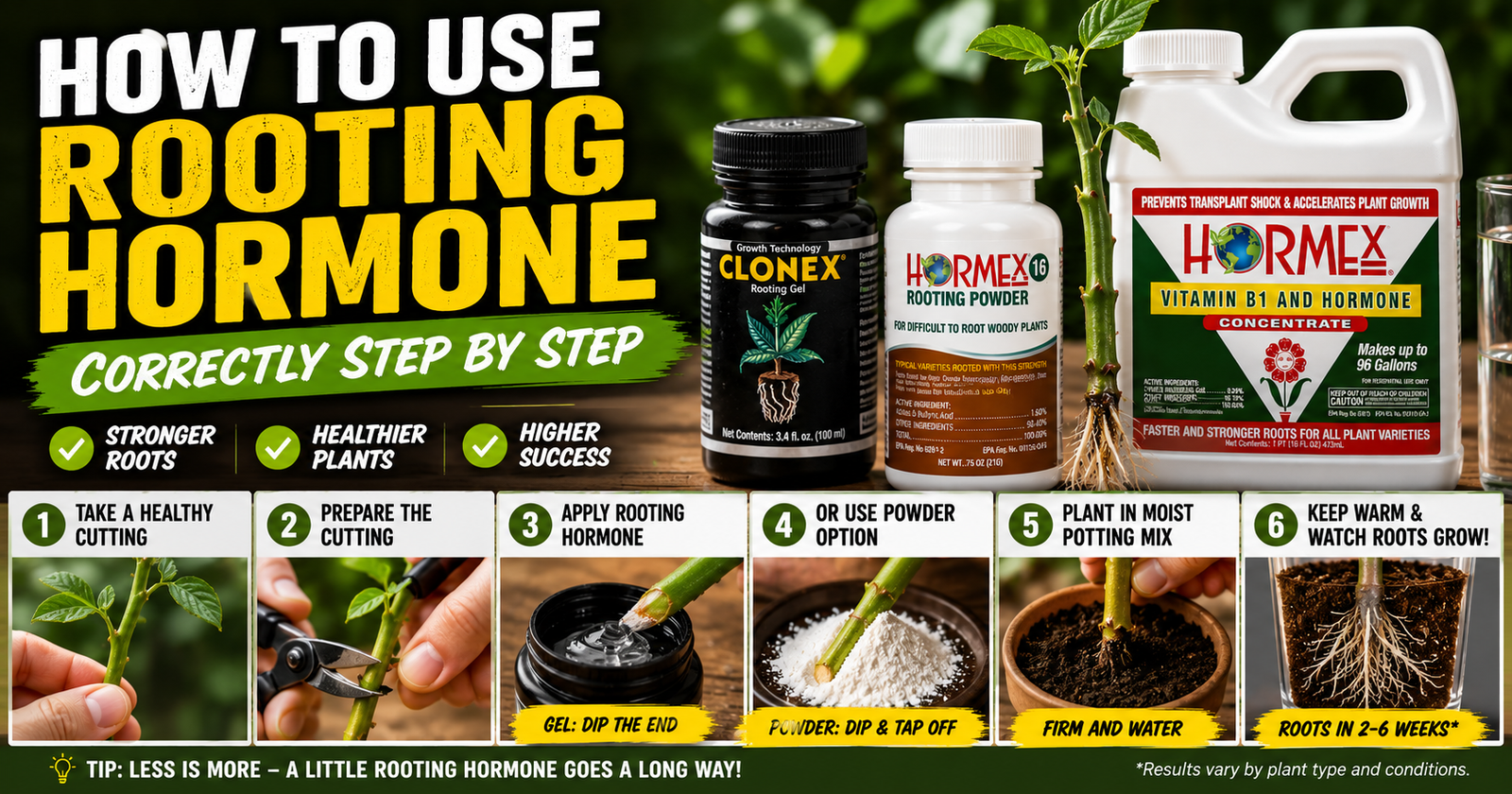
I’d rather spend that money on quality pruning shears, propagation supplies, or a good rooting hormone for more difficult plants. For easier projects, gardeners may also want to compare commercial products with homemade rooting treatments.
Those investments usually make a much bigger difference.
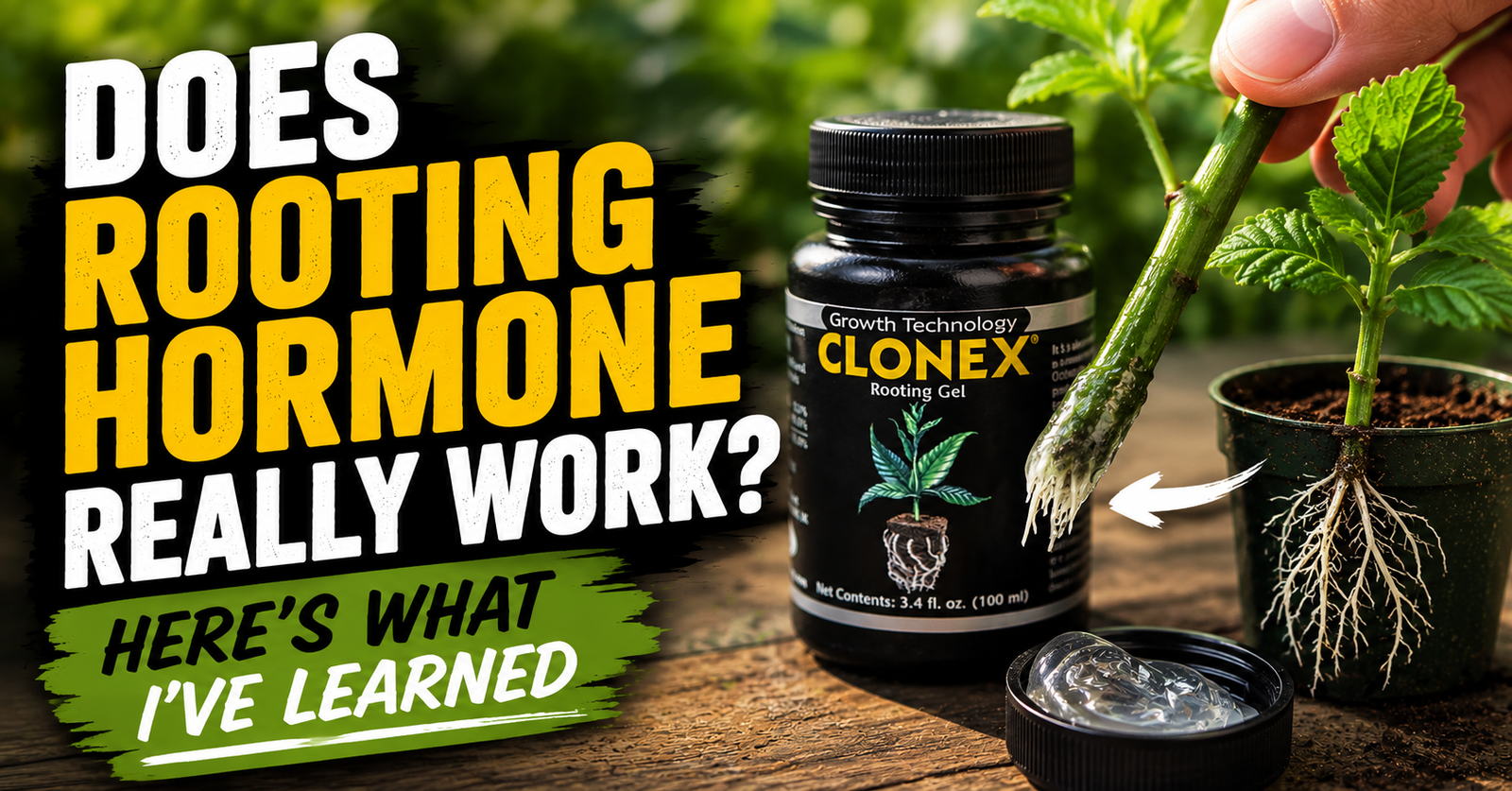
For example, when I’m rooting woody shrubs or slower species, I’d much rather have a dependable rooting gel than bottled water. The evidence on choosing hormone for slower species puts that product preference into better perspective.
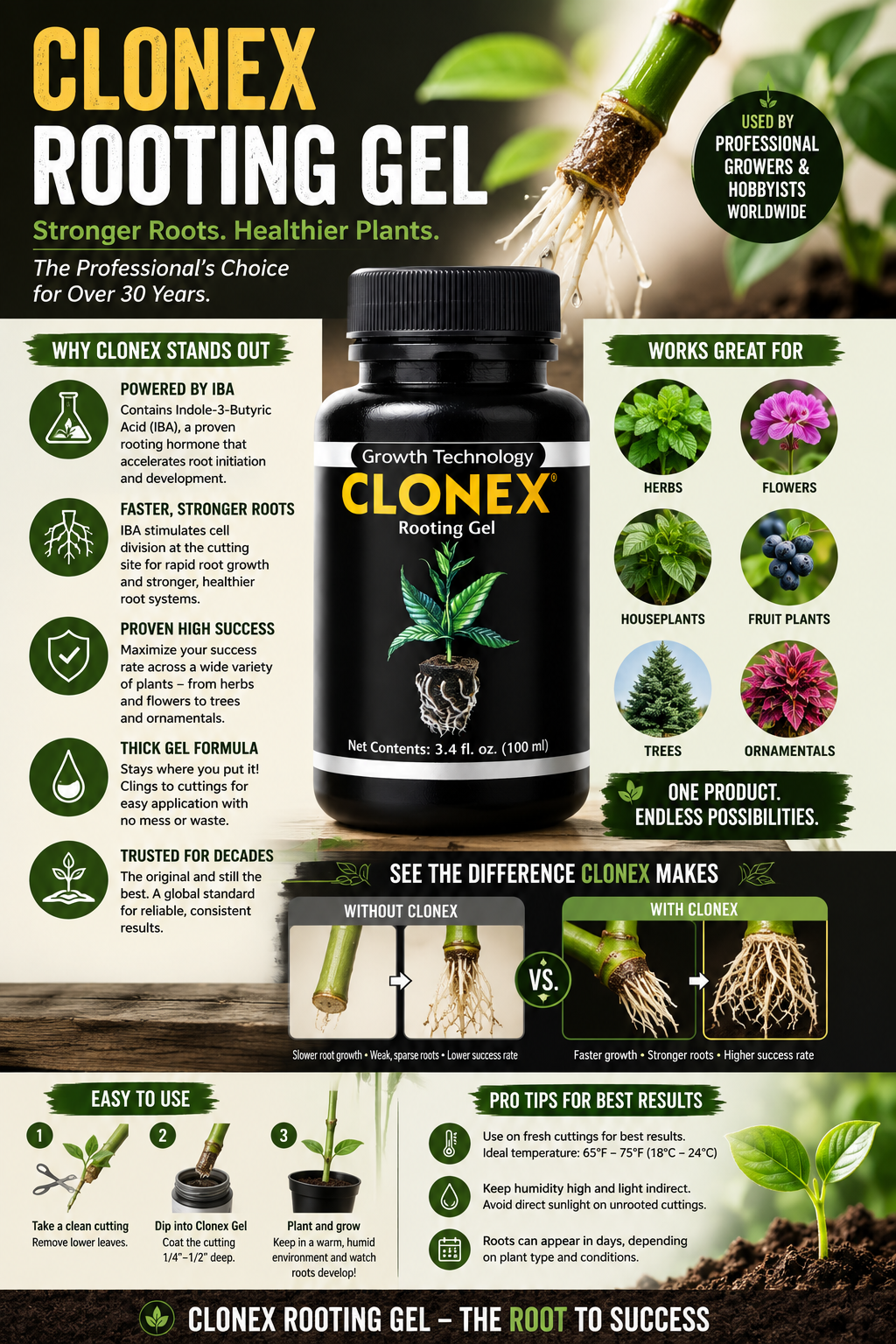
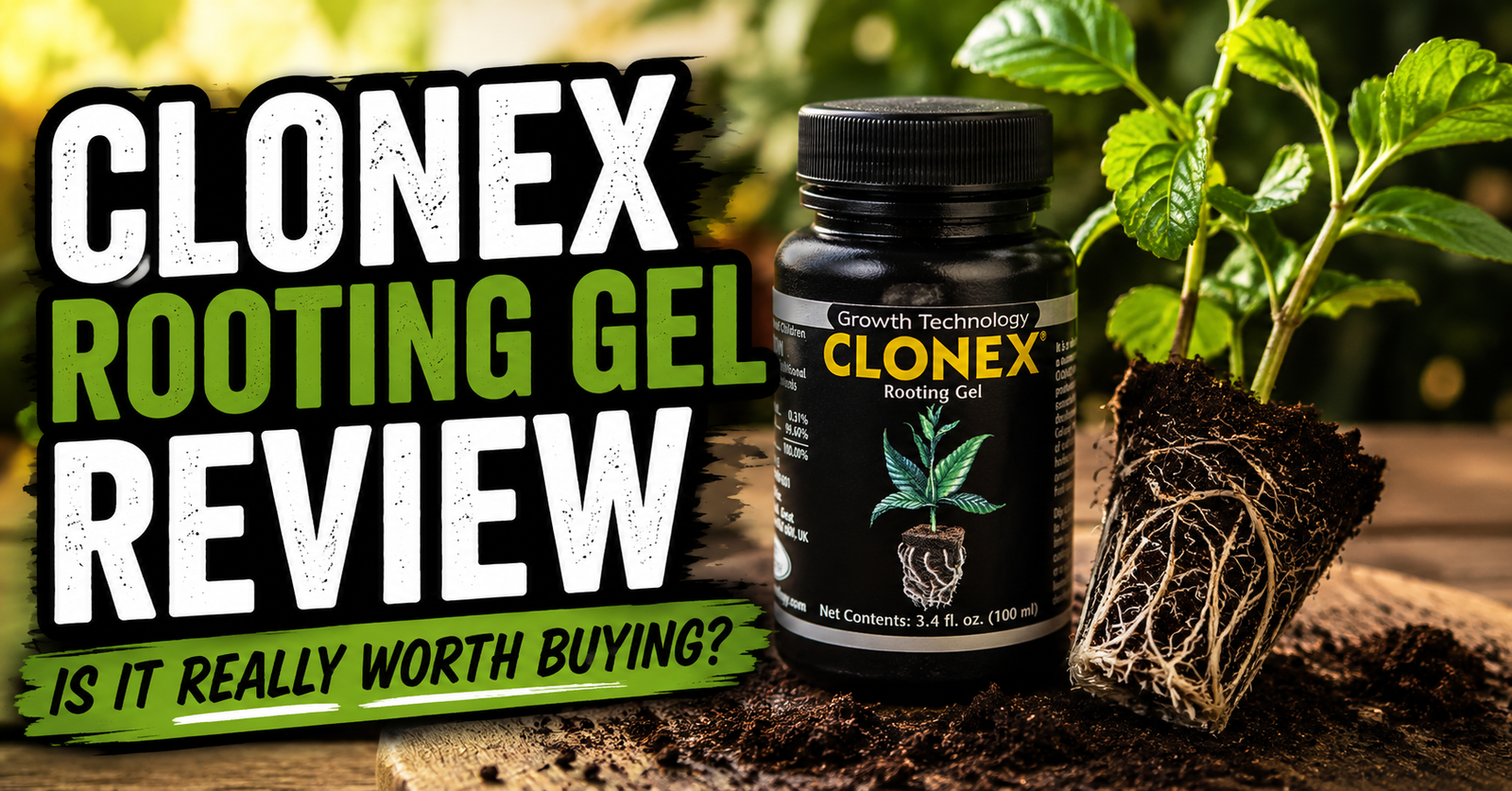
That’s why I often reach for the products I discussed in my Clonex Rooting Gel Review or compare different products using my Rooting Gel vs. Powder vs. Liquid guide.
Those choices have consistently improved my results far more than changing water brands.
Fresh Water Matters More Than Fancy Water
If I could only give one piece of advice about propagation water, this would be it.
Fresh water beats expensive water almost every time.
I’ve seen people spend money on distilled water while leaving the same water in the jar for two weeks.
Meanwhile, someone else uses ordinary tap water but replaces it every few days.
The second gardener usually has better success.
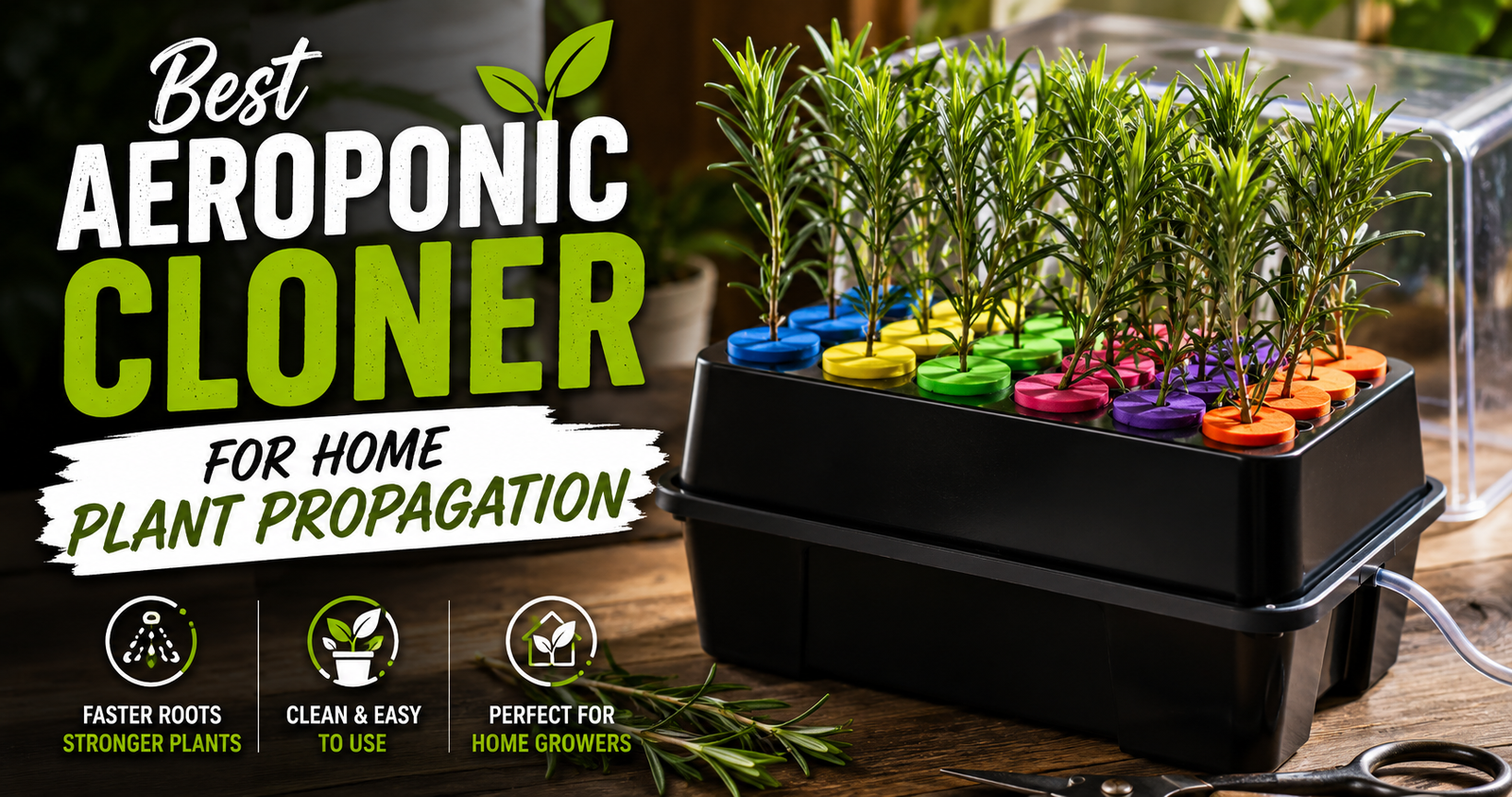
Fresh water helps replenish dissolved oxygen, removes bacteria that naturally build up over time, and creates a healthier environment for new roots. That focus on oxygen also matters in oxygen-rich aeroponic propagation, where cuttings receive moisture without remaining submerged.
That’s far more important than whether the water originally came from a faucet or a bottle.
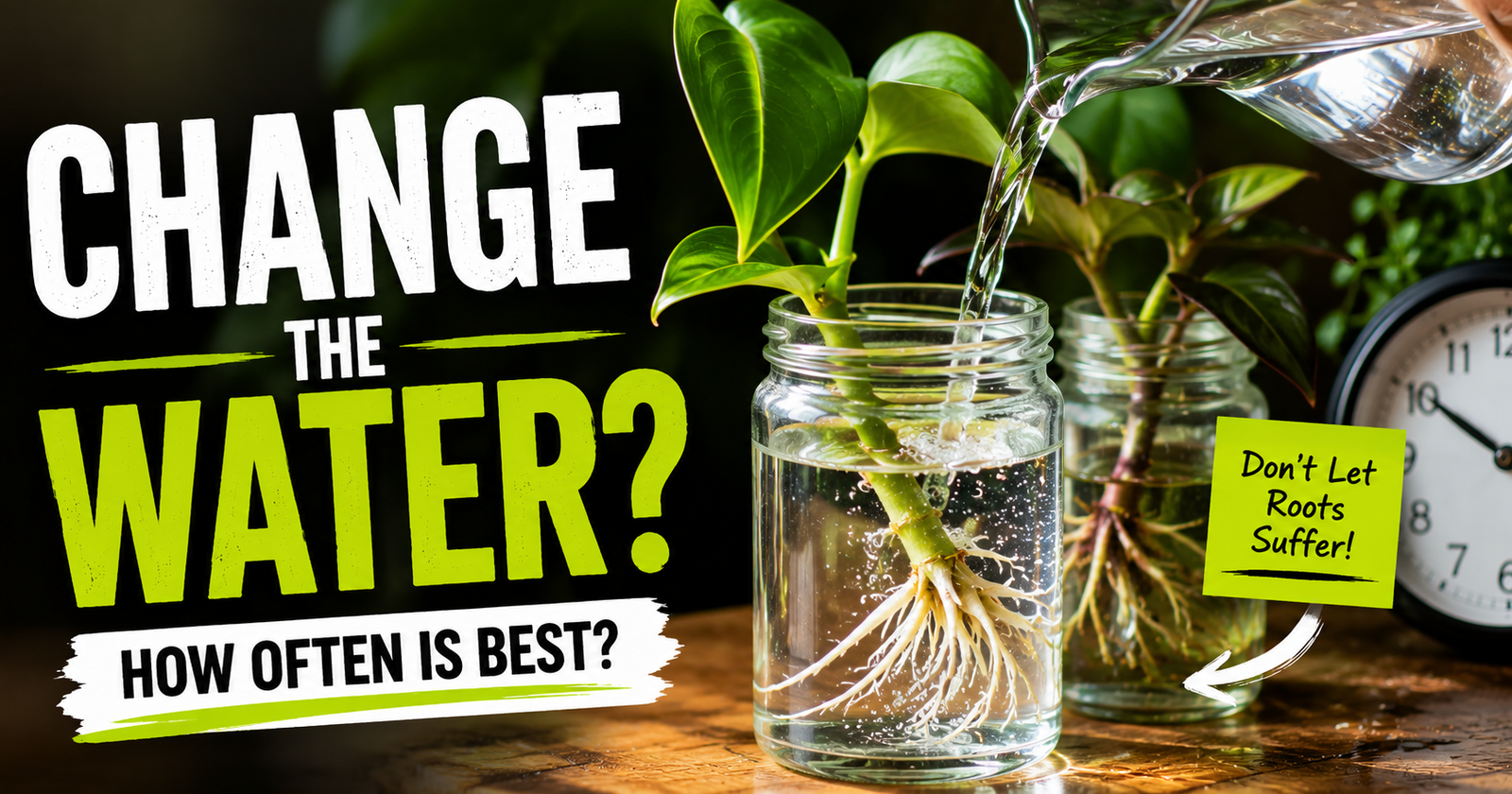
I explain my full routine in How Often Should You Change Water When Propagating Cuttings? because consistency is one of the biggest factors in successful water propagation.
When I Actually Change Water Sources
Despite everything I’ve said, there are a few situations where I will experiment with a different type of water.
For example:
- My local tap water suddenly changes color or odor.
- I notice unusual mineral buildup on multiple propagation projects.
- Every cutting begins struggling for no obvious reason.
- I know my water has unusually high mineral content.
- I’m propagating a particularly rare or valuable plant and want to eliminate as many variables as possible.
Even then, I treat changing the water source as an experiment, not an automatic solution.
Most propagation problems have nothing to do with the type of water being used.
They usually come back to the basics.
Healthy cuttings.
Clean containers.
Bright, indirect light.
Fresh water.
And a little patience.
Frequently Asked Questions
Should I let tap water sit before using it?
If your water contains chlorine and it gives you peace of mind, letting it sit overnight won’t hurt anything.
I occasionally do this if I’ve already filled my propagation jars the night before.
That said, I don’t consider it a requirement.
I’ve rooted plenty of cuttings by filling the jar straight from the faucet and placing the cutting in immediately.
Is distilled water better than tap water?
Not for most propagation projects.
Distilled water certainly won’t hurt your cuttings, but I haven’t found it to consistently produce better rooting than ordinary tap water.
If your local tap water is extremely hard or contains unusually high mineral levels, distilled water may be worth trying.
Otherwise, I wouldn’t consider it necessary.
Can hard water stop cuttings from rooting?
Usually not.
Hard water may leave mineral deposits inside your container or slightly discolor older roots, but it rarely prevents healthy cuttings from rooting on its own.
If a cutting won’t root, I almost always look at the health of the cutting, the amount of light, water quality, and the species before blaming hard water.
Is rainwater the best choice?
Rainwater is an excellent option if it’s clean.
Many gardeners have great success using it because it doesn’t contain chlorine or chloramine and is naturally soft.
I enjoy using rainwater when it’s readily available, but I certainly don’t think it’s required for successful propagation.
Can softened water be used?
This is one type of water I’m a little more cautious about.
Many home water softeners replace calcium and magnesium with sodium.
Over time, elevated sodium levels aren’t ideal for many plants.
If your home uses softened water, I’d rather use water from an unsoftened outdoor faucet, rainwater, filtered water, or ordinary tap water before it passes through the softener.
Does the temperature of the water matter?
Yes, more than many people realize.
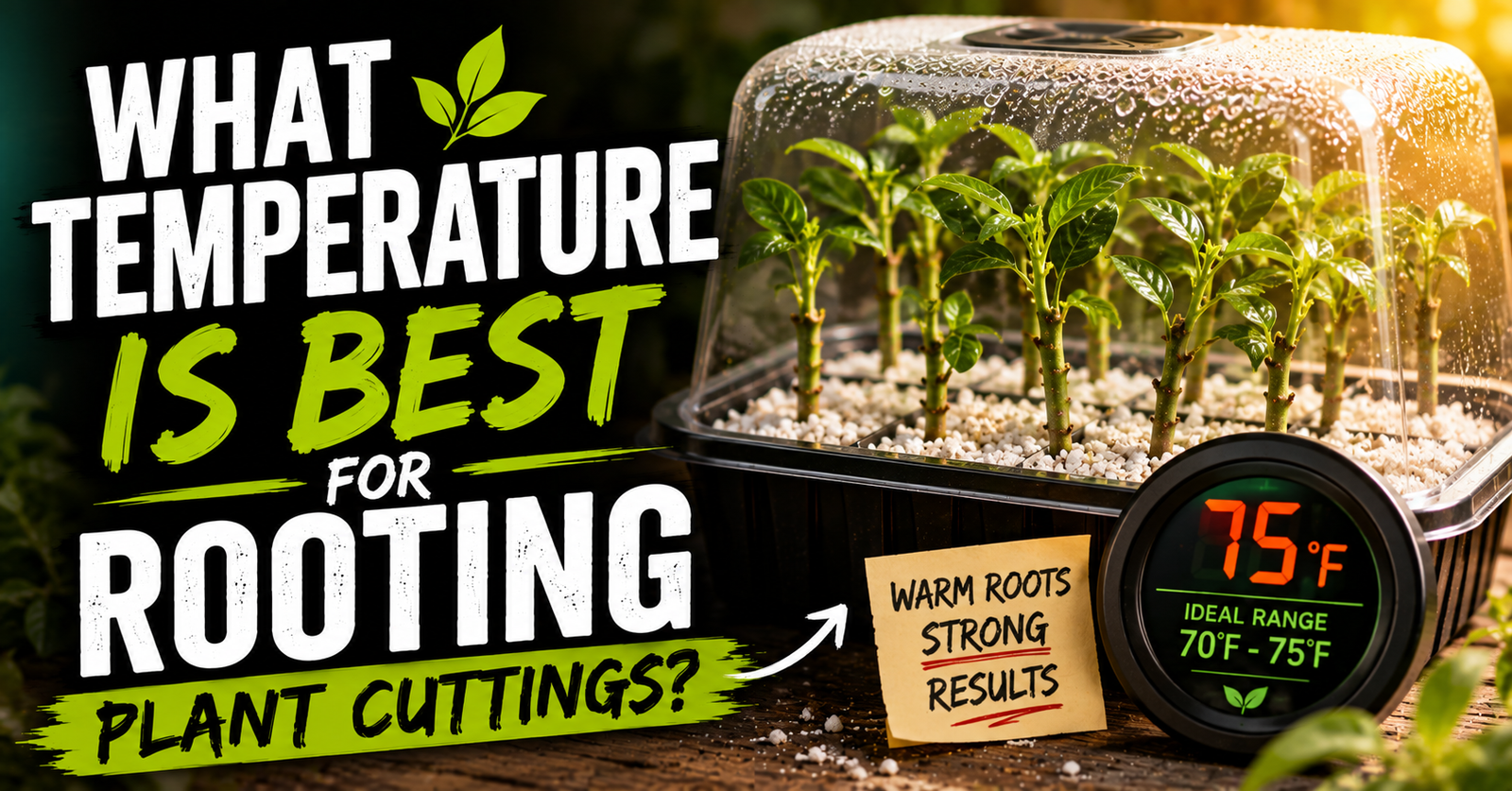
Extremely cold water can slow root development, while very warm water can encourage bacterial growth and reduce dissolved oxygen.
I’ve had the best results using clean, room-temperature water.
The difference isn’t dramatic overnight, but over several weeks it can certainly influence how quickly healthy roots develop.
Can I keep topping off the water instead of replacing it?
I wouldn’t.
Topping off the container simply adds fresh water to old water.
It doesn’t remove bacteria, algae, or organic material that’s already building up inside the jar.
Whenever I refresh my propagation water, I completely empty the container, give it a quick rinse if necessary, and refill it with fresh water.
That simple habit has probably prevented more propagation problems than almost anything else I do.
Good Water Helps, Good Habits Help Even More
After propagating thousands of cuttings, I’ve become convinced that gardeners spend far too much time worrying about the type of water and not enough time focusing on the things that actually have the biggest impact.
A healthy cutting taken from an actively growing plant.
A clean container.
Bright, indirect light.
Fresh water.
Regular observation.
Those four or five habits have consistently produced healthy roots for me whether I was using tap water, rainwater, filtered water, or well water.
If your cuttings are struggling, I’d start there before assuming the water itself is the problem.
Most of the time, improving your propagation routine will have a much bigger impact than changing where the water comes from.
About the Author
Daxon Weaver is the founder of PropagationWorld, where he shares practical propagation methods, honest product reviews, and years of hands-on experience rooting everything from common houseplants to woody shrubs and fruit plants. After propagating thousands of cuttings, he enjoys helping gardeners simplify plant propagation and achieve more consistent success.