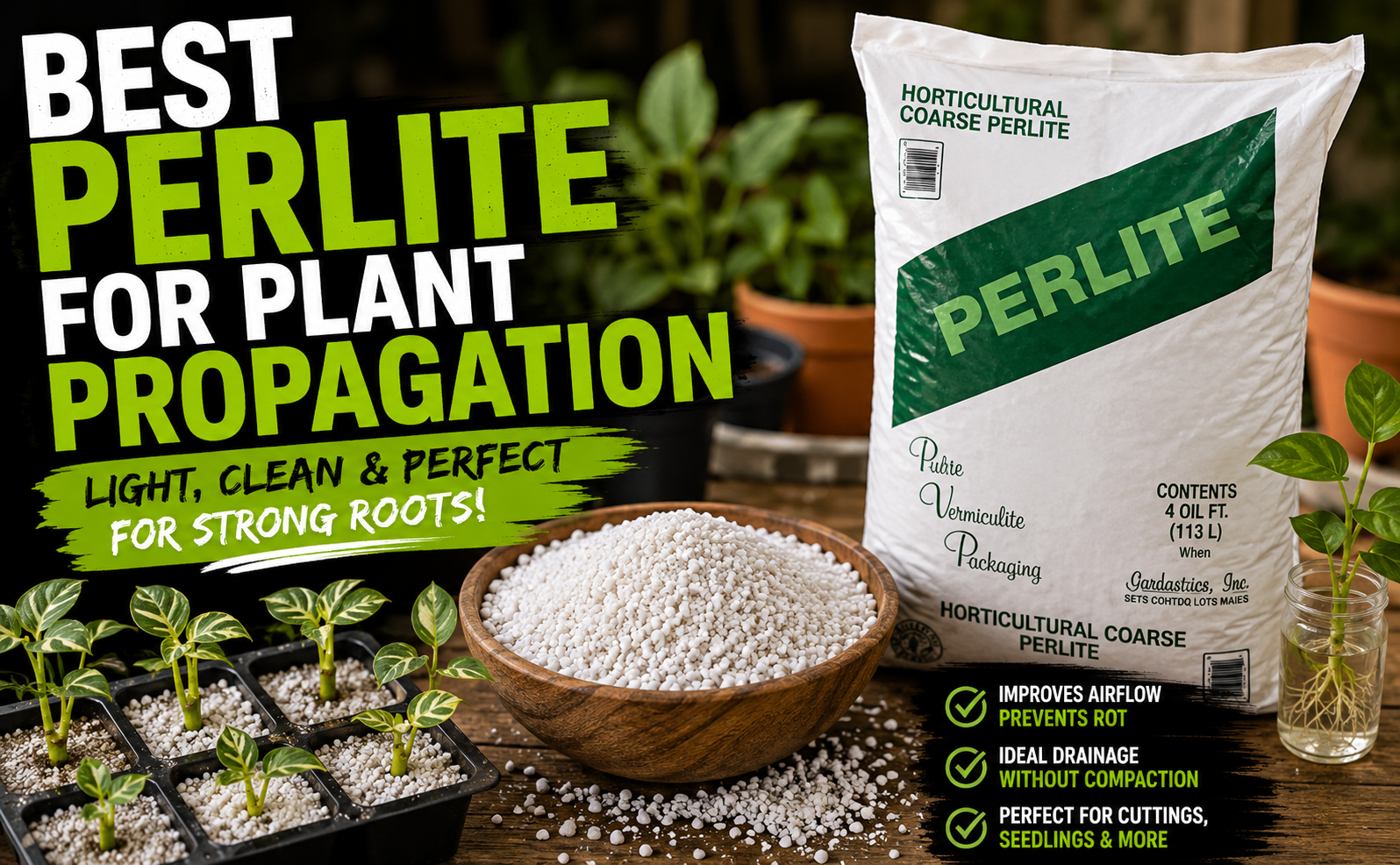
If you’ve struggled with cuttings rotting before they ever produce roots, the problem may not have been the plant.
It may have been what you were trying to root it in.
When I first started propagating plants, I assumed almost any potting soil would work.
After all, plants grow in soil, so why wouldn’t fresh cuttings?
It didn’t take long to realize the two situations are completely different.
Fresh cuttings don’t have roots.
That means they can’t tolerate heavy, soggy growing media nearly as well as established plants.
When the rooting medium stays wet for too long, oxygen levels drop, harmful fungi and bacteria become more active, and stem rot becomes much more likely.
Once I switched to propagation mixes containing plenty of perlite, my results improved dramatically.
The cuttings stayed healthier.
The growing medium drained better.
And perhaps most importantly, I lost far fewer cuttings to rot.
Today, I rarely propagate anything in plain potting soil.
Whether I’m rooting hydrangeas, blueberries, roses, grapes, elderberries, figs, herbs, or common houseplants, perlite is almost always part of the mix.
The Short Answer
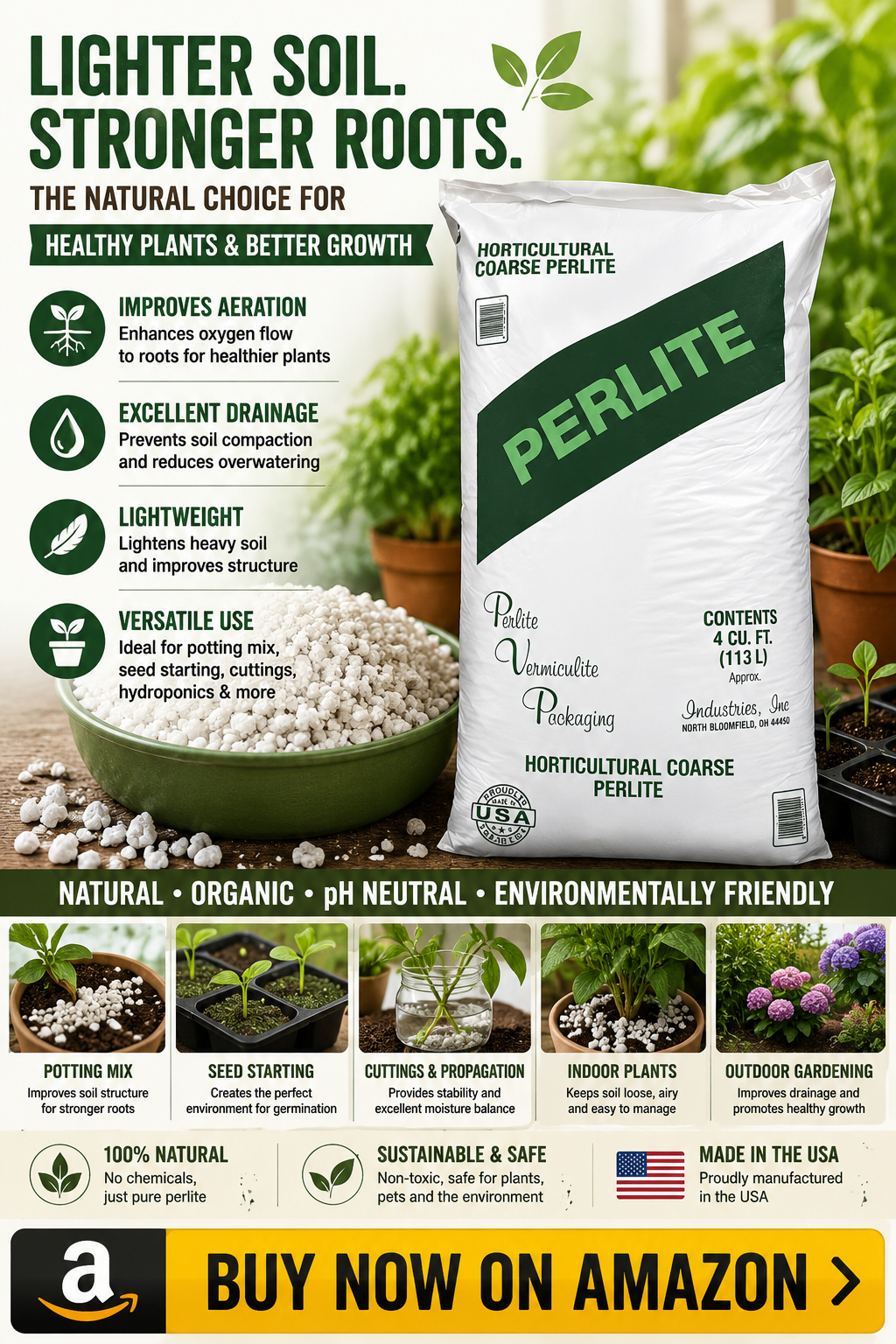
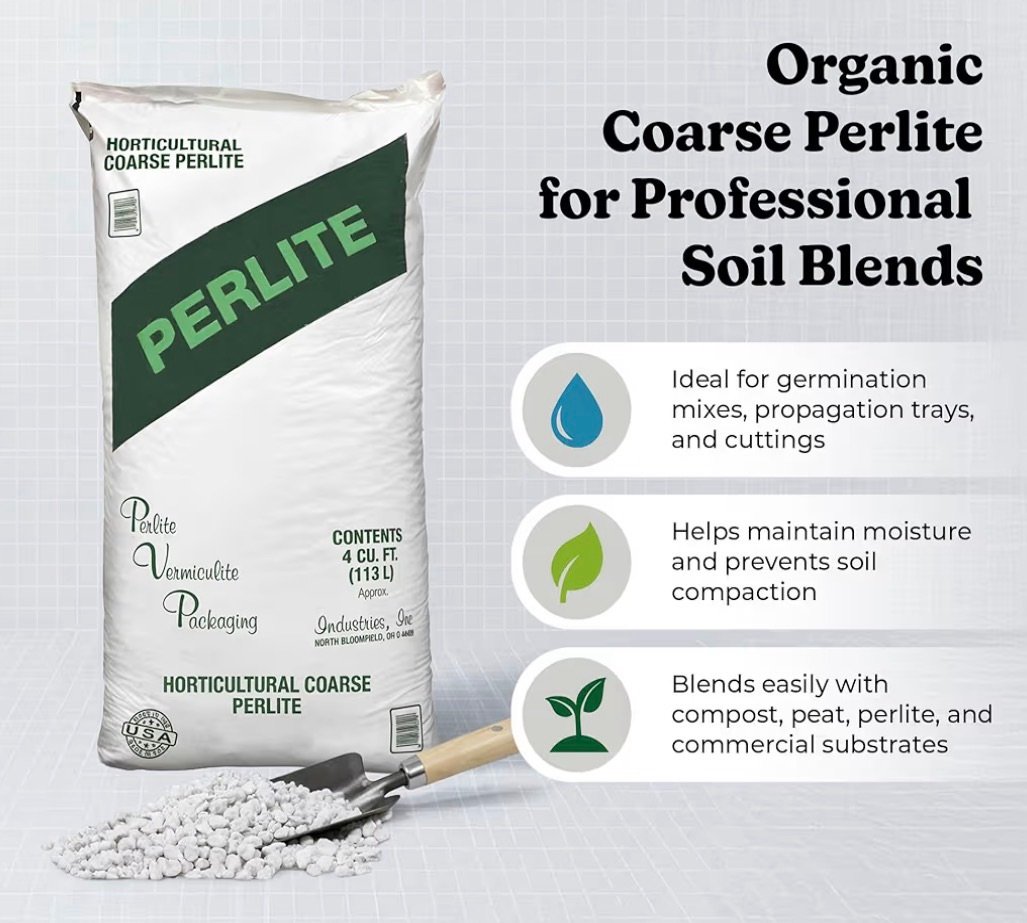
The best perlite for plant propagation is coarse horticultural-grade perlite that improves drainage while still holding enough moisture for developing roots. I prefer larger bags because they’re more economical, and I end up using perlite in almost every propagation project throughout the year. If you’re deciding between the two common amendments, perlite versus vermiculite explains how their moisture and airflow characteristics differ during propagation.
My Favorite Perlite for Plant Propagation
After trying several brands over the years, this is the one I continue buying.
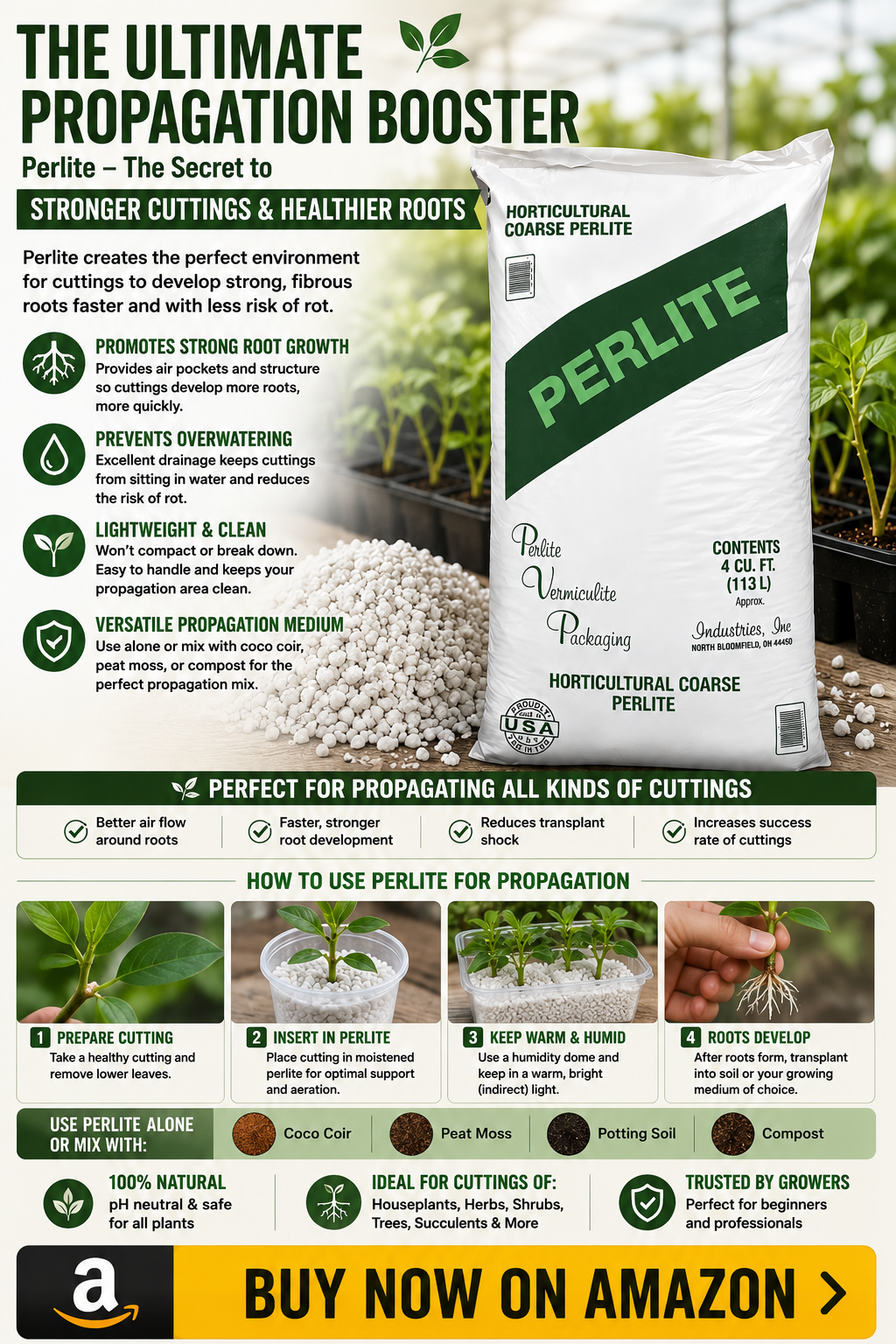
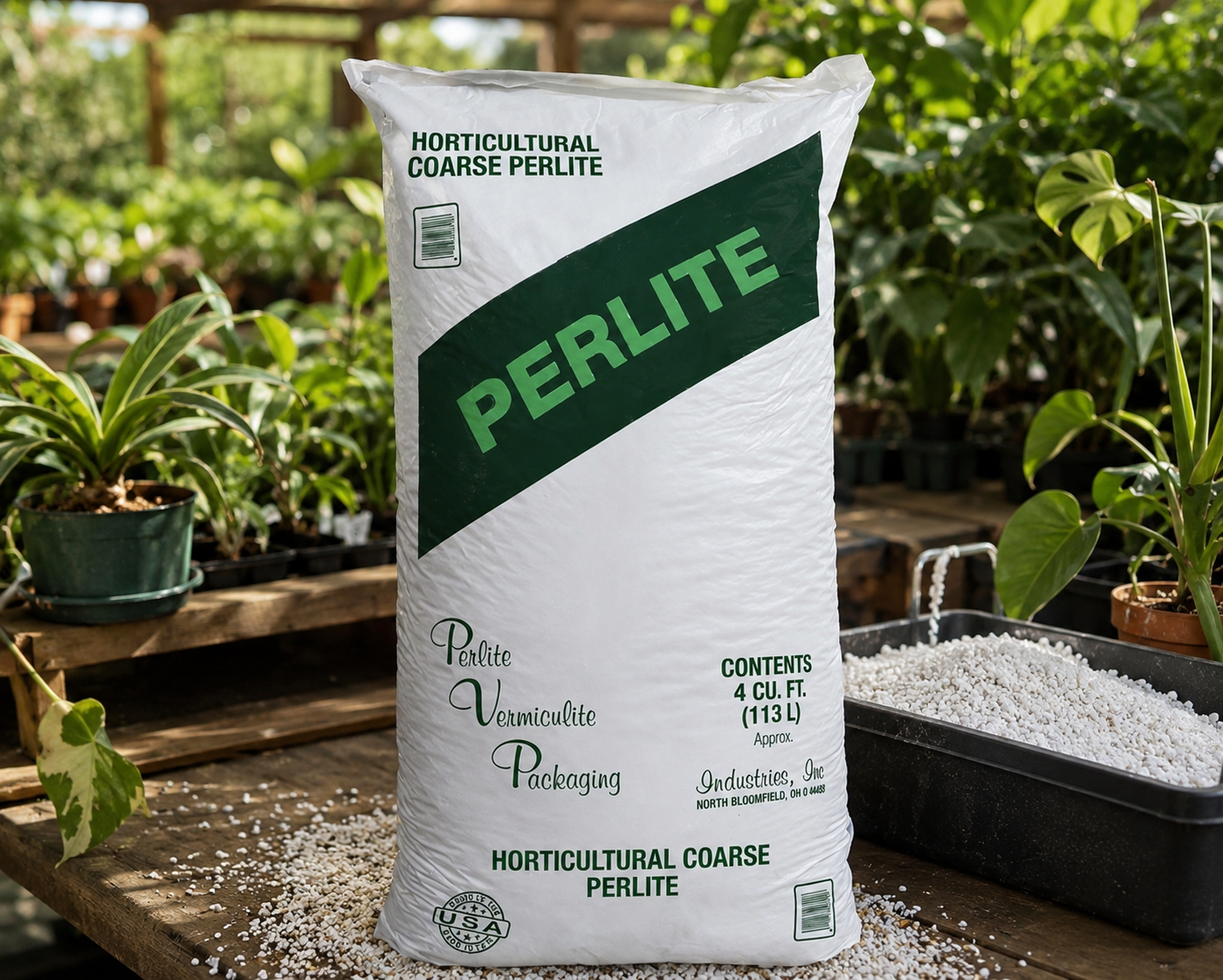
It’s a 4 Cubic Foot Horticultural Perlite that’s lightweight, clean, and works equally well for propagation trays, seed starting, custom potting mixes, and outdoor gardening.
What I like most is that the particles provide excellent air space around developing roots while still holding enough moisture to create an ideal rooting environment.
Because I propagate throughout the year, I also appreciate buying a larger bag instead of constantly running back to the garden center for smaller packages.
If you only buy perlite once, buy enough to last.
Trust me, you’ll find yourself reaching for it far more often than you expect.
See the Perlite I Use for Rooting Plant Cuttings on Amazon
Why Perlite Works So Well for Propagation
One word explains almost everything.
Air.
Healthy roots need oxygen just as much as they need moisture.
When a propagation medium stays saturated for too long, oxygen disappears from the tiny spaces surrounding the stem.
That’s where problems begin.
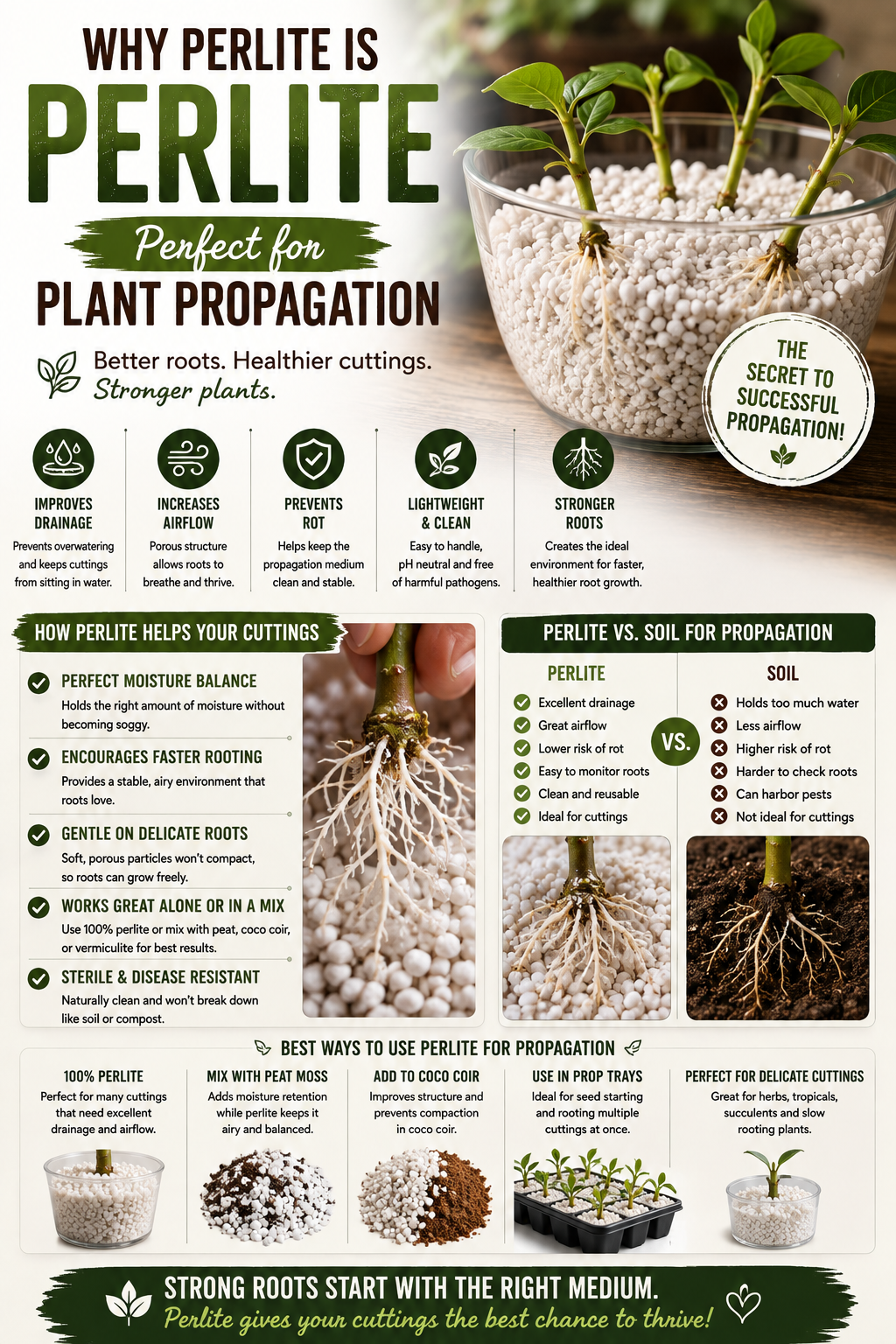
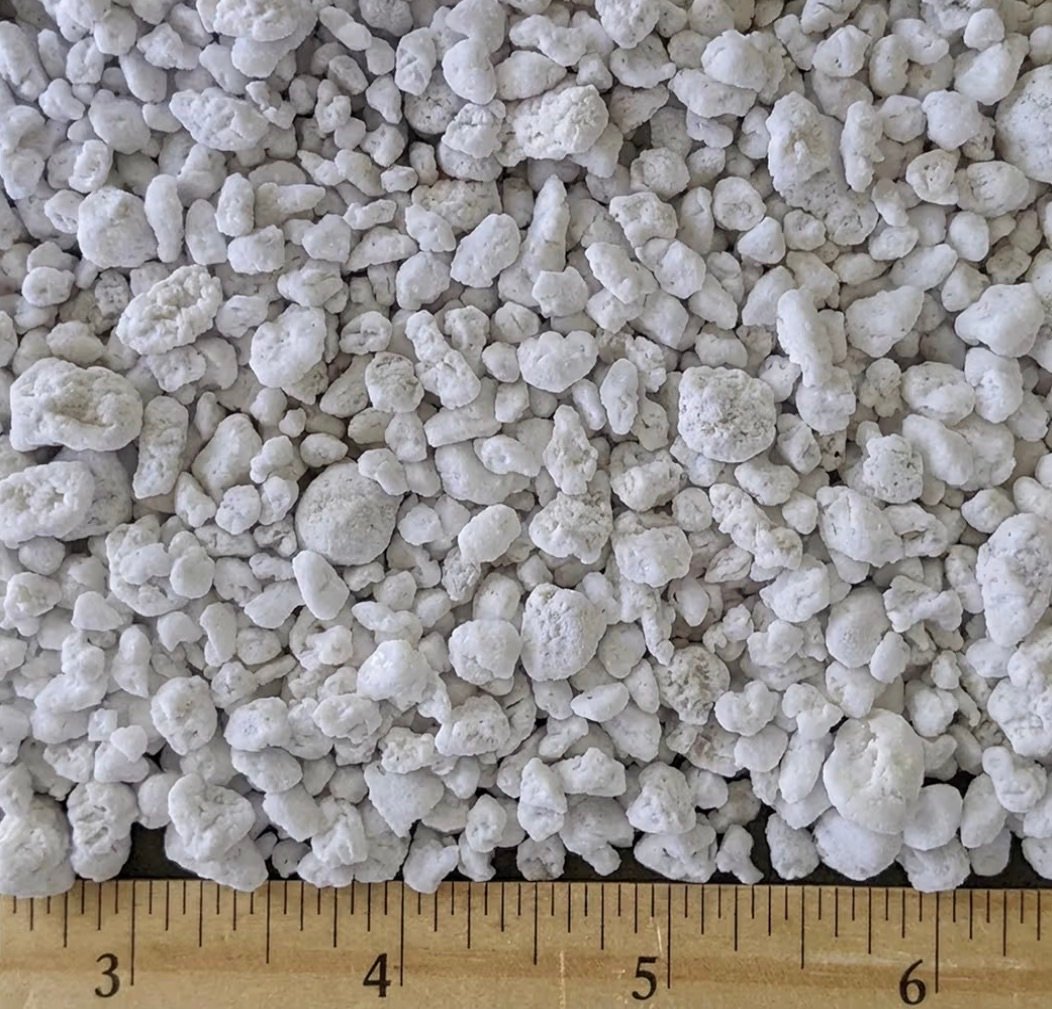
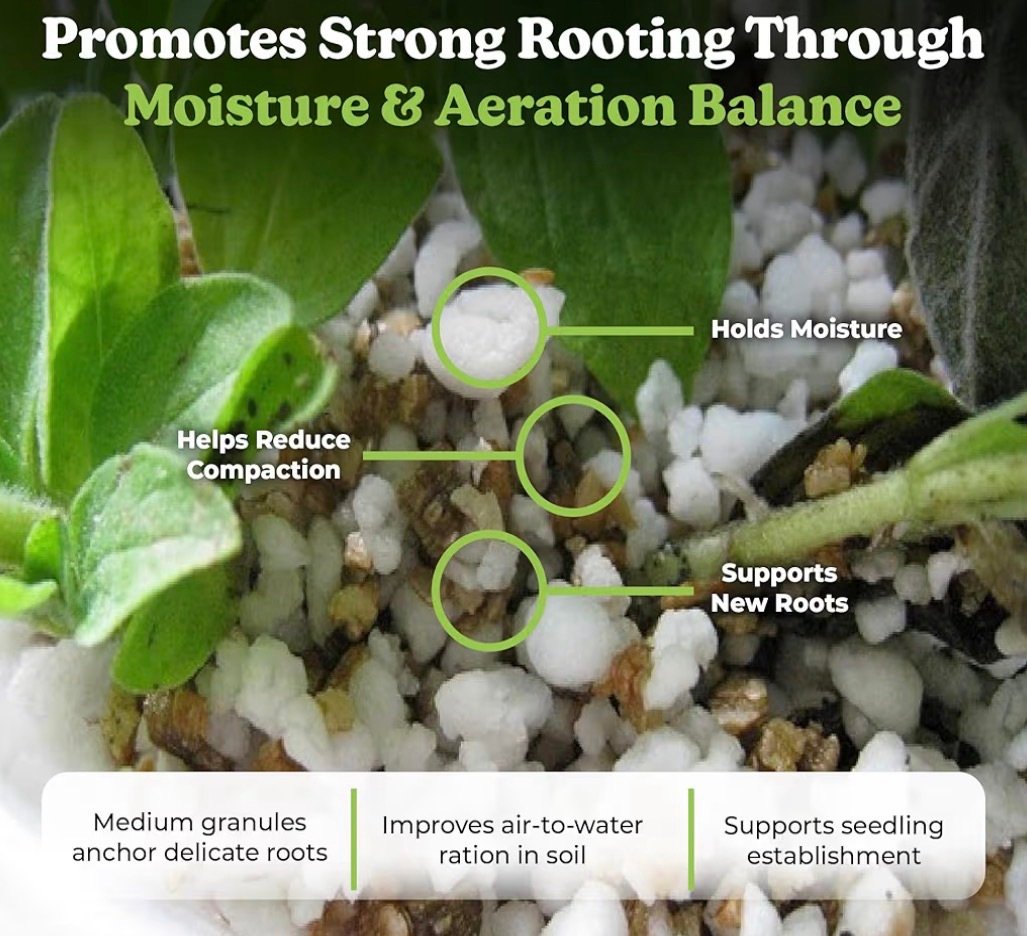
Perlite creates thousands of tiny air pockets throughout the rooting medium.
Those spaces improve drainage while still allowing enough moisture to remain available for developing roots.
Instead of sitting in soggy soil, the cutting receives a much healthier balance of air and water.
I’ve found this especially important when propagating woody shrubs and fruit plants that naturally take longer to develop roots.
I Rarely Use Perlite by Itself
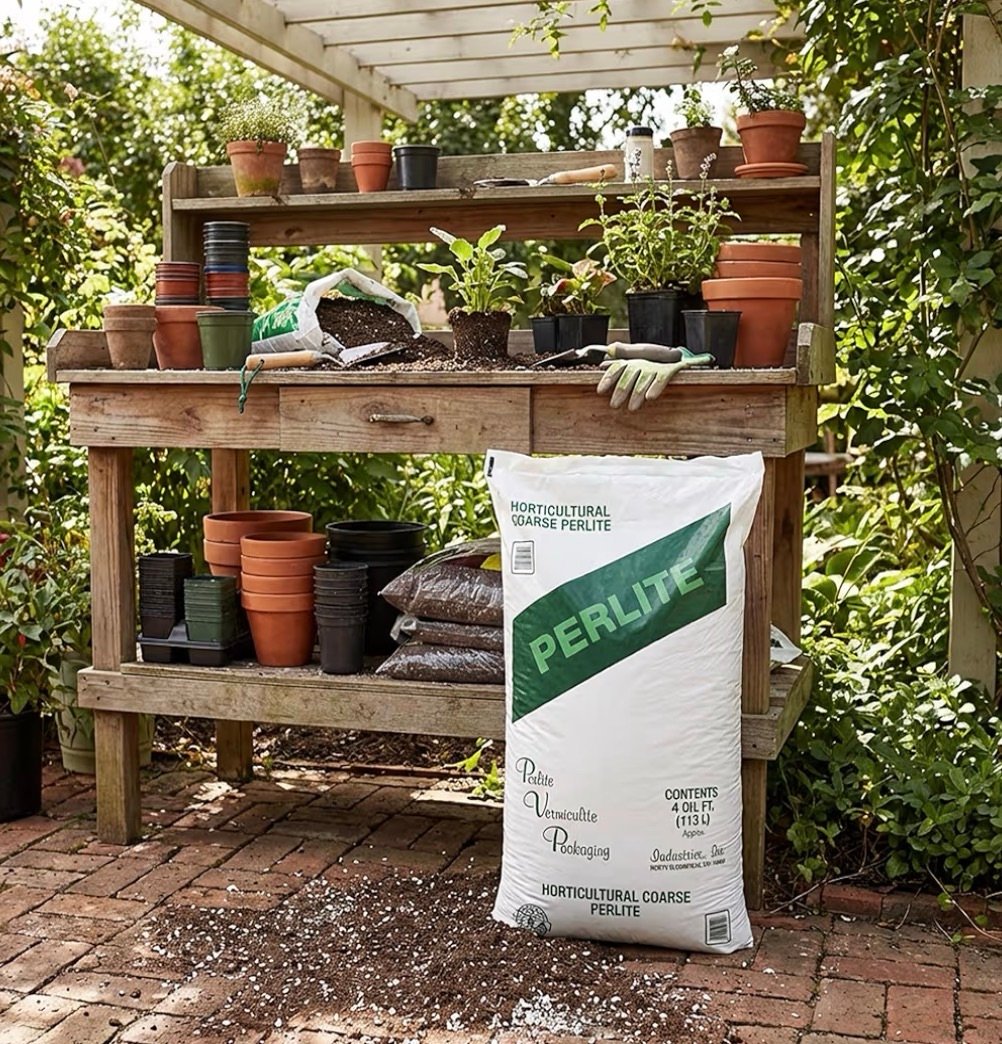
Although some gardeners root directly in straight perlite, I usually mix it with another propagation medium depending on the plant.
For example, I might combine it with a quality seed-starting mix for hydrangeas, blueberries, and roses.
Other times I’ll mix it with coco coir or sphagnum moss for species that appreciate a little more moisture.
Using a blend gives me much more control over drainage while still creating excellent conditions for new root growth.
That’s one reason I always keep a large bag of perlite nearby.
It’s one of the most versatile ingredients in my propagation area.
Plants That Love Perlite
Over the years I’ve successfully rooted countless plants using propagation mixes containing perlite.
Some of the biggest standouts include:
- Hydrangeas
- Roses
- Blueberries
- Elderberries
- Grapes
- Fig trees
- Lavender
- Rosemary
- Houseplants
- Fruit trees
- Ornamental shrubs
- Many hardwood and softwood cuttings
Whenever I’m rooting cuttings directly in a growing medium instead of water, there’s a very good chance perlite is part of the recipe.
How Perlite Helps Prevent Stem Rot
One of the biggest reasons I recommend perlite so often is because it helps solve one of the most common propagation problems.
Stem rot.
Fresh cuttings are incredibly vulnerable before they develop roots.
They’re sitting in a warm, moist environment, which is exactly the type of environment fungi and bacteria enjoy.
If the propagation medium also stays soaked for long periods, the risk becomes even greater.
Perlite helps break that cycle.
Because it creates so much air space throughout the mix, excess water drains away much more easily.
The stem isn’t constantly surrounded by soggy growing media, and the developing roots have access to the oxygen they need.
I’ve found that using a well-draining propagation mix is one of the easiest ways to improve rooting success, especially with woody shrubs that naturally take longer to root.
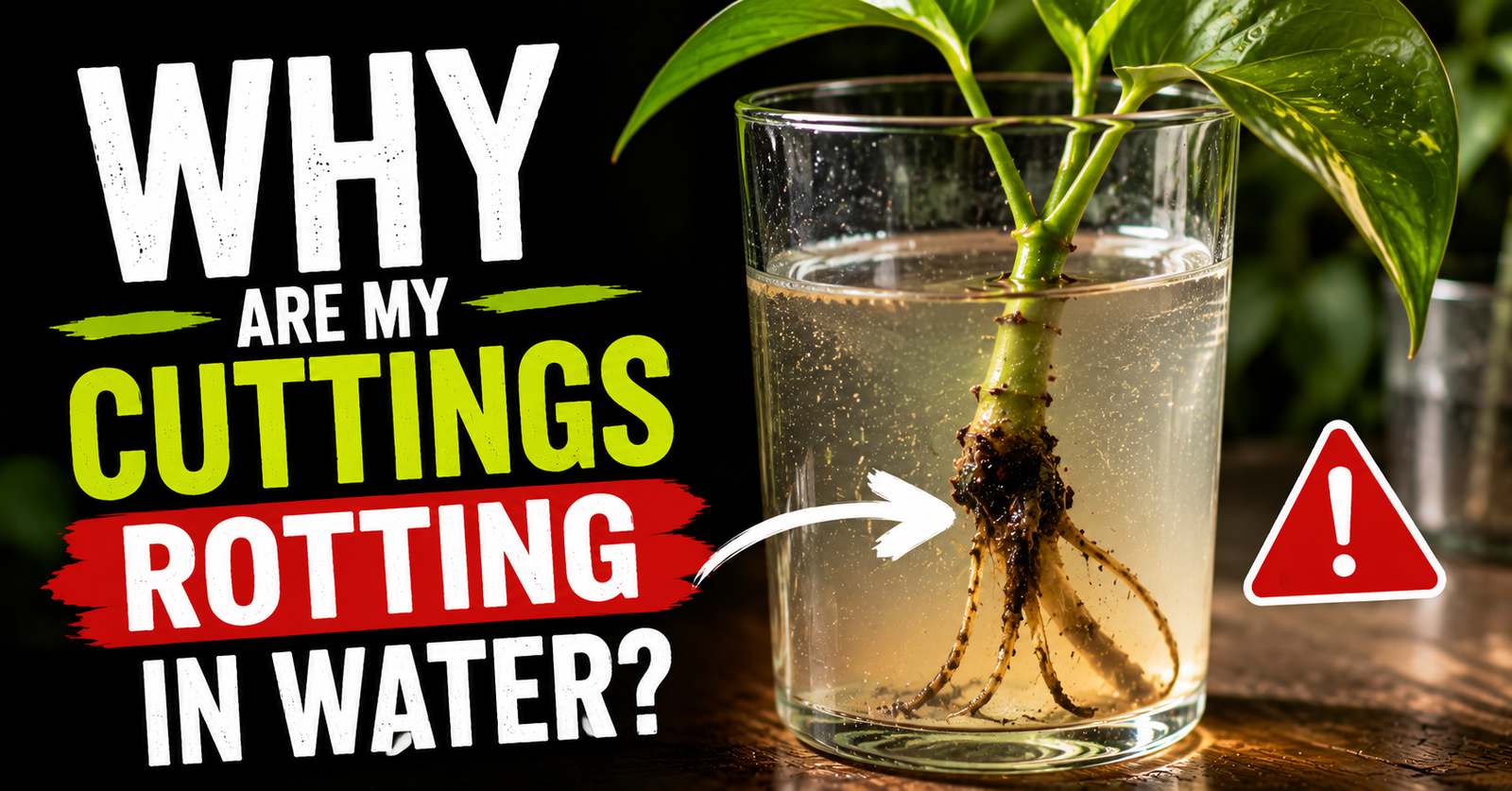
If stem rot has been giving you trouble, I also recommend reading why cuttings rot in water and how to prevent it. While that article focuses on water propagation, many of the same principles apply to cuttings rooted in growing media.
Perlite vs. Potting Soil
People often ask why they can’t simply stick a cutting into ordinary potting soil.
Sometimes you can.
Sometimes you’ll even have success.
The problem is consistency.
Most potting soils are designed to support established plants with healthy root systems.
Fresh cuttings don’t have that advantage.
Heavy potting mixes often stay wetter than necessary, reducing airflow around the stem and increasing the chances of rot.
Adding perlite changes the entire structure of the mix.
Instead of becoming dense and compacted, the growing medium stays lighter, drains better, and allows new roots to spread much more easily.
That’s exactly what I want when I’m trying to encourage root development instead of leafy growth.
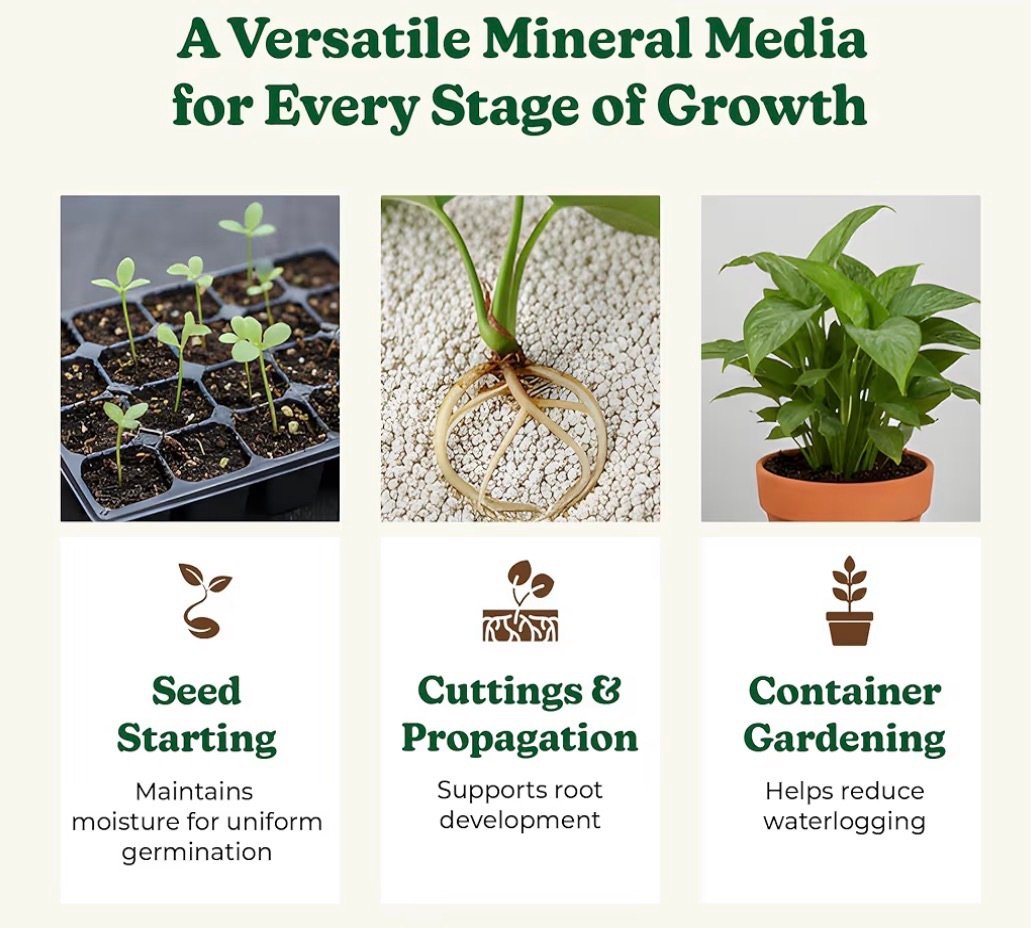
Perlite vs. Vermiculite
Although they’re often grouped together, perlite and vermiculite behave very differently.
Vermiculite holds considerably more moisture.
Perlite emphasizes drainage and aeration.
Neither is automatically better.
It depends on what you’re trying to accomplish.
When I’m propagating cuttings, I almost always lean toward perlite because preventing stem rot is usually my highest priority.
Once roots have developed and the plant is growing vigorously, moisture retention becomes less of a concern.
That’s why you’ll usually find much more perlite than vermiculite in my propagation mixes.
I Use Perlite for Much More Than Propagation
One reason I never mind buying the larger bags is because they never go to waste.
Throughout the year, I mix perlite into:
- Homemade potting soil
- Seed-starting mixes
- Raised bed containers
- Indoor houseplant soil
- Succulent mixes
- Cactus soil
- Vegetable containers
- Nursery pots for newly rooted cuttings
Improving drainage benefits far more than propagation.
It’s one of the simplest ways to create healthier root systems for many different types of plants.
That versatility makes a large bag much easier to justify than buying several smaller bags every season.
Pair Perlite With the Right Propagation Tools
Perlite gives cuttings an excellent rooting environment, but it’s only one piece of a successful propagation setup.
Before I even think about the growing medium, I make sure I’m starting with a clean, healthy cutting.
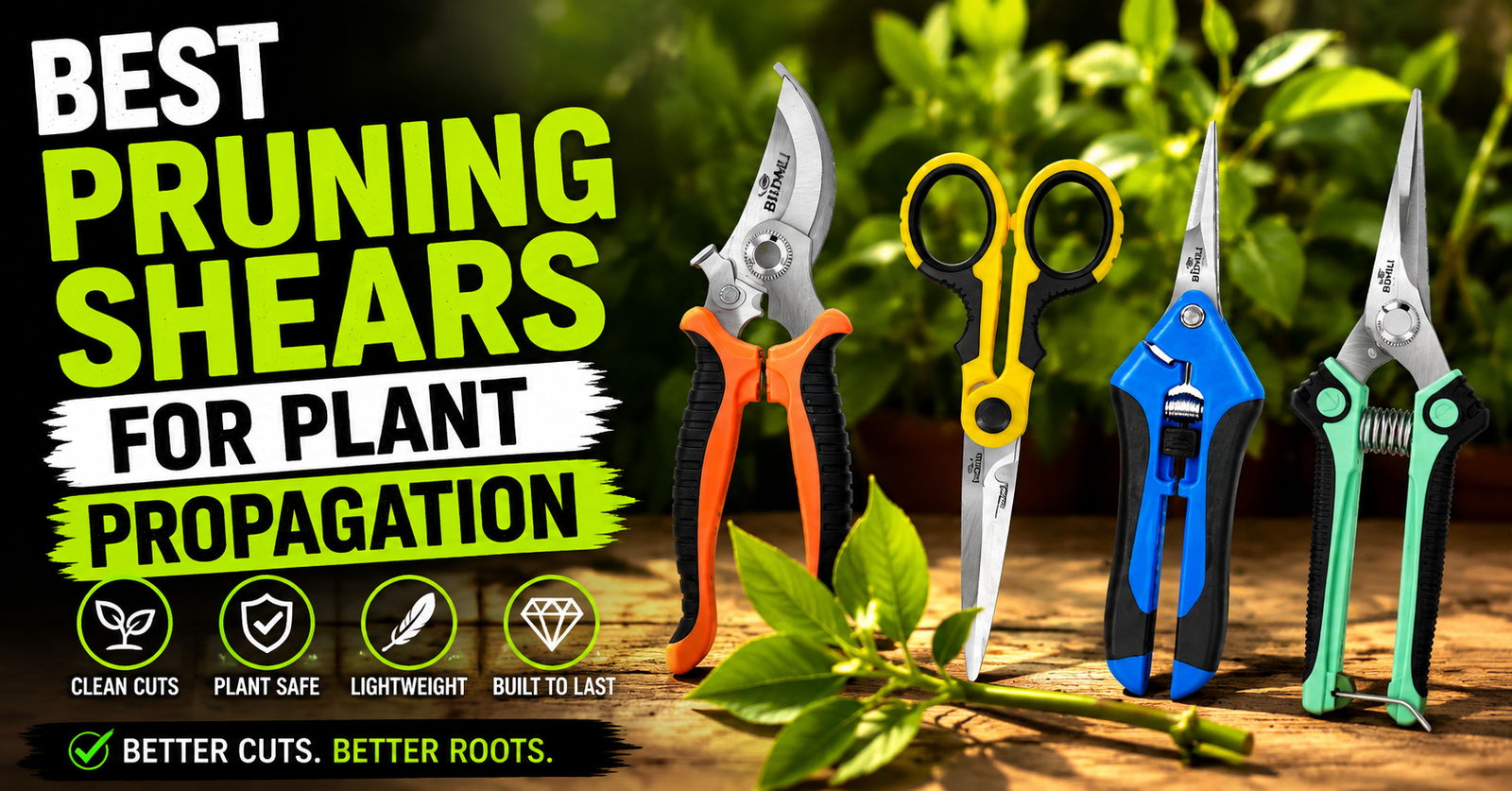
That’s why I always use my favorite pruning shears for plant propagation. A clean cut gives every stem the best possible chance to root.
For more challenging plants, I often combine perlite with rooting hormone as well.
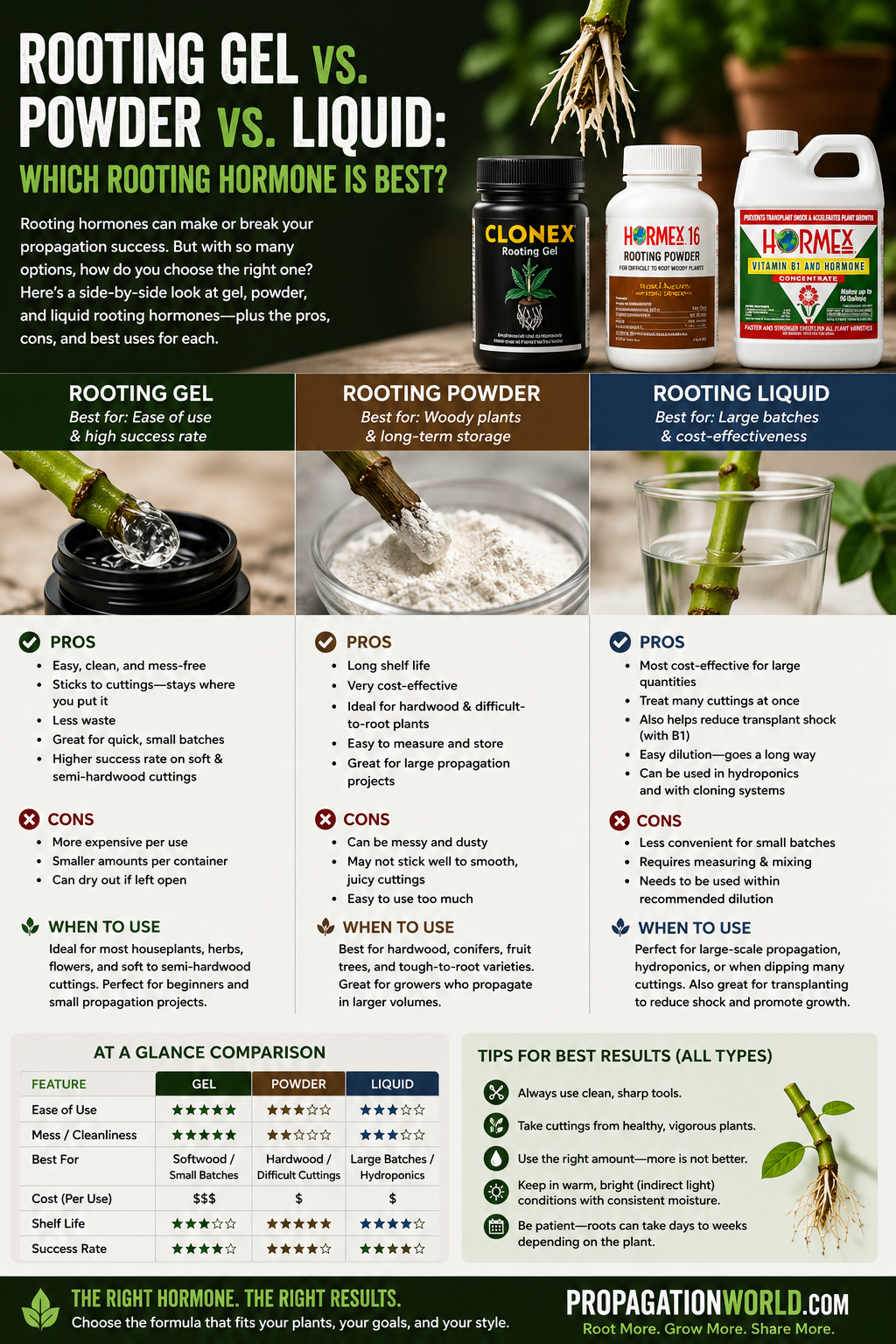
If you’re still deciding which type works best, my comparison of rooting gel, powder, and liquid rooting hormoneexplains where each one shines.
During cooler weather, I also place my propagation trays on the heat mat I use for plant propagation to keep the rooting medium at a more consistent temperature.
Those three tools, sharp pruning shears, a quality rooting hormone, and gentle bottom heat, work together with perlite to create an environment where cuttings have an excellent chance of succeeding.
Common Mistakes When Using Perlite
One mistake I see fairly often is assuming more water is always better.
Because perlite drains so well, some gardeners constantly add more water without checking whether the mix actually needs it.
The goal is lightly moist, not waterlogged.
Another mistake is using fine dust instead of horticultural-grade perlite.
Very small particles reduce the amount of air space you’re trying to create in the first place.
Finally, don’t forget to lightly dampen dry perlite before using it.
Dry perlite is extremely lightweight and can produce a surprising amount of dust while you’re mixing it.
A quick mist with water makes it much easier to work with while keeping the dust to a minimum.
Frequently Asked Questions
Can you root cuttings in 100% perlite?
Yes, and I’ve done it many times.
Some gardeners root almost everything in straight perlite because it provides outstanding drainage and excellent airflow around developing roots.
Personally, I use both methods.
For certain plants, straight perlite works extremely well.
For others, I prefer mixing it with a quality seed-starting mix, coco coir, or sphagnum moss to hold a little more moisture.
The nice thing about perlite is its flexibility.
You can easily adjust your propagation mix depending on the plant you’re working with.
Does perlite help cuttings root faster?
By itself, perlite doesn’t magically create roots faster.
What it does is create better conditions for roots to develop.
Healthier oxygen levels, improved drainage, and reduced chances of stem rot all help the cutting focus its energy on producing roots instead of simply surviving.
In my experience, healthier conditions usually lead to healthier, more vigorous root systems.
Is coarse perlite better than fine perlite?
For propagation, I generally prefer coarse horticultural perlite.
The larger particles create more air space throughout the rooting medium, which improves drainage and oxygen availability around the stem.
Fine perlite certainly has its place, but for most propagation projects, I consistently reach for the coarser grades.
Should I rinse perlite before using it?
Sometimes.
Fresh bags often contain a little loose dust from shipping.
If I’m working indoors, I’ll usually dampen or lightly rinse the perlite before mixing it into my propagation media.
That simple step keeps dust from becoming airborne and makes it much easier to work with.
Can I reuse perlite?
Yes, provided it’s clean.
If the previous propagation project was healthy and disease-free, I’ll often wash the perlite thoroughly, allow it to dry, and use it again.
If the cuttings suffered from rot, fungal disease, or pests, I don’t risk it.
Fresh perlite is inexpensive compared to losing an entire tray of valuable cuttings.
Is perlite better than rooting in water?
They’re simply different methods.
Water propagation lets you easily watch roots develop, which makes it popular with beginners and many houseplants.
Perlite propagation often produces stronger root systems that transition into soil more easily because the developing roots are already growing in an airy solid medium.
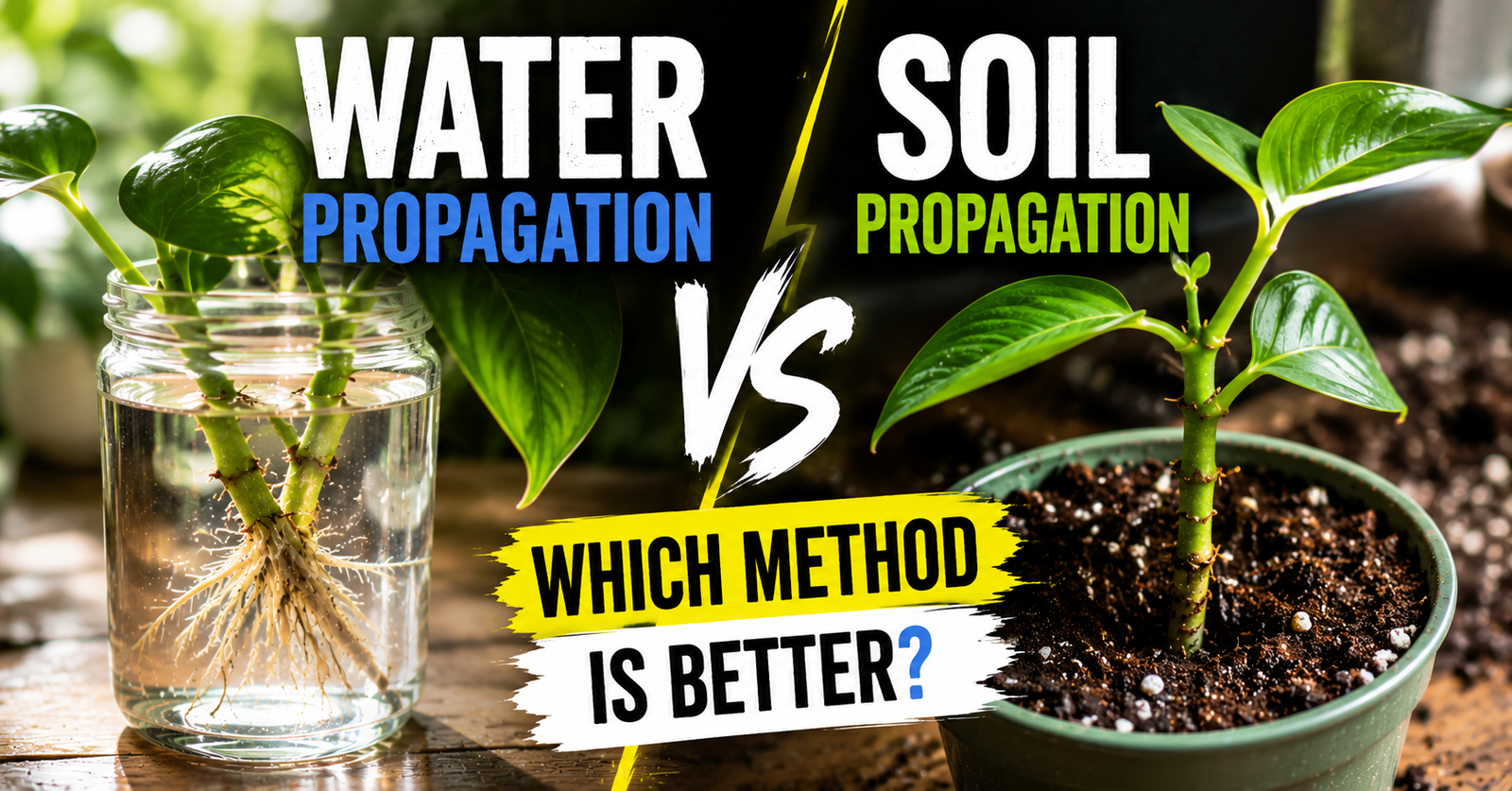
If you’re trying to decide which approach fits your plant, I compare the strengths and weaknesses of both in Water Propagation vs. Soil Propagation… Which Method Is Better?.
Why Perlite Always Has a Place in My Propagation Area
If I had to narrow my propagation supplies down to just a handful of essentials, perlite would easily make the list.
It’s affordable.
It’s lightweight.
It’s easy to work with.
Most importantly, it creates the kind of rooting environment that helps cuttings succeed instead of struggle.
I’ve used it while propagating common houseplants, herbs, flowering shrubs, berry bushes, fruit trees, and many other plants over the years, and I still reach for it almost every week.
Whether I’m mixing my own propagation blend or rooting directly in perlite, it has become one of those products I simply don’t like being without.
If you’re putting together your first propagation setup or looking for an easy way to improve drainage around new cuttings, I don’t think you’ll regret keeping a large bag on hand.
See the Horticultural Perlite I Use for Nearly Every Propagation Project
It’s one of those gardening supplies that keeps proving its value long after you bring it home.
Perlite Is Just One Part of the Equation
Perlite creates an excellent rooting environment, but successful propagation depends on much more than choosing the right growing medium. Learning how moisture, temperature, humidity, lighting, and healthy cuttings work together can dramatically improve your success rate. My Complete Guide to Propagating Plant Cuttings ties every part of the propagation process together in one place.
About the Author
Daxon Weaver is the founder of PropagationWorld, where he shares practical propagation methods, honest product reviews, and years of hands-on experience rooting everything from common houseplants to fruit trees and ornamental shrubs. After propagating thousands of cuttings, he enjoys helping gardeners build simple propagation setups that consistently produce healthier roots and stronger plants.