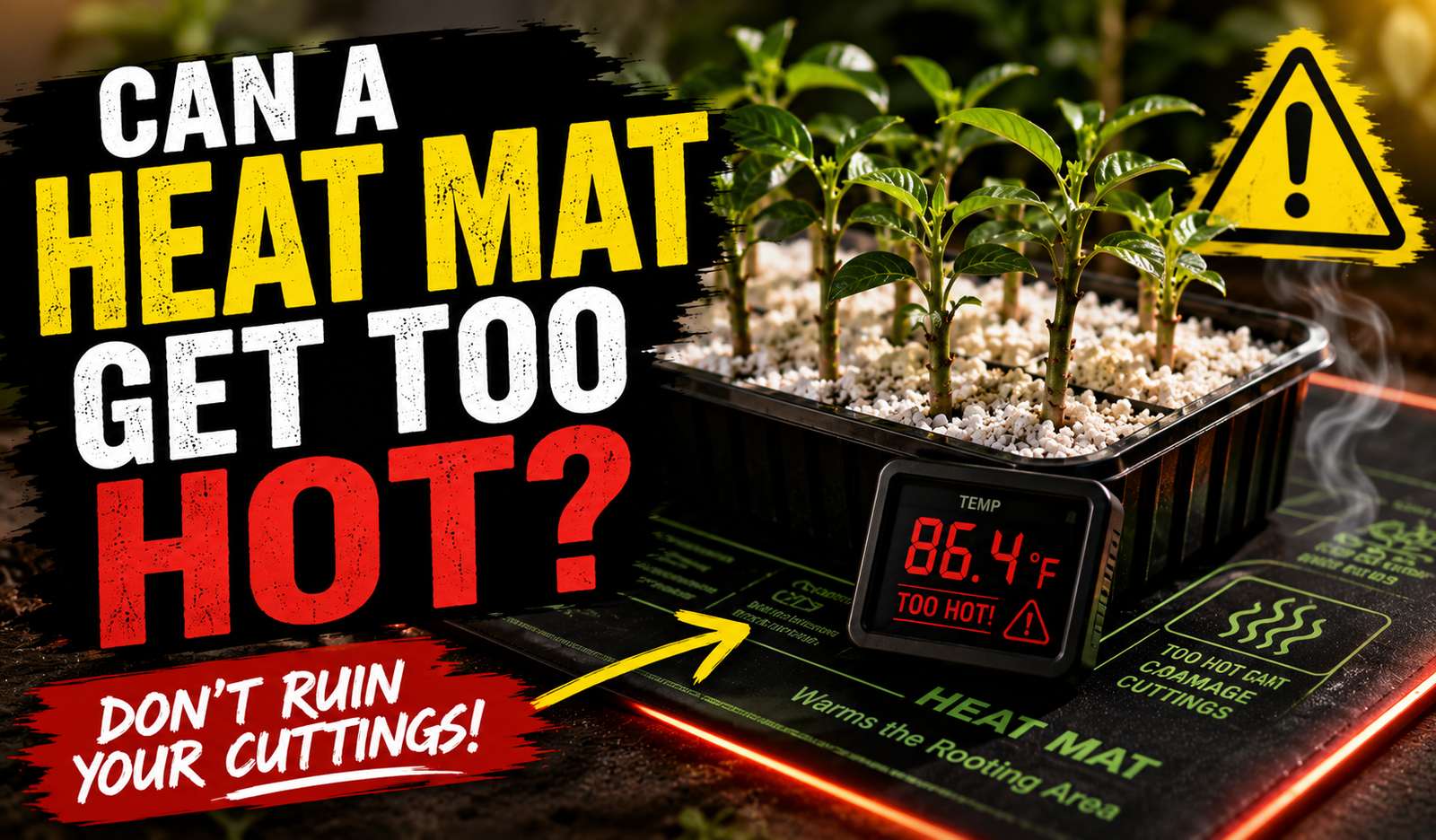
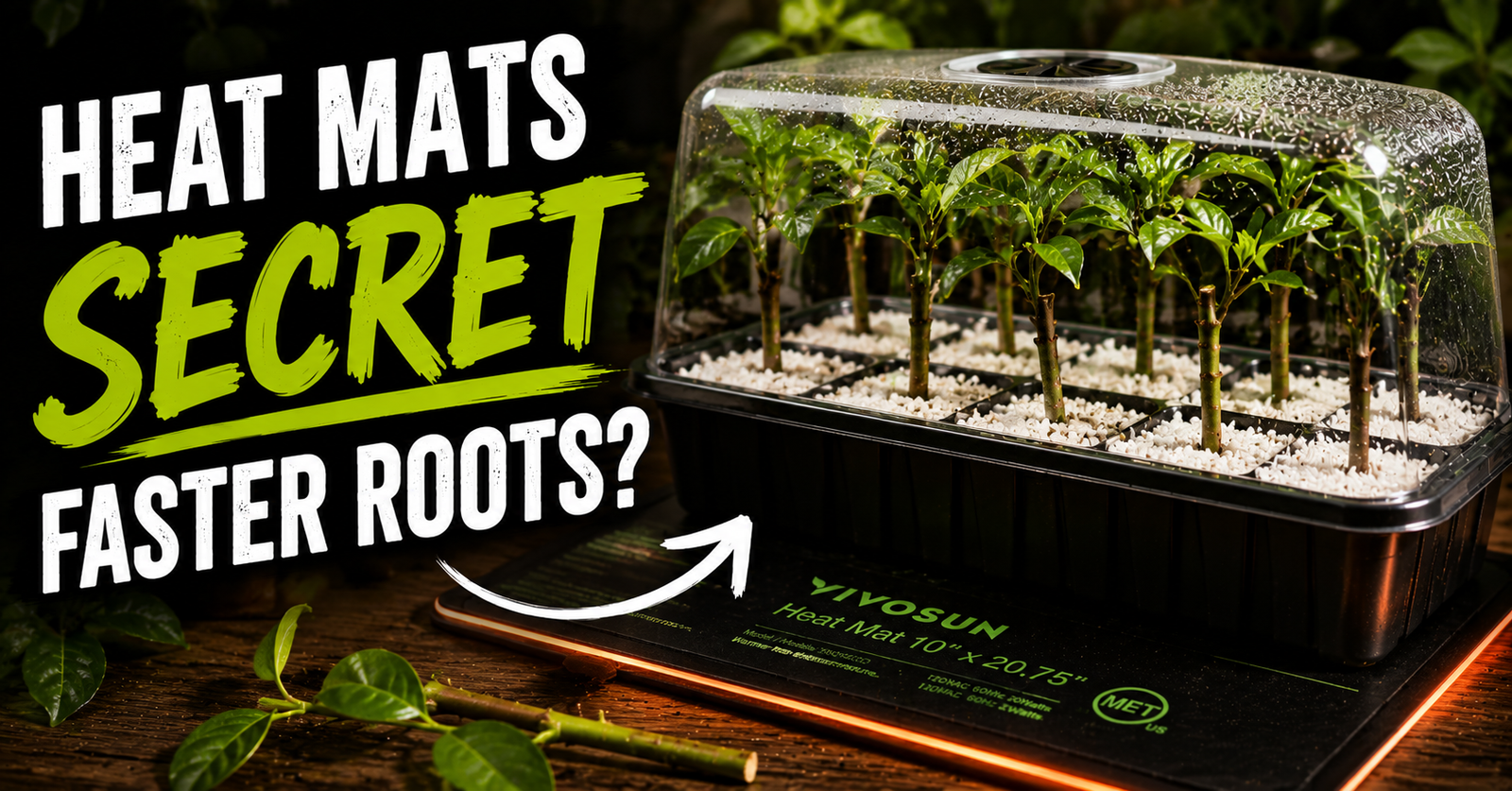
A propagation heat mat is designed to help cuttings root, but like many gardening tools, it can cause problems if it’s used the wrong way.
I’ve seen gardeners become nervous about using bottom heat because they’re worried they’ll “cook” their cuttings.
It’s a fair concern.
Fresh cuttings are delicate, and the last thing anyone wants is to damage them before roots even have a chance to form.
The good news is that overheating usually isn’t caused by the heat mat alone.
More often, it’s the result of several small factors combining together.
A warm room.
Direct afternoon sun.
A propagation tray sitting on a windowsill.
A heat mat running without a thermostat.
Individually, those conditions might not be a problem.
Stack them together, and the rooting medium can become much warmer than you intended.
That’s why I think understanding how heat mats work is just as important as owning one.
Heat Mats Are Meant to Warm, Not Heat
One misconception I hear quite a bit is that a propagation heat mat should feel hot when you touch it.
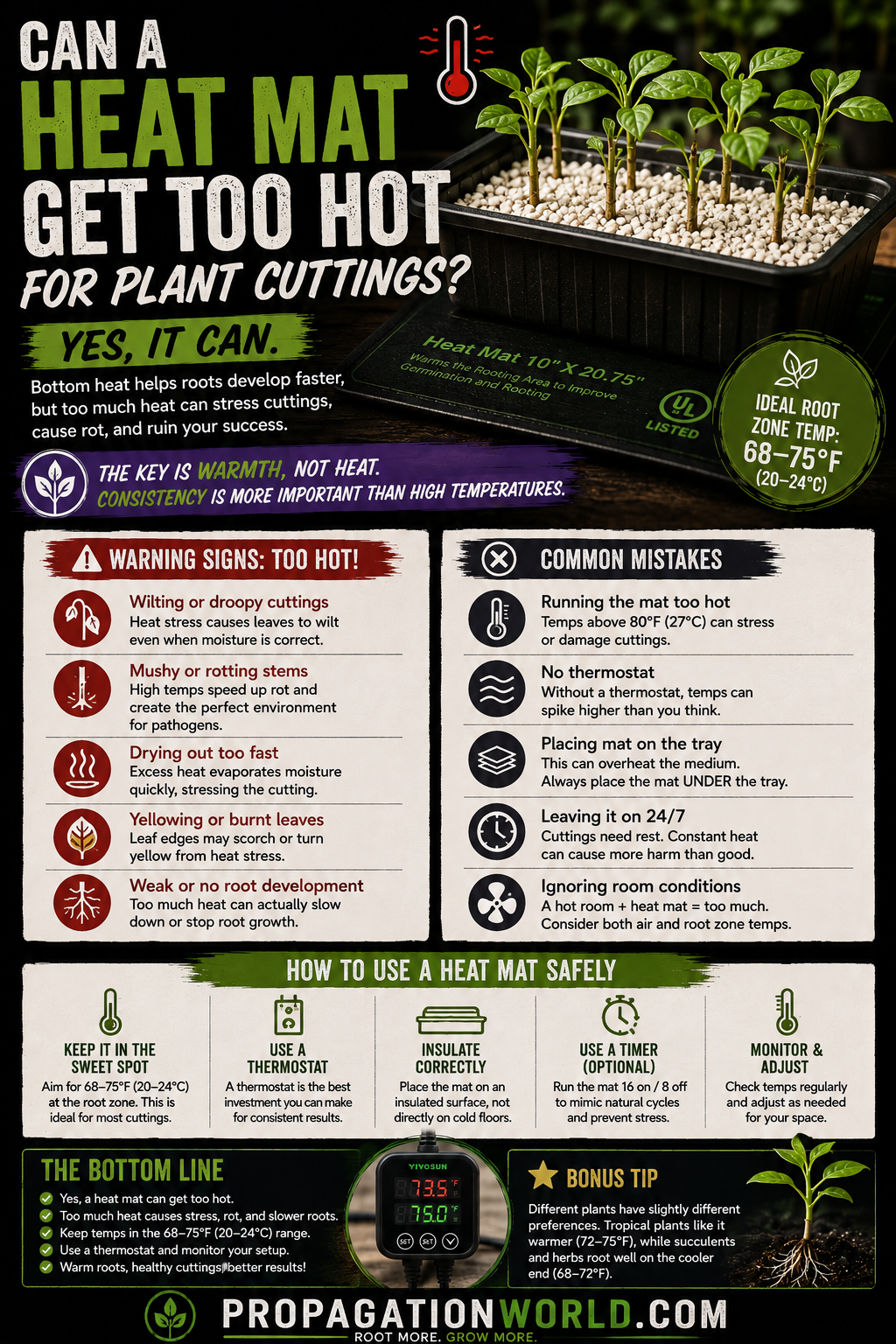
In reality, most quality heat mats only raise the temperature of the rooting medium by several degrees above the surrounding air.
That’s exactly what they’re supposed to do.
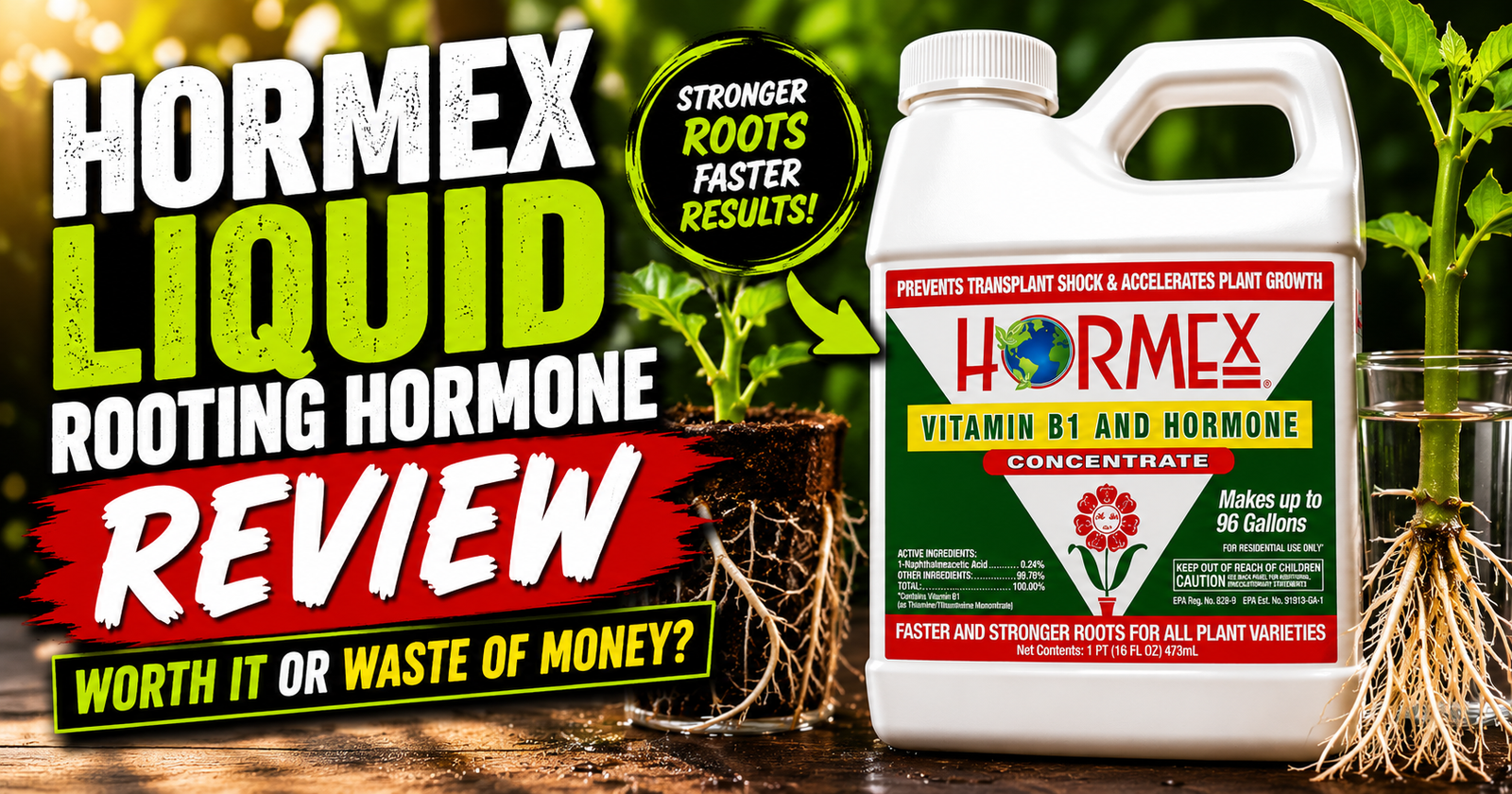
They’re designed to provide gentle bottom heat, not create a tropical sauna underneath your propagation tray. The same principle applies to seedling heat mats: consistent bottom heat should support propagation without excessively raising the root-zone temperature.
When used correctly, the warmth is subtle.
In fact, if the room is already comfortably warm, you may barely notice the heat mat doing anything at all.
That’s perfectly normal.
The Real Risk Comes From Poor Temperature Control
I’ve found that the biggest overheating problems usually happen when gardeners don’t realize how many heat sources are affecting the tray at once.
Imagine a propagation tray sitting in a sunny window during the middle of summer.
The sunlight is warming the tray.
The room itself is already warm.
Then a heat mat continues adding warmth underneath.
Before long, the root zone may be much warmer than expected.
That’s why I prefer creating steady conditions instead of constantly adding more heat.
Consistency almost always produces better results than pushing temperatures to the limit.
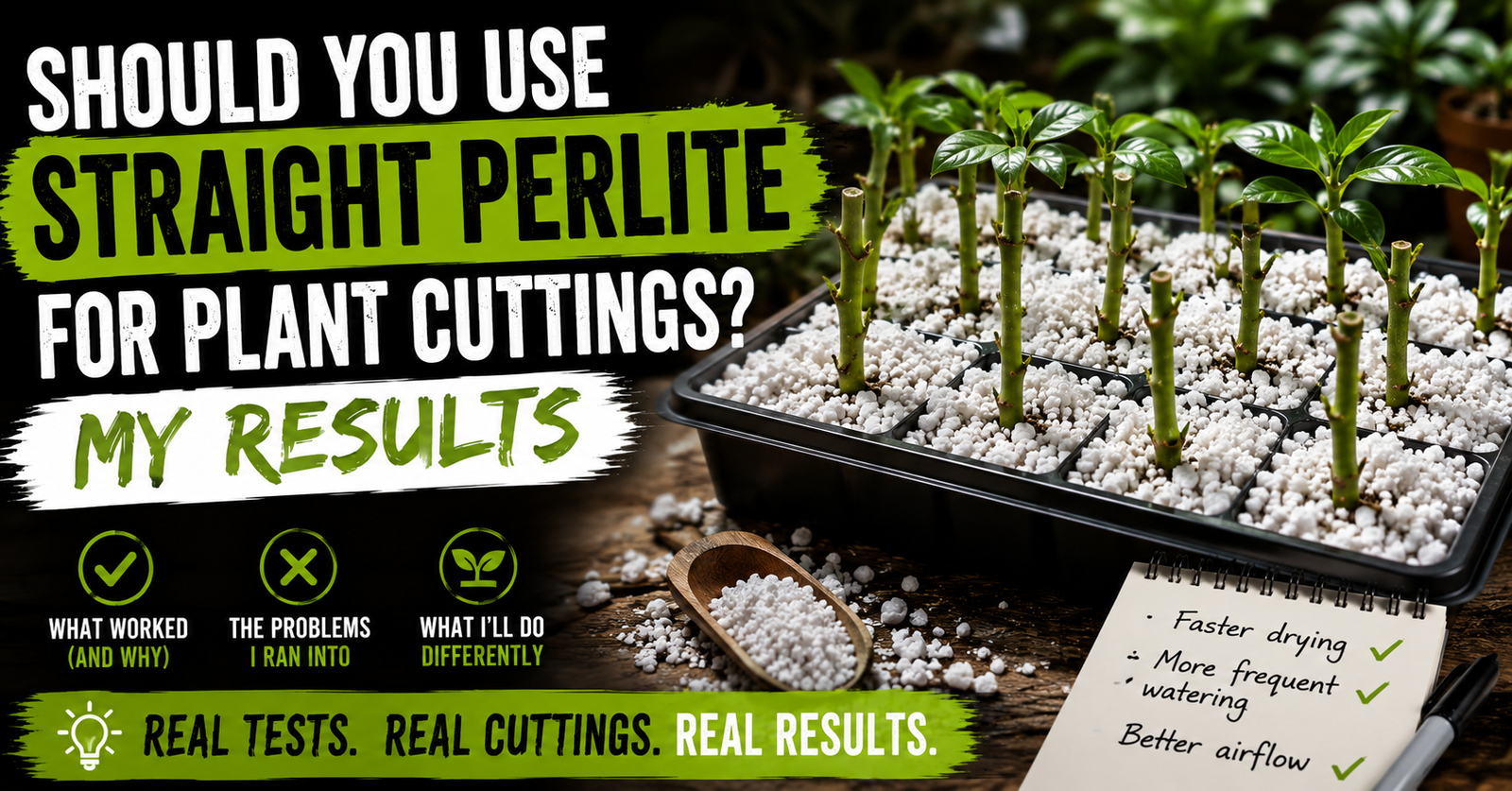
Why I Prefer a Thermostat
For me, a thermostat isn’t just a convenience.
It’s peace of mind.
Instead of wondering whether the propagation tray is getting too warm while I’m away, I know the temperature is being regulated automatically.
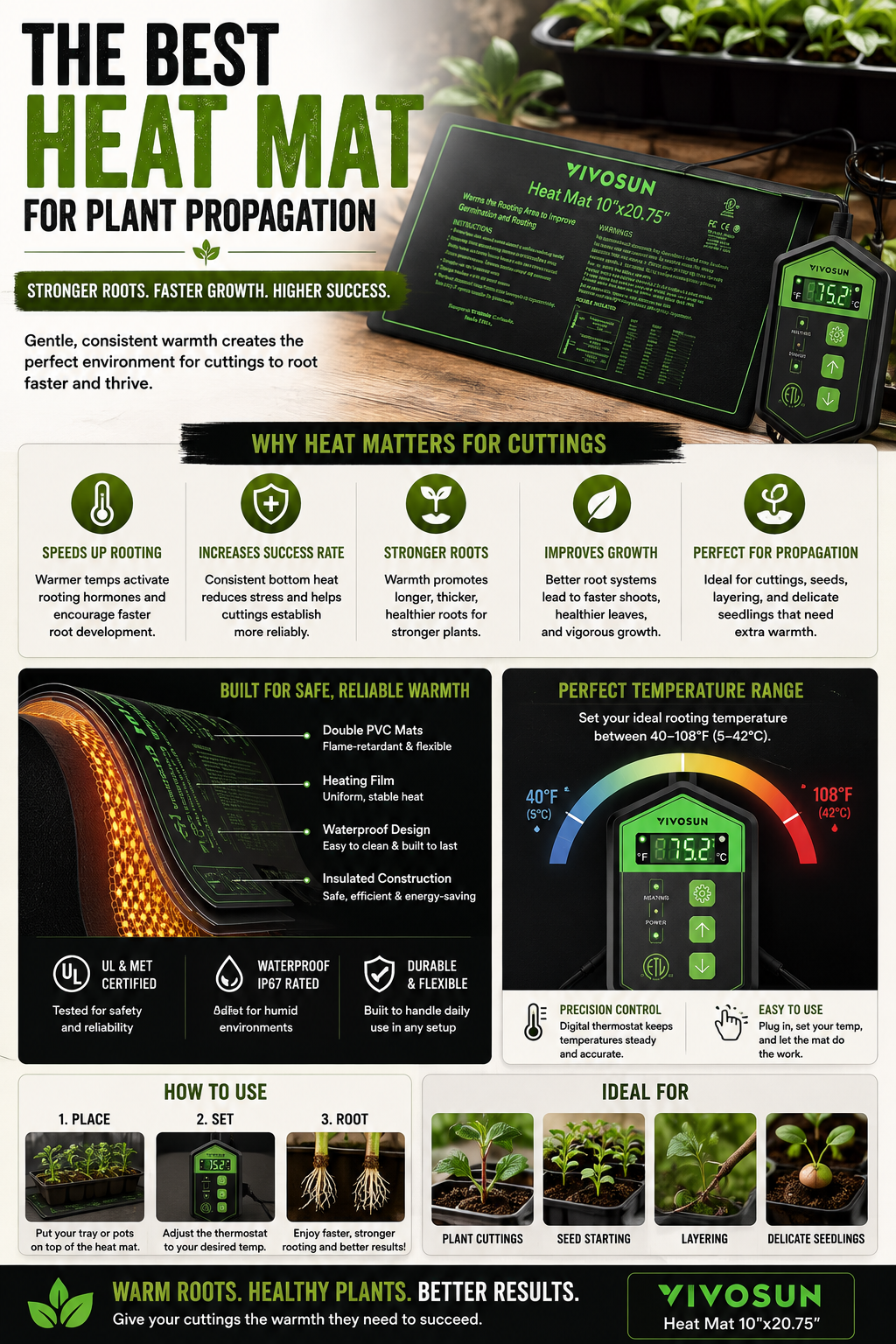
That’s one of the biggest reasons I recommend the propagation heat mat and thermostat combination I use myself.
The thermostat helps prevent unnecessary temperature swings and removes much of the guesswork that comes with propagation during cooler months.
It allows me to focus on healthy cuttings instead of constantly checking whether the rooting medium feels warm enough or too warm.
Plants Usually Give You Clues
One thing I’ve learned is that plants rarely keep problems completely hidden.
If the propagation setup is becoming too warm, the cuttings often begin giving you small clues before serious damage occurs.
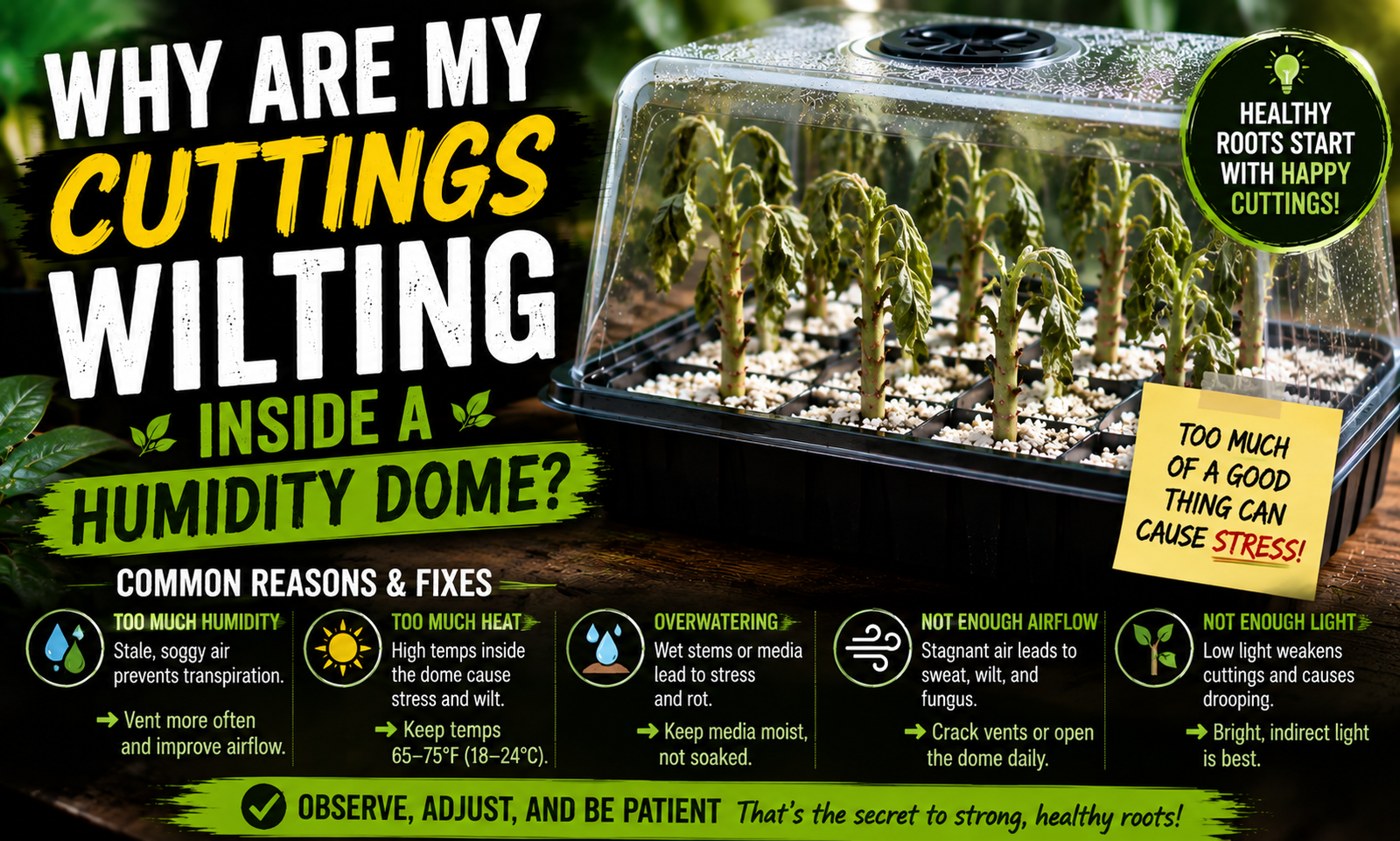
Leaves may wilt even though the propagation mix is still moist. Moist soil does not rule out other causes, and wilting inside a humidity dome explains what to check next.
The rooting medium may dry much faster than normal.
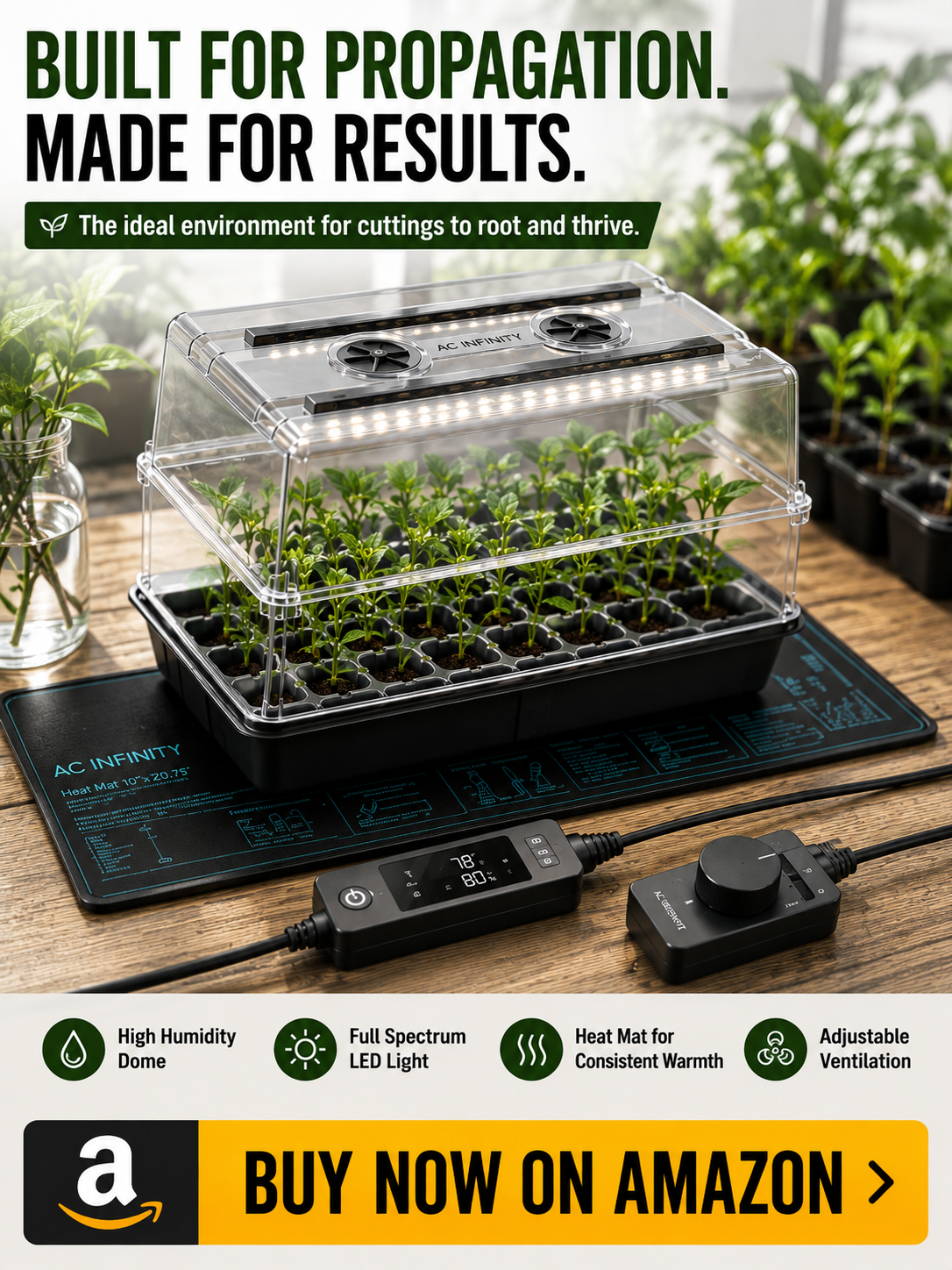
Condensation inside a humidity dome may become excessive during the warmest part of the day. If excess condensation persists, an adjustable humidity dome can help you reassess humidity around the cuttings.
Those little observations tell me it’s time to step back and evaluate the entire environment instead of automatically assuming the cuttings simply need more water.
Paying attention to those early warning signs has helped me avoid far more problems than trying to guess the exact temperature by touch alone.
Sometimes the Solution Is Surprisingly Simple
One thing I appreciate about propagation is that many problems don’t require expensive fixes.
If a propagation tray is getting too warm, I don’t immediately buy new equipment.
I start by looking at the setup.
Is the tray sitting in direct afternoon sunlight?
Could it be moved a few feet away from the window?
Is the room itself much warmer than it was a few weeks ago?
Would opening a vent or improving airflow help?
Small adjustments often solve the problem without changing the rest of the propagation system.
I’ve learned not to assume the heat mat is automatically at fault.
Most of the time, it’s the combination of conditions that needs attention.
Different Plants Have Different Comfort Zones
Another thing worth remembering is that not every plant responds to warmth the same way.
Many tropical houseplants appreciate warmer root-zone temperatures than hardwood cuttings collected during winter dormancy.
Some herbs root surprisingly well under a wide range of conditions.
Certain woody shrubs are much more particular.
That’s one reason I avoid chasing one “perfect” temperature for every propagation project.
Instead, I try to understand what the plant naturally prefers and then create conditions that stay reasonably close to that environment.
That approach has been much more successful than treating every cutting exactly the same.
My Goal Isn’t Speed
If you’ve read several of my propagation articles, you’ve probably noticed a common theme.
I’m rarely trying to make plants root as fast as possible.
I’m trying to help them root as consistently as possible.
There’s a big difference.
I’ve never been disappointed because roots appeared a few days later than expected.
I have been disappointed when rushing the process led to weaker plants or unnecessary losses.
Steady conditions usually produce healthier roots, and healthier roots almost always become stronger plants after transplanting.
That’s the outcome I care about.
The Heat Mat Is Only Part of the Setup
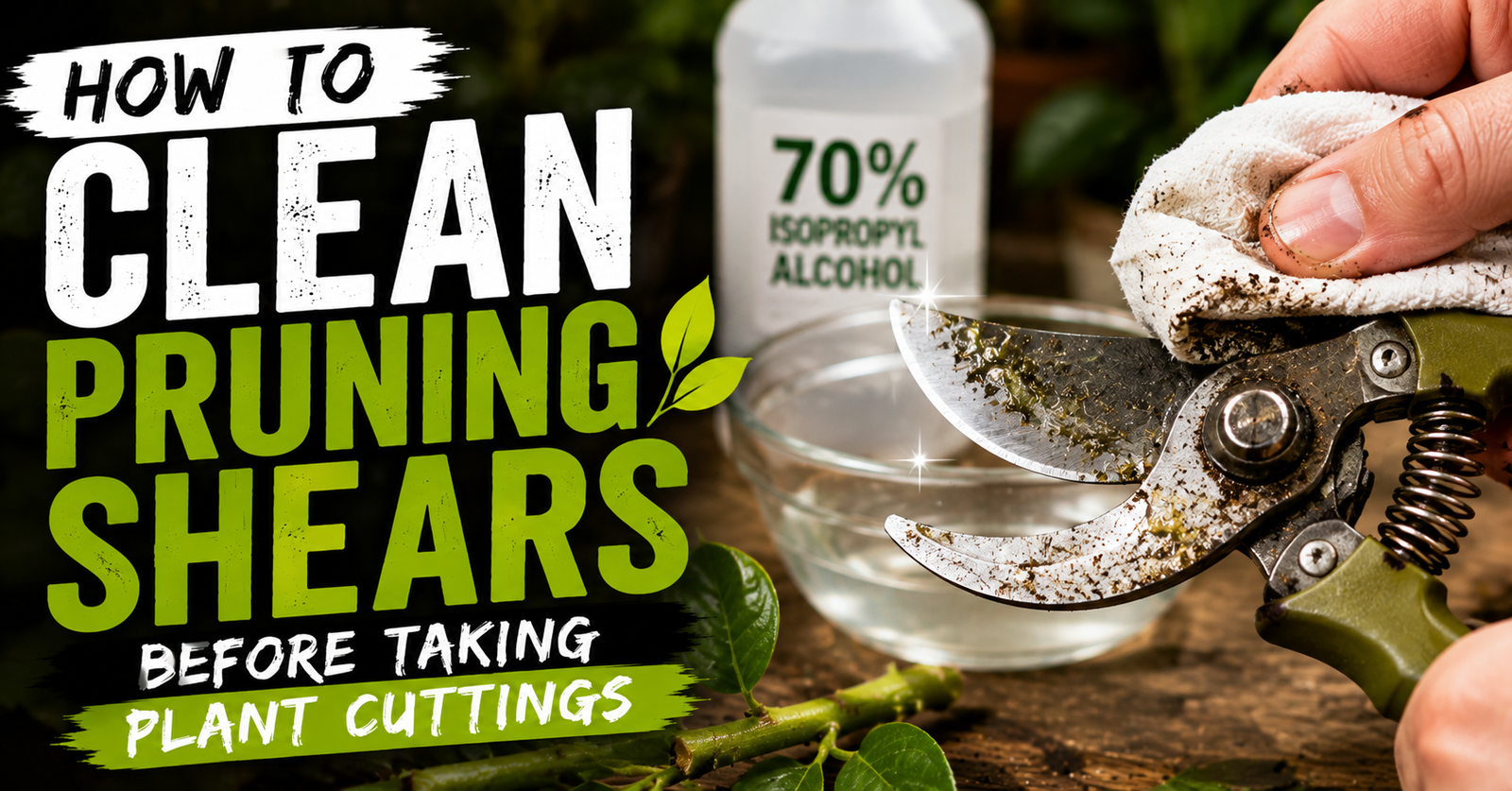
A propagation heat mat can create excellent conditions beneath the tray, but it can’t compensate for everything else.
If the rooting medium stays waterlogged, problems can still develop.
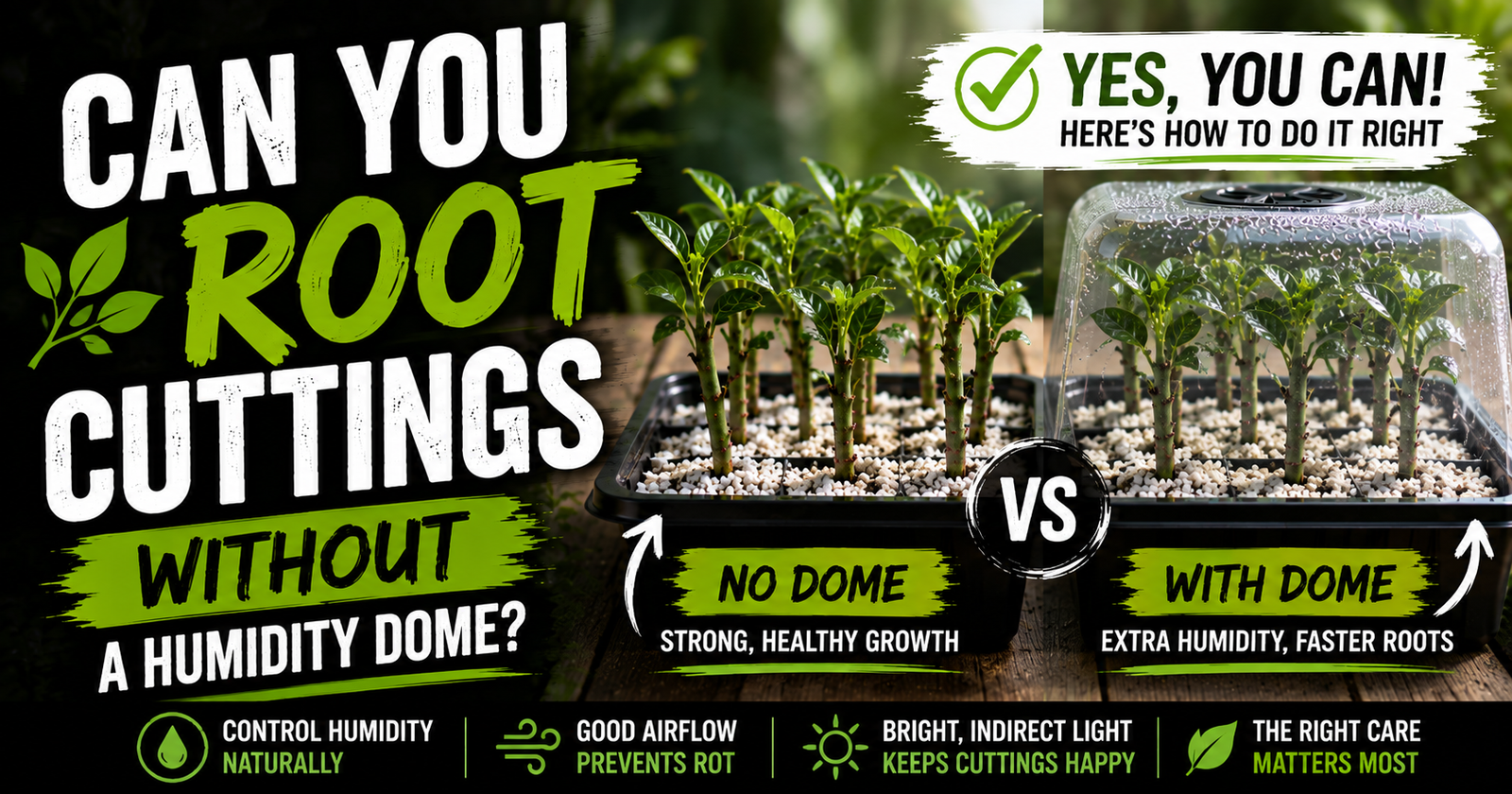
If humidity is extremely low, leaves may still lose moisture faster than the cutting can replace it. Understanding using a humidity dome effectively can help balance moisture retention without adding unnecessary heat.
If the cutting itself wasn’t healthy when it was taken, bottom heat won’t change that.
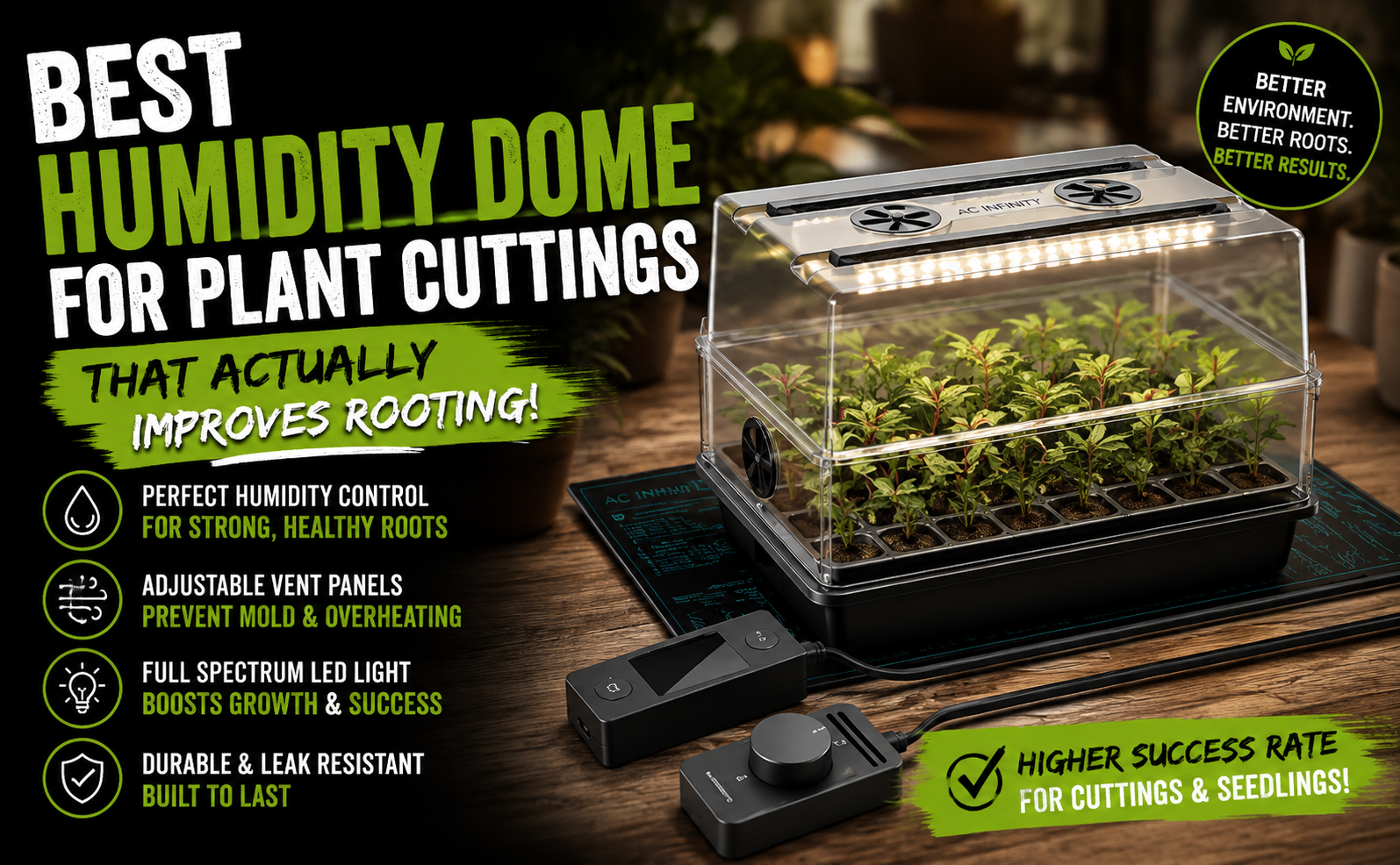
For slower-rooting shrubs and fruit plants, I usually combine gentle bottom heat with the humidity dome I rely on most for propagation because together they create a much more stable environment while roots are forming.
Each tool has its own purpose, and they work best when they’re supporting each other rather than trying to solve every problem on their own.
Is a Heat Mat Still Worth Buying?
Without question.
The possibility of using one incorrectly doesn’t make it a bad tool.
It simply means it’s worth understanding how to use it properly.
That’s true for almost every piece of gardening equipment.
Once I started using a thermostat-controlled setup and paying closer attention to the overall environment instead of just the heat mat itself, overheating stopped being something I worried about.
If you’re looking for a dependable setup that’s easy to manage, I’d recommend checking out the heat mat and digital thermostat I use on Amazon.
It has become one of the most dependable pieces of equipment in my propagation area because it helps me maintain stable conditions instead of constantly guessing.
Frequently Asked Questions
Can a propagation heat mat damage plant cuttings?
It can, but it’s uncommon when the mat is used correctly.
Most problems happen because the propagation tray becomes too warm from several heat sources working together rather than the heat mat by itself.
Using a thermostat, avoiding direct afternoon sun, and checking the propagation mix regularly greatly reduce the chances of overheating.
Should the heat mat feel hot to the touch?
Not really.
Many people expect a propagation heat mat to feel almost like an electric blanket.
Most quality mats produce gentle warmth instead.
Their purpose isn’t to become hot.
Their job is to raise the root-zone temperature enough to encourage healthy root development.
If it feels only slightly warm, that’s often exactly how it’s supposed to perform.
Can I leave my propagation tray on the heat mat all day?
Yes.
In fact, that’s how I use mine.
The key is allowing the thermostat to regulate the temperature rather than constantly turning the heat mat on and off yourself.
Stable conditions are usually much better for developing roots than temperatures that change dramatically throughout the day.
What happens if the propagation mix gets too warm?
The first thing you’ll usually notice isn’t burned plants.
More commonly, the propagation mix dries much faster than expected.
Leaves may begin wilting even though you recently watered.
The cuttings can also become stressed because they’re losing moisture faster than they can replace it.
Those early warning signs tell me it’s time to evaluate the entire propagation setup before making any major changes.
Can I use a heat mat outdoors?
Yes, although I rarely find it necessary during warm weather.
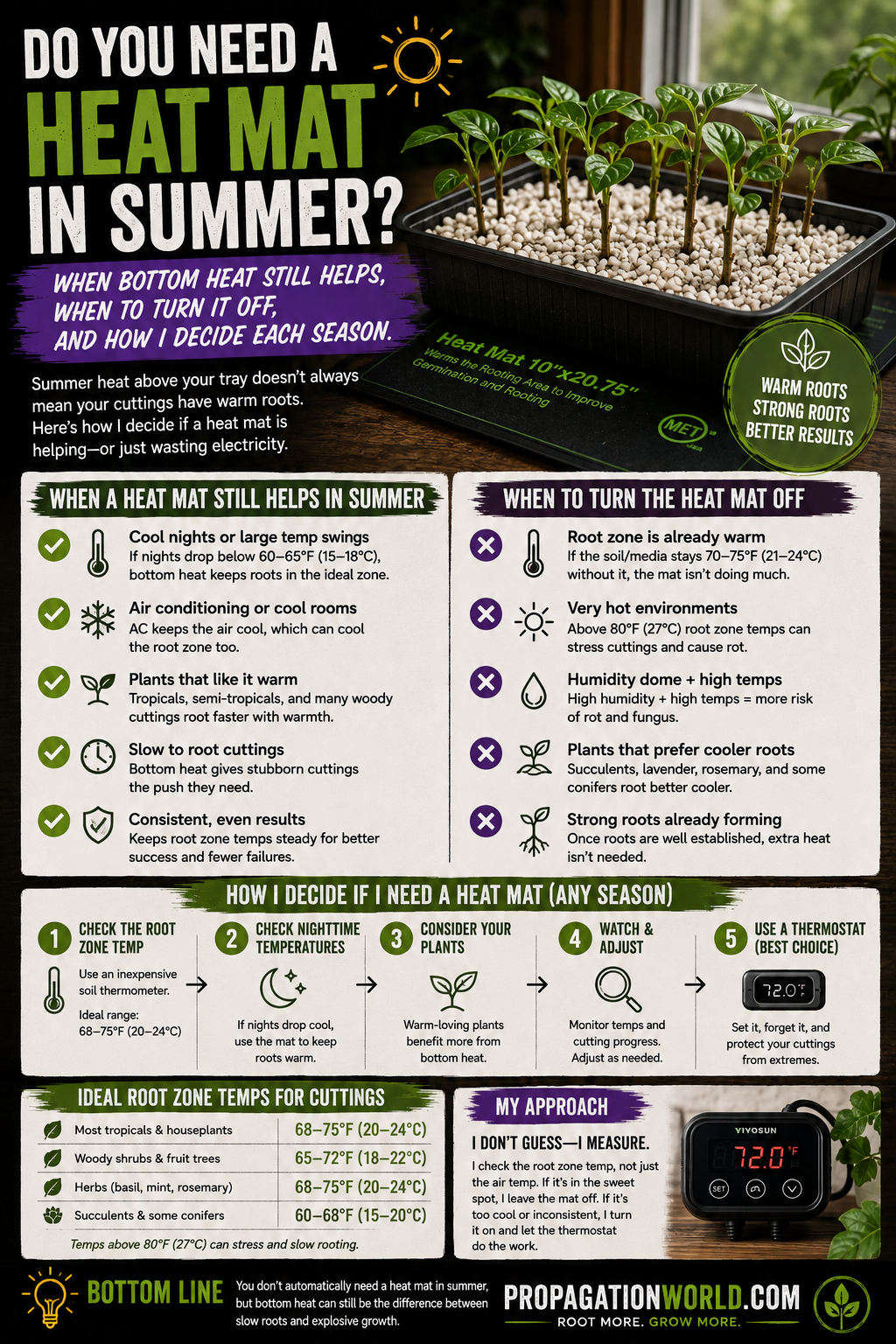
If outdoor temperatures are already ideal for propagation, the additional bottom heat often provides very little benefit. Outdoor conditions can change the decision entirely, so this summer heat mat guidance explains when extra warmth is useful and when it is not: summer heat mat guidance.
I get the most value from my heat mat indoors or during cooler seasons when maintaining a consistent root-zone temperature is much more difficult.
Healthy Roots Like Stable Conditions
One thing propagation has reinforced for me over the years is that plants don’t usually need perfect conditions.
They need consistent ones.
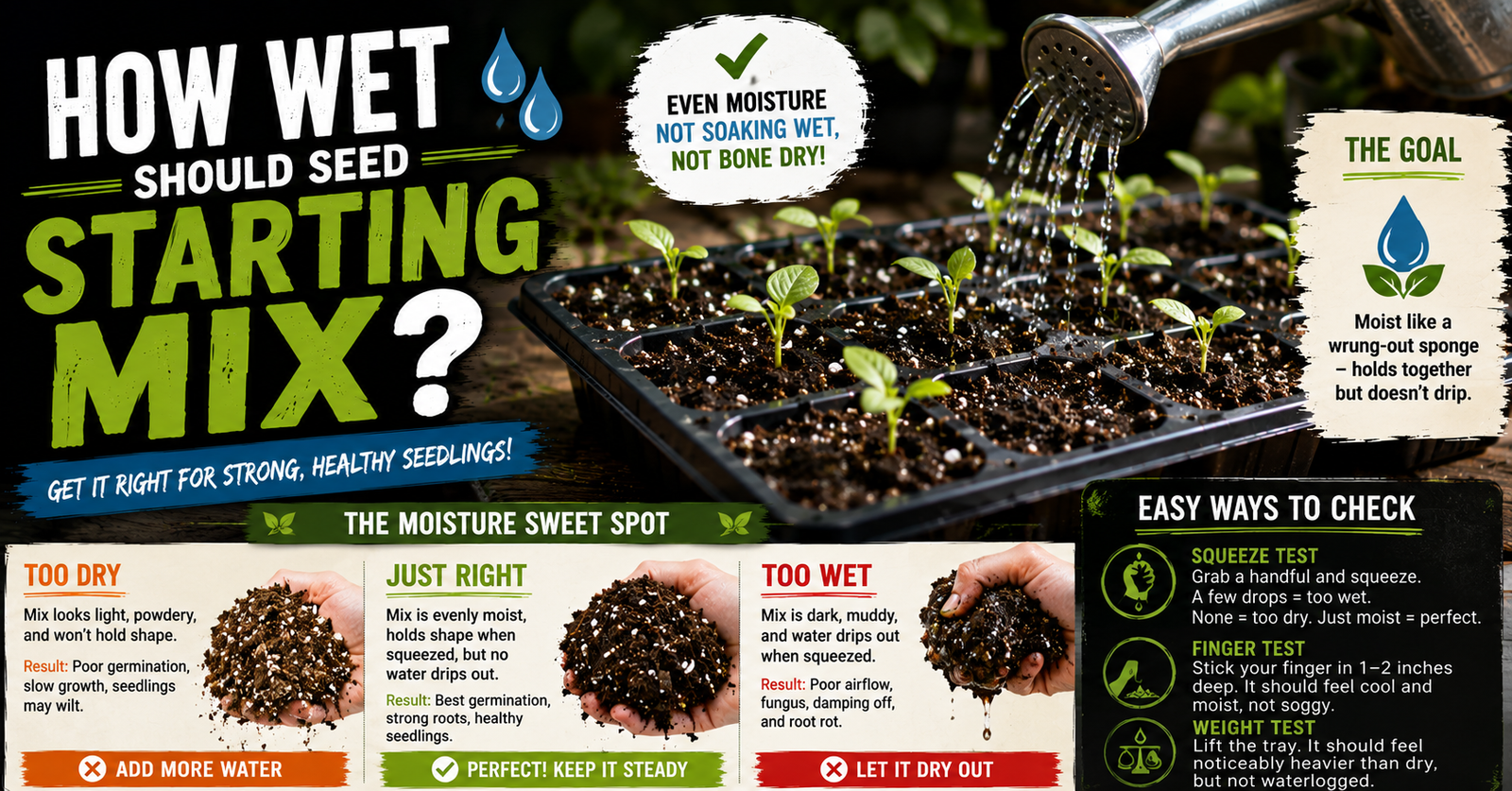
A steady propagation mix.
Predictable moisture.
Reliable temperatures.
Healthy airflow.
When those pieces come together, rooting becomes much less frustrating.
That’s exactly how I think about a heat mat today.
It’s not a shortcut.
It’s simply another tool that helps create a stable environment where cuttings can focus on producing healthy roots instead of constantly adapting to changing conditions.
About the Author
Daxon Weaver is the founder of PropagationWorld and has propagated thousands of houseplants, herbs, berry bushes, fruit trees, and ornamental shrubs. His hands-on experience has shown that successful propagation often comes down to maintaining stable conditions, and properly managed bottom heat remains one of the simplest ways to improve rooting consistency.