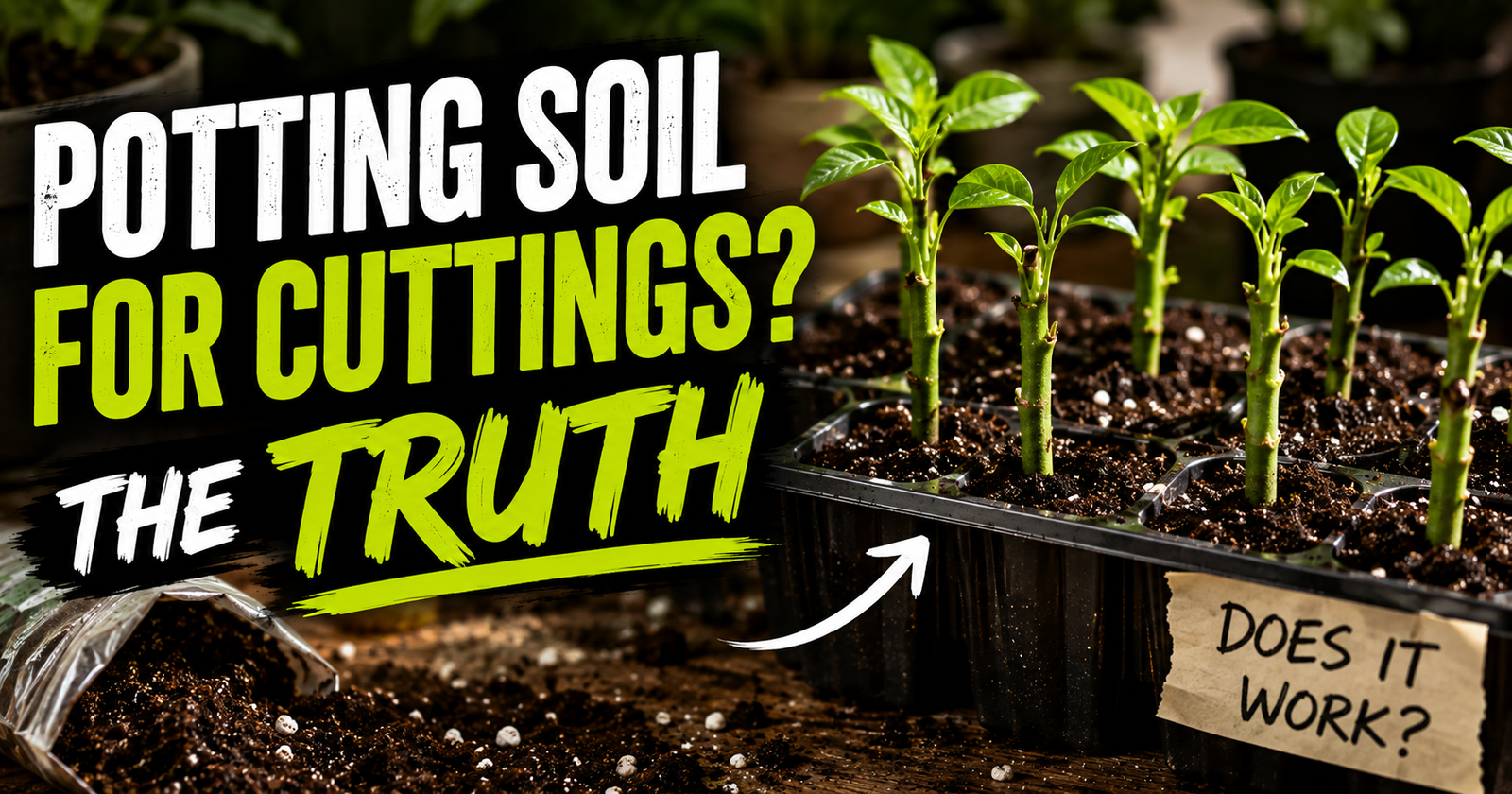
I can’t tell you how many times I’ve heard someone say, “I already have potting soil, so I’ll just use that.”
Honestly, I understand the thought process.
If the soil grows healthy plants, why shouldn’t it grow healthy roots?
That’s exactly what I believed when I first started propagating.
Sometimes it even worked.
But after propagating thousands of cuttings over the years, I eventually realized something important.
Growing an established plant and rooting a fresh cutting are two completely different jobs.
An established plant already has roots pulling in water, oxygen, and nutrients every single day.
A cutting has none of that.
It’s trying to build an entirely new root system while surviving on the limited moisture and energy stored inside its stem. That limited moisture is one reason protecting moisture during rooting can matter before roots have developed.
That changes everything.
The rooting medium that works beautifully for a mature tomato plant isn’t necessarily the best place for a freshly cut hydrangea stem.
Once I started treating those as two different situations instead of one, my propagation success became far more consistent.
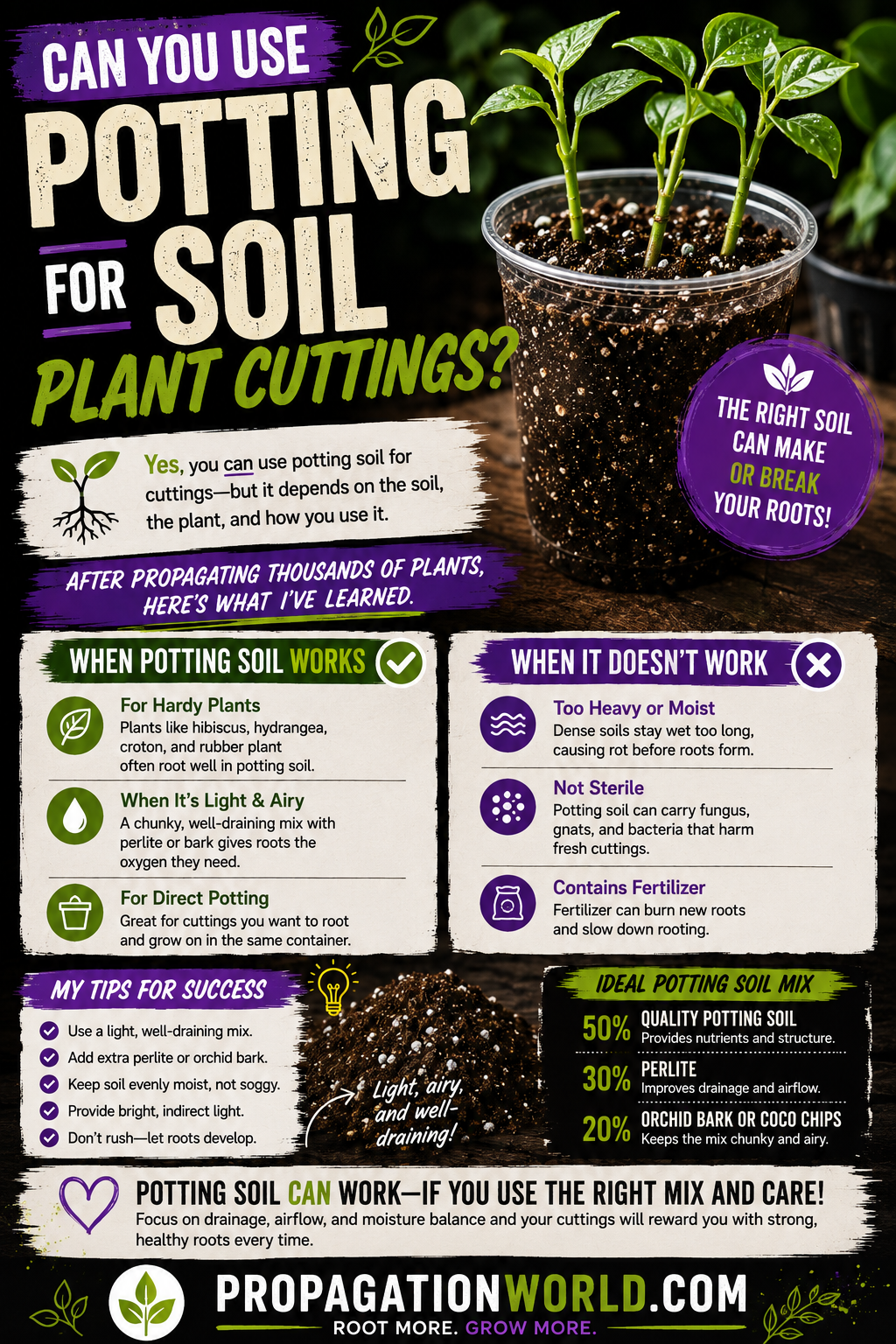
Why Potting Soil Sometimes Works
Let’s give potting soil some credit.
It isn’t a terrible propagation medium.
I’ve rooted plenty of easy plants in ordinary potting soil over the years.
Pothos.
Mint.
Spider plants.
Tradescantia.
Basil.
Many of these root so readily that they’ll tolerate less-than-perfect growing conditions.
If you’re only propagating one or two easy houseplants, you may never notice a problem.
That’s one reason gardeners often have very different opinions about this subject.
Their experiences are based on different plants.
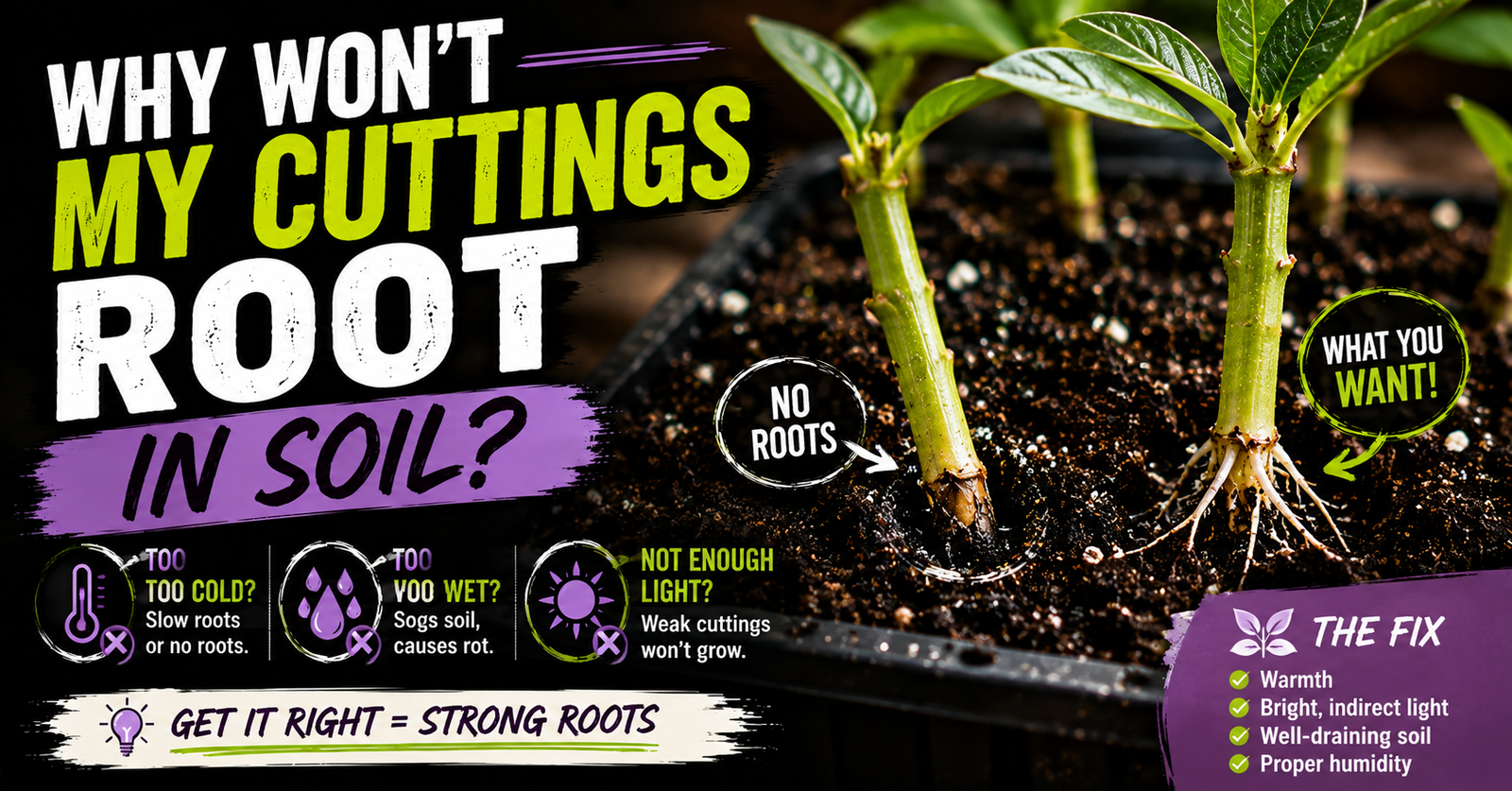
Where Potting Soil Starts Causing Problems
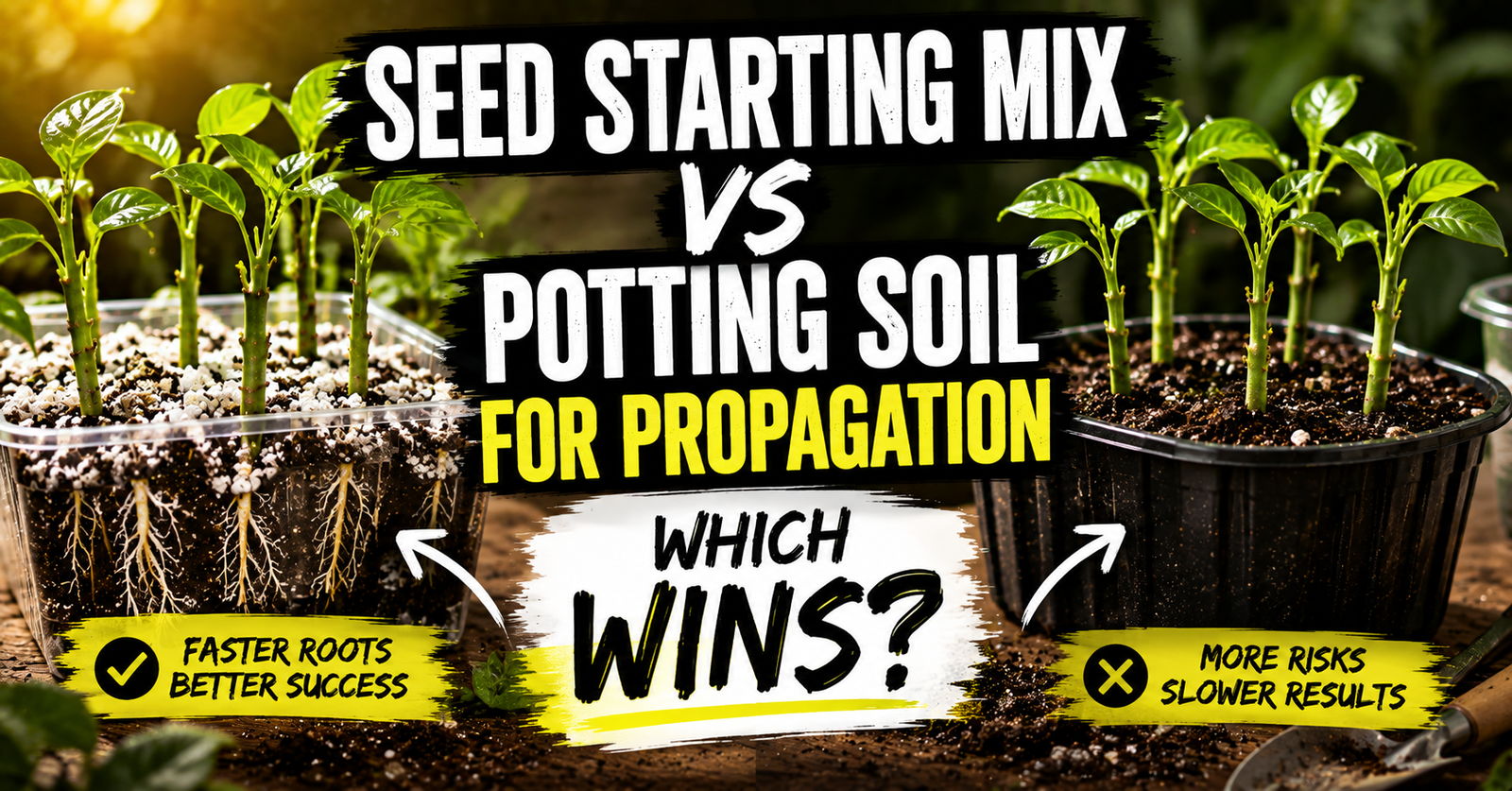
Once I began propagating woody shrubs, berry bushes, fruit trees, and other slower-rooting plants, I started noticing a pattern. That pattern becomes clearer when comparing seed starting mix versus potting soil for different stages of propagation.
The cuttings that struggled were often sitting in heavier growing media.
The soil stayed wet longer.
Airflow around the stem wasn’t nearly as good.
Some cuttings eventually rooted anyway.
Others slowly developed stem rot before roots had a chance to form.
That was the moment I stopped assuming all growing media were basically the same.
Fresh cuttings need oxygen just as much as they need moisture.
Heavy potting soil doesn’t always provide that balance.
What I Use Instead
Today, I almost always reach for a lighter propagation mix instead of ordinary potting soil.
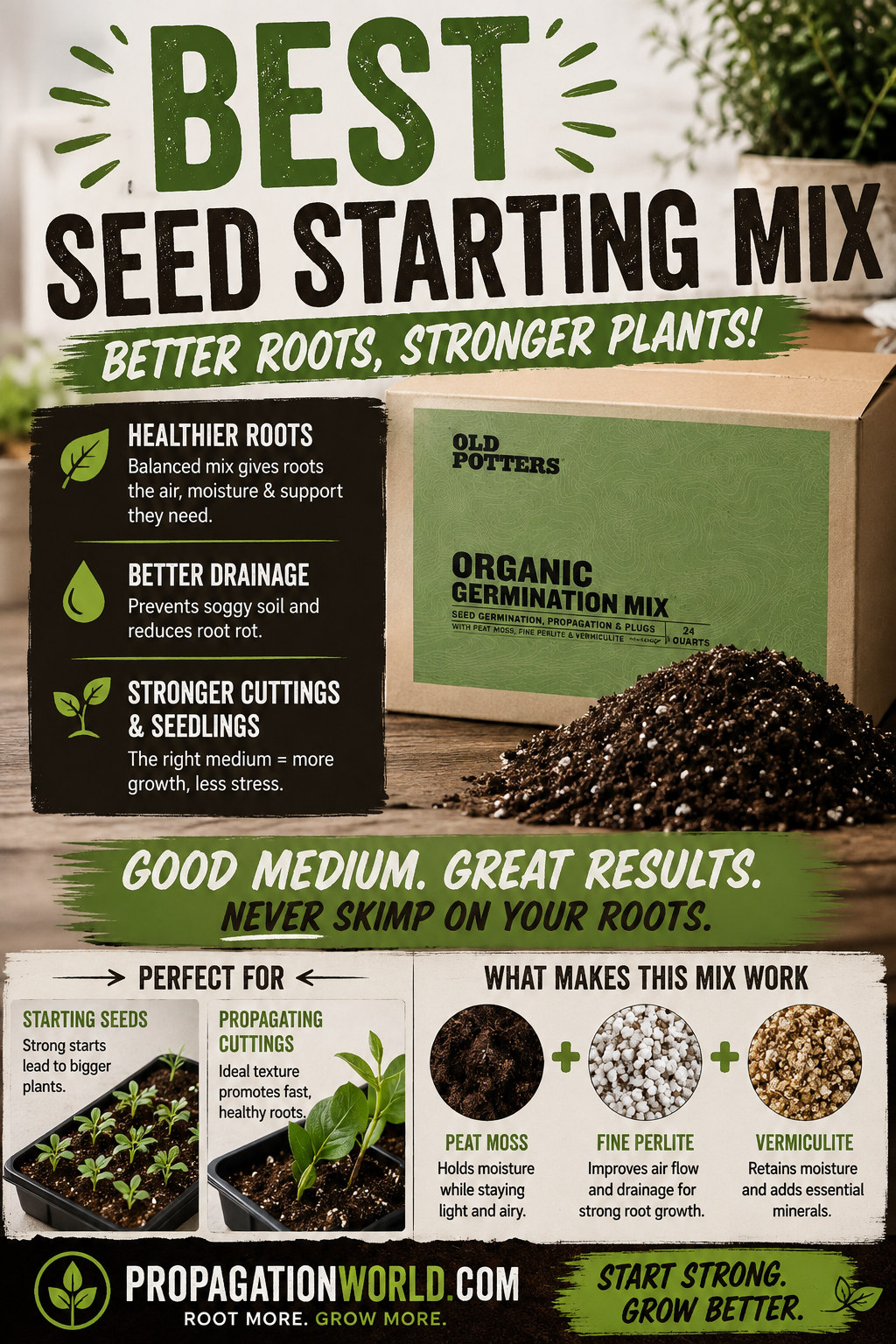
The one I recommend most often is my favorite seed starting mix for plant propagation because it already contains the ingredients I want around developing roots.
It’s light enough for new roots to grow through easily.
It drains much better than most standard potting soils.
Most importantly, it creates a more forgiving environment if I accidentally water a little too much.
That doesn’t mean potting soil never works.
It simply means I’ve had much better long-term success using a mix that was designed for young plants instead of mature ones.
One Experiment Changed My Mind
Several years ago, I rooted cuttings from the same shrub using two different media.
Half went into ordinary potting soil.
The other half went into a lighter propagation mix.
I wasn’t trying to prove anything.
I was honestly curious whether it would matter.
It did.
The cuttings in the propagation mix stayed healthier while they were waiting for roots.
The stems stayed firmer.
I lost fewer cuttings before root development even started.
Not every cutting rooted faster.
But more of them survived long enough to actually produce roots.
That experiment completely changed how I approach propagation, and I’ve rarely reached for ordinary potting soil first ever since.
Can You Improve Ordinary Potting Soil?
Absolutely.
If potting soil is all you have, I wouldn’t tell you to cancel your propagation plans.
I’d tell you to improve it.
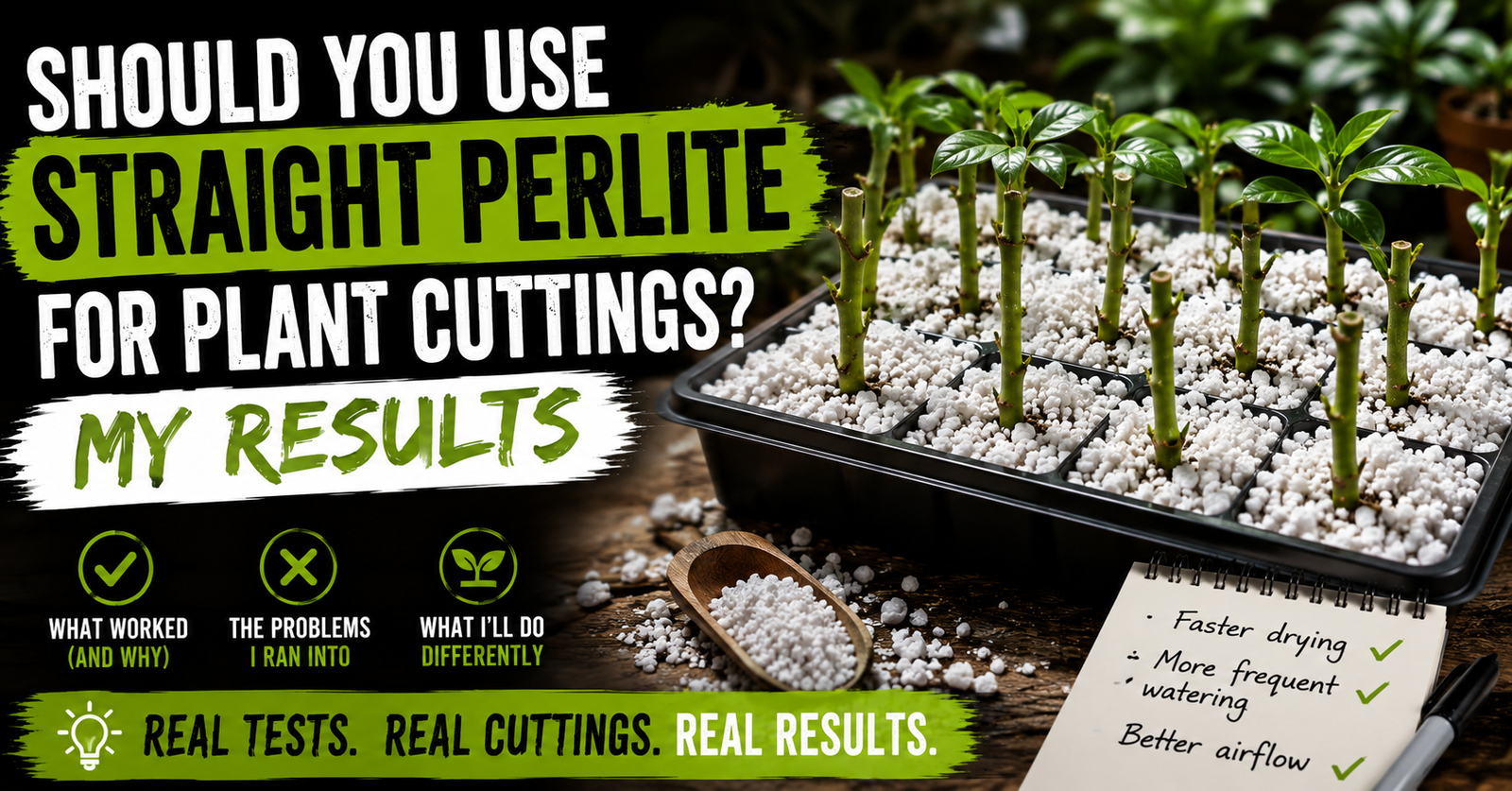
One of the easiest ways to do that is by increasing drainage and aeration.
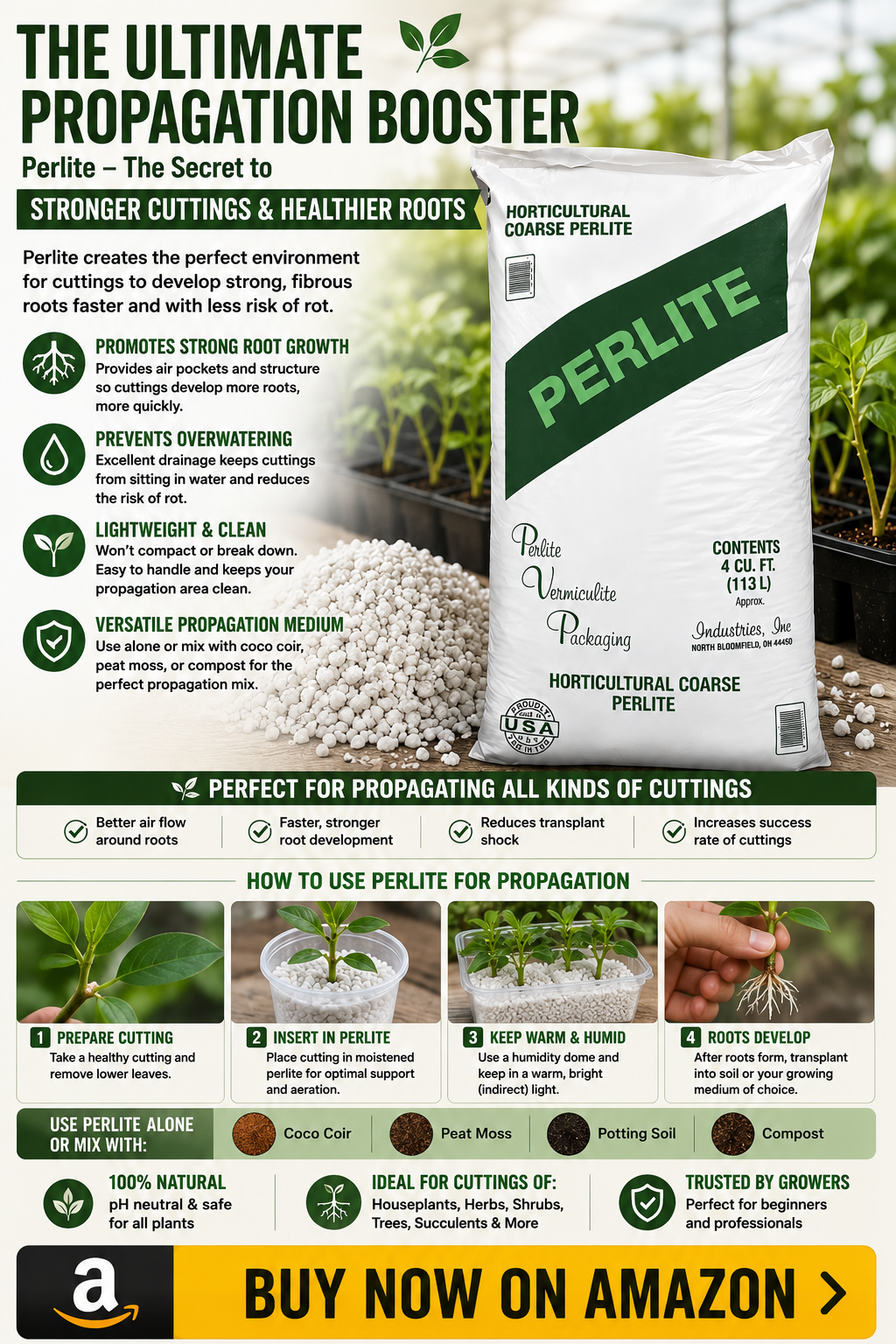
That’s exactly why I almost always mix in extra perlite when I have to use ordinary potting soil for cuttings. If you need more drainage and aeration, additional perlite can be blended into ordinary potting soil for cuttings.
The additional air space helps excess water drain away while giving developing roots more oxygen.
That simple adjustment has produced much better results for me than using dense potting soil by itself.
The goal isn’t to make the soil dry.
The goal is to make it breathe.
The Difference Between Growing and Rooting
This is one of those ideas that completely changed how I think about propagation.
Once a cutting has a healthy root system, it’s surprisingly forgiving.
It can usually handle a wider variety of growing media because the roots are already doing their job.
Before those roots exist, everything is different.
The stem is trying to survive while creating an entirely new root system from scratch.
During that stage, every decision matters a little more.
Too much water becomes a bigger problem.
Poor airflow becomes a bigger problem.
Heavy soil becomes a bigger problem.
That’s why I always ask myself one question before filling a propagation tray.
“Is this medium helping roots develop, or is it better suited for growing an established plant?”
That mindset has helped me make much better decisions over the years.
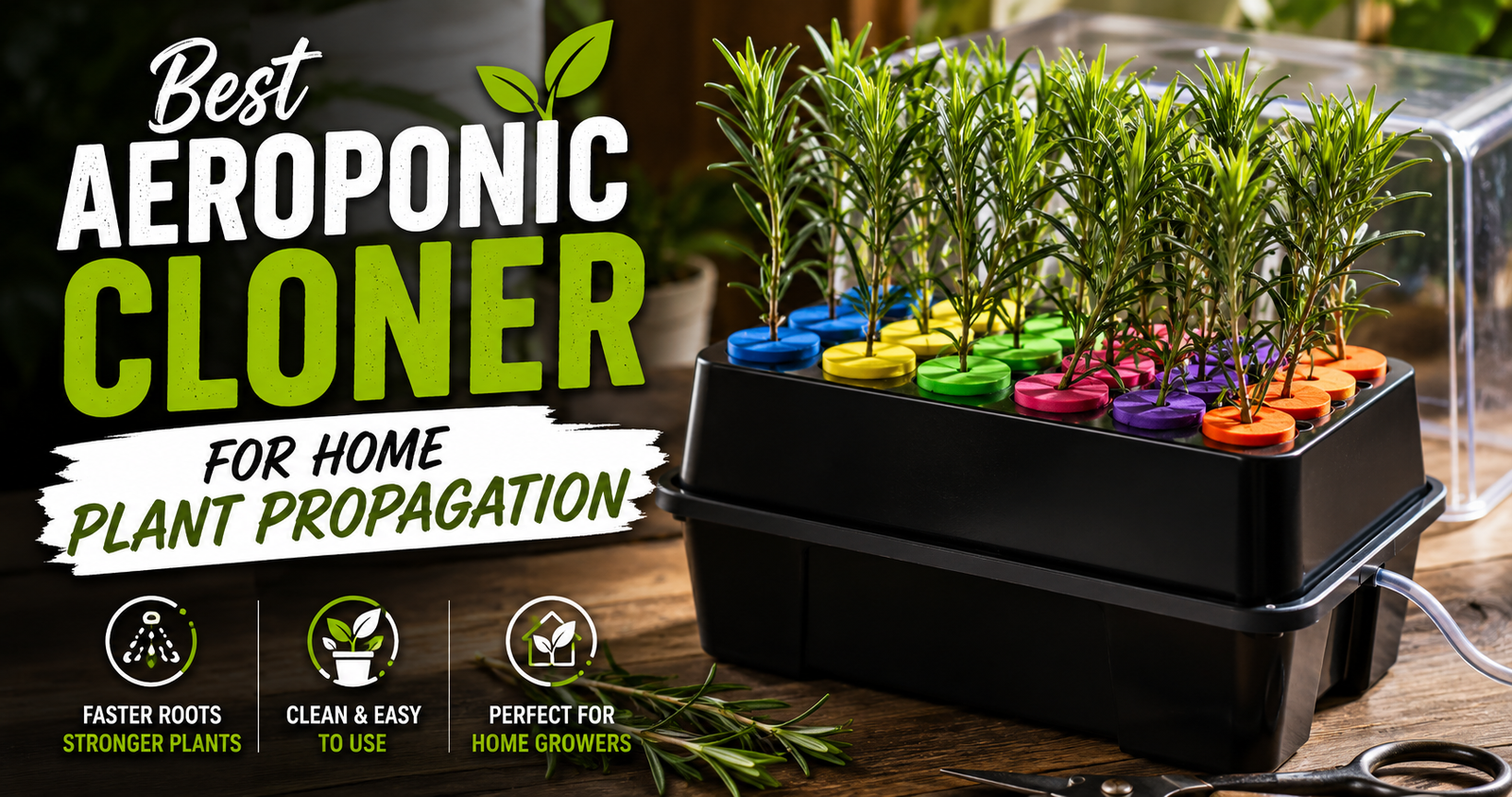
Don’t Forget About the Environment
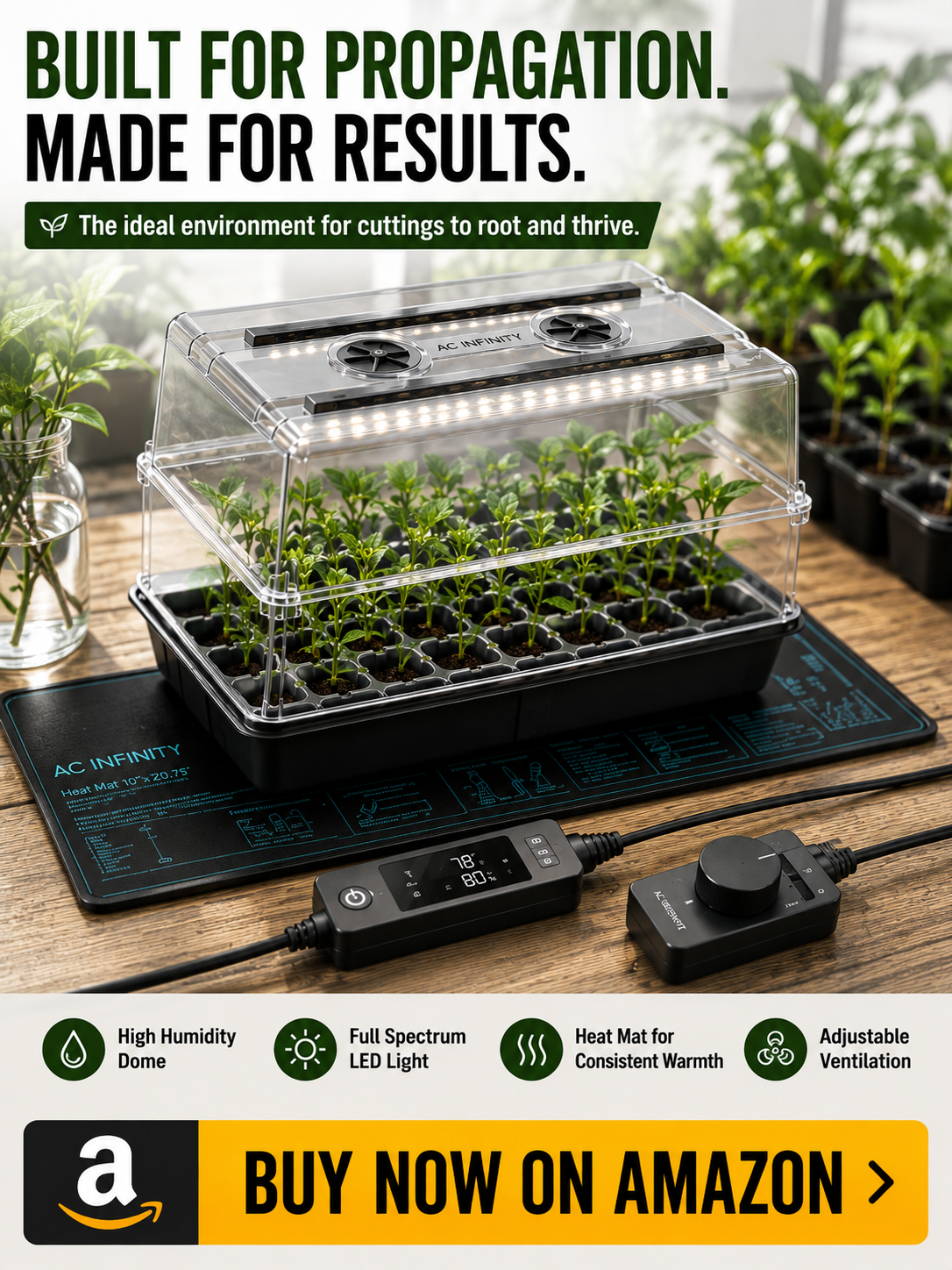
The rooting medium is only one piece of the puzzle. Maintaining a suitable environment can also involve using an adjustable humidity dome around your cuttings.
You can have the perfect propagation mix and still struggle if the environment isn’t supporting the cutting.
Temperature, humidity, lighting, and healthy parent plants all play important roles.
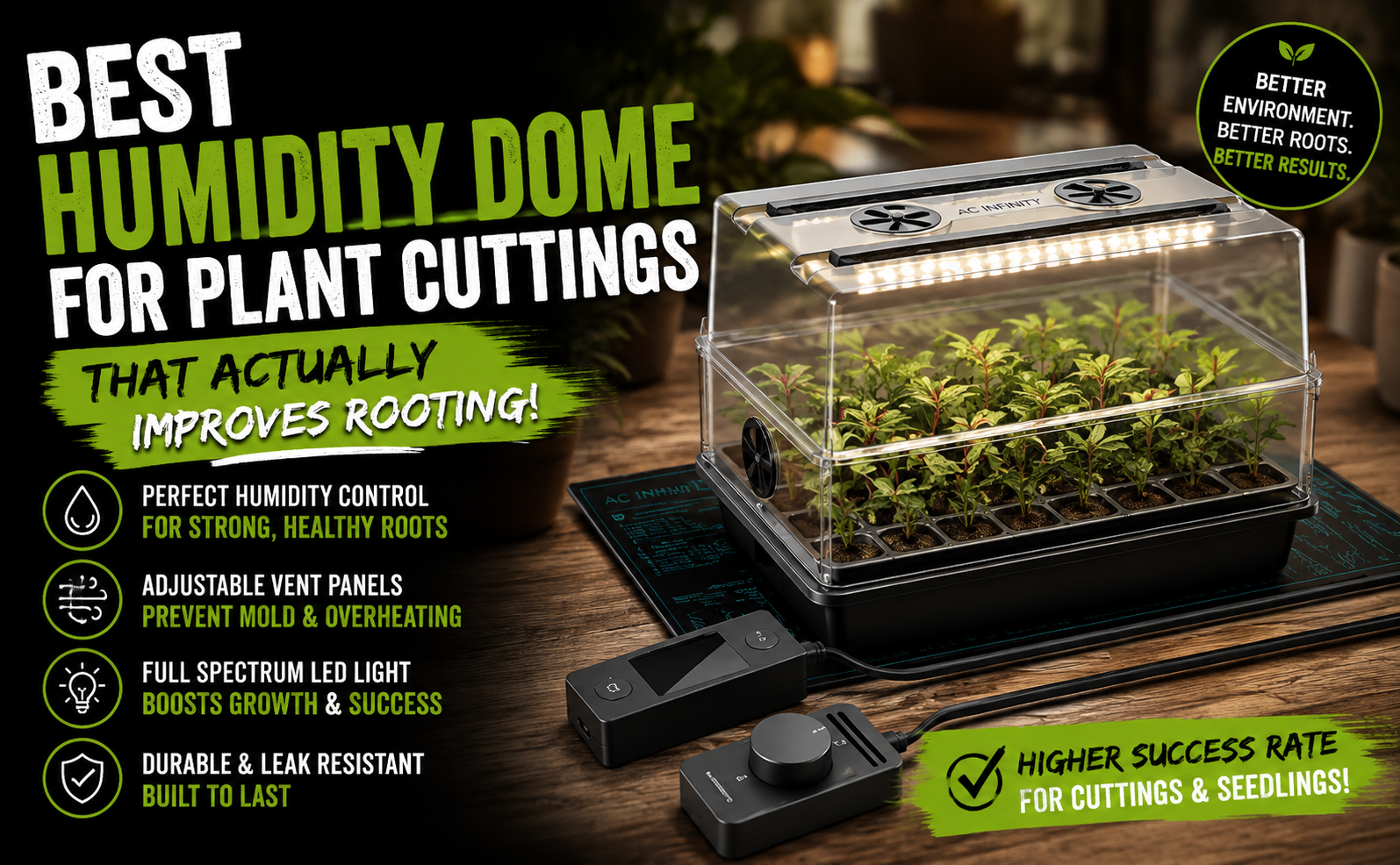
For woody shrubs and fruit plants that spend several weeks developing roots, I usually place my trays under the propagation humidity dome I rely on most because reducing moisture loss gives the cuttings more time to establish themselves.
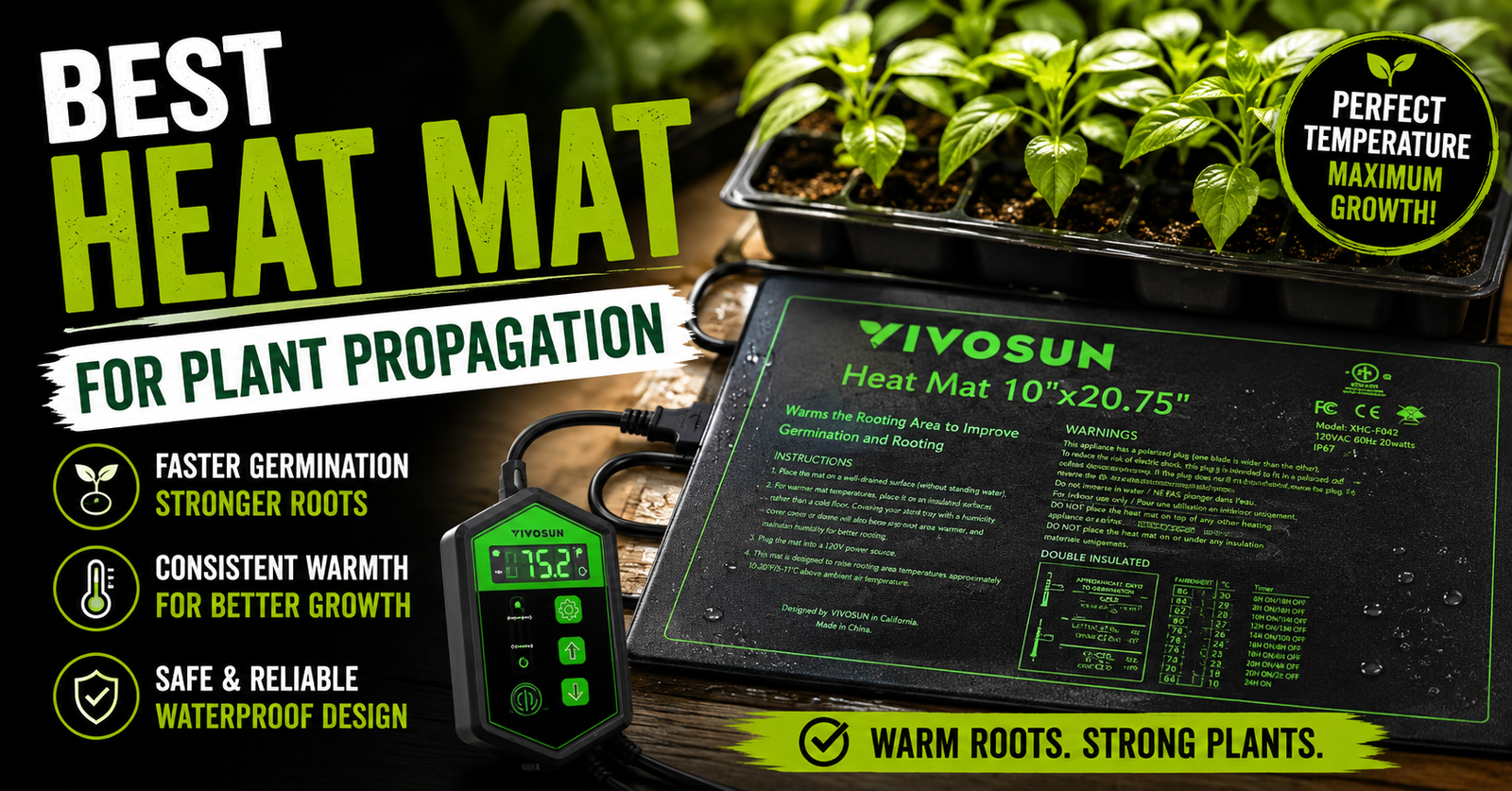
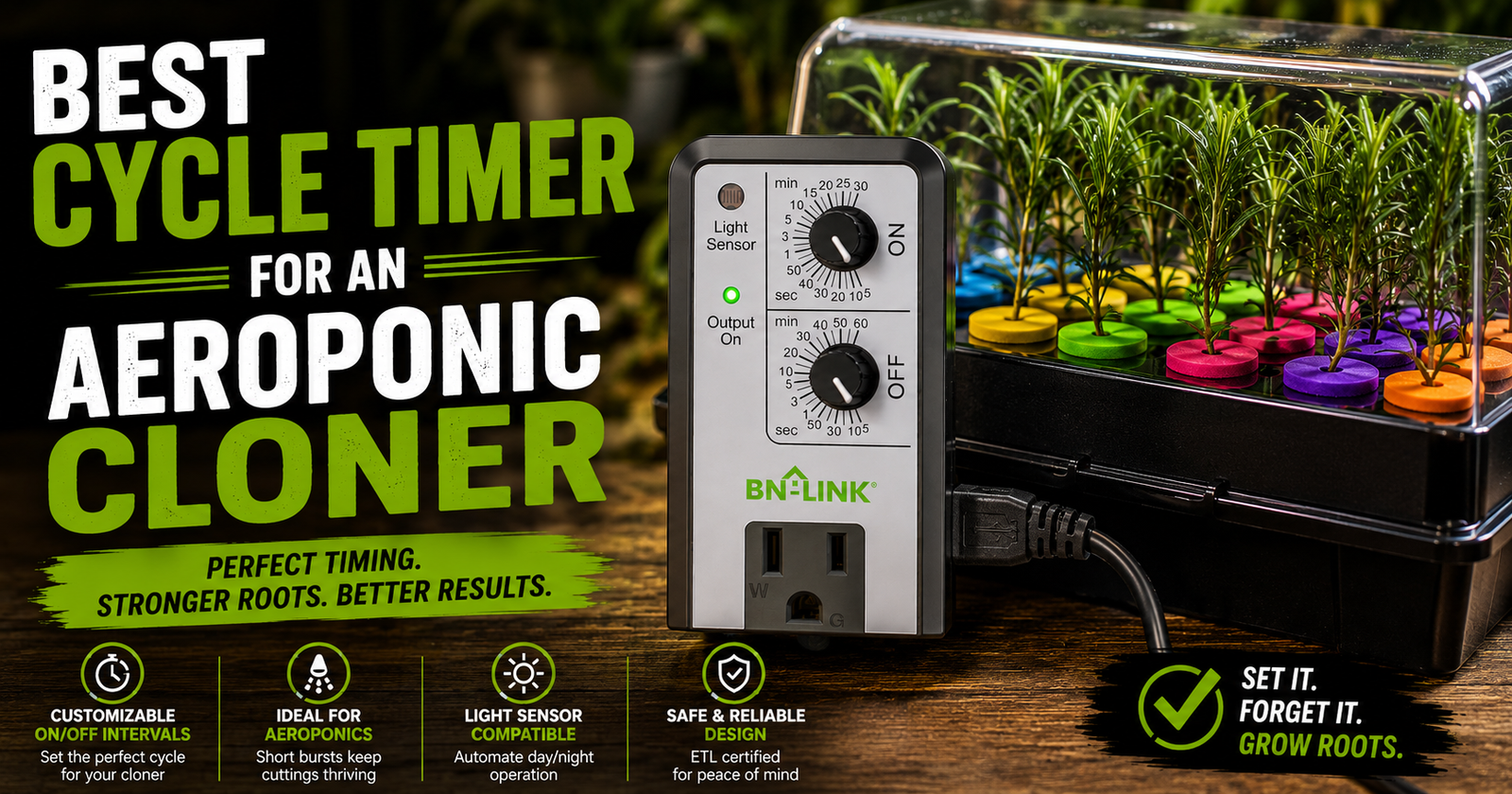
During cooler weather, I also use the heat mat that’s become one of the most valuable tools on my propagation benchto keep the rooting medium consistently warm.
Those tools don’t replace a good propagation mix.
They simply help create the conditions where healthy roots are much more likely to develop.
What I Buy Instead of Potting Soil
These days, I rarely buy ordinary potting soil if my goal is propagation.
I’d much rather start with a propagation mix that’s already designed for young roots.
It saves me time.
It removes a lot of guesswork.
And I’ve simply had better results using products made specifically for propagation.
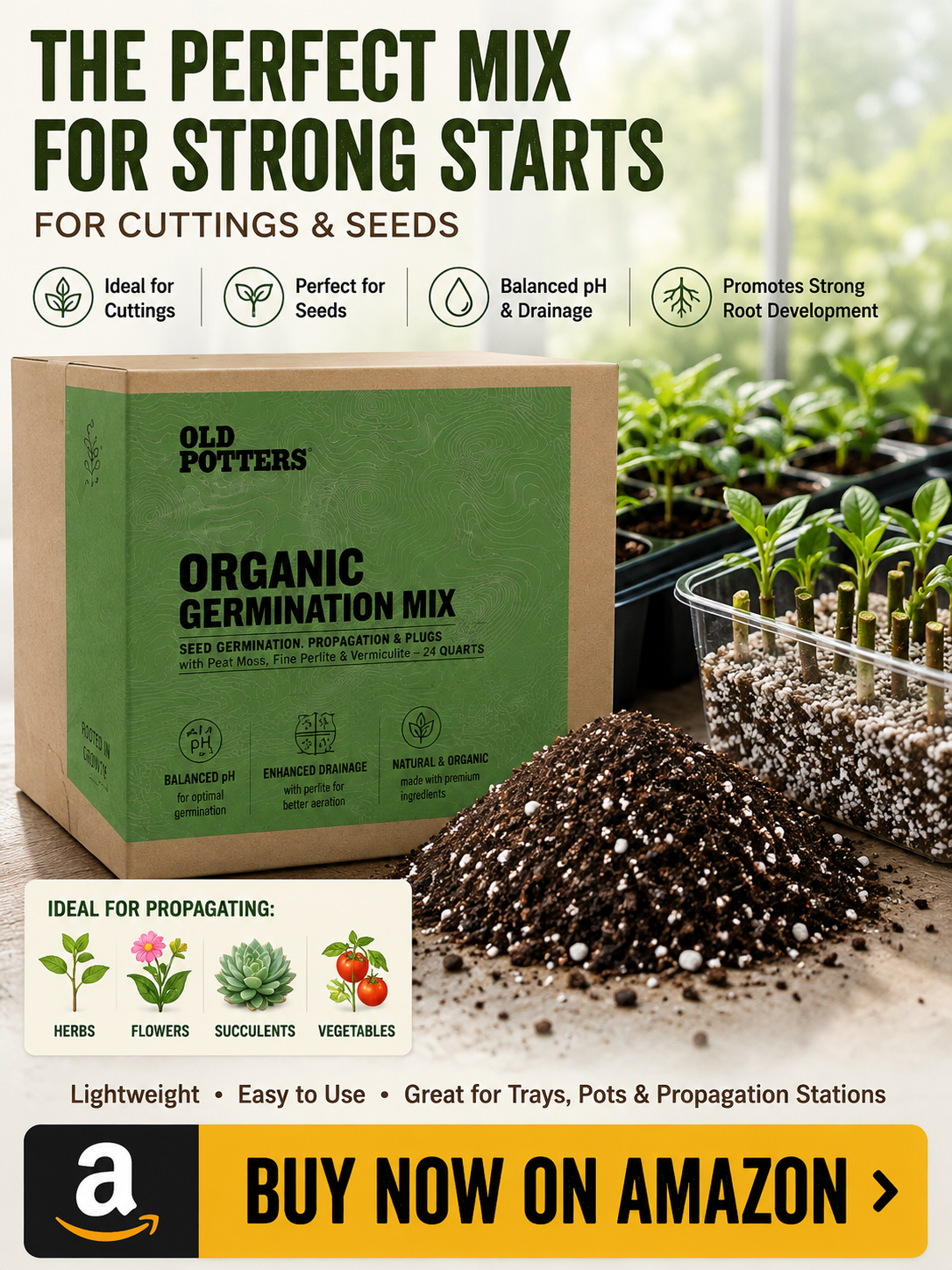
If you’re planning to root more than just a couple of cuttings this year, I’d recommend taking a look at the seed starting mix I keep on hand for propagation projects.
I’ve used it for everything from vegetables and herbs to hydrangeas, blueberries, roses, and many other woody plants.
Having a quality propagation mix ready to go makes it much easier to start cuttings whenever the opportunity comes along.
The Best Propagation Medium Isn’t Always the Most Expensive
One thing propagation has taught me is that success rarely comes from buying the most expensive products.
It usually comes from choosing products that solve the right problem.
For rooting cuttings, the problem isn’t feeding the plant.
It’s creating an environment where new roots can safely develop.
That’s why I place so much importance on drainage, aeration, and consistent moisture instead of simply grabbing whatever bag of soil happens to be nearby.
Once I shifted my focus from growing plants to growing roots, my results improved more than I expected.
It wasn’t because I became a better gardener overnight.
It was because I finally started giving cuttings what they actually needed instead of what I assumed they needed.
Frequently Asked Questions
Will cuttings eventually root in regular potting soil?
Many of them will.
Plants are often more resilient than we give them credit for.
The question isn’t whether rooting in potting soil is possible.
The better question is whether it’s giving your cuttings the best chance to succeed.
For easy plants, the answer may be yes.
For slower-rooting shrubs, fruit plants, and ornamental species, I’ve consistently had better results using lighter propagation media instead.
Is potting soil too rich for fresh cuttings?
Sometimes.
Many potting soils contain fertilizers and organic materials designed to support established plants over long periods.
Fresh cuttings don’t need all of that immediately.
They’re focused on producing roots, not rapid leafy growth.
That’s one reason propagation mixes are usually much simpler and lighter than standard potting soils.
Can I mix potting soil with seed starting mix?
Absolutely.
I’ve done that many times.
If I have leftover potting soil that I’d like to use, I’ll often blend it with a quality propagation mix and sometimes add extra perlite as well.
That creates a lighter medium than potting soil alone while still making good use of materials I already have.
Propagation doesn’t always have to be all or nothing.
Small adjustments can make a surprisingly big difference.
What if potting soil is all I have?
I’d still encourage you to take the cutting.
Seriously.
I’ve seen too many people delay propagation because they were waiting for the “perfect” supplies.
Plants don’t always wait.
If ordinary potting soil is what you have today, use it.
Just understand its limitations, avoid overwatering, and improve the mix when you can.
I’ve rooted plenty of plants with less-than-perfect materials over the years.
Getting started is often more important than getting everything exactly right.
What’s the biggest advantage of seed starting mix?
Consistency.
That’s really what you’re paying for.
A quality propagation mix gives me predictable drainage, good aeration, and reliable moisture retention every time I fill a tray.
Instead of wondering how a random bag of potting soil is going to behave, I already know what to expect.
That consistency has become one of the biggest reasons I keep propagation mix on hand throughout the year.
What I’d Tell a Friend
If a friend called me tomorrow and asked whether they should root cuttings in ordinary potting soil, I wouldn’t tell them it can’t be done.
I’d tell them exactly what I’ve learned after years of propagating plants.
Start with what you have if you need to.
Don’t let perfect become the enemy of getting started.
But if you discover that propagation is something you genuinely enjoy, invest in a rooting medium that’s designed for the job.
The difference isn’t always dramatic on the first cutting.
It becomes much more noticeable after you’ve rooted dozens of trays over the course of a season.
That’s exactly why I continue keeping a quality propagation mix in my greenhouse.
It removes one more variable, helps me avoid unnecessary failures, and gives every cutting a healthier place to begin its life.
About the Author
Daxon Weaver is the founder of PropagationWorld and has spent years propagating thousands of houseplants, herbs, berry bushes, fruit trees, and ornamental shrubs. Through hands-on experience, he enjoys testing propagation products, refining propagation methods, and helping gardeners build healthier plants from the very first cutting.