There’s something exciting about checking your propagation jar every morning.
You lean in looking for tiny white roots.
Instead…
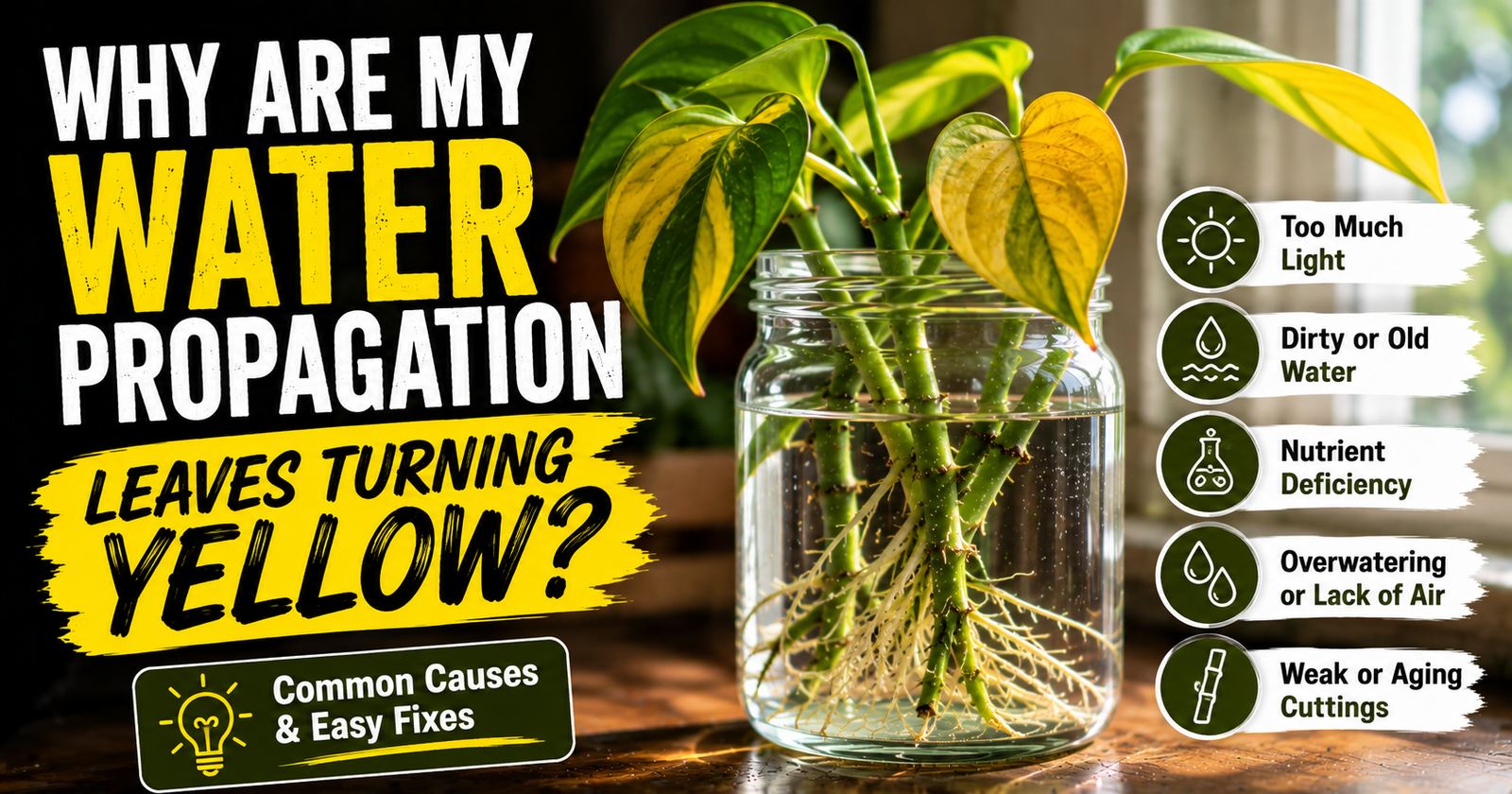
One of the leaves has turned bright yellow.
If you’re like I was when I first started propagating plants, your mind immediately jumps to the worst possible conclusion.
“The cutting is dying.”
Fortunately, that’s often not what’s happening at all.
Yellow leaves are one of the most misunderstood parts of water propagation.
Sometimes they’re completely normal.
Sometimes they’re the first warning that something needs attention.
The challenge is figuring out which situation you’re dealing with.
Over the years I’ve learned that the leaves rarely tell the entire story by themselves.
To understand why they’re turning yellow, I also look at the stem, the roots, the water, the lighting, and how long the cutting has been propagating.
When you look at the entire plant instead of one yellow leaf, the answer usually becomes much easier to find.
Let’s go through the most common reasons this happens and what I actually do when I see it.
The Short Answer
Yellow leaves are usually caused by normal aging, stress from producing roots, poor water quality, incorrect lighting, stem or root problems, or simply leaving the cutting in water too long. In many cases, a single yellow leaf isn’t anything to panic about.
One Yellow Leaf Doesn’t Mean the Cutting Is Failing
This is probably the biggest misconception I see.
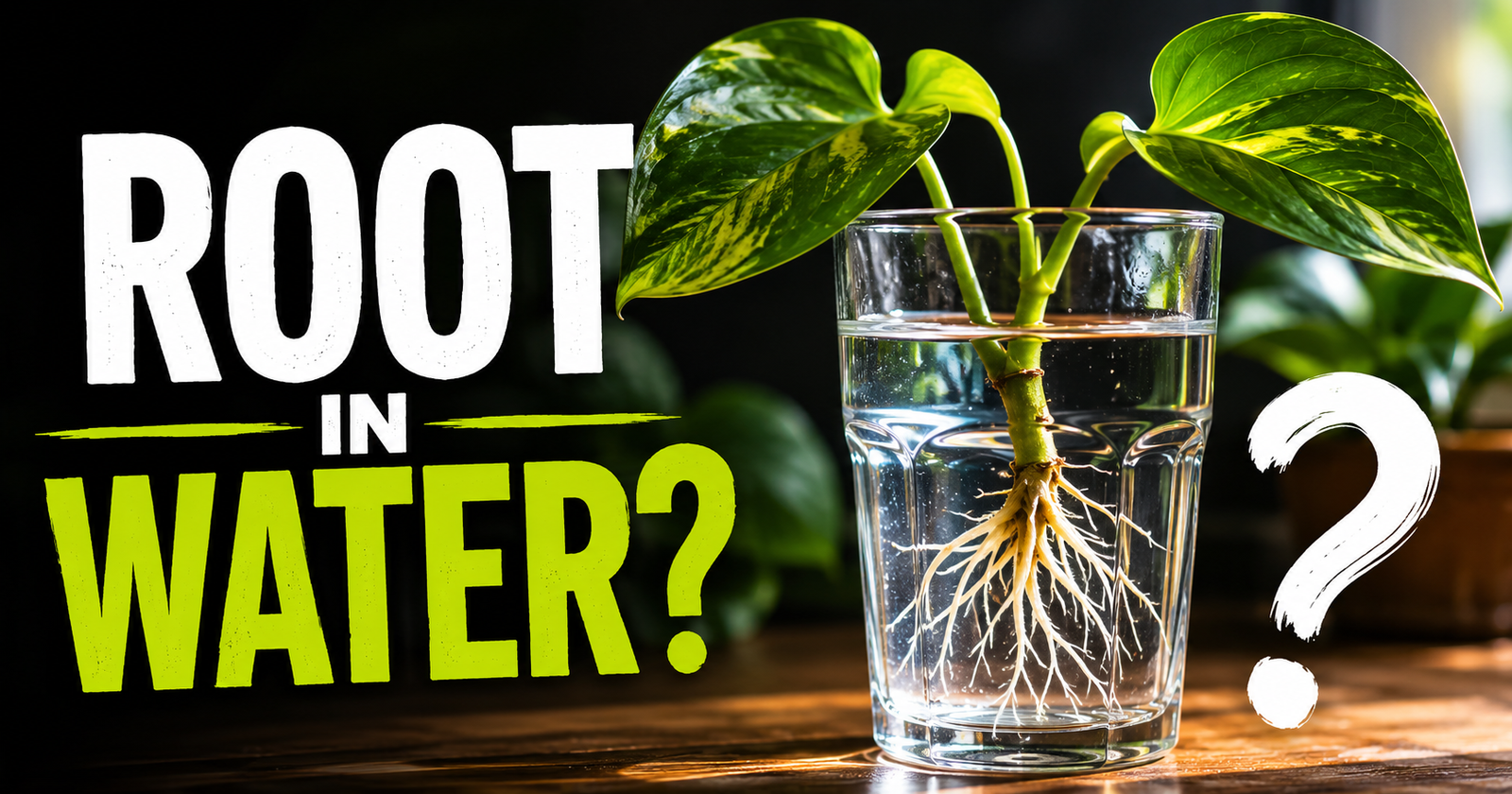
A surprising number of healthy cuttings sacrifice an older leaf while they’re busy building a brand-new root system.
Think about what the cutting is trying to accomplish.
It has no functioning roots.
It can’t absorb water and nutrients the way a mature plant can.
Instead, it’s living off the energy stored inside its stem and leaves while it works to produce roots.
Sometimes the oldest leaf becomes expendable.
I’ve watched countless pothos and philodendron cuttings lose one lower leaf before going on to develop excellent root systems.
If everything else still looks healthy, I usually keep watching instead of trying to “fix” something that isn’t actually broken.
Look at the Entire Cutting Before Making Changes
Whenever someone sends me a photo of yellow leaves, I almost never look at the leaves first.
Instead I ask questions like:
- Are the roots healthy?
- Is the stem still firm?
- Is the water cloudy?
- Are new roots still growing?
- Is new growth starting?
Those answers tell me far more than leaf color alone.
A cutting with one yellow leaf, bright white roots, and a firm stem usually has a very different future than one with yellow leaves, brown mushy roots, and a soft stem.
Always diagnose the entire cutting rather than focusing on a single symptom.
Your Cutting Is Putting Its Energy Into Growing Roots
Fresh cuttings only have a limited amount of stored energy.
They have to decide where that energy goes.
Many species naturally prioritize root development before they worry about keeping every existing leaf alive.
That means it’s perfectly normal for one of the oldest leaves to yellow while the cutting is busy growing roots beneath the water.
I’ve actually learned to expect this on certain plants.
As long as new roots continue developing and the stem stays healthy, I usually leave the cutting alone.
More often than not, it rewards my patience.
Too Much Direct Sunlight
A sunny windowsill isn’t always the best location for propagation.
Bright indirect light encourages healthy growth.
Hot afternoon sun often creates unnecessary stress.
Without roots to continuously replace moisture, the leaves can lose water surprisingly quickly.
That stress often appears as yellowing, especially on leaves receiving the strongest sunlight.
I almost always keep my propagation jars somewhere bright enough to receive plenty of indirect light but protected from intense afternoon rays.
Making that simple adjustment has solved the problem more times than I can count.
Not Enough Light Can Cause Yellow Leaves Too
Interestingly, the opposite problem produces many of the same symptoms.
A cutting sitting in a dark room may stay alive for weeks without actually making much progress.
As stored energy runs low, older leaves often begin yellowing because the plant simply isn’t producing enough new energy through photosynthesis.
Whenever possible, I place cuttings somewhere bright enough that I could comfortably read a book during the daytime without turning on a light.
That usually provides excellent growing conditions without exposing the cutting to excessive heat.
Poor Water Quality Slowly Stresses the Entire Cutting
Fresh water is one of the simplest things you can give a cutting.
Unfortunately, it’s also one of the easiest things to neglect.
As water sits, oxygen levels slowly decrease while bacteria and algae begin multiplying.
Even if the water still looks fairly clean, those changes are happening.
Eventually the roots begin struggling, and once the roots become stressed, the leaves often show the first visible symptoms.
Yellowing leaves are sometimes the plant’s way of telling you that something below the water line needs attention.
That’s one reason I make changing the water part of my regular routine instead of waiting until it obviously looks dirty.
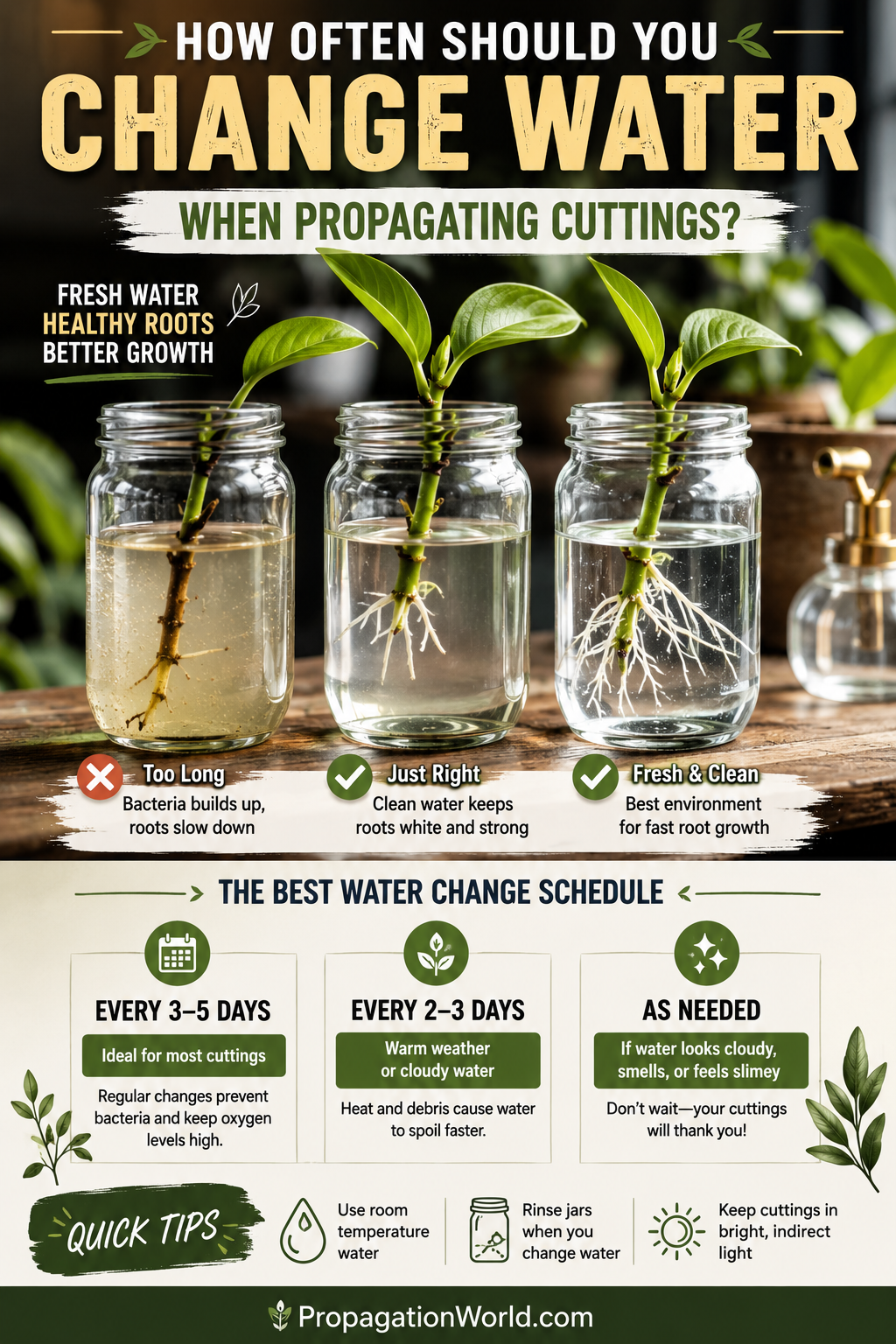
If you’re unsure how often to replace it, I explain exactly what I do in How Often Should You Change Water When Propagating Cuttings?.
The Roots May Be Struggling
Whenever I notice yellow leaves, the next thing I inspect is the roots.
Healthy roots are usually firm and light colored.
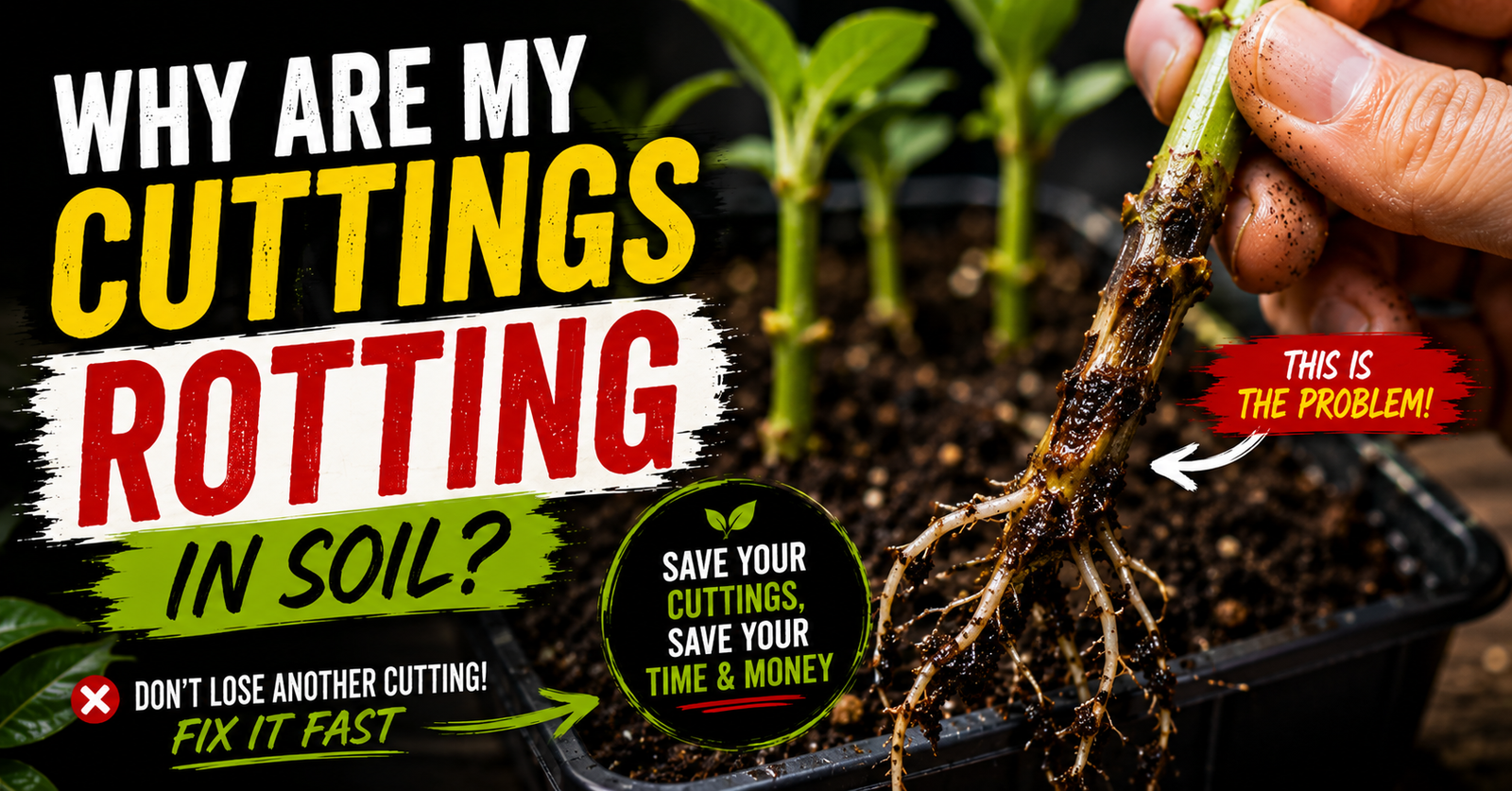
If they’ve started turning dark brown, become slimy, or feel mushy, the problem usually isn’t the leaves at all.
The roots are no longer supporting the cutting properly.
That’s why I never diagnose yellow leaves by themselves.
They’re often pointing toward a problem happening somewhere else.
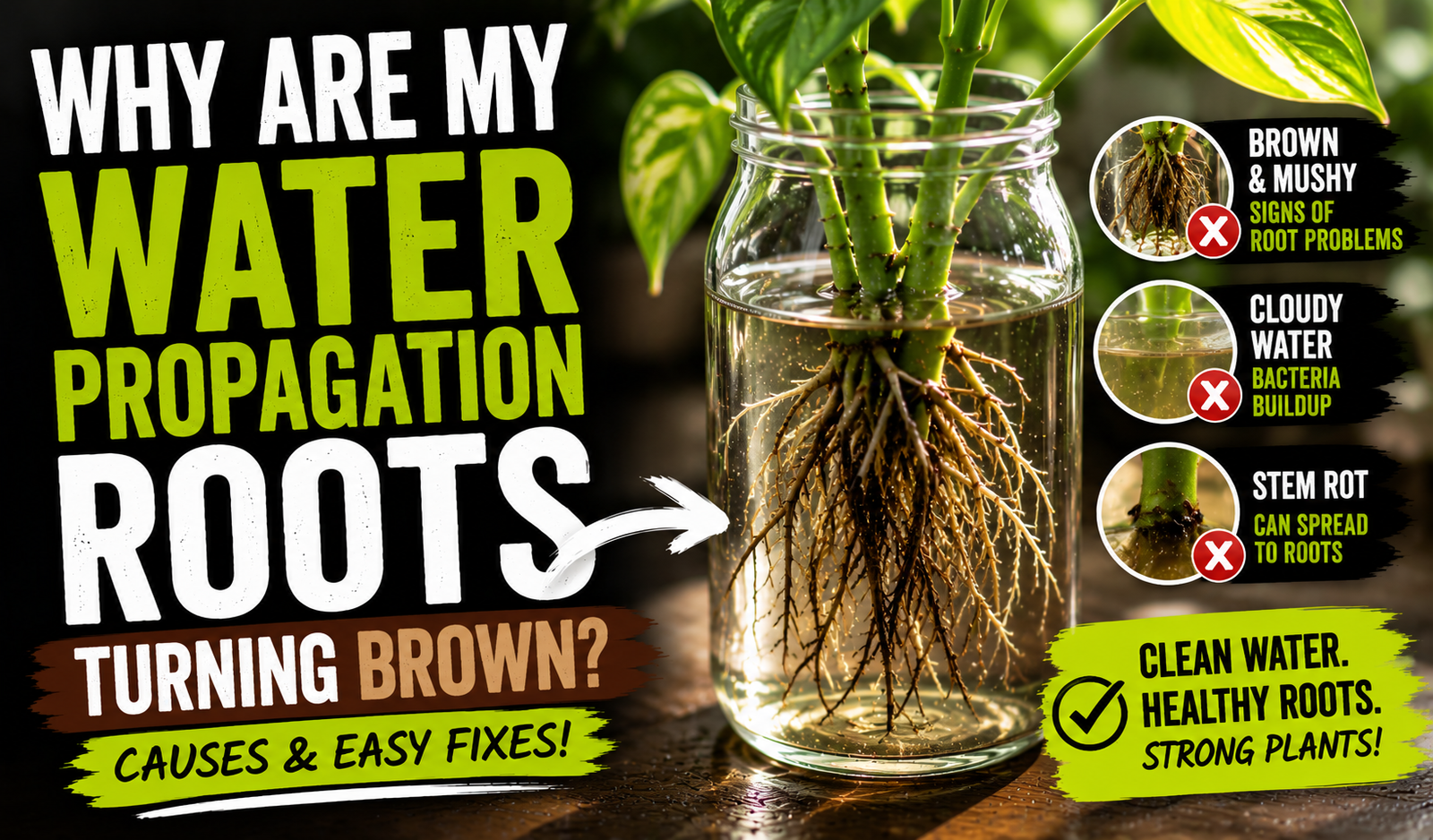
If your roots have changed color recently, my guide on Why Are My Water Propagation Roots Turning Brown? will help you determine whether they’re healthy or beginning to rot.
Stem Rot Can Cause Yellow Leaves
Sometimes perfectly healthy-looking leaves begin turning yellow because the stem has already started failing.
This usually begins at the bottom of the cutting.
The stem may become darker than normal.
It may feel soft instead of firm.
Sometimes it even develops an unpleasant smell.
Once bacteria begin breaking down the stem, water and nutrients can no longer move efficiently through the cutting.
The leaves often respond by yellowing one after another.
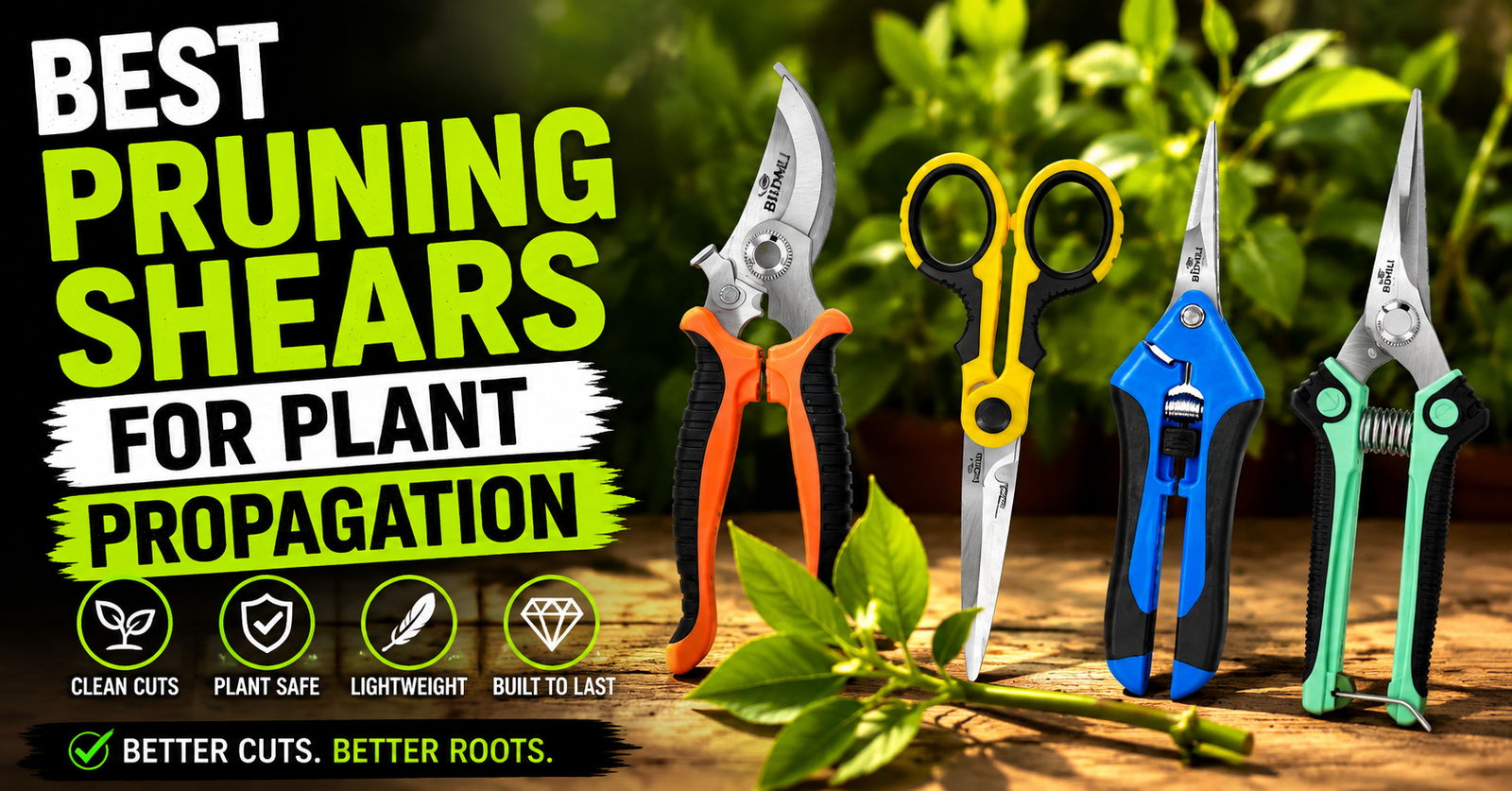
If I catch stem rot early enough, I’ll usually trim the cutting back to healthy tissue using clean pruning shears and restart the propagation. A look at pruning tools for damaged stems is useful when you need to remove damaged tissue without worsening the cut.
If too much of the stem has already become soft, it’s generally faster to begin with a fresh cutting.
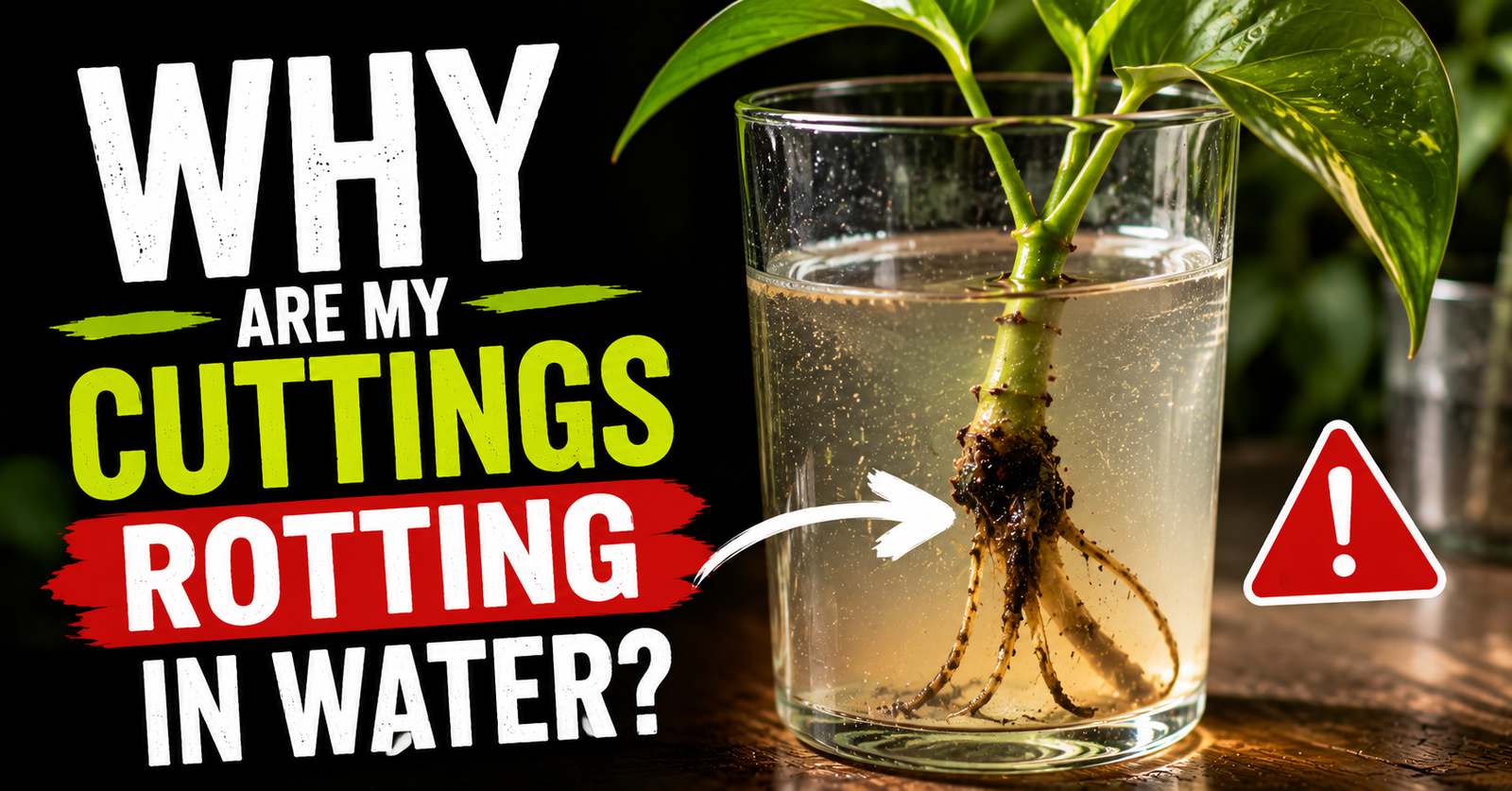
I go into much more detail in Why Are My Cuttings Rotting in Water? because preventing rot is much easier than trying to reverse it.
Your Cutting Might Be Ready for Soil
This is another possibility that surprises people.
Sometimes the cutting has actually been successful.
It’s simply ready for the next stage.
I’ve seen plenty of cuttings sit in water for months because they looked so nice in the jar.
Eventually growth slowed.
Older leaves yellowed.
The roots became crowded.
The plant wasn’t necessarily unhealthy.
It had simply reached the point where water alone wasn’t enough.
Once I transplanted those cuttings into a quality potting mix, many of them started producing fresh green leaves within a few weeks.
If your cutting already has a well-developed root system, transplanting may be exactly what it needs.
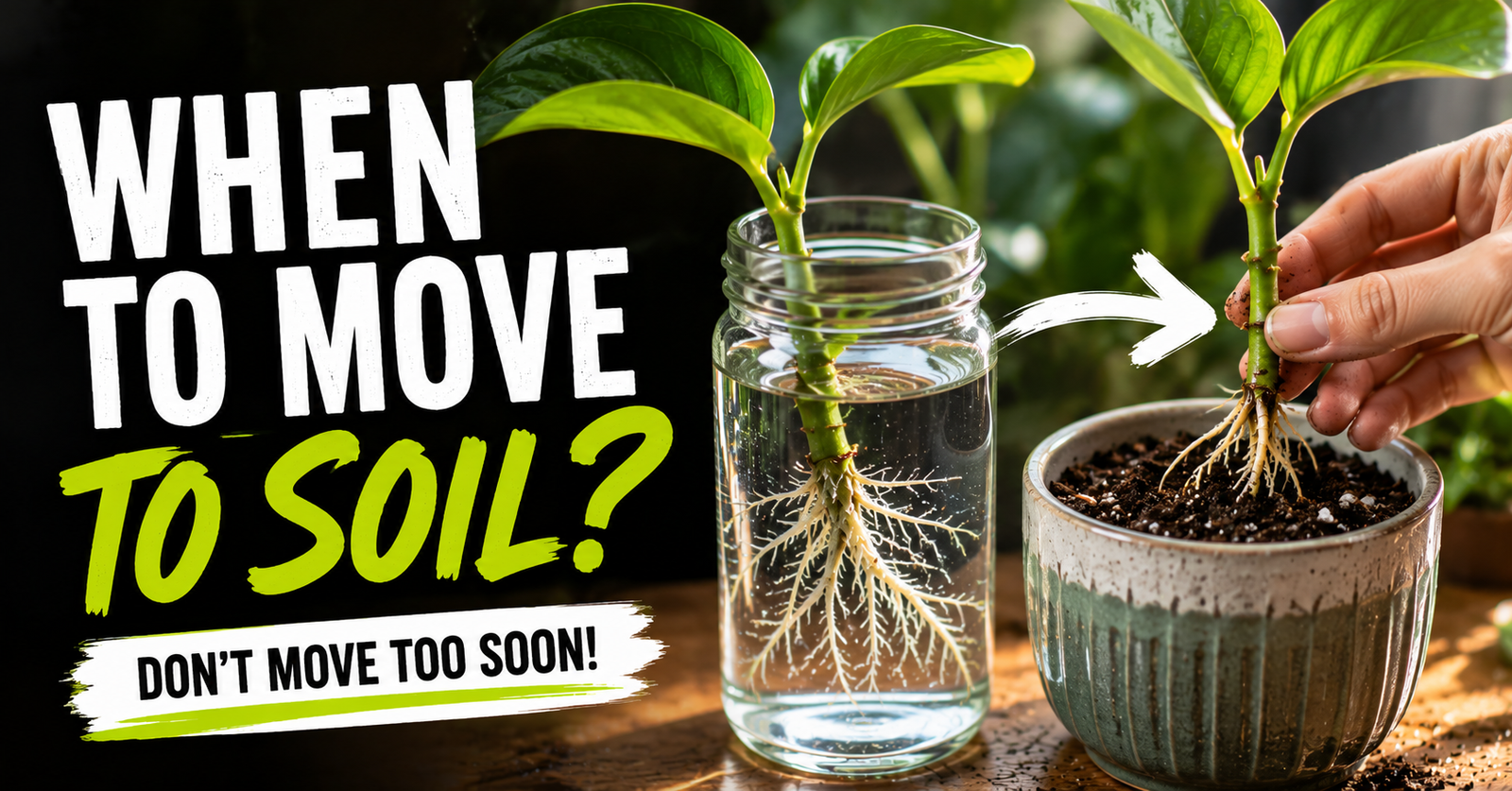
I explain the signs I look for in When Should You Move Water-Rooted Cuttings to Soil?.
Nutrient Deficiencies Eventually Catch Up
Fresh cuttings don’t need fertilizer.
In fact, I never recommend adding fertilizer while a cutting is still trying to produce its first roots.
But once a plant has been growing in plain water for several months, the situation changes.
Water doesn’t contain the steady supply of nutrients that potting soil provides.
Eventually the plant begins using up everything it stored inside its stems and leaves.
One of the first symptoms can be pale or yellow foliage.
This usually isn’t something you’ll notice during the first few weeks of propagation.
It’s much more common with plants that have been left in water for extended periods.
If you’re intentionally growing plants in water long-term, you’ll eventually need to provide nutrients rather than relying on plain water forever.
That’s one reason I still transplant most of my propagated cuttings into soil instead of leaving them in jars permanently.
Don’t Assume Every Yellow Leaf Needs to Be Removed
Whenever a leaf turns yellow, people often reach for the scissors immediately.
Sometimes that’s perfectly fine.
Sometimes I leave it alone.
If the leaf is almost completely yellow, it’s no longer contributing much to the plant and will usually fall off on its own.
If it’s only beginning to yellow while the rest of the cutting looks healthy, I often leave it attached until the plant naturally sheds it.
The cutting is still reclaiming nutrients from that leaf while it’s attached.
There’s usually no need to rush the process.
My Routine When I See Yellow Leaves
Over the years, I’ve developed a routine that keeps me from making unnecessary changes.
Whenever I notice yellow foliage, I ask myself the same questions.
- Are the roots still healthy and firm?
- Is the stem solid?
- Does the water smell fresh?
- Am I changing the water regularly?
- Is the cutting receiving bright, indirect light?
- Has the cutting been sitting in water for several months?
- Is only one older leaf yellow, or is the entire cutting declining?
Most of the time, those questions point me toward the answer without much guessing.
Instead of trying five different fixes at once, I correct the actual problem and then give the cutting time to respond.
That approach has saved far more cuttings than constantly moving them around or changing everything at once.
Frequently Asked Questions
Should I remove yellow leaves from my water propagation?
Usually, I don’t remove a leaf just because it’s starting to turn yellow.
If it’s only partially yellow, the cutting is often still reclaiming nutrients from that leaf before it naturally drops it.
Once a leaf has turned almost completely yellow or brown, I usually remove it. Keeping dead foliage in or near the water can encourage bacteria and make the container look untidy.
Can a yellow leaf turn green again?
In most cases, no.
Once a leaf has completely turned yellow, it usually won’t recover.
The important question isn’t whether that leaf can be saved.
It’s whether the rest of the cutting is still healthy.
If the stem is firm, the roots look good, and new growth is appearing, I don’t worry much about losing one older leaf.
Will changing the water fix yellow leaves?
Sometimes.
If poor water quality is stressing the roots, fresh water can absolutely help.
However, changing the water won’t solve every problem.
If the cutting isn’t receiving enough light, is suffering from stem rot, or has already outgrown the propagation jar, simply replacing the water won’t address the real cause.
That’s why I always look at the entire cutting before making changes.
Can tap water cause yellow leaves?
It can, although it’s usually not the biggest reason.
I’ve propagated thousands of cuttings using ordinary tap water without any issues.
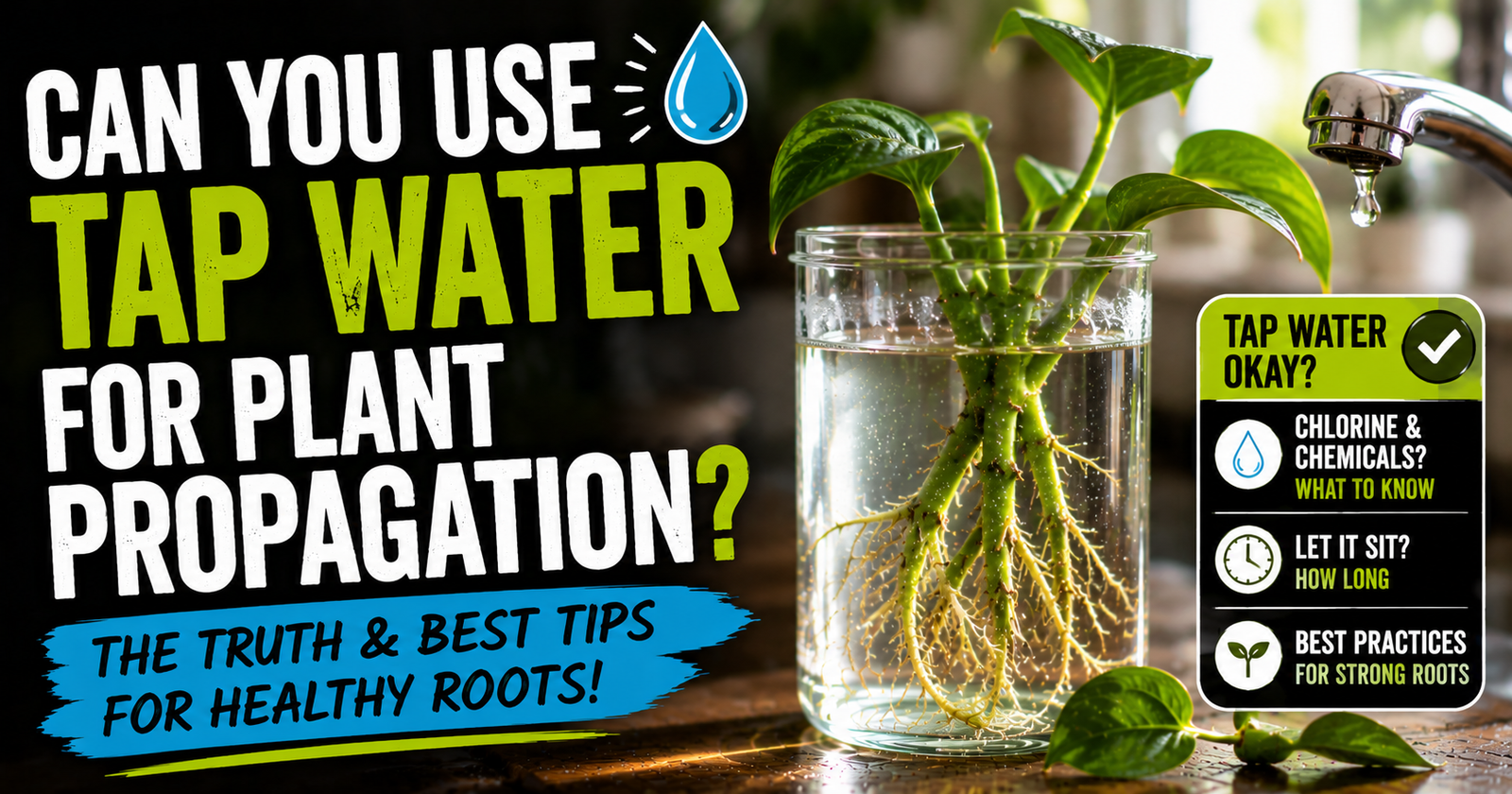
If your local water contains extremely high levels of minerals or chlorine, it may contribute to problems over time. A closer look at when those concerns matter can be found in this guide to tap water quality concerns.
For most gardeners, though, keeping the water fresh is much more important than switching to bottled or distilled water.
Why are only the bottom leaves turning yellow?
That’s actually one of the most common situations I see.
Older leaves naturally age first.
They’re also the leaves most likely to be sacrificed while the cutting directs its energy toward producing roots.
If the upper leaves remain healthy and the roots continue growing, I usually consider one or two yellow lower leaves completely normal.
Can too much rooting hormone cause yellow leaves?
Not usually.

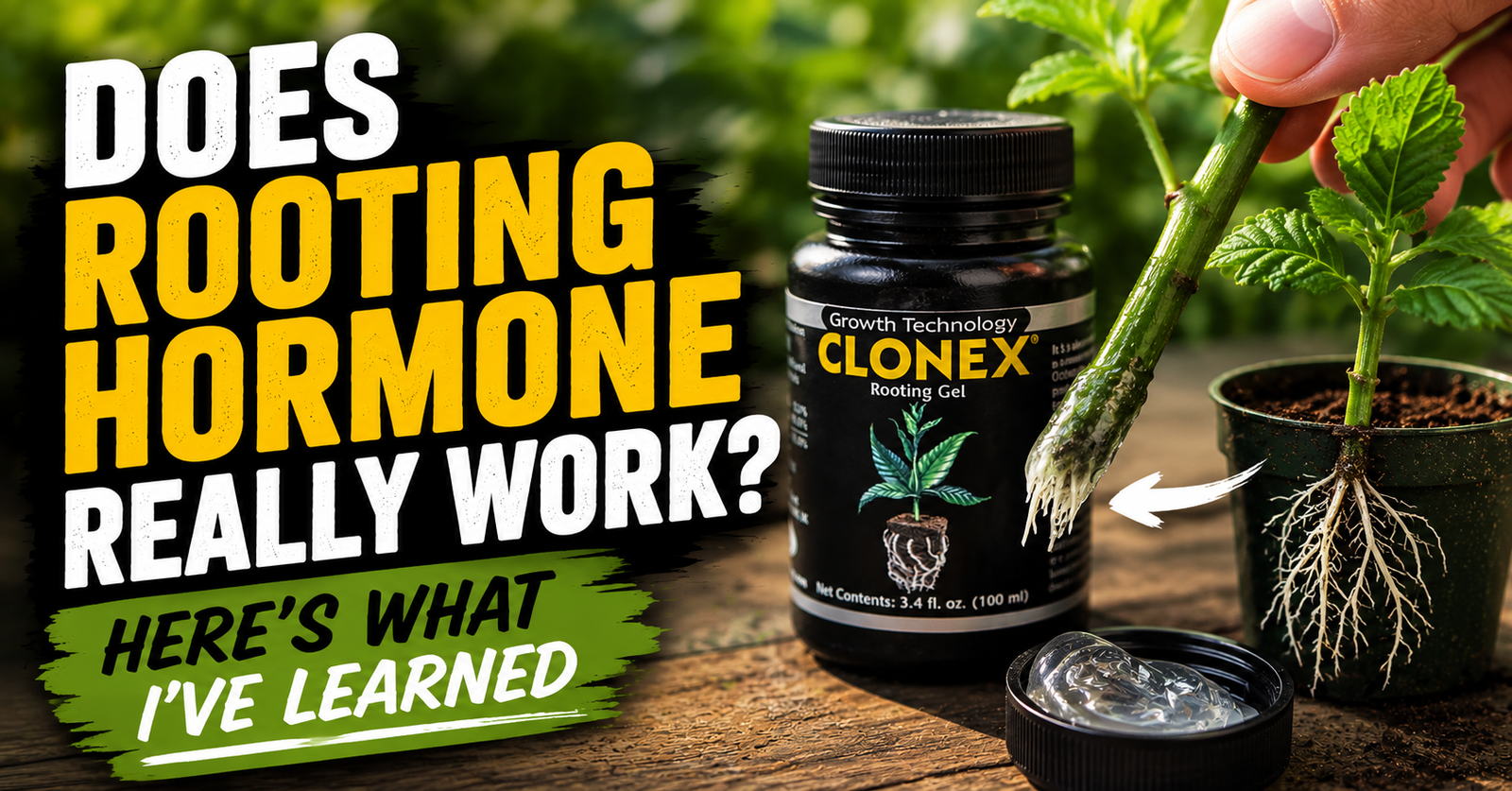
When used correctly, rooting hormone is very unlikely to be responsible for yellow foliage. If you use rooting hormone while propagating cuttings, Clonex rooting gel is a relevant product to review alongside the application instructions.
Problems like poor water quality, inadequate lighting, stem rot, or simply leaving the cutting in water too long are much more common causes.
If you’re using rooting hormone, focus on applying it correctly rather than assuming it’s responsible for every problem.
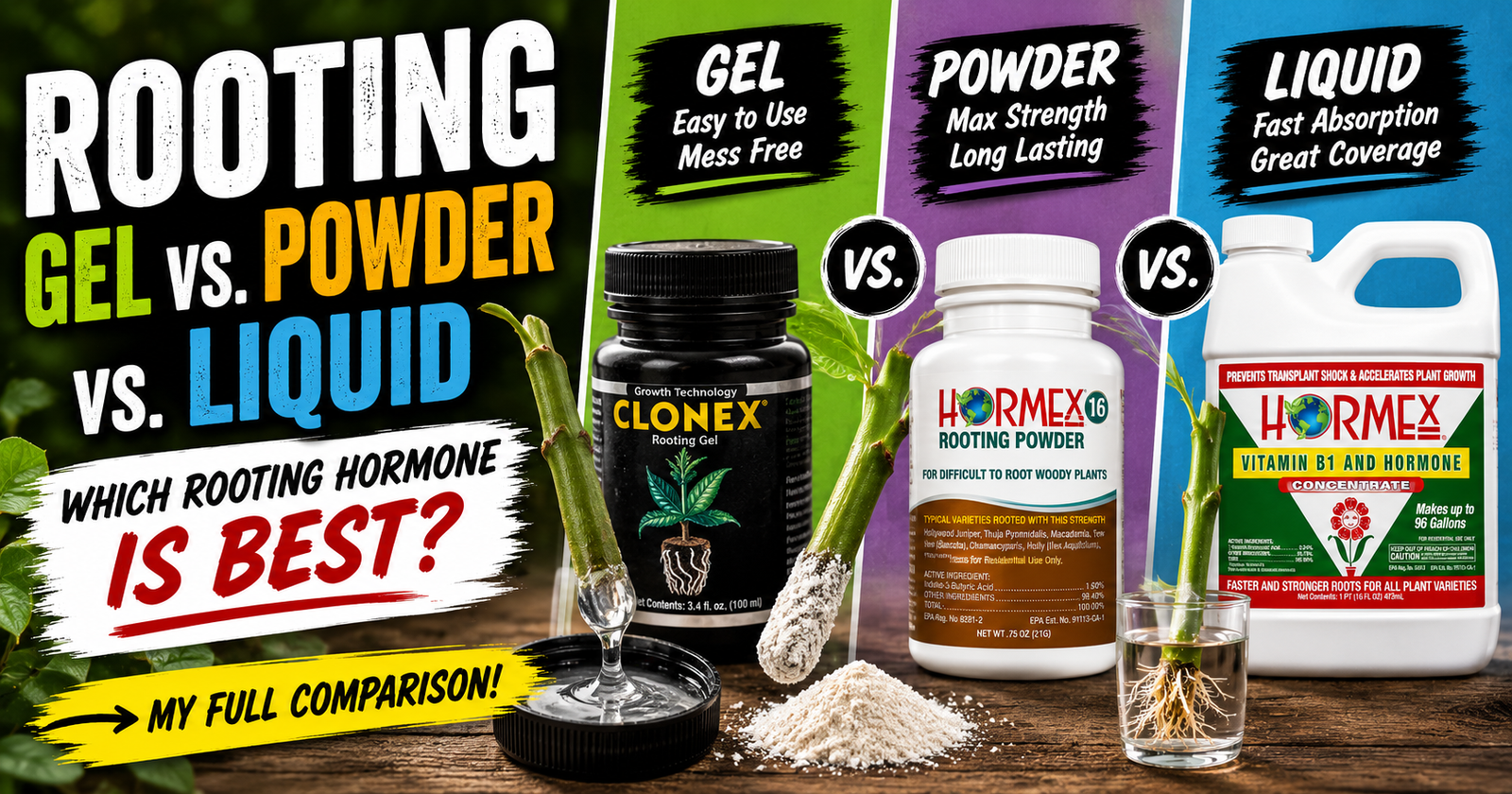
I explain the different types and when I use each one in my Rooting Gel vs. Powder vs. Liquid comparison.
Can yellow leaves mean the cutting is dying?
Sometimes, but definitely not always.
I’ve had plenty of successful propagations where one or two older leaves yellowed before the cutting developed a beautiful root system.
What worries me is when yellow leaves are accompanied by a soft stem, foul-smelling water, or mushy roots.
Those symptoms together point to a much bigger issue than leaf color alone.
Healthy Roots Matter More Than Perfect Leaves
If years of propagation have taught me anything, it’s this…
I pay far more attention to the roots than the leaves.
Leaves often react to problems that happened days or even weeks earlier.
Roots tell me what’s happening right now.
A cutting with healthy roots can usually replace an old yellow leaf without much trouble.
A cutting with failing roots will continue declining no matter how green the foliage looked a few days earlier.
Whenever you’re trying to diagnose a propagation problem, start below the water line.
That’s where the real story usually begins.
Once I stopped chasing every yellow leaf and started evaluating the entire cutting, my success rate improved dramatically.
About the Author
Daxon Weaver is the founder of PropagationWorld, where he shares practical propagation techniques, honest product reviews, and years of hands-on experience rooting everything from common houseplants to woody shrubs and fruit plants. After propagating thousands of cuttings, he enjoys helping gardeners solve problems before they lose valuable plants.