
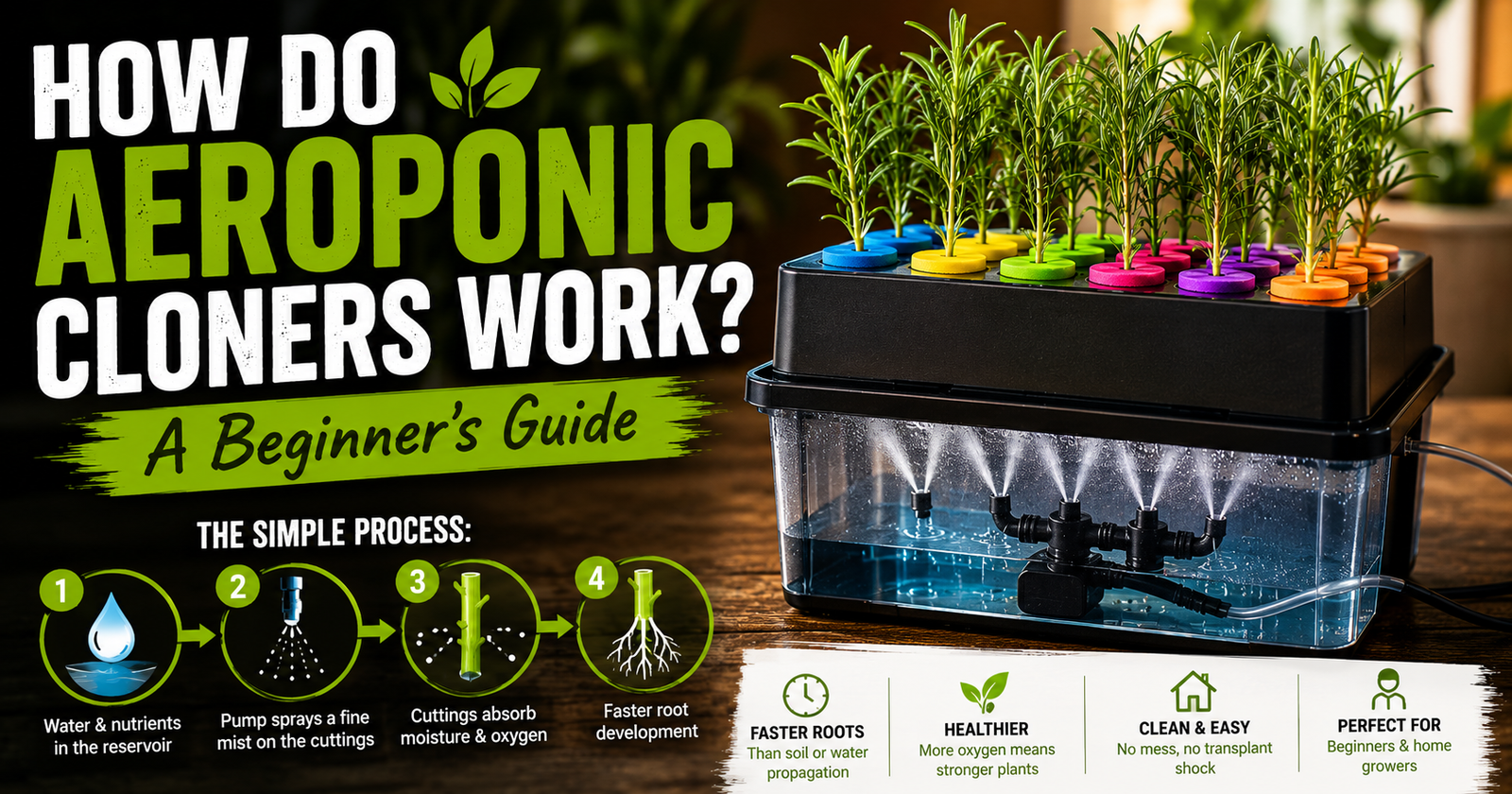
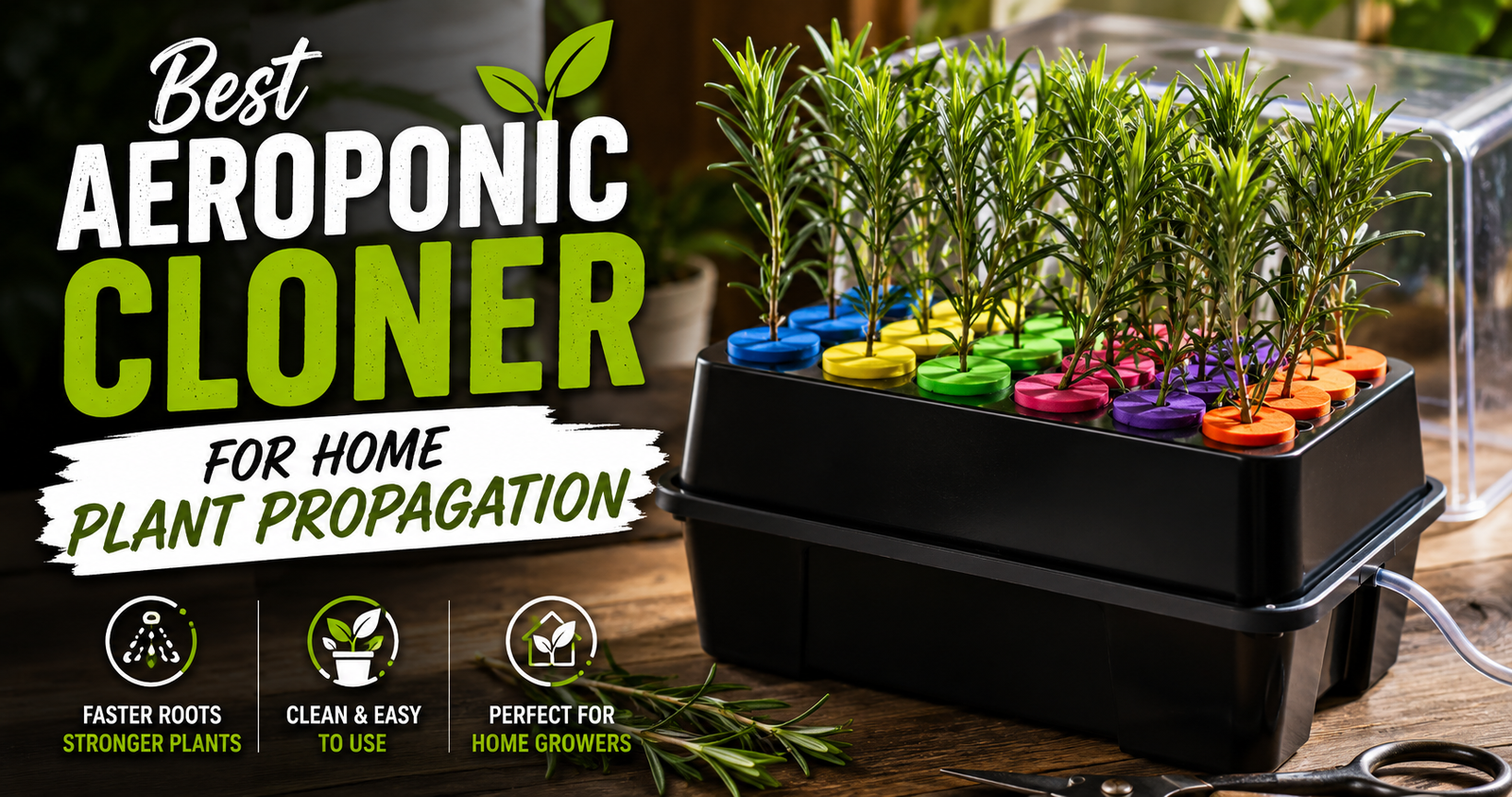
If you’ve ever looked inside an aeroponic cloner, it almost seems too simple to work. There isn’t any soil, there usually isn’t any potting mix, and in many cases, the only thing supporting the cuttings is a soft neoprene collar.
Instead of rooting in soil or sitting in a glass of water, the cuttings hang inside a closed chamber while a small pump sprays water onto the lower stems. That constant supply of moisture—combined with plenty of oxygen—is what makes aeroponic cloners one of the fastest and most reliable propagation methods available for many plants.
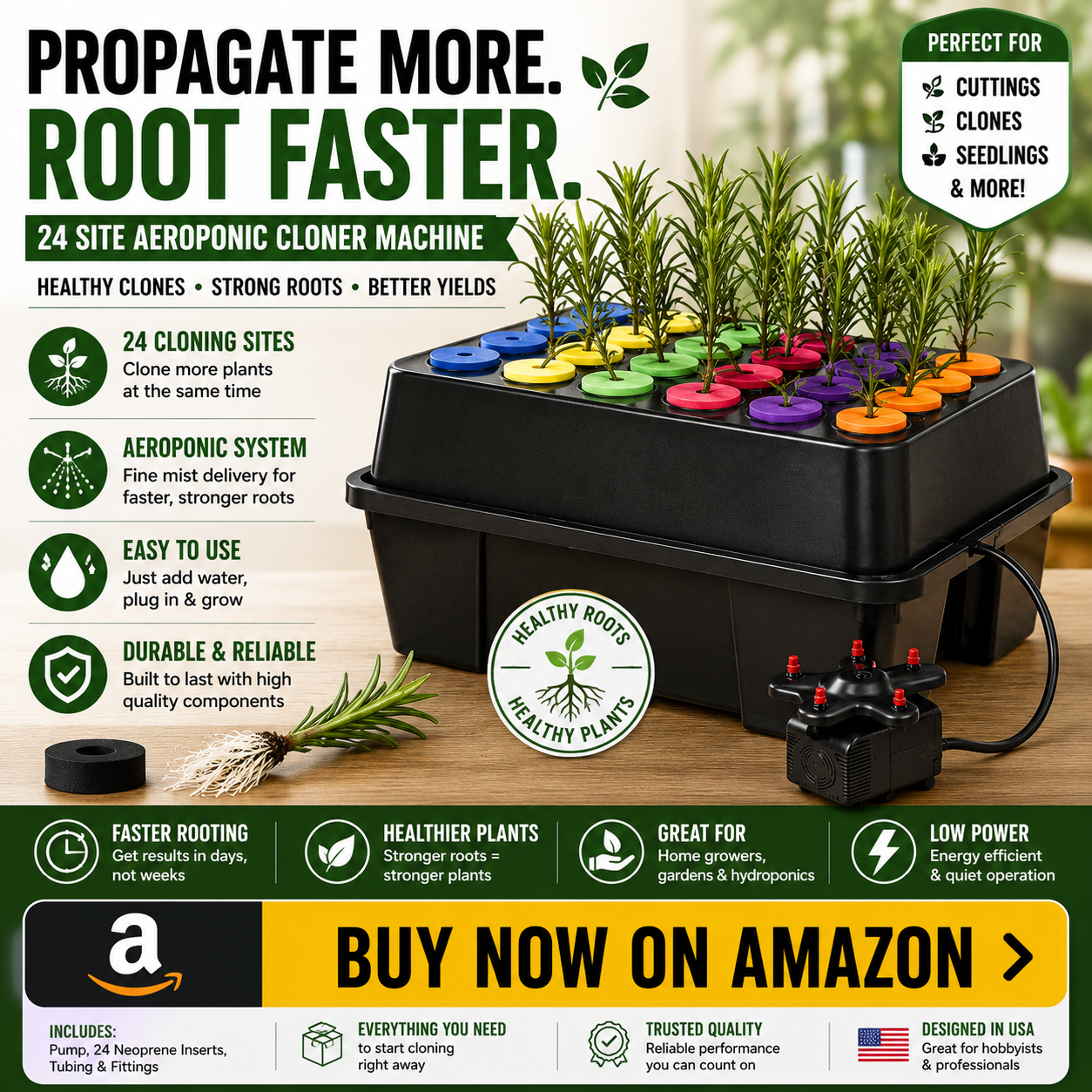
For home gardeners, they’re also surprisingly easy to use. Once the system is assembled, much of the work is done for you. As long as the reservoir stays clean and your cuttings are healthy, an aeroponic cloner provides a consistent environment that’s difficult to duplicate with traditional propagation methods. A 24-site cloner is one option for gardeners who want room to root multiple cuttings at once.
If you’re still deciding which system to buy, I recommend reading my guide to the Best Aeroponic Cloner for Plant Cuttings where I review the model I think offers the best value for most home gardeners.
What Is an Aeroponic Cloner?
An aeroponic cloner is a propagation system that roots plant cuttings by repeatedly spraying the lower stems with water instead of placing them in soil or standing water.
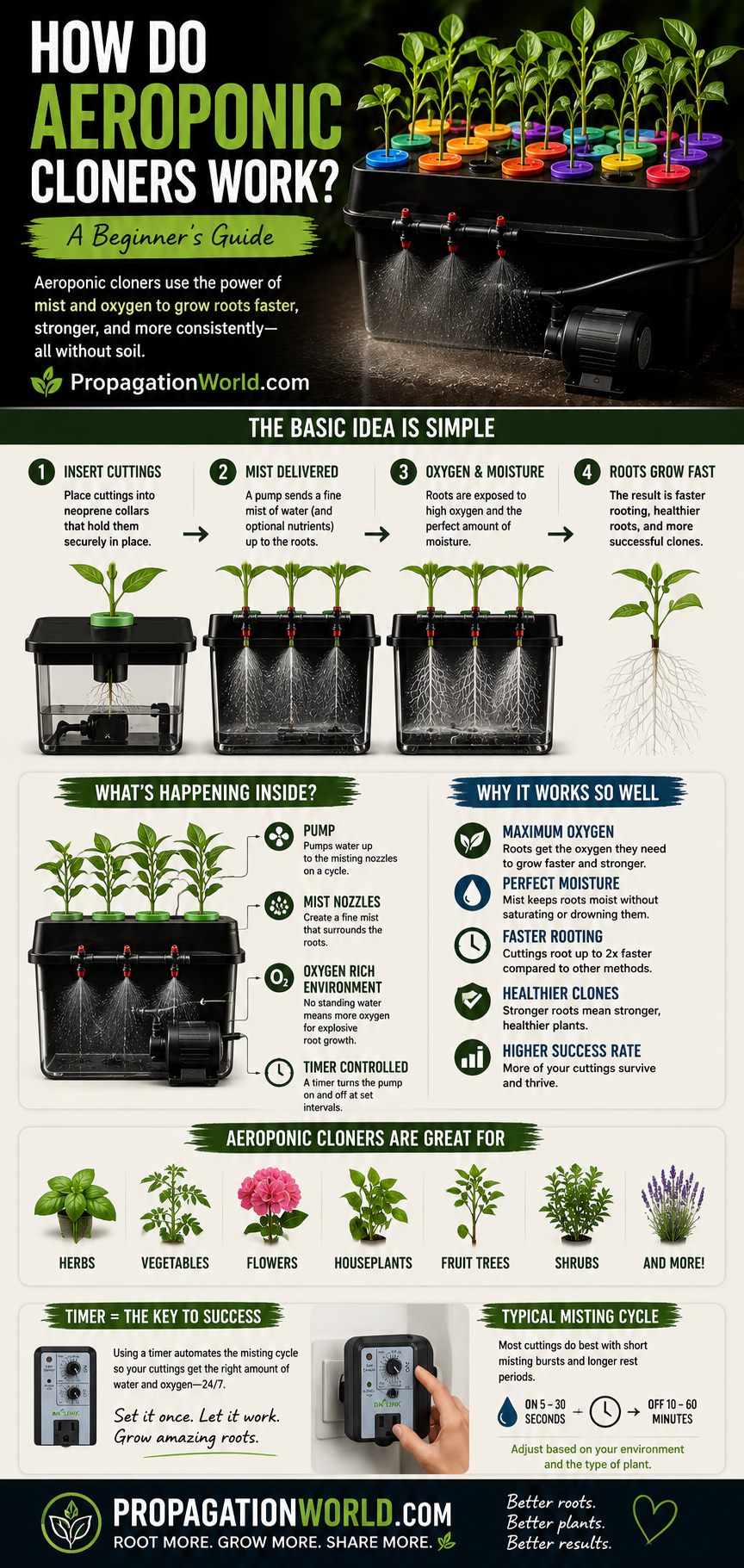
The cuttings are held upright in reusable neoprene collars that suspend the stems inside an enclosed chamber. Below them, a small water pump pushes water through a spray manifold fitted with several misting nozzles. As the water sprays upward, it coats the stems with moisture while allowing plenty of fresh air to circulate around them.
This combination of moisture and oxygen creates an ideal environment for new roots to develop.
Unlike traditional propagation methods that rely on constantly wet soil or fully submerged stems, aeroponic cloners expose developing roots to much more oxygen while still preventing them from drying out.
Why Aeroponic Cloners Root Cuttings So Well
Most people assume the secret is the water.
Water is certainly important, but it’s only half of the equation.
Developing roots also need oxygen.
When stems sit in a glass of water, oxygen levels around the cutting are naturally lower because the stem remains submerged all the time. In an aeroponic cloner, the stems receive frequent bursts of moisture while spending the time between spray cycles surrounded by humid, oxygen-rich air.
That balance is one reason many gardeners notice faster rooting and healthier root systems compared to traditional water propagation.
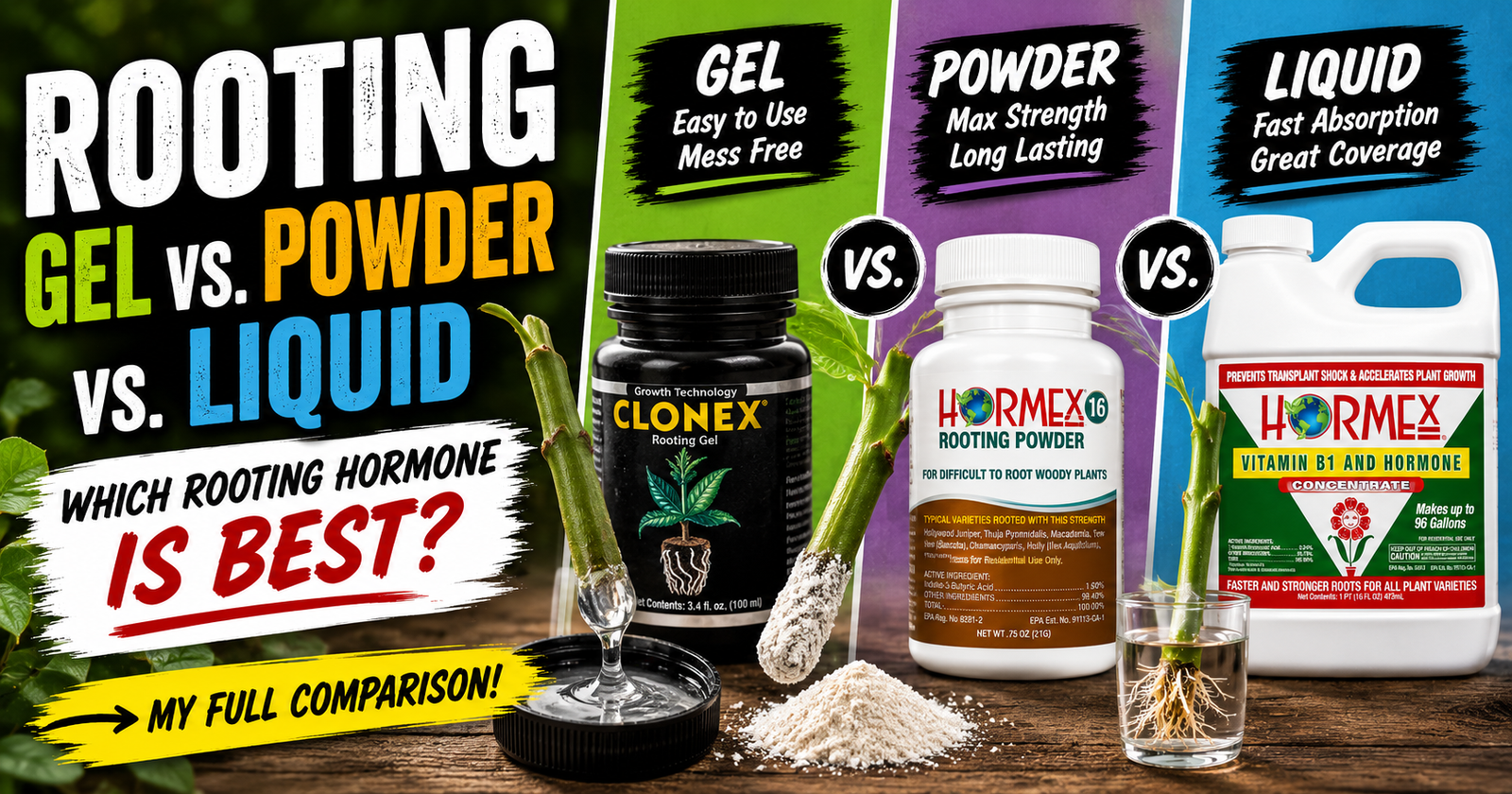
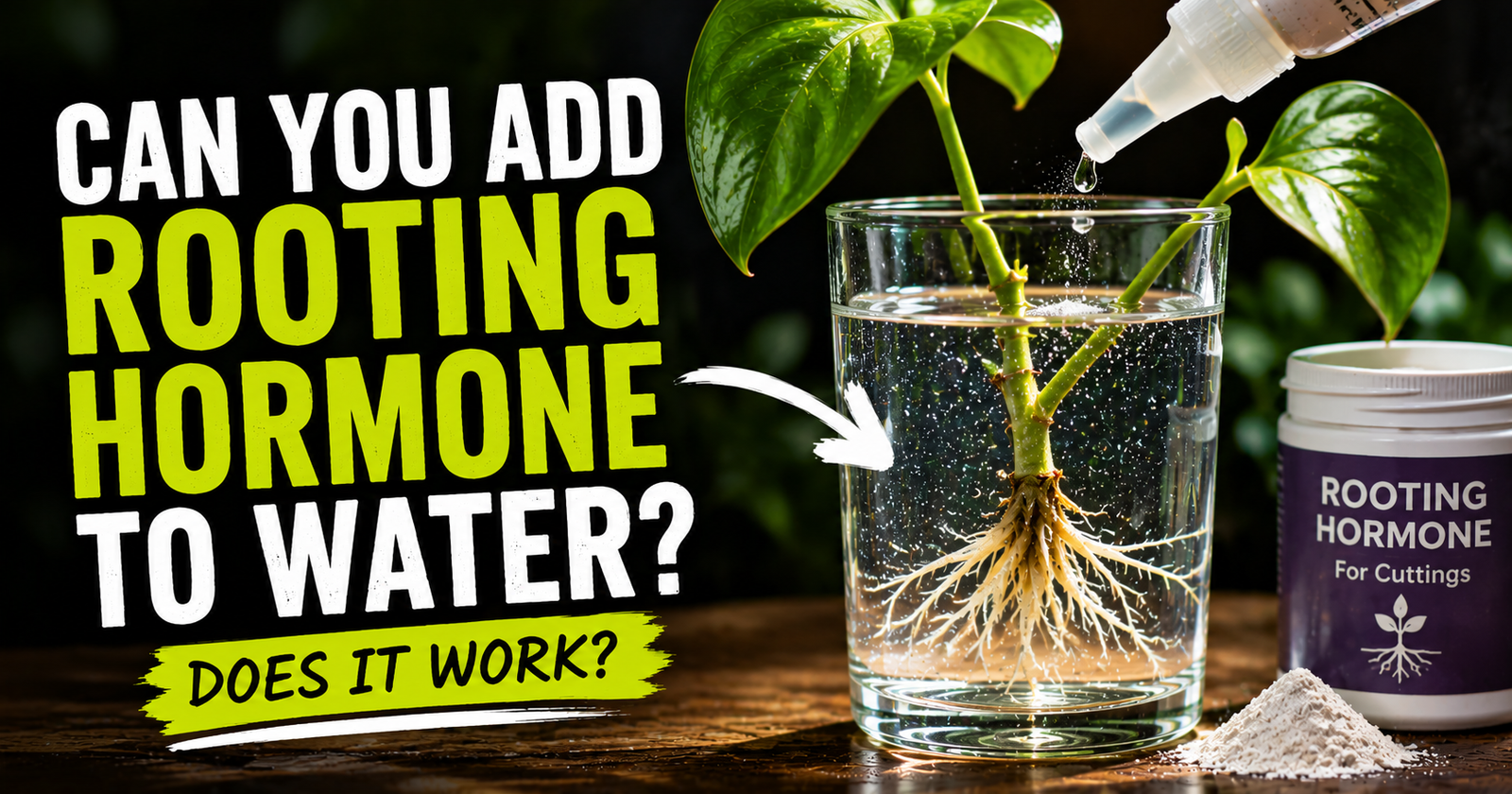
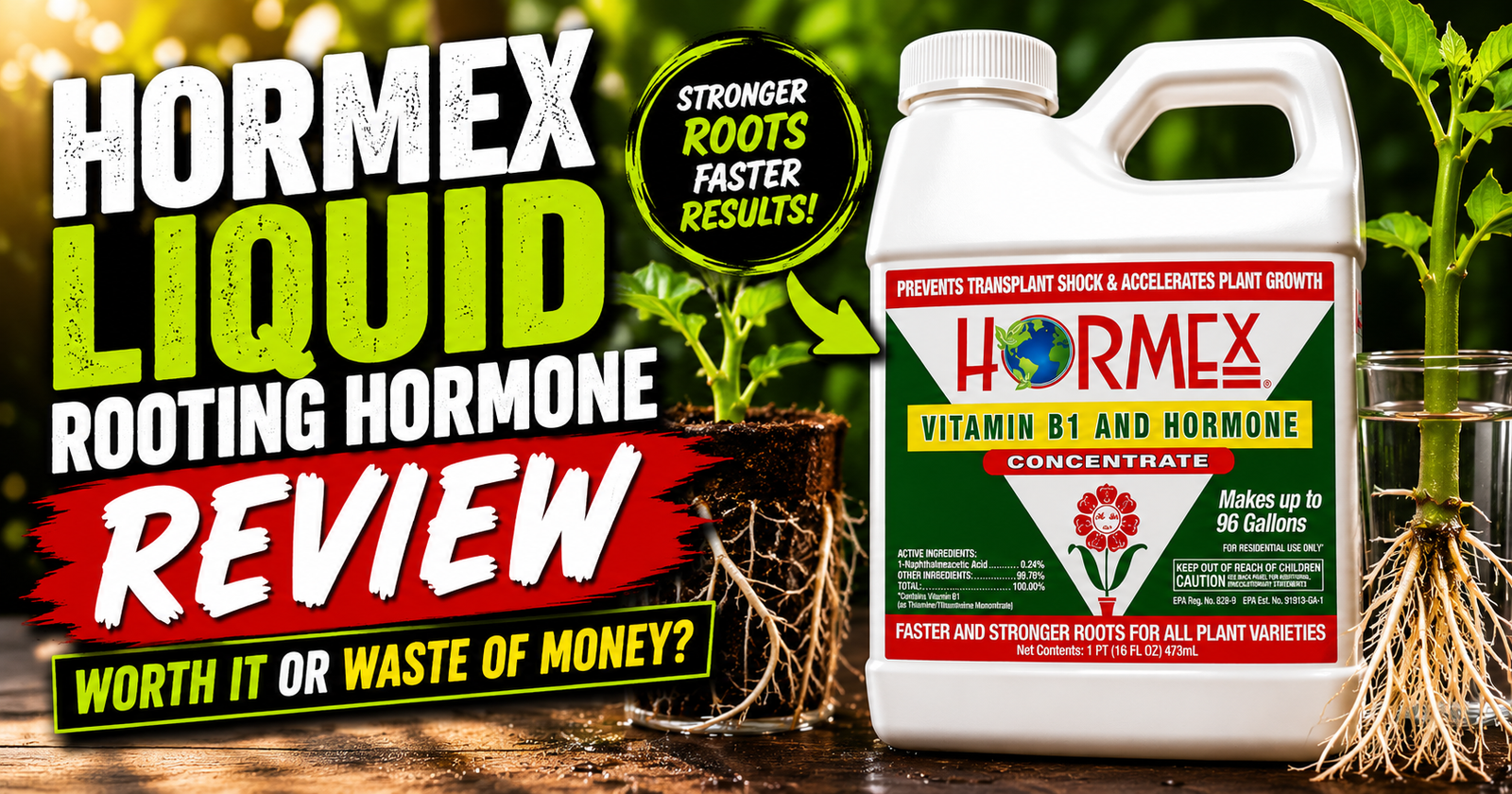
Of course, no propagation system can compensate for poor technique. Starting with healthy cuttings and using the proper rooting hormone can make just as much difference as the equipment itself. If you’re still deciding which rooting hormone is best, I recommend reading Rooting Gel vs. Powder vs. Liquid – Which Rooting Hormone Is Best? before getting started.
The Main Parts of an Aeroponic Cloner
Although different brands have slightly different designs, almost every home aeroponic cloner contains the same basic components. Understanding what each part does makes the entire system much easier to understand and troubleshoot.
Reservoir
The reservoir is simply the water tank that supplies the entire propagation system. Every spray cycle begins here.
Keeping the reservoir clean is extremely important because algae, bacteria, and mineral buildup can eventually reduce performance and increase the chances of problems developing around your cuttings.
Water Pump
The pump is the heart of the entire system.
It pulls water from the reservoir and forces it upward through the spray manifold.
Without the pump, nothing happens.
Fortunately, most replacement pumps are inexpensive and easy to install if one ever wears out.
Spray Manifold
The spray manifold distributes water evenly throughout the chamber.
Attached to the manifold are several small spray nozzles that create the mist or fine spray responsible for keeping the stems moist.
Over time, these nozzles can occasionally become clogged with mineral deposits, so routine cleaning is part of normal maintenance.
Neoprene Clone Collars
Instead of filling net pots with soil or another growing medium, aeroponic cloners use soft neoprene collars.
These collars gently hold each cutting upright while allowing the lower portion of the stem to hang freely inside the propagation chamber.
One advantage of neoprene collars is that they’re reusable. After cleaning and sanitizing them, they can be used for many future propagation projects.
Lid
The lid serves more than one purpose.
It supports the collars while also blocking light from reaching the reservoir.
Limiting light exposure helps reduce algae growth and keeps the water cleaner for longer periods.
How an Aeroponic Cloner Actually Roots a Cutting
The process begins with taking a healthy cutting from a vigorous parent plant.
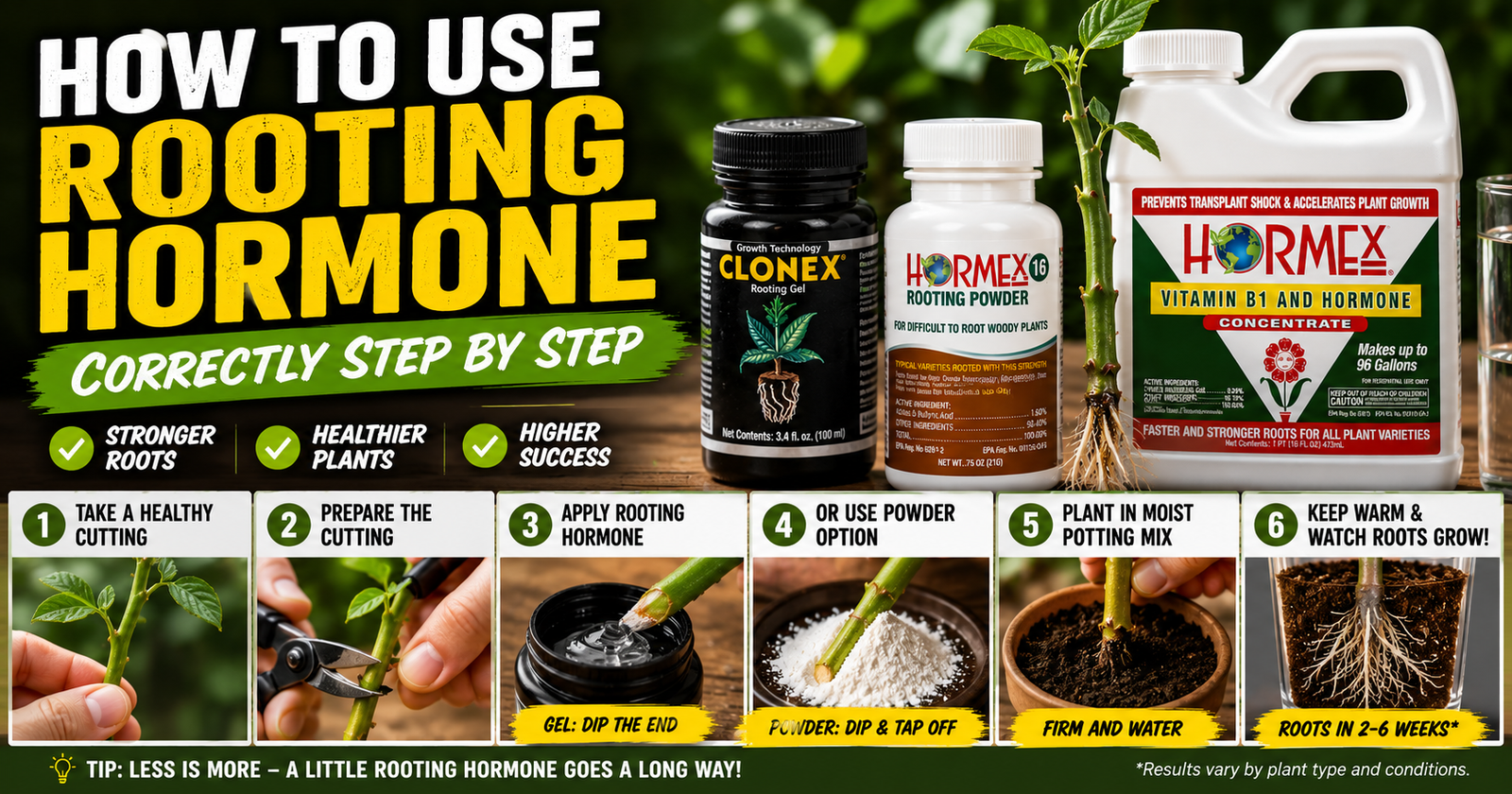
After trimming the stem just below a node, many gardeners apply rooting hormone before placing the cutting into the neoprene collar. While rooting hormone isn’t always required, it often improves success rates with woody plants and slower-rooting species. If you’re new to using it, my guide on How to Use Rooting Hormone Correctly Step by Step walks through the process from start to finish.
Once the cutting is in place, the pump begins spraying water onto the lower stem. Over the next several days, the cut end forms a protective callus before tiny root initials begin to emerge. As those roots grow longer, they continue receiving a steady supply of moisture and oxygen until they’re ready to be transplanted into soil or another growing medium.
The result is a clean, efficient propagation system that removes much of the guesswork involved with traditional methods while allowing you to root dozens of cuttings at the same time.
Should an Aeroponic Cloner Run All the Time?
This is one of the biggest questions new aeroponic cloner owners have.
Many manufacturers recommend allowing the pump to run continuously, and for plenty of plants, that works perfectly well. The stems stay consistently moist, and roots often develop quickly without any adjustments.
However, I’ve found that continuous operation isn’t the only option.
Some gardeners prefer giving the stems short breaks between spray cycles. During those pauses, the stems remain in a humid environment while also being exposed to fresh oxygen before the next misting cycle begins. Depending on the plant you’re propagating and your growing conditions, this approach may work just as well—or even better.
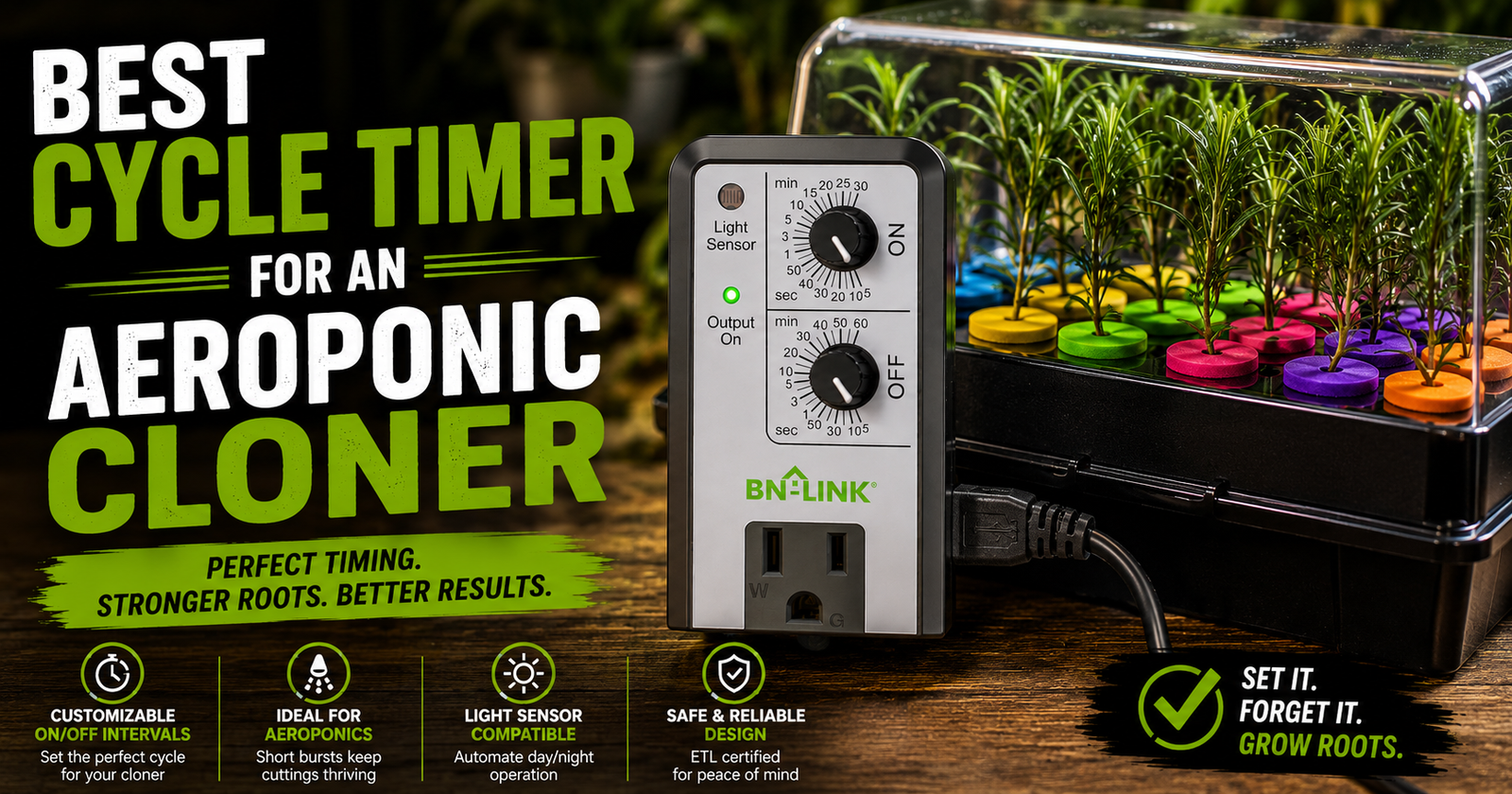
That’s why I recommend using a repeat cycle timer rather than relying on continuous operation. A timer gives you the flexibility to experiment with different spray intervals instead of being locked into a single method.
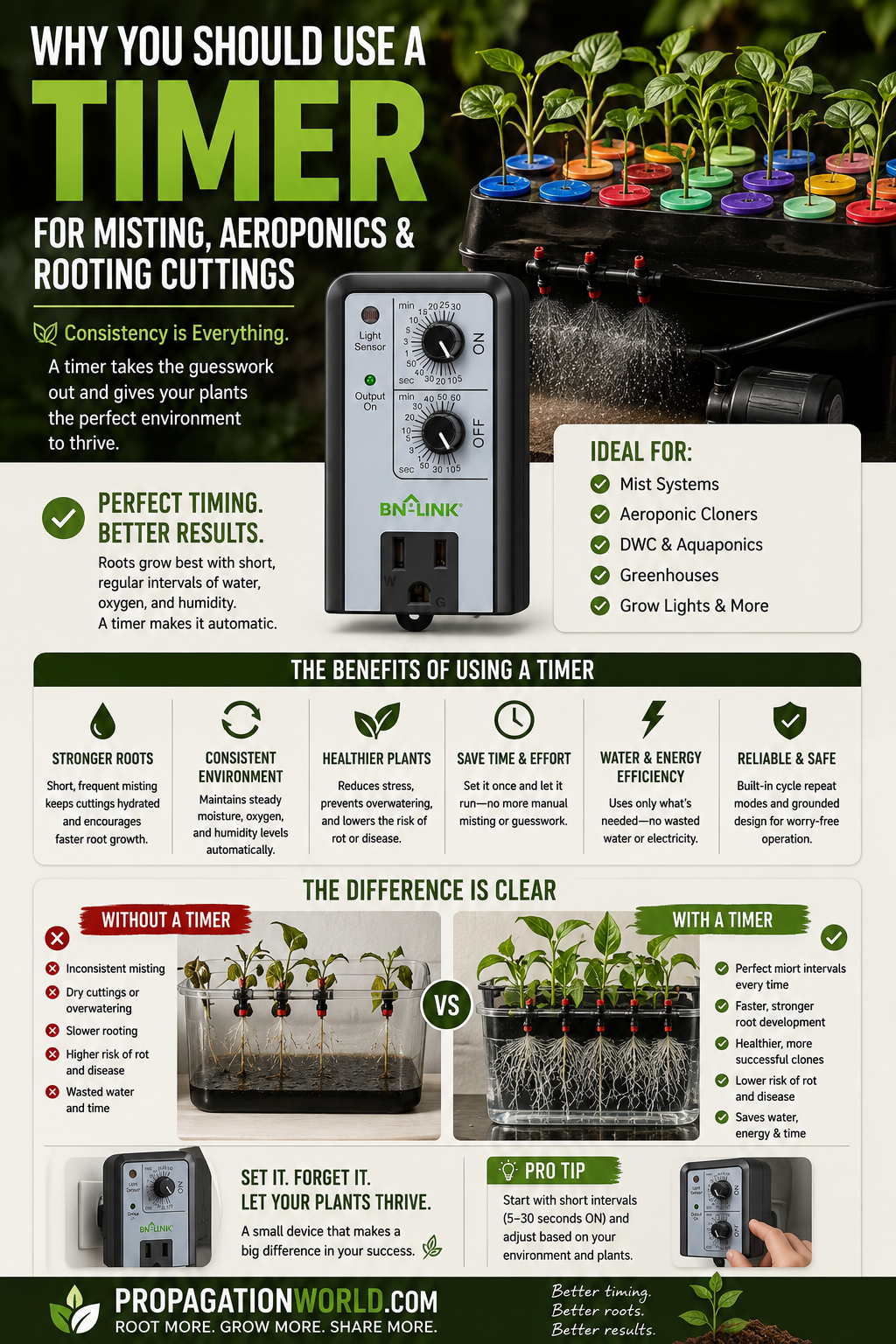
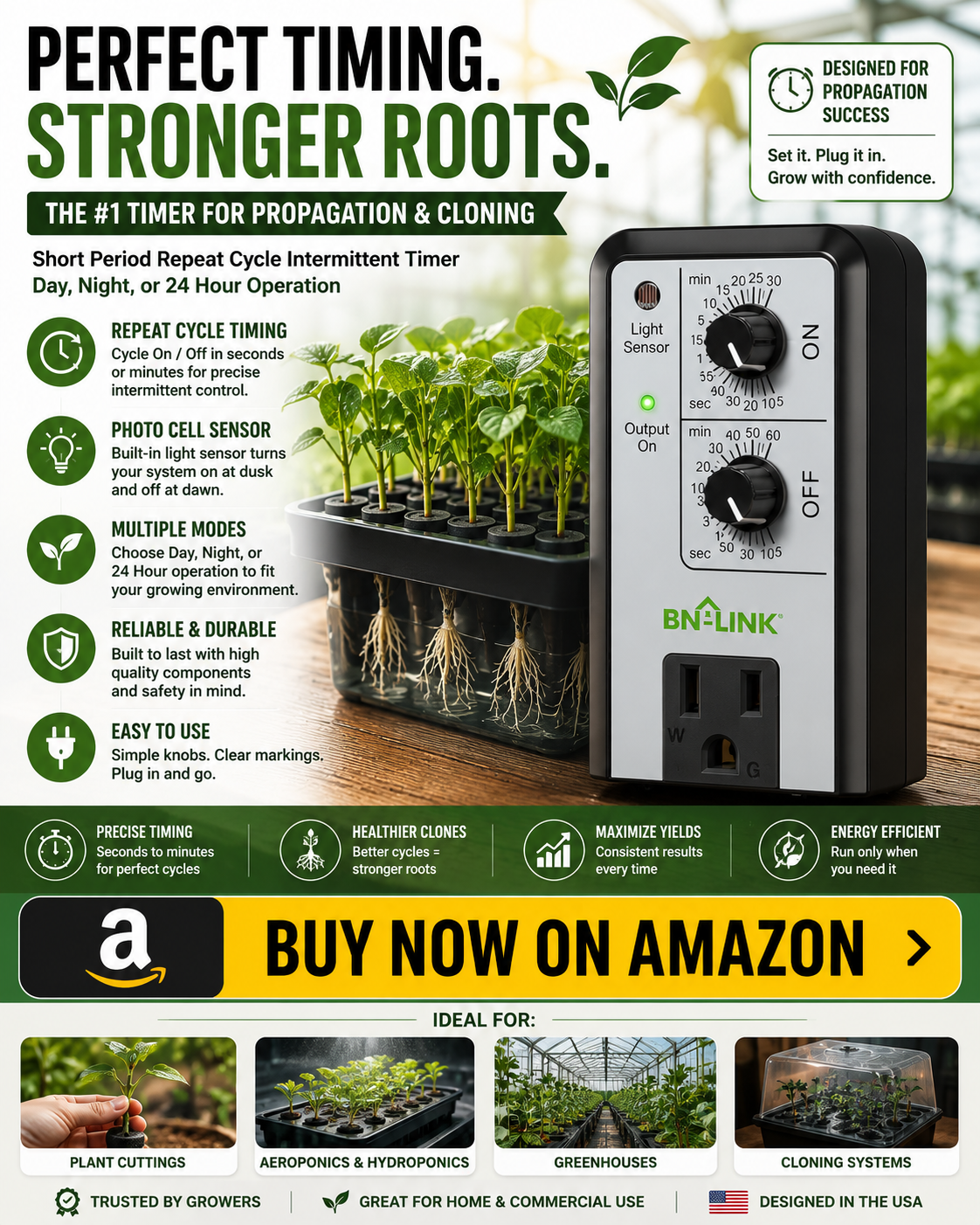
If you’re looking for a timer designed specifically for this purpose, I recommend the BN-LINK Short Period Repeat Cycle Timer. It allows you to create repeating on-and-off intervals that are ideal for aeroponic propagation. I also put together a complete guide explaining how these timers work, recommended starting settings, and why I think they’re one of the best upgrades you can make in my article on the Best Cycle Timer for an Aeroponic Cloner.
Do You Need Rooting Hormone?
Not always.
Many easy-to-root plants will happily produce roots without any rooting hormone at all. Pothos, tradescantia, coleus, and several other common houseplants often root readily in favorable conditions.
However, rooting hormone can be a worthwhile addition when you’re propagating plants that are naturally slower to root. Many shrubs, fruit plants, roses, and woody ornamentals respond well to the extra encouragement, especially when combined with a healthy propagation environment.
The nice thing about an aeroponic cloner is that it works with virtually any type of rooting hormone. Whether you prefer a gel, powder, or liquid formula, the treated cutting can simply be placed into the neoprene collar after application.
If you’re still deciding which type to buy, I recommend reading my comparison of Rooting Gel vs. Powder vs. Liquid – Which Rooting Hormone Is Best? before making your decision.
What Plants Can You Root in an Aeroponic Cloner?
One of the biggest advantages of aeroponic propagation is its versatility.
A single machine can be used to propagate everything from common houseplants to fruiting shrubs and ornamental landscape plants.
Some popular choices include:
- Pothos
- Philodendron
- Monstera
- Tradescantia
- Spider plants
- Coleus
- Hydrangeas
- Roses
- Blueberries
- Elderberries
- Grapes
- Figs
- Rosemary
- Lavender
- Mint
- Basil
- Tomatoes
- Peppers
Of course, every plant is different. Some species produce roots in less than a week, while others may require several weeks before significant root development occurs.
Advantages of an Aeroponic Cloner
There are plenty of reasons why aeroponic cloners have become so popular among home gardeners.
Faster Root Development
Because cuttings receive an ideal combination of moisture and oxygen, many plants develop roots surprisingly quickly compared to traditional propagation methods.
Root More Cuttings at Once
Instead of filling your windowsill with jars of water or trays of soil, a single aeroponic cloner allows you to organize dozens of cuttings in one compact location.
Easy to Monitor Progress
Since the roots develop inside the propagation chamber rather than hidden beneath soil, it’s much easier to check their progress without disturbing the plant.
Less Guesswork
Maintaining the proper moisture level can be challenging when rooting cuttings in pots or trays. An aeroponic cloner automates much of that process, providing a more consistent environment from day to day.
Disadvantages of an Aeroponic Cloner
Like any gardening tool, aeroponic cloners aren’t perfect.
Higher Initial Cost
They cost more than a glass of water or a simple propagation tray. However, if you propagate regularly, many gardeners find the convenience well worth the investment.
Requires Electricity
Unlike passive propagation methods, an aeroponic cloner depends on a functioning pump and electrical outlet.
Routine Cleaning Is Necessary
To keep everything running smoothly, you’ll need to clean the reservoir, pump, collars, and spray nozzles between batches of cuttings. Fortunately, routine maintenance only takes a few minutes and helps prevent many common problems.
Are Aeroponic Cloners Worth It?
If you only root one or two cuttings each year, probably not.
A glass of water or a small propagation tray will likely meet your needs just fine.
But if you’re someone who enjoys propagating houseplants, shrubs, fruit plants, herbs, or ornamental flowers on a regular basis, I think an aeroponic cloner is one of the best investments you can make.
It simplifies the entire process, keeps your propagation area organized, and makes it much easier to root larger numbers of cuttings with consistent results.
When you pair a quality cloner with a repeat cycle timer and the appropriate rooting hormone, you’ve created a propagation setup that’s capable of handling almost any project around your home or garden.
If you’re still shopping, my review of the Best Aeroponic Cloner for Plant Cuttings walks through the model I recommend for most home gardeners and explains exactly why I think it’s the best value.
Frequently Asked Questions
Are aeroponic cloners good for beginners?
Absolutely. Most home aeroponic cloners are surprisingly simple to assemble and operate. Once you’ve prepared healthy cuttings and filled the reservoir with clean water, the system handles much of the work automatically.
How often should I clean an aeroponic cloner?
I recommend cleaning the reservoir, pump, spray manifold, nozzles, and neoprene collars after every propagation batch. Regular cleaning helps reduce algae, mineral buildup, and bacteria that could interfere with healthy root development.
Can I use an aeroponic cloner without rooting hormone?
Yes. Many plants root successfully without any rooting hormone. However, using one can improve results with slower-rooting or woody species.
Is an aeroponic cloner better than water propagation?
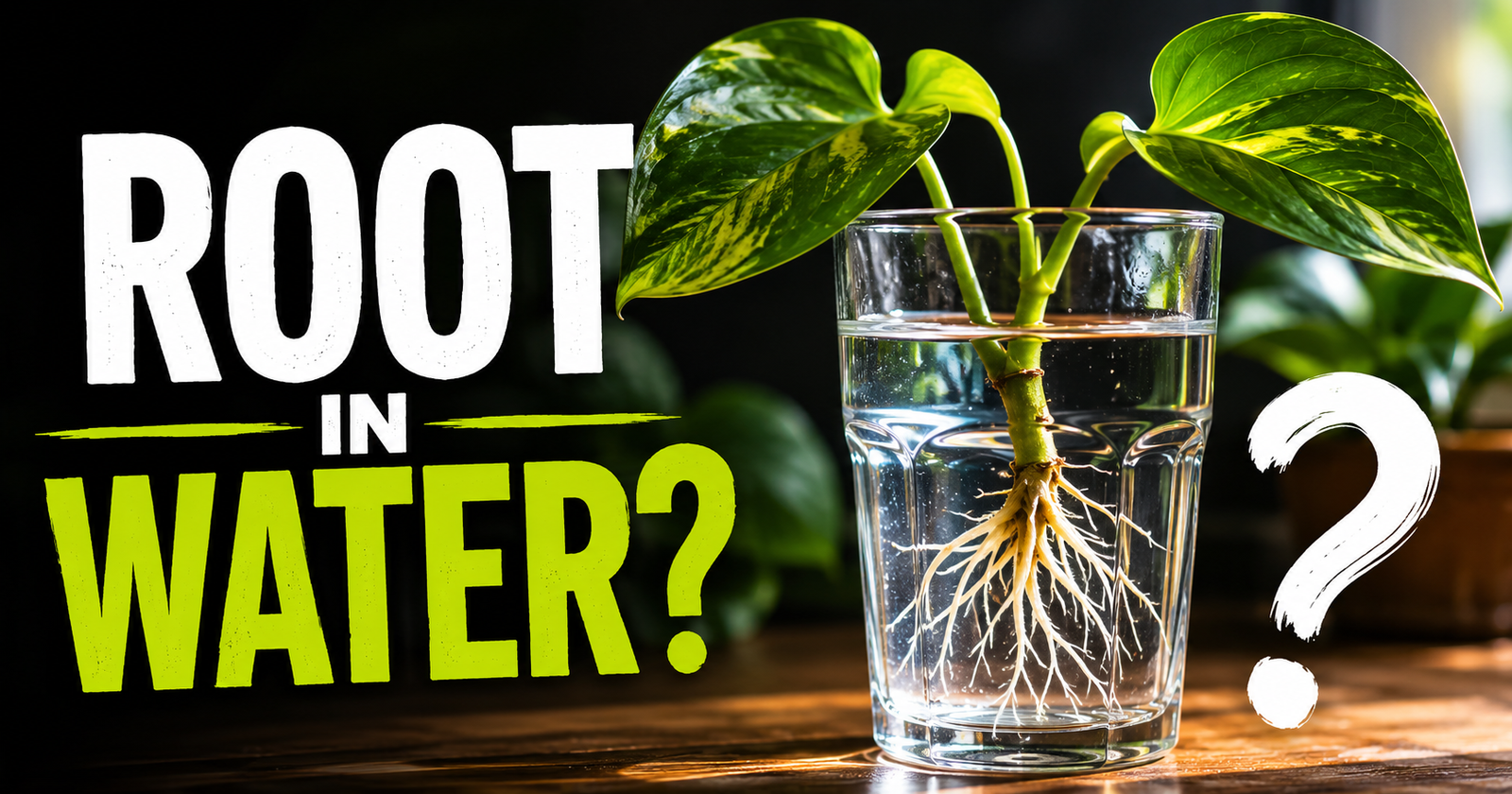
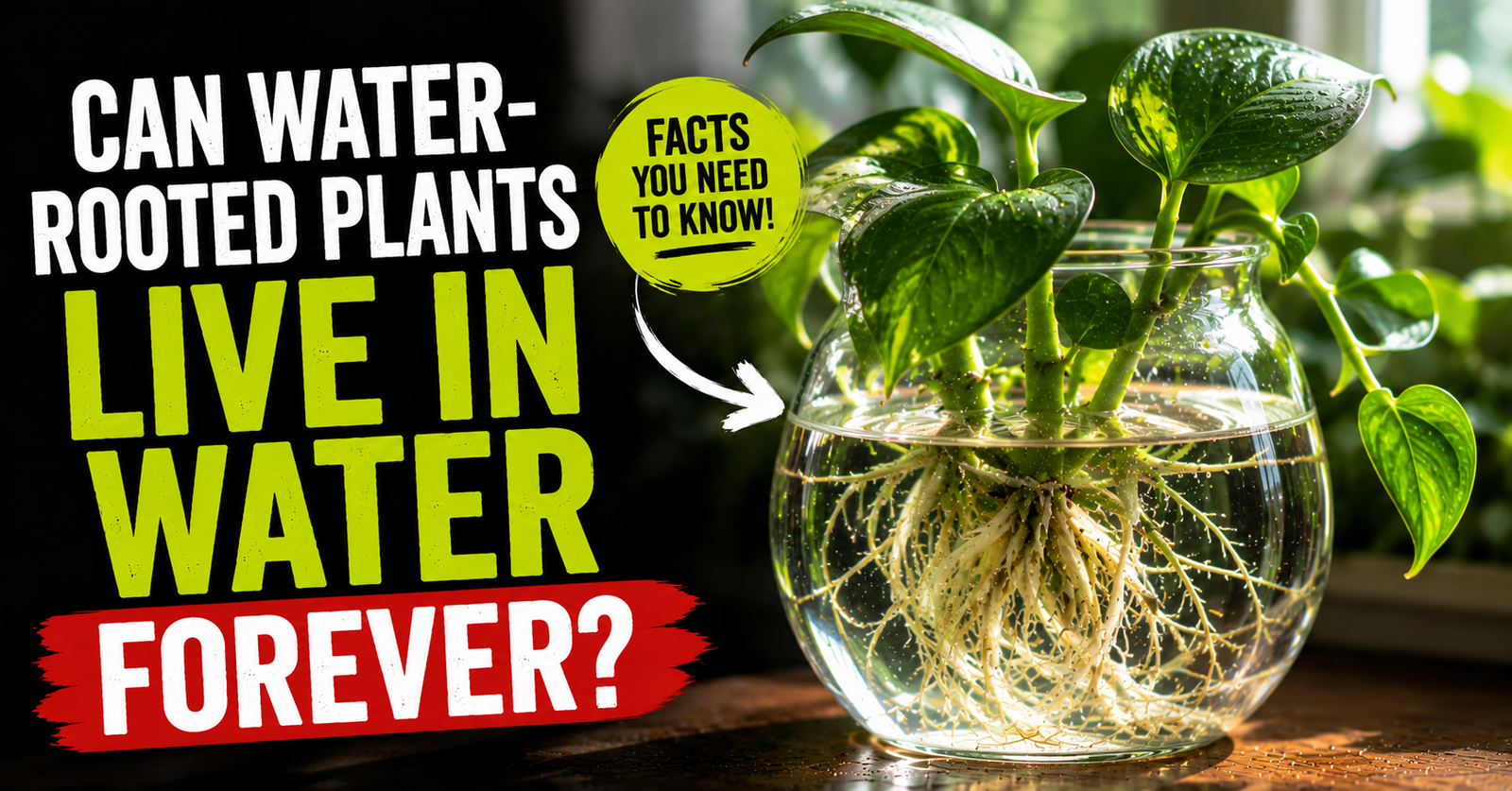
Both methods work well, but they have different strengths. Water propagation is inexpensive and simple, while an aeroponic cloner provides greater consistency, better oxygen exposure around the stems, and the ability to root many cuttings at the same time. Gardeners comparing these options can start with the simple water-rooting method before considering more specialized equipment.
How long does it take for cuttings to root?
It depends on the plant you’re propagating. Some easy-to-root houseplants may develop roots within a week, while woody shrubs and fruit plants often require several weeks before they’re ready to transplant.
Author: Dax Weaver
Dax Weaver is the founder of PropagationWorld.com and enjoys helping home gardeners propagate more plants through practical techniques, honest equipment reviews, and real-world growing experience. From rooting hormone and aeroponic cloners to propagation methods and troubleshooting, his goal is to make plant propagation easier and more successful for gardeners of every skill level.