
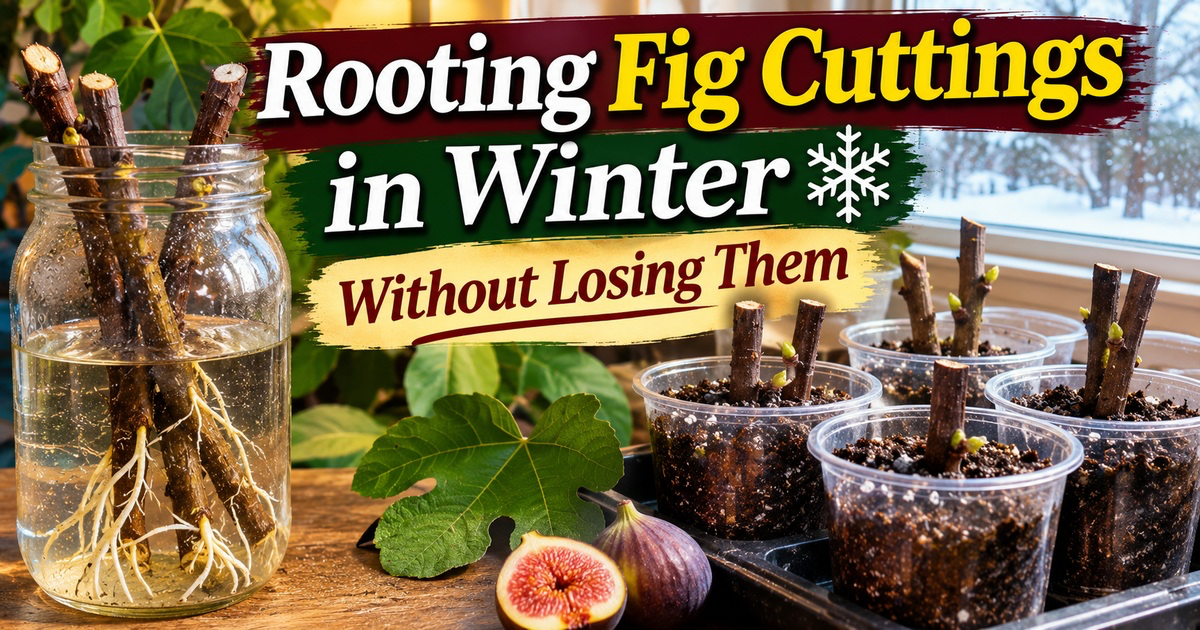
There’s a particular problem with rooting fig cuttings during winter that I think deserves a lot more attention.
You can do almost everything right, see beautiful green leaves begin growing, and still lose the cutting before spring arrives.
The frustrating part is that those new leaves make it look like you’ve succeeded.
You start imagining where you’ll plant your new fig tree.
Then the leaves droop, the stem begins looking unhealthy, and you discover the cutting never developed enough roots to support that growth.
Winter propagation has a way of exposing every little weakness in your setup.
The room might be warm enough for the buds to open but too cool around the base of the cutting for dependable root development.
The propagation medium might stay wet for days because there’s very little evaporation.
Or you might successfully root the cutting in December, only to discover you don’t have enough light to keep a young fig tree growing indoors until spring.
Yes, you can root fig cuttings during winter. But getting roots to appear is only half the job. Keeping that young tree healthy until outdoor conditions improve is just as important.
Here in Missouri, that’s something I take seriously when planning any winter propagation project.
Our outdoor growing season doesn’t begin simply because we have a few warm afternoons in February or March.
A young fig tree that’s been growing indoors needs protection until the weather is suitable for moving it outside.
That’s why I think winter fig propagation should begin with a plan for the entire season, not just the first few weeks.
Is Winter Actually a Good Time to Root Fig Cuttings?
It can be an excellent time.
Fig trees are commonly propagated from dormant hardwood cuttings, and winter is when that material becomes available.
Once a fig tree has dropped its leaves and entered dormancy, you can collect mature wood without dealing with the moisture demands of large, actively growing leaves.
That’s a major advantage.
A dormant cutting doesn’t have to support a full canopy while it’s trying to develop roots.
Instead, it can use stored reserves to support callus formation, root initiation, and eventually new shoot growth.
However, there’s an important difference between collecting cuttings in winter and actively rooting them during winter.
You don’t necessarily need to do both at the same time.
Collecting Cuttings and Rooting Them Are Two Different Decisions
Let’s say you’re pruning a dormant fig tree in December.
You collect several healthy branches that would make good propagation material.
You have two reasonable options.
You can begin rooting them indoors right away.
Or you can store them under suitable dormant conditions and start the rooting process closer to spring.
Neither approach is automatically better.
The right choice depends on whether you have the space, lighting, and temperature control to support the plants after they begin growing.
Personally, I think that’s one of the most important questions to answer before starting winter cuttings.
It’s easy to find room for a dozen dormant sticks.
Finding room for a dozen actively growing fig trees under lights for several months is a completely different situation.
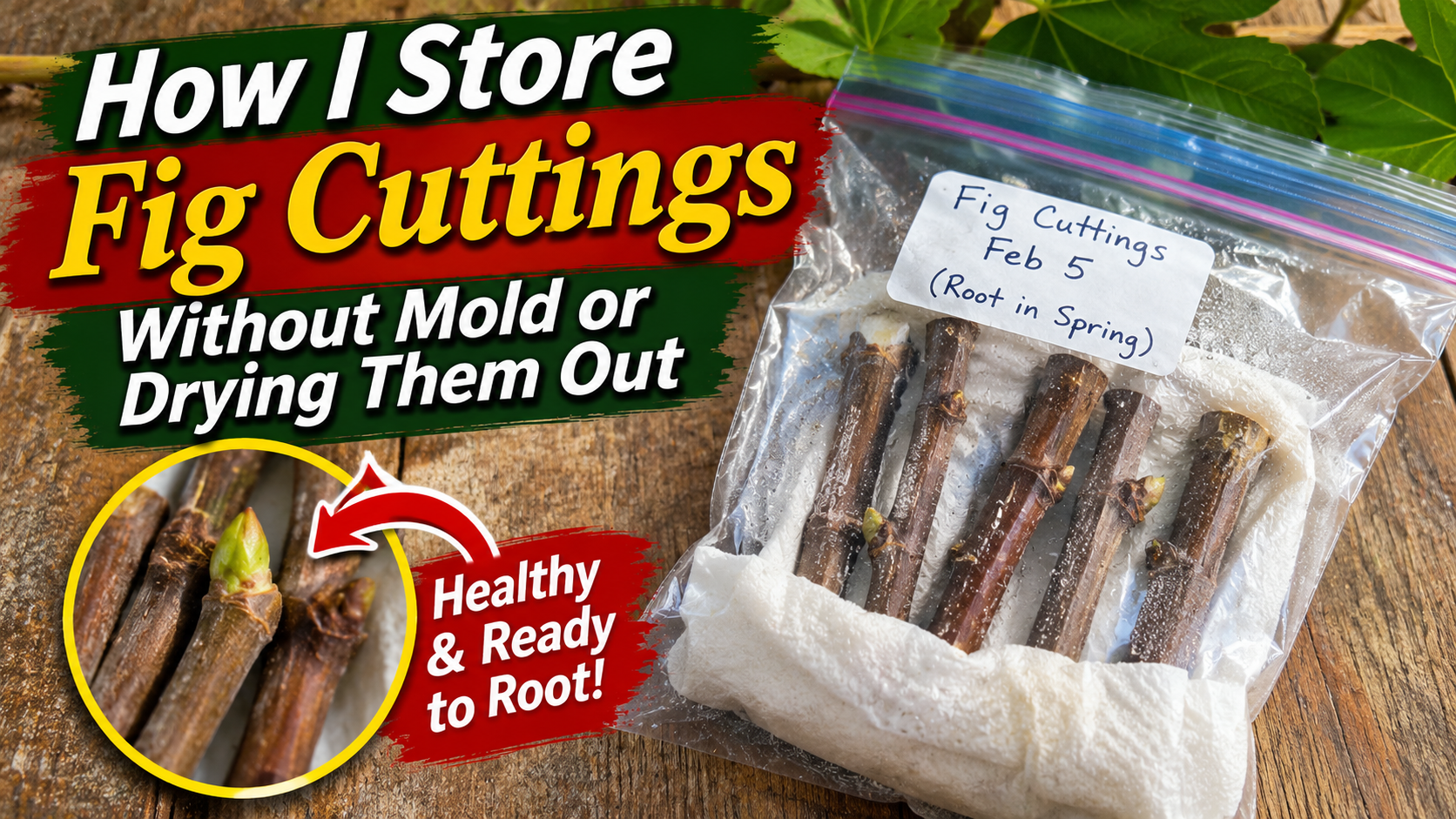
If you’re collecting cuttings now but aren’t ready to root them, I’ve explained how I approach storing dormant fig cuttings without mold or dehydration.
There’s no reason to rush the rooting process if your growing space isn’t ready.

When Would I Start Rooting Fig Cuttings Indoors?
For a Missouri gardener with a reasonably good indoor setup, late winter can be a practical time to begin.
January or February may work well if you have suitable lighting and room for the plants afterward.
Starting in December is possible, but it also means keeping newly rooted plants healthy indoors for a longer period.
That’s where some gardeners run into trouble.
A cutting that roots successfully in January may need several more months of indoor care before it’s safe to move outside.
During that time, it needs more than the warm, humid conditions used to initiate roots.
It needs enough light to support its new leaves.
It needs a suitable container.
It needs careful watering.
And it needs time to develop into a stronger plant.
Why I Wouldn’t Automatically Start in November
Imagine starting twenty fig cuttings in November.
By December, several have roots and new leaves.
By January, some are growing rapidly.
Now you’re managing twenty young fig plants during the darkest part of winter.
Without adequate grow lighting, the stems may stretch toward whatever light is available.
The leaves may become pale or weak.
And if the plants remain in tiny propagation containers too long, root development may become restricted.
That’s a lot of extra work simply because the cuttings were started early.
If I don’t have a suitable indoor growing area, I’d rather store the dormant wood and begin rooting later.
There’s nothing wrong with waiting until you’re better prepared.
Choosing the Best Fig Cuttings for Winter Rooting
Not every dormant branch deserves a place in the propagation tray.
I would start by looking for healthy, mature wood with several viable nodes.
For many home propagation projects, cuttings approximately 6 to 9 inches long are a practical starting point.
Pencil-thick wood is often convenient to handle, although healthy cuttings can vary in thickness.
I want the wood to feel firm and mature.
I don’t want soft, immature tips, severely shriveled stems, or branches showing obvious disease.
One-Year-Old Wood Is a Good Starting Point
Healthy, mature growth from the previous growing season is commonly used for hardwood propagation.
The wood should have hardened before dormancy.
It’s usually easier to work with than extremely thin, immature growth.
Older wood can sometimes root too, but I wouldn’t automatically assume thicker branches are better.
For someone learning winter propagation, reasonably uniform cuttings make it easier to compare results and maintain consistent conditions.
Don’t Forget Which End Goes Down
Dormant fig cuttings can look surprisingly similar from one end to the other.
Before placing several cuttings into a bag or container, make sure you can identify the basal end.
That’s the end originally closest to the roots of the parent tree.
It’s the end that belongs in the rooting medium.
A simple marking system can prevent mistakes.
I would rather spend a few seconds labeling cuttings than discover later that I’ve planted some upside down.
The Rooting Medium I’d Choose for Winter Fig Cuttings
Winter changes how I think about moisture.
During summer, warm temperatures and moving air can dry propagation containers surprisingly quickly.
During winter, especially inside a protected container, the rooting medium may stay damp much longer.
That’s why I would prioritize drainage and airflow around the buried portion of the fig cutting.
I don’t want a dense medium that stays saturated for days.
I want something that retains enough moisture for rooting while still allowing oxygen to reach the stem.
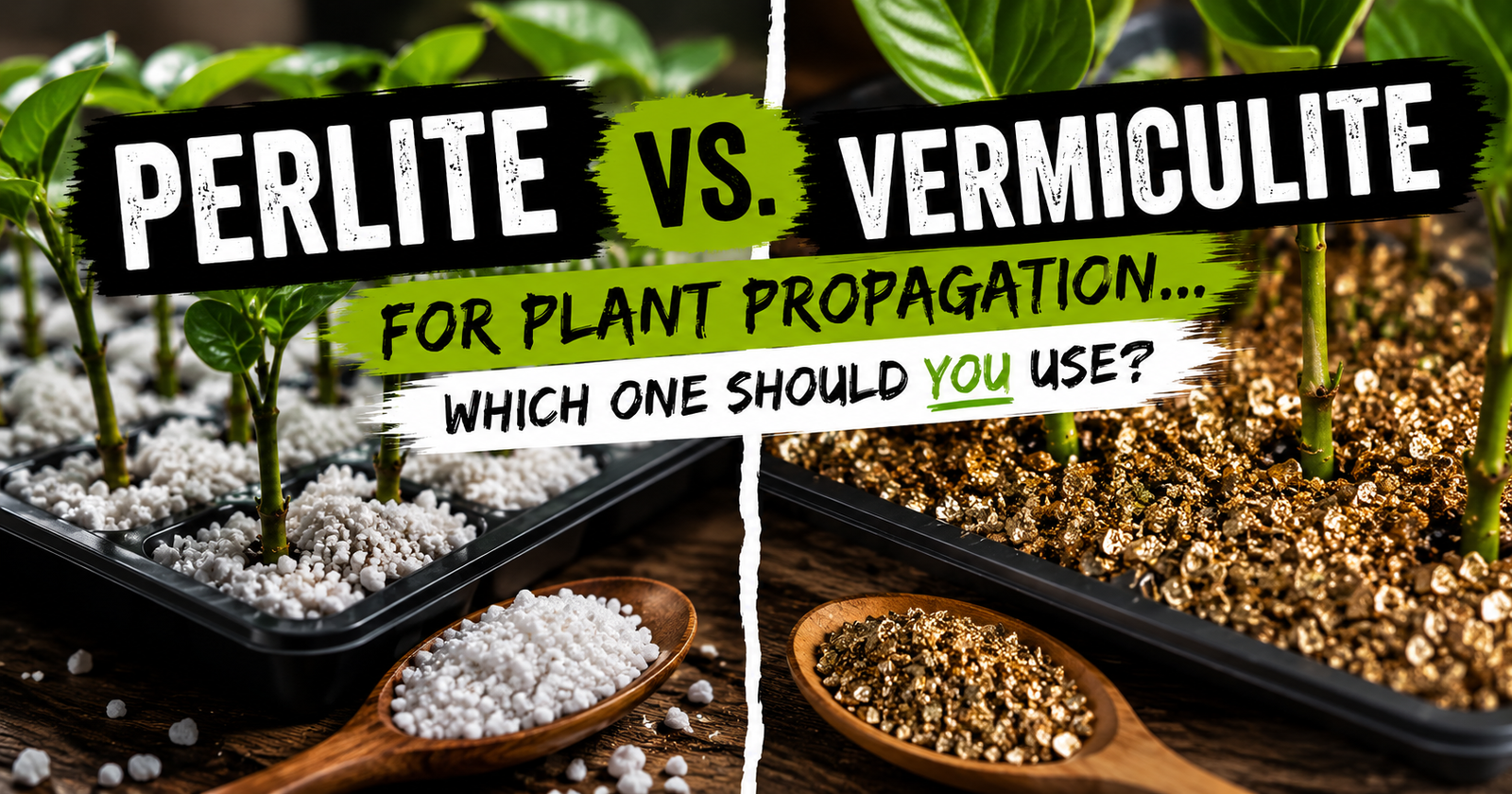
Perlite Is Worth Considering
Perlite is useful because it creates air spaces in a propagation medium.
It doesn’t provide much nutrition, but dormant cuttings don’t need a rich fertilizer-heavy environment to begin forming roots.
Their immediate challenge is establishing a root system.
Perlite can be used by itself or blended with other suitable propagation materials.
The important thing is managing moisture correctly.
Even a very airy medium can cause problems if the container has poor drainage or is constantly sitting in water.
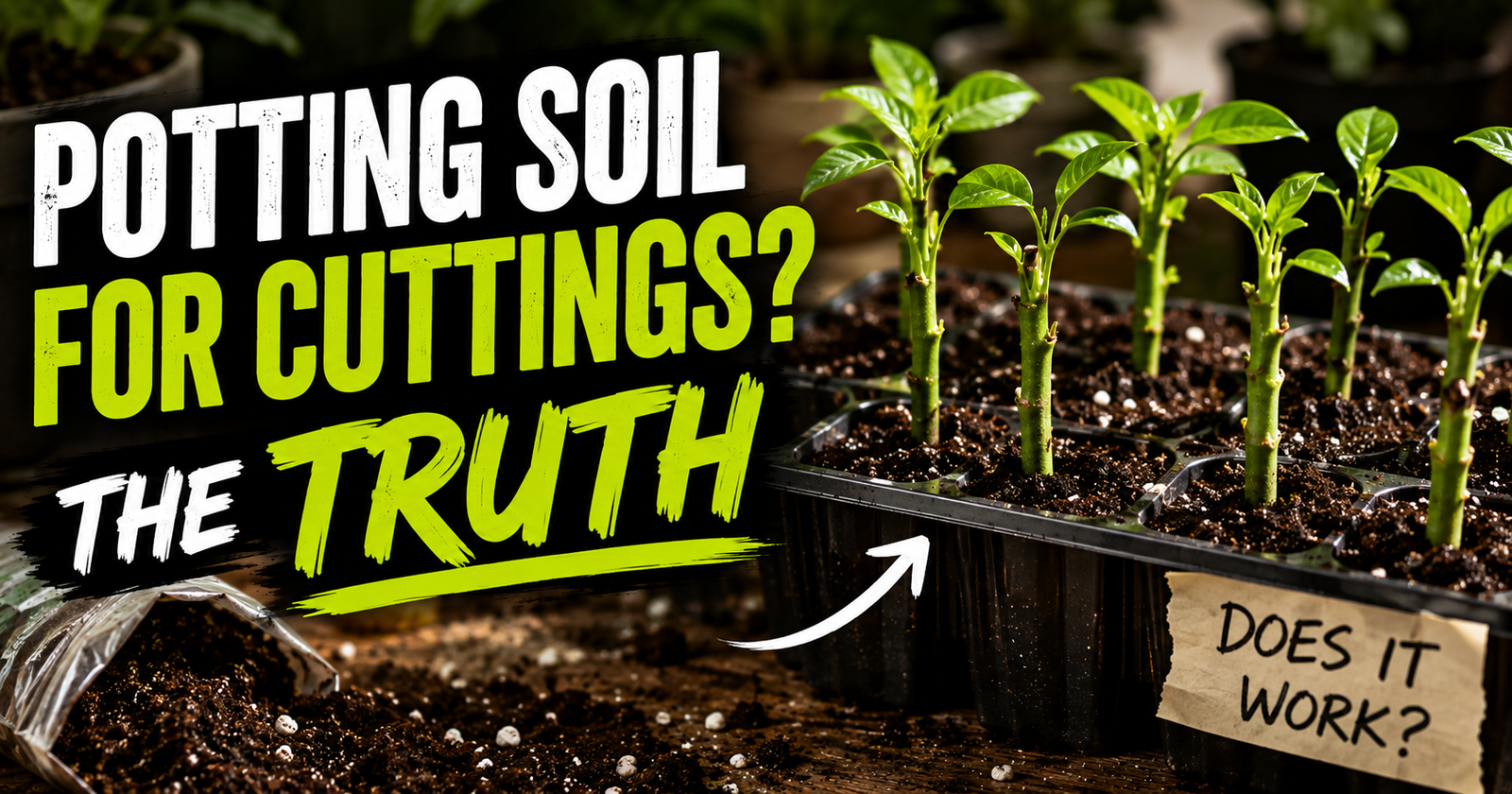
Seed Starting Mix Can Work Too
A quality seed starting mix is another reasonable option.
I particularly like the idea of a light mix containing ingredients such as peat moss, perlite, and vermiculite because it can balance moisture retention with aeration.
The exact proportions matter, though.
Some mixes hold considerably more water than others.
For winter fig propagation, I’d rather begin with a slightly moist medium and monitor it than saturate everything before inserting the cuttings.

I’ve covered the seed starting mix I recommend for propagation if you’re choosing supplies.
Whatever medium you select, make sure the container has adequate drainage.
A clear plastic cup with drainage holes can be particularly useful because you may eventually be able to see roots developing against the sides without disturbing the cutting.

How Deep Should You Plant Dormant Fig Cuttings?
For an ordinary hardwood fig cutting, I would place the basal end into the rooting medium with enough stem buried to provide stability and allow roots to develop.
The exact depth depends on the length of the cutting and the propagation method.
A practical starting point is to bury approximately half the cutting, keeping at least one healthy bud above the surface.
I would avoid burying the entire cutting in a small, wet container.
And I wouldn’t pack the rooting medium tightly around the stem.
The goal is firm contact between the cutting and the medium without eliminating the air spaces that make a good propagation mix useful.
Should You Scratch the Bark Before Planting?
Some fig growers lightly wound the basal portion of hardwood cuttings before rooting.
The idea is to expose tissue near the base where root formation may be encouraged.
However, wounding also creates additional exposed tissue.
That means there’s a tradeoff.
If the cutting is already healthy and you’re using a suitable rooting method, aggressive scraping isn’t necessary.
I would be particularly cautious about heavily wounding cuttings that will spend several weeks in a moist indoor environment.
For a beginner, clean cuts and good growing conditions are more important than experimenting with extensive bark removal.
Do Fig Cuttings Need Rooting Hormone in Winter?
Fig trees are often capable of rooting without supplemental rooting hormone.
That doesn’t mean rooting hormone is useless.
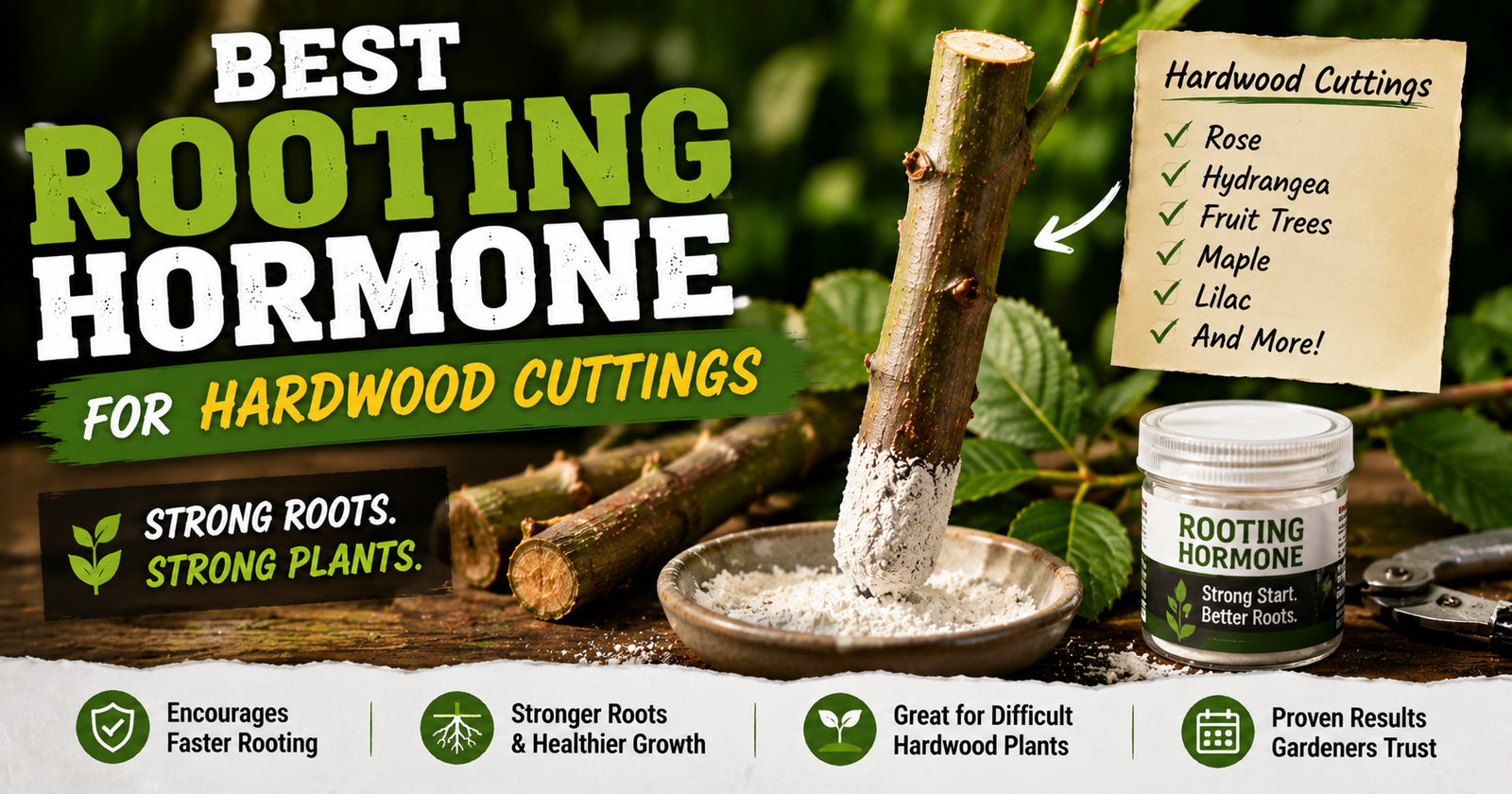
Appropriate rooting hormone treatments can improve rooting performance or consistency under some conditions.
For dormant hardwood cuttings, I would consider using a product labeled for the type of cutting being propagated.
But I wouldn’t assume the strongest concentration is automatically the best.
Too much rooting hormone can inhibit root development or damage sensitive tissue.
The application method matters too.
Powder, gel, and liquid formulations behave differently, and products vary in their concentrations.

If you’re choosing between them, my rooting gel vs. powder vs. liquid comparison explains the practical differences.
For winter fig propagation, rooting hormone is an optional tool.
It doesn’t replace proper temperature, moisture, or healthy propagation material.
The Temperature Problem That Makes Winter Rooting Tricky
This is where winter propagation gets particularly interesting.
The air around a cutting and the temperature inside its rooting medium aren’t always the same.
You might have a room that stays around 70°F while the propagation container sits on a cold shelf or near a drafty window.
The leaves and buds may respond to the room temperature, while root development is affected by cooler conditions around the buried stem.
That mismatch can create problems.
Should You Use a Heat Mat?
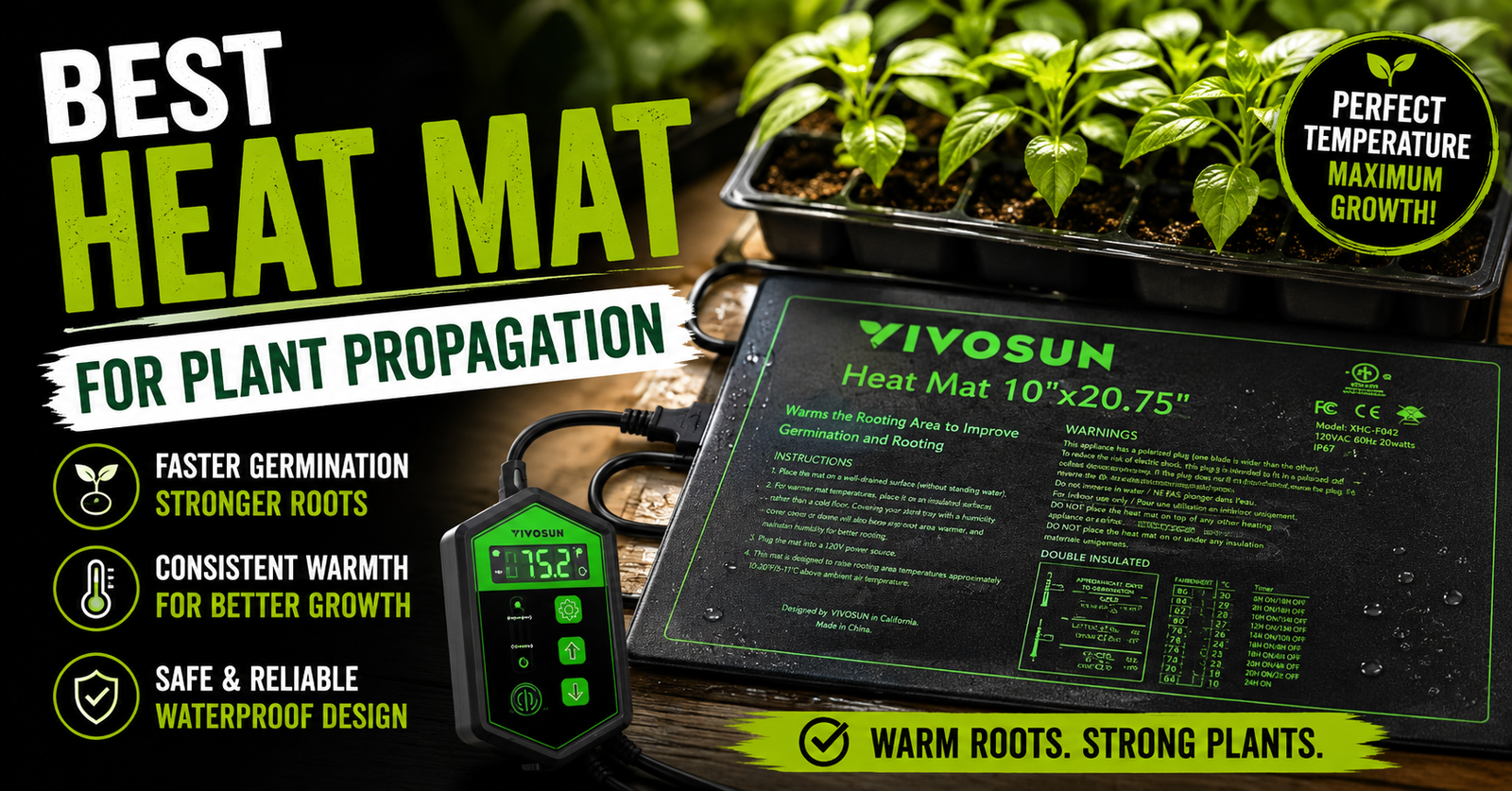
A thermostatically controlled propagation heat mat can help maintain a suitable root-zone temperature when the surrounding environment is cool.
But I wouldn’t automatically plug one in and assume everything is better.
The actual temperature of the rooting medium matters.
A mat can raise the temperature more than expected, especially when the container is insulated or the room is already warm.
For winter fig cuttings, I would begin with a moderate root-zone temperature and monitor how the cuttings respond rather than trying to maximize heat.
The purpose of bottom heat is to encourage healthy rooting, not force the cuttings to grow as quickly as possible.
Don’t Confuse Callus Formation With Rooting
A fig cutting may develop callus tissue around the buried end before roots become visible.
Callus is wound-response tissue.
Its appearance can be encouraging, but it doesn’t mean the cutting has established a functioning root system.
This distinction matters because a cutting can develop callus, open buds, and still fail to produce enough roots.
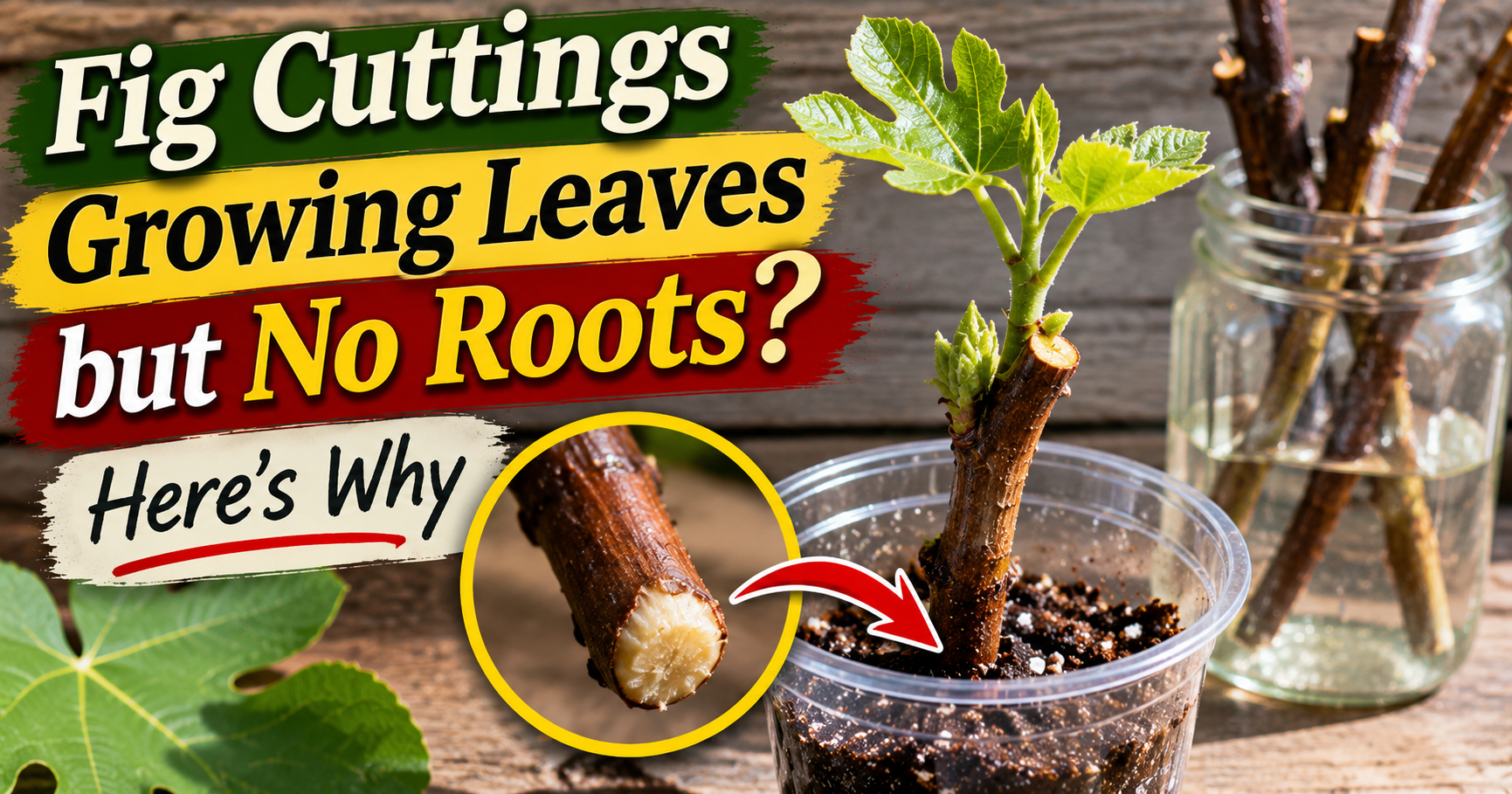
I would judge success by actual root development and the cutting’s ability to sustain growth, not simply by whether the buried end looks swollen.
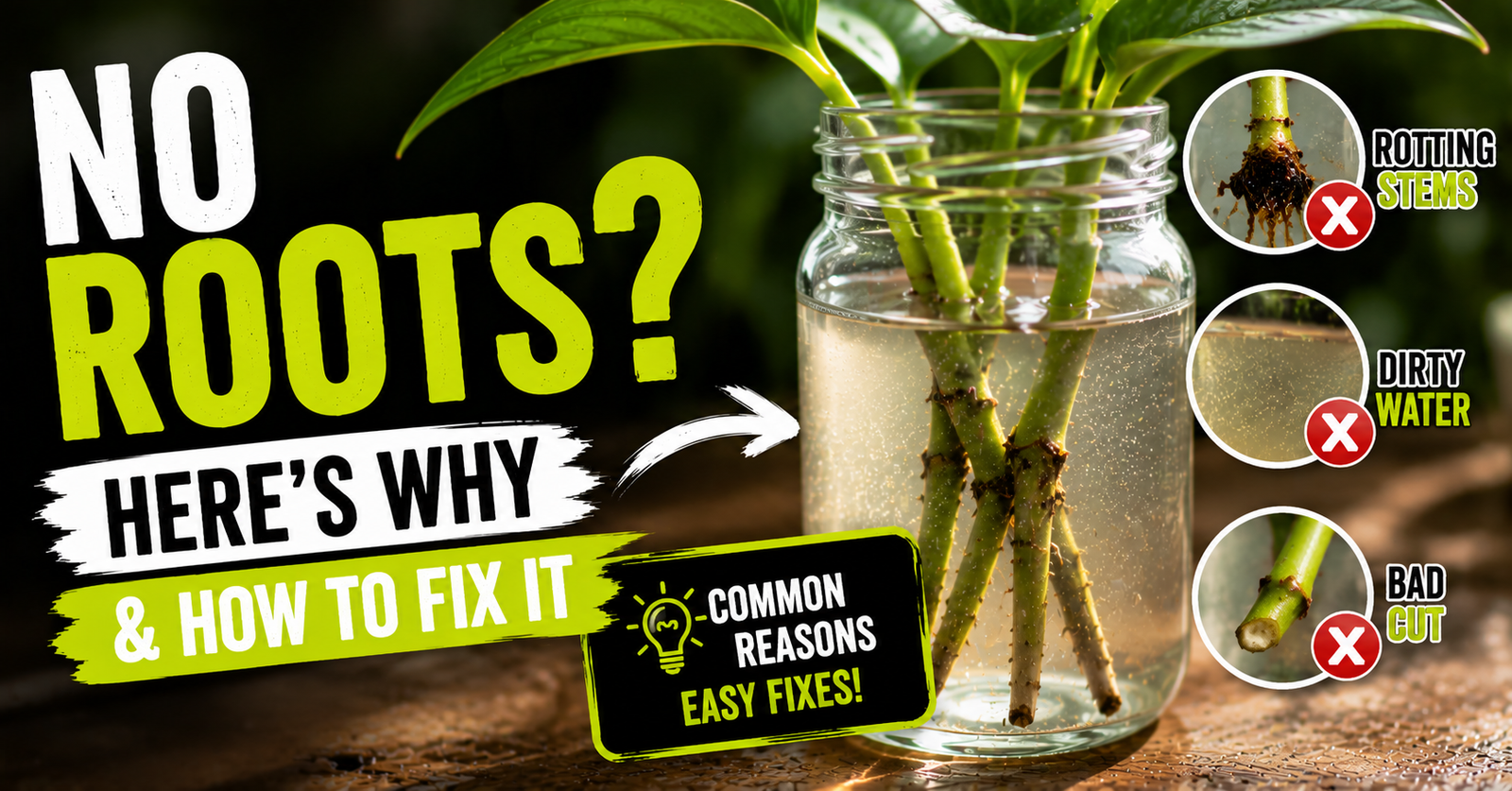
The Biggest Winter Warning Sign: Leaves Before Roots
This is the problem I’d pay the most attention to.
A dormant fig cutting contains stored energy.
Under favorable conditions, the buds can begin opening before a substantial root system develops.
The cutting may look wonderful for a short time.
Then the leaves begin demanding more water than the stem can supply.
That’s when wilting can happen.
Why New Leaves Aren’t Proof of Success
A cutting doesn’t need an established root system to begin pushing buds.
Stored carbohydrates and moisture can support early growth.
But those reserves are limited.
Once the leaves expand, the plant needs a dependable water supply.
That’s why I wouldn’t celebrate a winter fig cutting as successfully rooted simply because it produced leaves.
I’d want evidence of roots.
What I’d Do When Leaves Appear Too Early
I wouldn’t immediately pull the cutting out of its container to inspect the base.
That could damage roots that are just beginning to form.
Instead, I’d evaluate the growing conditions.
Is the medium too wet?
Is the root zone too cool?
Are the leaves receiving enough light?
Is the cutting losing moisture too quickly?
I’d make careful adjustments based on those observations rather than changing everything at once.
And if the cutting is producing healthy green leaves, I’d make sure it receives appropriate light instead of leaving it in a dark rooting location.
The challenge is helping the leaves remain healthy while giving the roots enough time to catch up.

How Much Light Do Fig Cuttings Need During Winter?
Lighting becomes especially important once dormant fig cuttings begin opening their buds.
Before that happens, a leafless hardwood cutting has very little photosynthetic activity. Its immediate priorities are staying alive and developing roots.
But once those buds open and green leaves begin expanding, the situation changes.
Those leaves need light to produce energy.
And that’s where rooting fig cuttings in a basement, spare bedroom, or garage can become challenging.
A room that seems bright enough for people may provide nowhere near enough light for a young fig tree.
A Sunny Window Isn’t Always Enough
I like using natural sunlight whenever possible, but winter sunlight has limitations.
The days are shorter.
The sun stays lower in the sky.
Cloudy weather can reduce the available light for several days in a row.
Even a south-facing window may not provide enough consistent light for vigorous growth, especially if the plant sits several feet away from the glass.
If a young fig tree begins producing long, thin stems with widely spaced leaves, inadequate lighting may be contributing to that stretched growth.
That’s called etiolation.
The plant is extending its stems in search of better light.
I would rather have a compact young fig tree with sturdy growth than one that stretches several inches toward a window while its root system is still developing.
When I’d Use Grow Lights
If I were starting a substantial batch of fig cuttings indoors during December, January, or February, I would seriously consider using grow lights.
They make it easier to provide consistent lighting regardless of the weather outside.
For actively growing young fig trees, a daily lighting period around 12 to 14 hours can be a reasonable starting point, provided the light intensity is appropriate.
The exact duration matters less than the total amount of useful light the leaves receive.
A weak light running for 14 hours isn’t necessarily better than a properly positioned grow light running for 12.
I’d follow the light manufacturer’s recommendations for distance and intensity, then watch the plants for signs of stretching or leaf stress.
I also wouldn’t place newly rooted cuttings directly beneath an extremely powerful light at full intensity.
They’re still developing roots, and excessive light can increase water demand before the roots are ready.
Do Winter Fig Cuttings Need a Humidity Dome?
This depends on whether the cuttings are dormant, actively growing leaves, or already developing a functioning root system.
Leafless hardwood cuttings generally lose much less water than leafy softwood cuttings.
Because of that, they often don’t need the same extremely humid conditions used for delicate green cuttings.
Once leaves begin opening, however, humidity can become more important.
A cutting with several expanding leaves but very few roots may struggle to replace the water escaping through its foliage.
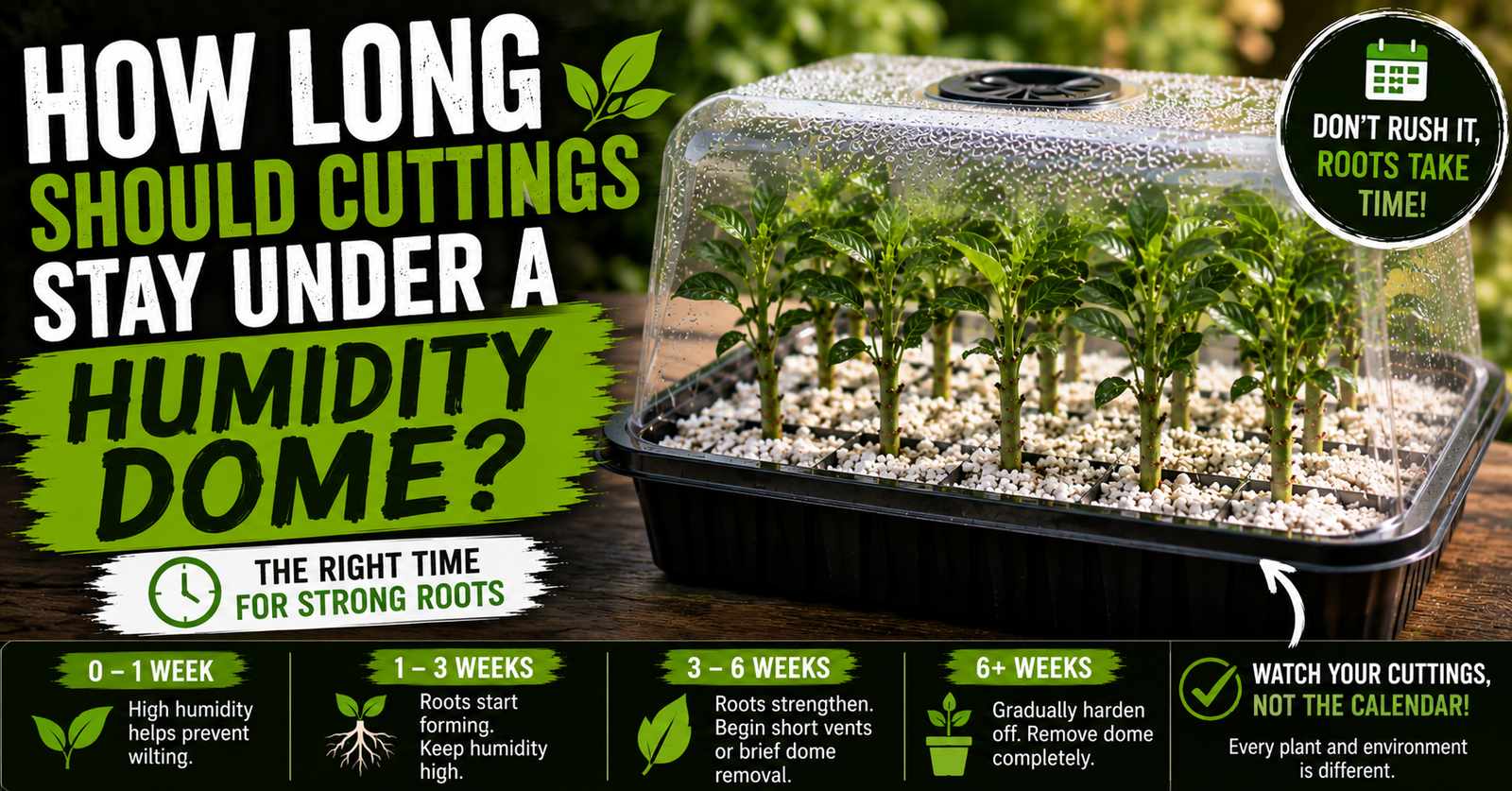
A humidity dome can help reduce that moisture loss.
But I wouldn’t automatically seal every dormant fig cutting inside a dome.
The Problem With Trapping Too Much Moisture
Imagine a small propagation container sitting on a heat mat beneath a completely closed humidity dome.
The growing medium is already damp.
The air inside the dome becomes very humid.
Condensation collects on the walls.
Water droplets begin falling onto the leaves and stems.
Meanwhile, the cutting still hasn’t developed roots.
That combination can create favorable conditions for fungal problems if the environment remains excessively wet and poorly ventilated.
High humidity itself isn’t automatically harmful, but constant leaf wetness, contaminated media, and inadequate air exchange can contribute to disease.
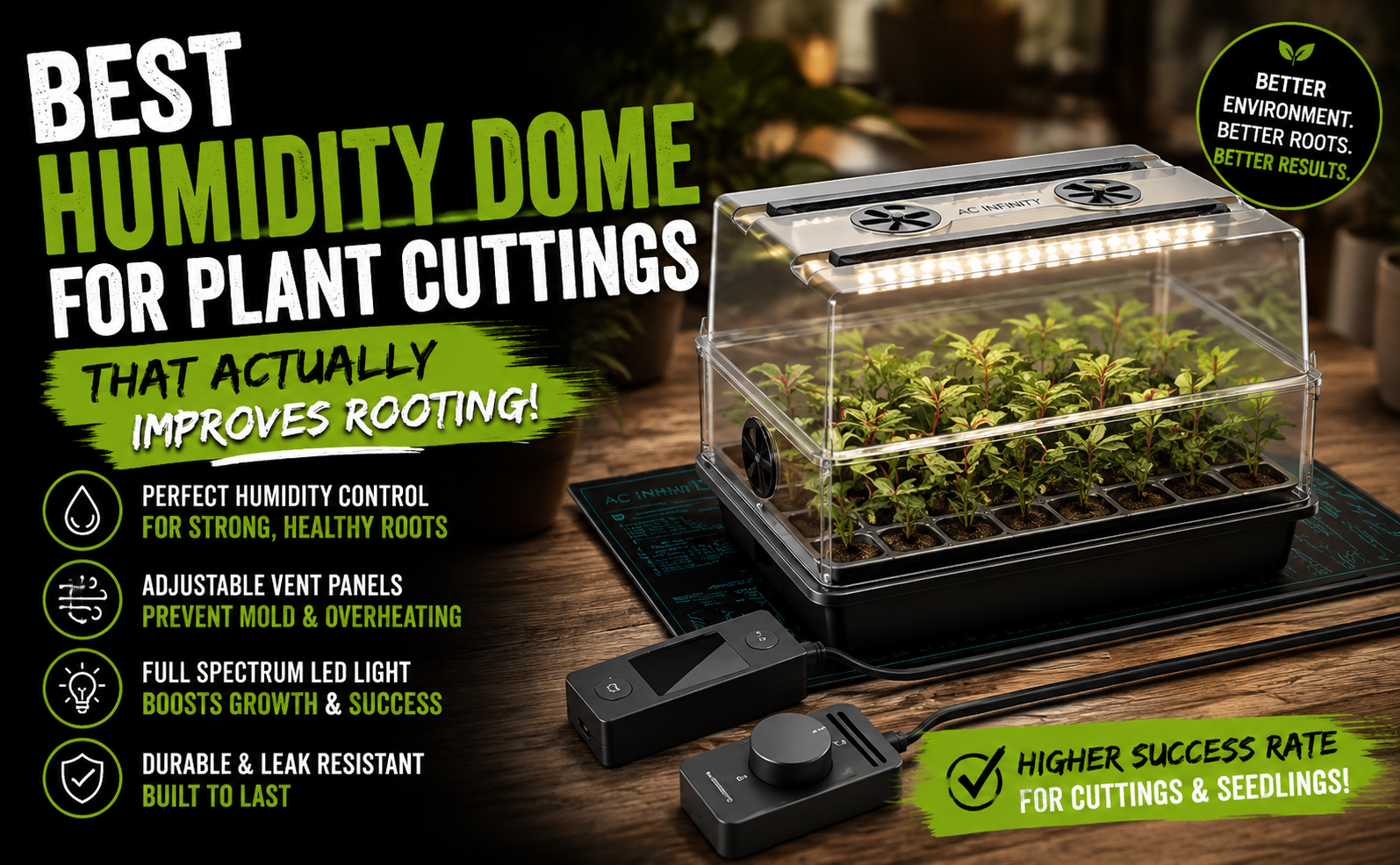
That’s why I prefer humidity systems that allow some control over ventilation.
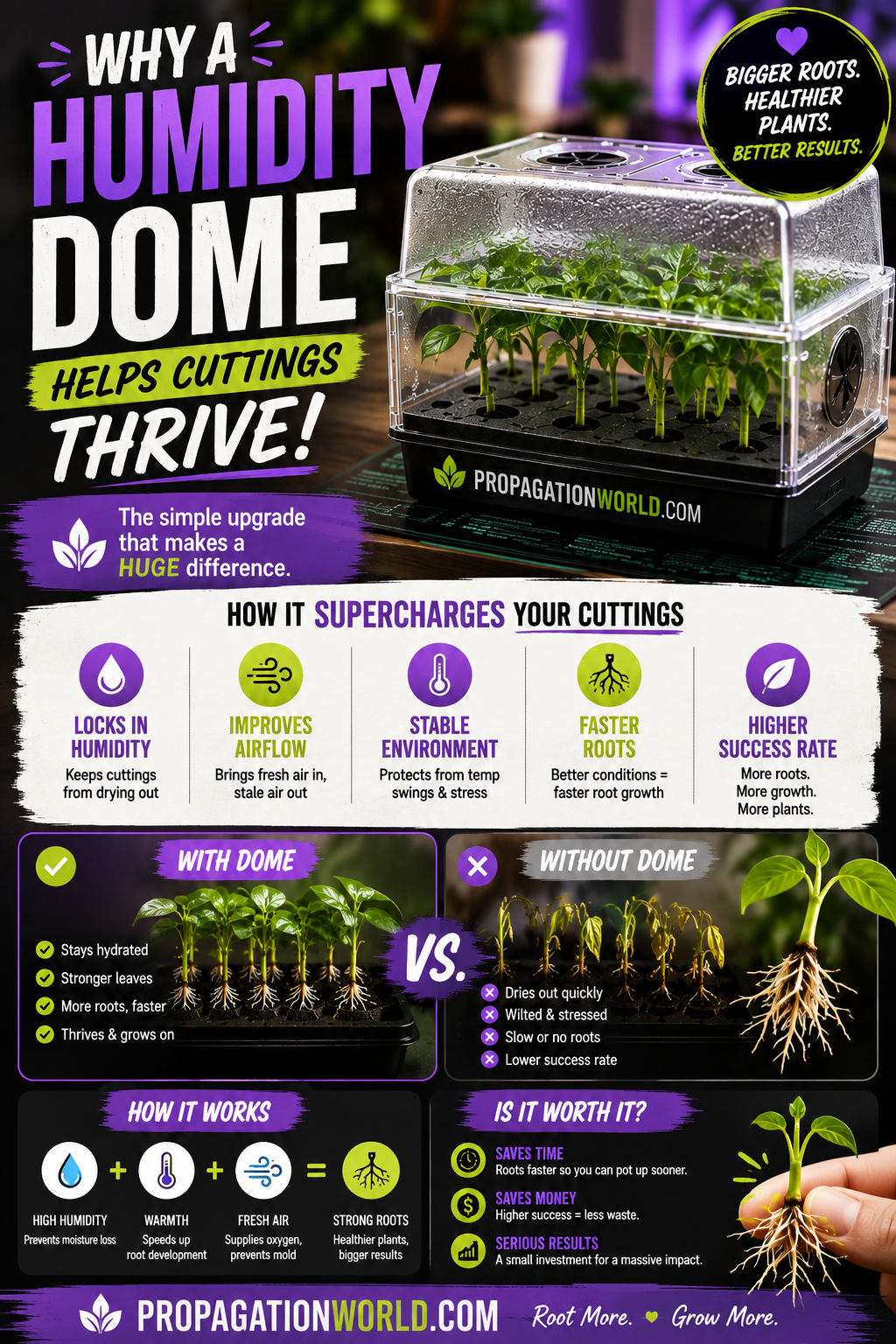
For a closer look at when extra humidity is useful, I’ve explained whether plant cuttings really need a humidity dome and when I’d leave one off.
What I’d Watch Under a Dome
I wouldn’t judge humidity by condensation alone.
Instead, I’d pay attention to several things.
Are the leaves remaining firm?
Is water constantly collecting on the foliage?
Does the rooting medium stay excessively wet?
Are there signs of fuzzy mold or softening stems?
Is the dome becoming too warm under the lights?
Those observations help determine whether the environment needs adjustment.
If the cutting has developed roots and is supporting healthy growth, I’d begin gradually increasing ventilation rather than keeping it under high humidity indefinitely.

Watering Fig Cuttings Indoors During Winter
This is one of the areas where I think gardeners can accidentally cause the most damage.
A dormant hardwood cutting doesn’t use water the same way an established fig tree does.
It has no developed root system.
It may have no leaves.
And it’s often growing in a relatively small container inside a protected environment.
That means the rooting medium may stay moist much longer than expected.
Adding water every day because you’re worried the cutting might dry out can create exactly the conditions that encourage rot.
Check Below the Surface
The top of a propagation container may look dry while the medium around the buried stem remains damp.
That’s why I wouldn’t judge the entire container by its surface.
For a small pot or propagation cup, I would check the weight of the container and the moisture slightly below the surface.
A clear container can also help reveal whether moisture is collecting along the sides.
However, condensation against clear plastic isn’t a perfect measurement of how much water is available around the cutting.
I would use several clues together.
Why I Like Containers With Drainage Holes
Drainage holes give excess water somewhere to go.
That sounds simple, but it makes a major difference when rooting cuttings indoors.
Without drainage, water can accumulate at the bottom of the container even when the surface looks relatively dry.
The buried portion of the cutting may then remain in saturated conditions.
I would rather use a small container with proper drainage and monitor moisture than try to root fig cuttings in a sealed pot full of wet growing medium.
Should You Bottom Water Fig Cuttings?
Bottom watering can work, but I wouldn’t leave the containers sitting in water indefinitely.
If the rooting medium has become too dry, allowing it to absorb water briefly from below may help distribute moisture.
Afterward, I’d let the excess drain away.
For newly planted dormant cuttings, I generally prefer beginning with a properly moistened medium rather than repeatedly soaking the containers.
The goal is steady moisture, not constant saturation.
How Long Do Fig Cuttings Take to Root in Winter?
There isn’t one dependable number that applies to every fig cutting.
Some may begin producing roots within a few weeks under favorable conditions.
Others take considerably longer.
The variety, condition of the wood, temperature, rooting medium, and overall growing environment all influence the timeline.
For planning purposes, I would allow several weeks rather than expecting visible roots in just a few days.
A cutting that hasn’t rooted after two weeks isn’t automatically a failure.
Why Some Cuttings Root Faster Than Others
Even cuttings collected from the same tree can behave differently.
One might come from vigorous, well-matured growth.
Another might be thinner or have fewer stored reserves.
One may have experienced some dehydration during storage.
Another may have been planted immediately after collection.
Those differences can affect how quickly roots develop.
That’s one reason I wouldn’t compare every cutting against the fastest one in the tray.
Instead, I’d evaluate each cutting based on its health and actual progress.
Callus Doesn’t Mean Roots
You may notice pale, swollen tissue forming around the basal end of a fig cutting.
That’s often callus tissue associated with the plant’s wound response.
It can appear before visible roots develop.
But callus formation isn’t proof that the cutting has successfully rooted.
Some cuttings form callus and never develop a healthy root system.
Others produce roots without an especially obvious mass of callus.
I would avoid repeatedly removing cuttings from the medium just to look for it.
The less you disturb delicate developing roots, the better.
How to Tell Whether Your Fig Cutting Has Roots
This is where transparent propagation containers can be particularly useful.
If roots begin growing against the sides of a clear cup, you may be able to see them without disturbing the cutting.
That’s much better than pulling the stem out every few days.
Look for Roots Along the Container
Healthy new fig roots are often pale or whitish when they first develop.
As they mature, their appearance can change.
If you see roots extending along the side or bottom of the container, that’s encouraging evidence that the cutting is becoming established.
I wouldn’t rush to transplant it after seeing the first tiny root.
A few delicate roots aren’t the same as a developed root system.
New Leaves Are Encouraging, but Not Proof
This deserves repeating because it’s so important for winter fig propagation.
A cutting can produce leaves using stored energy before it has roots.
New growth is encouraging, but it doesn’t guarantee success.
If the cutting is producing leaves and you can also see healthy roots developing, that’s a much stronger indication of progress.
Should You Tug on the Cutting?
Some gardeners gently tug on cuttings to feel for resistance.
I understand the temptation.
But for fig cuttings, especially those just beginning to root, I’d rather avoid it.
Tiny new roots can break surprisingly easily.
A clear container or careful observation is usually a safer approach.
When Should You Transplant Rooted Fig Cuttings?
This is another point where rushing can undo several weeks of progress.
A fig cutting may have enough roots to survive in its propagation container but not enough to tolerate being pulled apart and moved into a much larger pot.
I would wait until the root system has developed enough to hold at least some of the growing medium together.
That makes transplanting less disruptive.
Don’t Put a Tiny Cutting Into a Huge Pot
A small rooted fig cutting doesn’t need an enormous container immediately.
Oversized pots can hold more moisture than the young root system can use, particularly indoors during winter.
I’d rather move the cutting into a modestly larger container with drainage holes and a suitable potting mix.
As the tree grows and fills that container with roots, it can be moved into something larger.
That gradual approach makes moisture management easier.
Protect the Roots During Transplanting
New fig roots can be surprisingly fragile.
I would avoid shaking all the propagation medium away from them unless there’s a specific reason to do so.
Instead, I’d gently remove the rooted cutting with as much of its root system intact as possible.
Place it into the new container, fill around it with suitable potting mix, and water enough to settle the medium.
Then allow excess water to drain.
I wouldn’t immediately place the transplanted fig tree under intense light or expose it to major temperature changes.
Give it time to adjust.
Keeping Young Fig Trees Alive Until Spring
Rooting the cutting is only the beginning.
If you’ve successfully rooted fig cuttings indoors during winter, you now have young trees that need continued care.
This is where the process begins to resemble ordinary container growing rather than propagation.
The trees need adequate light.
They need appropriate watering.
They need room for their roots to develop.
And they need protection from cold weather.
Don’t Rush Them Outside During a Warm Spell
Missouri weather can be deceptive.
We can have beautiful warm afternoons followed by freezing temperatures.
A young fig tree that’s been growing indoors isn’t prepared for sudden exposure to frost.
Even varieties known for cold tolerance can suffer damage when they’re young, actively growing, or not properly acclimated.
That’s why I wouldn’t move indoor-rooted fig trees outside permanently simply because the forecast shows several warm days.
I’d wait until conditions are appropriate and the danger of frost has passed.
Harden Them Off Gradually
Indoor-grown plants need time to adjust to outdoor conditions.
Direct sunlight is stronger than most indoor grow lights.
Wind increases moisture loss.
Temperatures fluctuate much more.
I would begin by placing young fig trees outside in a sheltered, shaded location for limited periods during suitable weather.
Over several days, gradually increase their exposure to outdoor conditions.
Watch for leaf wilting, sunburn, or other signs of stress.
The goal is to help the plants adapt rather than suddenly exposing them to an entirely different environment.
Be Careful With Early Fertilizer
A newly rooted cutting doesn’t need heavy fertilization immediately.
Its root system is still developing.
Excess fertilizer can increase salt concentrations around delicate roots and potentially cause damage.
If the young tree is growing actively and has an established root system, light feeding may eventually be appropriate.
But I wouldn’t try to force rapid growth with strong fertilizer applications.
Healthy roots come first.
What If Your Winter Fig Cuttings Start Rotting?
Unfortunately, some cuttings fail even when you’ve tried to provide good conditions.
If a fig cutting begins turning soft and dark near the buried end, I would inspect the situation before making another attempt.
Was the growing medium too wet?
Was the container draining properly?
Was the wood healthy when it was collected?
Was the cutting stored too long or allowed to deteriorate before planting?
Was the rooting area excessively warm?
These questions help identify what may have contributed to the failure.
Can You Save a Rotting Fig Cutting?
Sometimes, if the damage is limited.
If the upper portion remains firm and healthy, you may be able to remove the decayed section with clean tools and attempt rooting again.
However, the remaining cutting needs enough healthy wood and viable nodes to make another attempt worthwhile.
I wouldn’t keep repeatedly trimming a cutting that’s clearly deteriorating throughout its length.
Sometimes starting over with healthier material is the better decision.
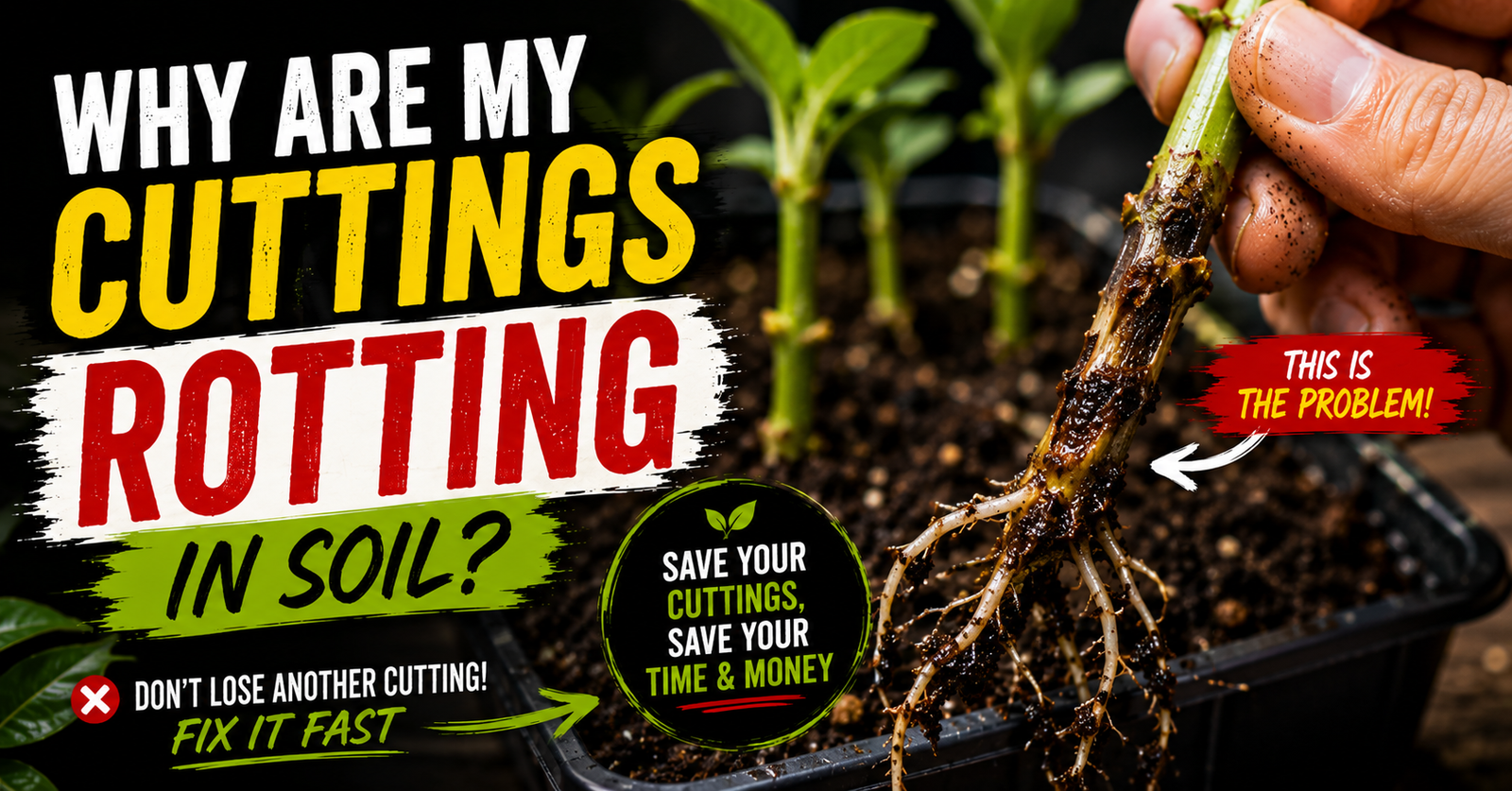
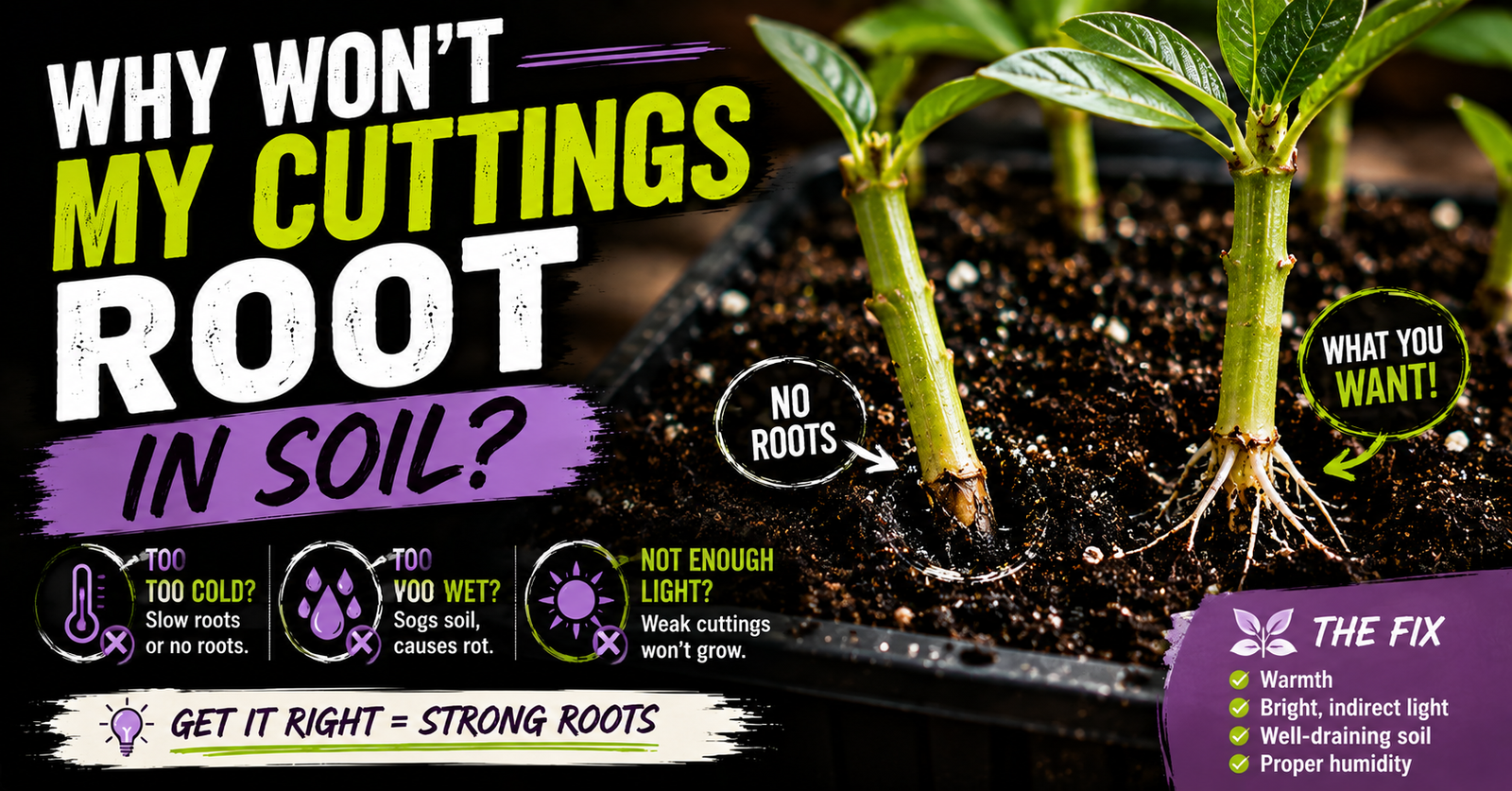
For a broader explanation of moisture-related failures, I’ve covered why plant cuttings rot in soil instead of producing roots.
That guide explains how growing media, oxygen, watering, and stem health interact.
A Winter Fig Propagation Setup Doesn’t Have to Be Expensive
I think gardeners sometimes make propagation more complicated than necessary.
You don’t need a commercial greenhouse to root a handful of fig cuttings.
For a basic indoor setup, I’d focus on having the right essentials.
- Healthy dormant fig cuttings with several viable nodes.
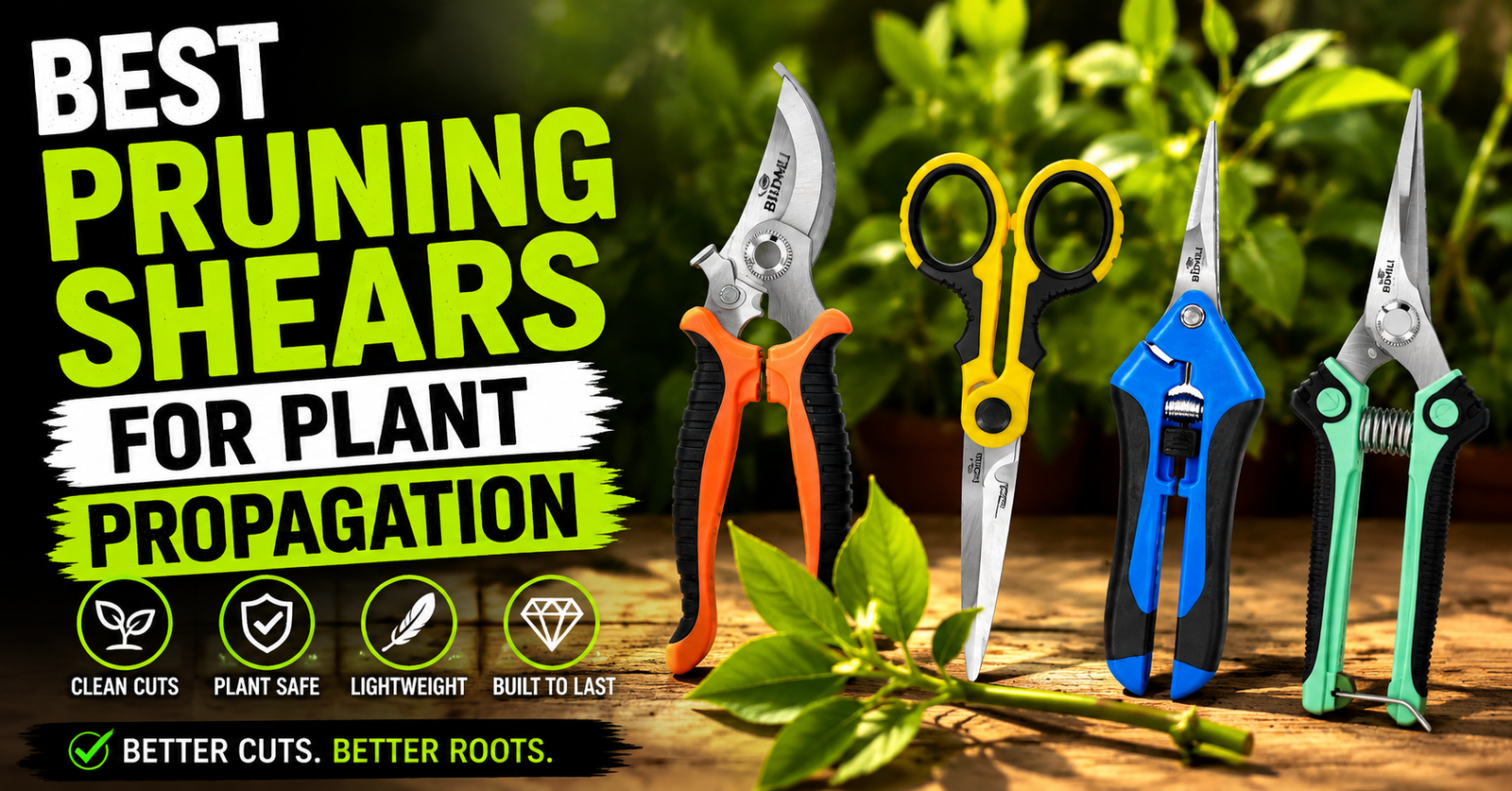
- Clean pruning shears or another suitable cutting tool.
- Small propagation containers with drainage holes.
- A light, well-draining rooting medium.
- A protected indoor location with appropriate temperatures.
- Adequate lighting once leaves begin growing.
- A way to monitor moisture without constantly disturbing the cuttings.
A heat mat and humidity dome may be useful depending on your conditions, but neither is automatically required.
I would buy additional equipment only when it solves a problem in the propagation environment.
Frequently Asked Questions
Can I root fig cuttings indoors in December?
Yes.
Dormant hardwood fig cuttings can be rooted indoors during December if you can provide suitable conditions.
However, remember that successfully rooted plants may need several months of indoor care before outdoor temperatures become appropriate.
If you don’t have enough space or lighting, storing the cuttings until later in winter may be easier.
Do fig cuttings need sunlight before they have roots?
Dormant leafless cuttings don’t have the same immediate light requirements as actively growing plants.
However, once buds open and leaves develop, adequate light becomes important.
I would plan for that transition before beginning winter propagation.
Can I use a heat mat and humidity dome together?
Yes, but monitor the conditions carefully.
A heat mat can warm the rooting medium while a dome helps reduce moisture loss.
Used together, they can also create excessive heat and humidity if the setup isn’t managed properly.
I would use a thermostat and provide appropriate ventilation.
Should I remove leaves from fig cuttings that sprout before rooting?
Not automatically.
Those leaves may begin contributing energy through photosynthesis once they receive adequate light.
However, they also increase water demand.
I would first evaluate the rooting environment, humidity, and lighting rather than immediately removing healthy leaves.
Can fig cuttings root without rooting hormone?
Yes.
Figs are often capable of rooting from hardwood cuttings without supplemental rooting hormone.
A suitable hormone treatment may help in some situations, but healthy wood and appropriate growing conditions remain essential.
Can I root several fig cuttings in the same container?
You can, but I prefer individual containers when practical.
Roots from neighboring cuttings can become tangled together.
Separating them later may damage delicate root systems.
Individual containers also make it easier to monitor moisture and transplant each cutting when it’s ready.
From Dormant Wood to a Young Fig Tree
What I find most interesting about winter fig propagation is how much can happen inside an ordinary little container.
A dormant branch that looked completely lifeless in December can eventually develop roots, open buds, and begin growing into a new tree.
But there’s no need to rush that transformation.
The goal isn’t producing leaves as quickly as possible.
It’s developing a healthy root system capable of supporting a strong young fig tree.
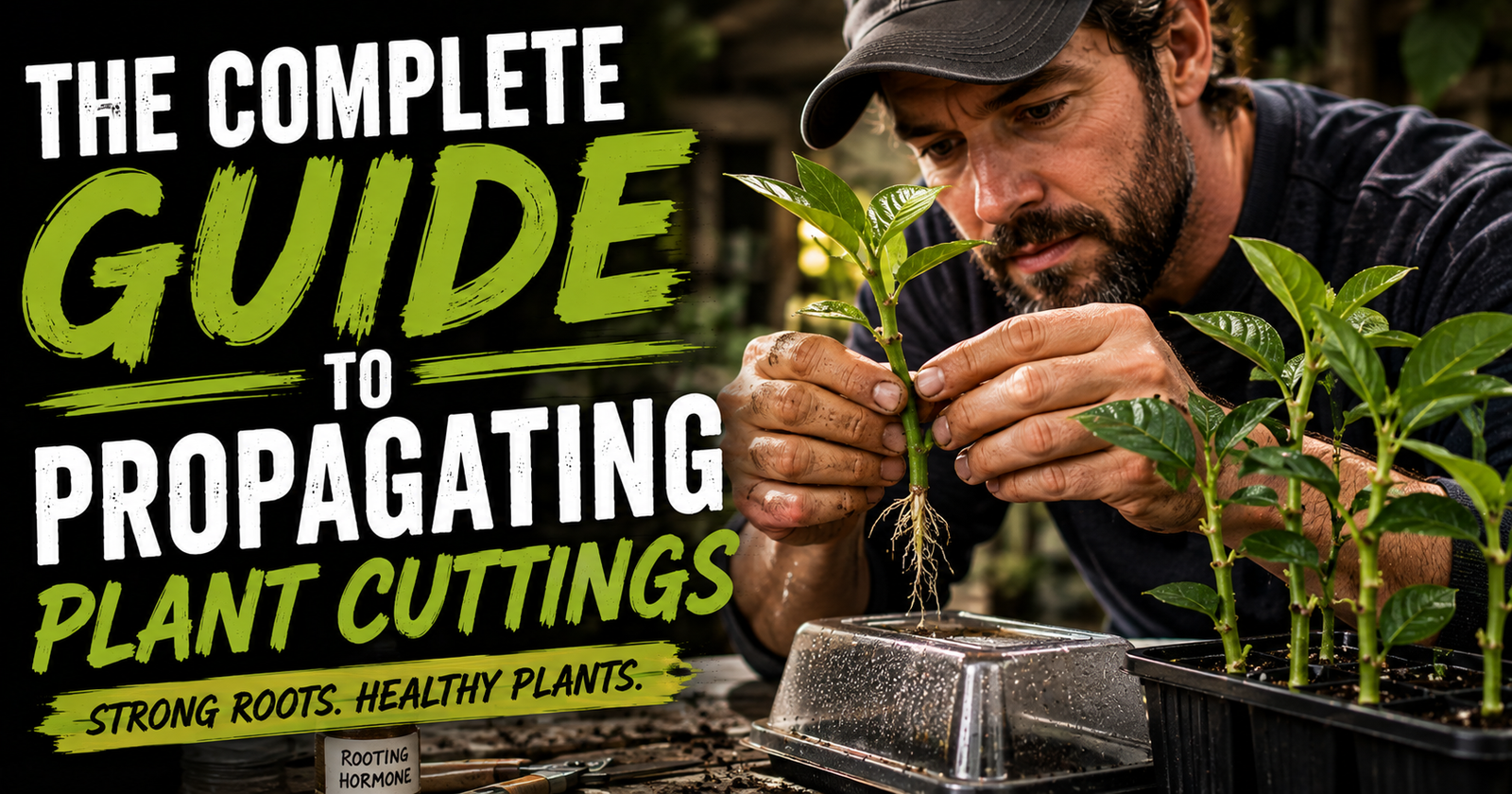
If you’re still learning the fundamentals of taking cuttings, choosing rooting media, controlling humidity, and transplanting young plants, my complete guide to propagating plant cuttings covers the entire process in greater detail.
Winter propagation can be an enjoyable way to keep growing plants when the garden outside is dormant.
And when spring finally arrives, having several healthy young fig trees ready for the growing season makes all that winter preparation worthwhile.
About the Author
Dax Weaver is the founder of PropagationWorld and has years of hands-on experience growing and propagating plants, including fruit trees, berry bushes, and ornamental shrubs. Through PropagationWorld, he shares practical growing advice, propagation techniques, and research-backed information to help gardeners grow more plants successfully.