
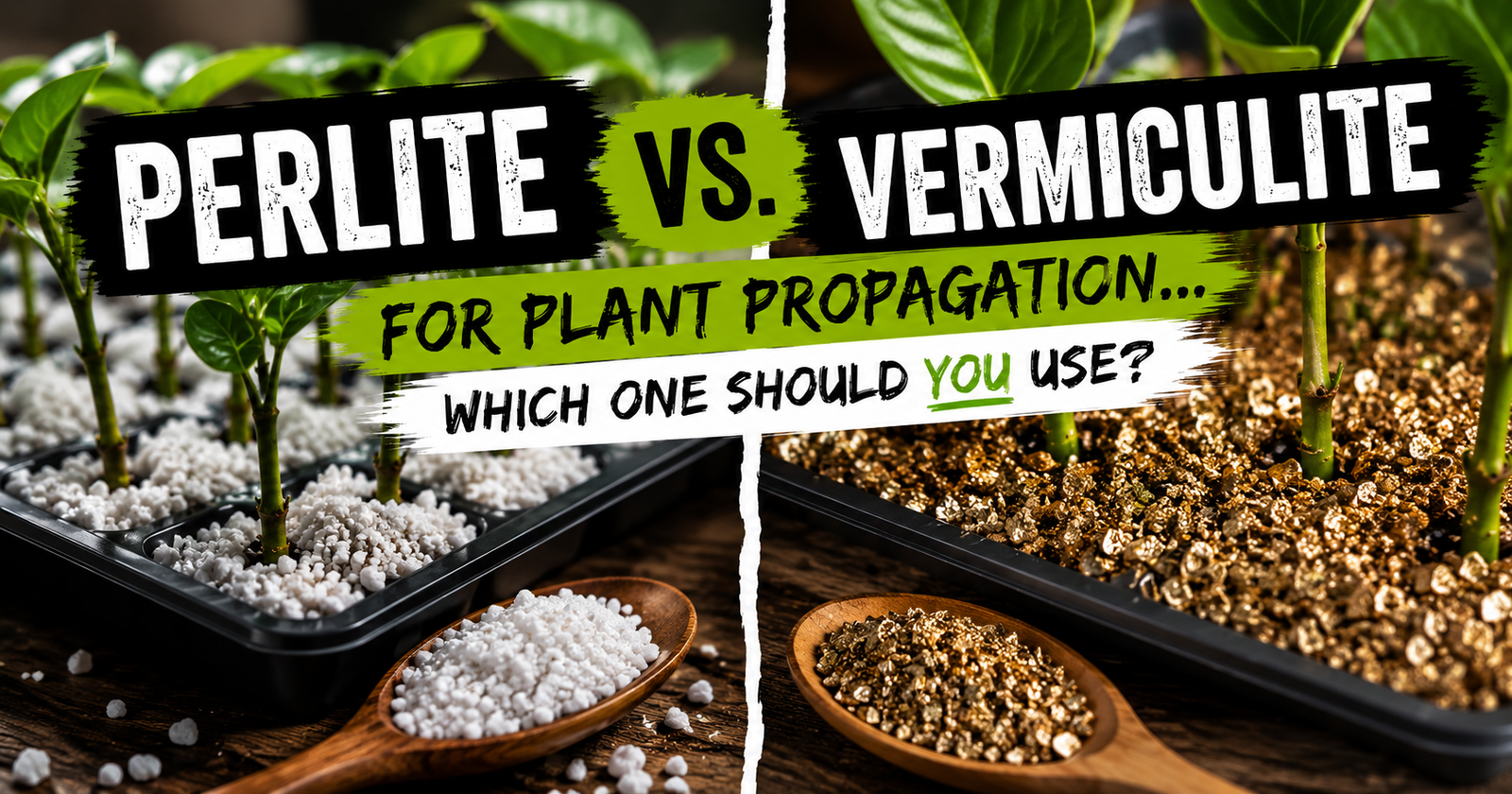
Walk into any garden center and you’ll probably see bags of perlite and vermiculite sitting right beside each other.
At first glance, they almost seem interchangeable.
They’re both lightweight.
They’re both added to soil mixes.
They’re both recommended for propagation.
So naturally, most gardeners assume either one will work just fine.
That’s exactly what I thought years ago.
Then I started paying closer attention to the cuttings that rooted quickly… and the ones that didn’t.
The more plants I propagated, the more I realized these two materials behave very differently.
One holds significantly more water.
The other creates much better airflow around developing roots.
Depending on what you’re trying to propagate, that difference can determine whether a cutting develops a healthy root system or slowly rots before roots ever appear.
After rooting thousands of cuttings ranging from common houseplants to blueberries, hydrangeas, roses, figs, grapes, elderberries, herbs, and ornamental shrubs, I’ve found myself reaching for one product far more often than the other.
That doesn’t mean the other one is useless.
It simply means each has strengths that are often misunderstood.
If you’re standing in the garden center wondering which bag belongs in your cart, here’s what I’ve learned from years of trial, error, and far more propagation experiments than I can count.
They Solve Different Problems
One mistake I see beginners make is trying to decide which product is “better.”
That’s actually the wrong question.
Perlite and vermiculite were never designed to do exactly the same job.
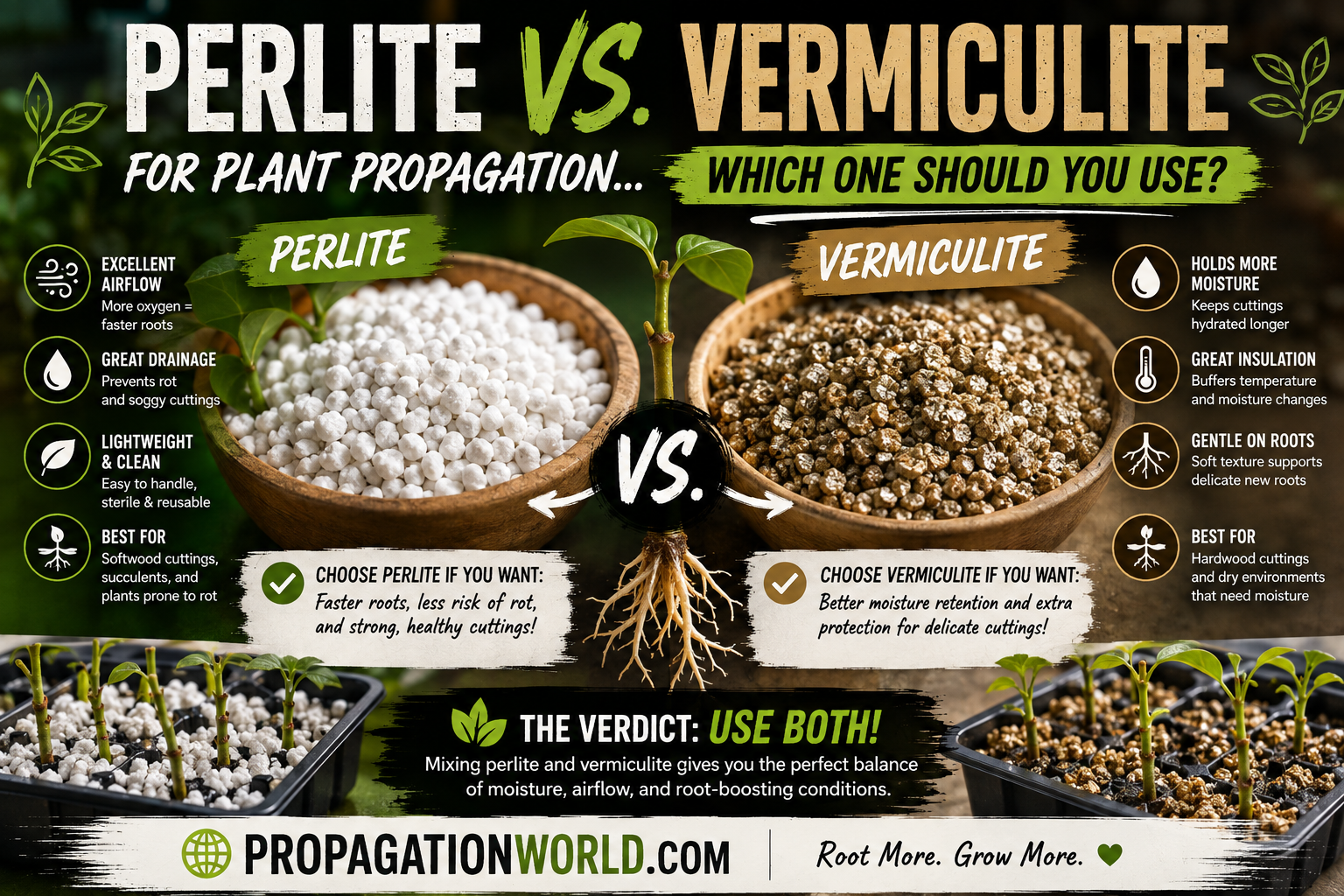
Perlite’s biggest strength is improving drainage and increasing the amount of oxygen surrounding developing roots.
Vermiculite’s biggest strength is holding moisture.
Those sound similar until you start propagating plants.
Fresh cuttings need moisture.
But they also desperately need oxygen.
Without enough oxygen around the stem, the chances of stem rot increase dramatically.
That’s one reason I find myself recommending perlite much more often than vermiculite for propagation.
It’s simply solving the problem I run into most often.
Why I Reach for Perlite First
If I had to choose only one propagation medium for rooting cuttings, I’d choose perlite without much hesitation.
Not because vermiculite is a bad product.
Because over the years I’ve lost far more cuttings from staying too wet than from drying out too quickly.
Heavy propagation mixes can remain saturated for days.
When that happens, oxygen disappears from around the stem.
The cutting sits in a damp environment where fungi and bacteria thrive.
That’s exactly what we’re trying to avoid.
Perlite keeps tiny air pockets throughout the propagation mix.
Those pockets help excess water drain away while still leaving enough moisture available for developing roots.
It’s one of the simplest changes I’ve ever made that consistently improved my rooting success.
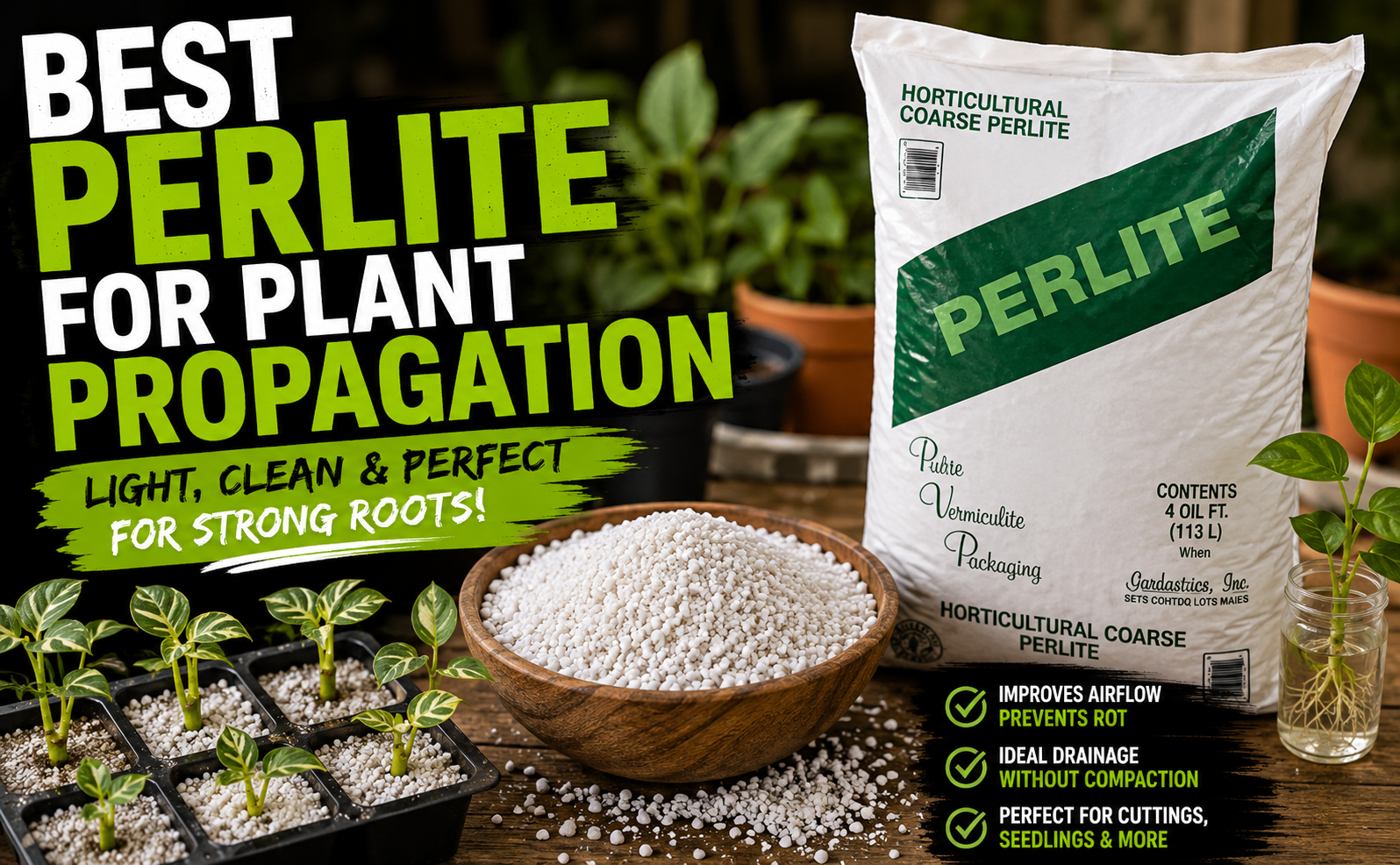
If you’re putting together a propagation bench or mixing your own rooting medium, I’d recommend starting with the horticultural perlite I use for nearly every propagation project. It’s become one of the supplies I buy in bulk because I use it throughout the year for everything from woody shrubs to common houseplants.
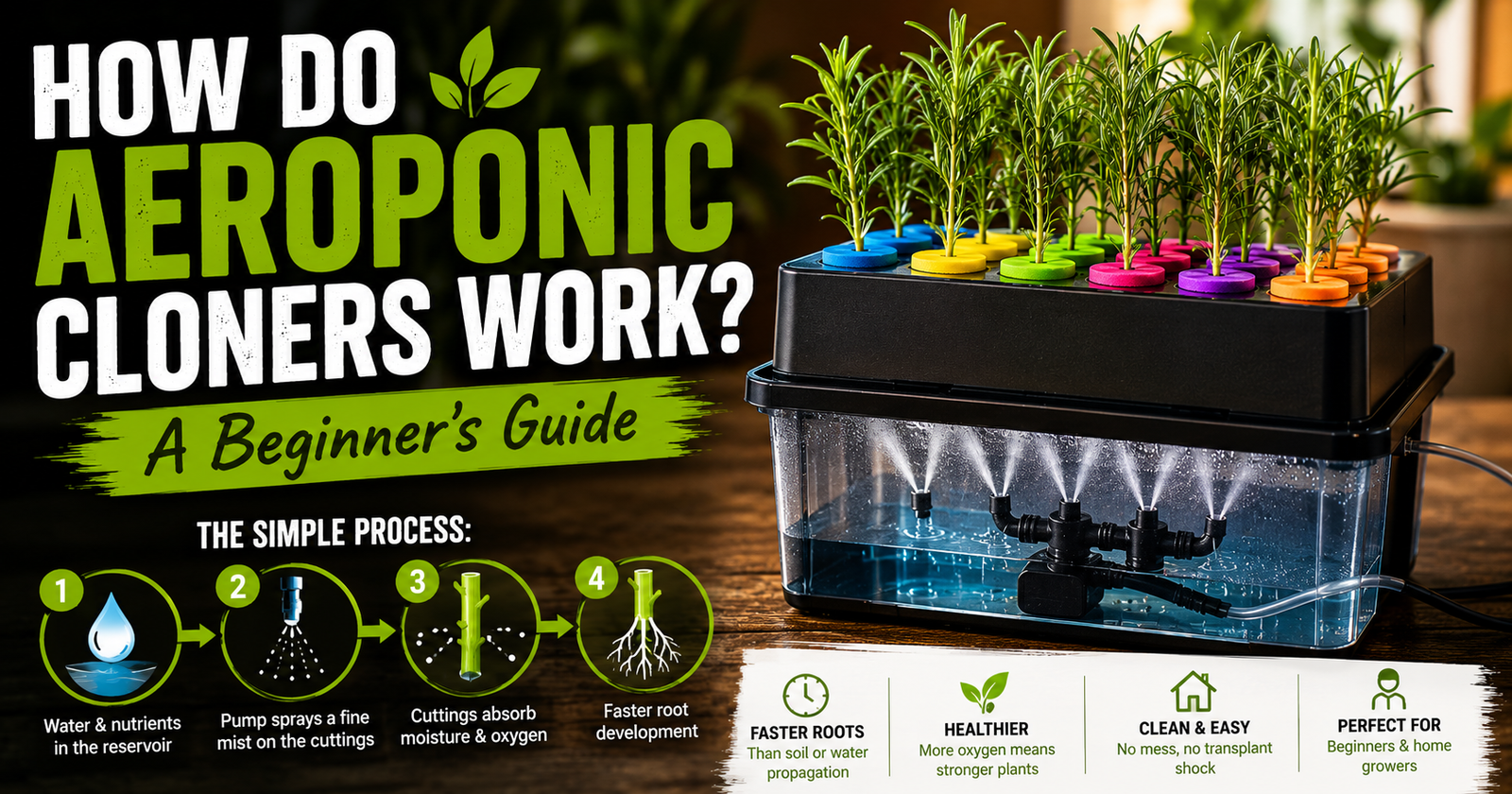
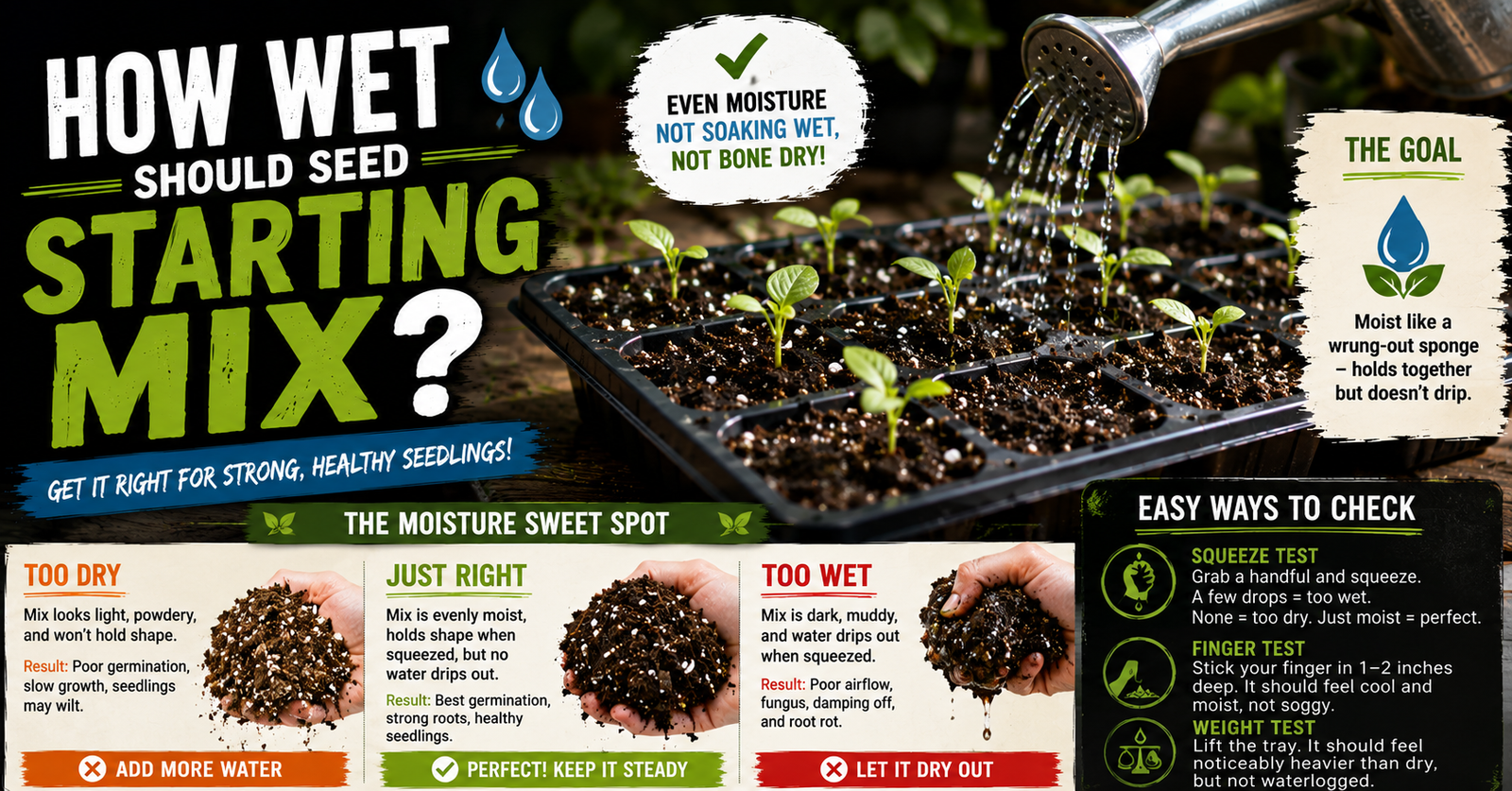
That Doesn’t Mean Vermiculite Is Wrong
If you’ve read this far, you might think I’m completely against vermiculite.
I’m not.
I actually keep it on hand.
I just use it differently.
Vermiculite excels when moisture retention is the priority.
For seed starting, it can be an excellent addition because tiny seedlings dry out much more quickly than established plants.
Some gardeners also like adding a small amount to propagation mixes for plants that appreciate slightly more moisture around developing roots.
I’ve experimented with those mixes myself, and they certainly have their place.
The important thing is understanding what vermiculite is doing.
It’s increasing water retention.
If your propagation mix already stays wet for a long time, adding more moisture-holding material may actually move you farther away from the conditions your cuttings need.
That’s why I rarely think in terms of which product is “best.”
Instead, I ask what problem I’m trying to solve.
The Biggest Mistake I See With Propagation Mixes
If I could go back and give myself one piece of advice when I first started propagating plants, it would be this.
Stop worrying so much about keeping the cutting wet.
Start worrying about keeping the roots healthy.
Those aren’t always the same thing.
For years I believed that if the propagation mix started drying out, I needed to add more water.
Sometimes I did.
Sometimes I simply made the problem worse.
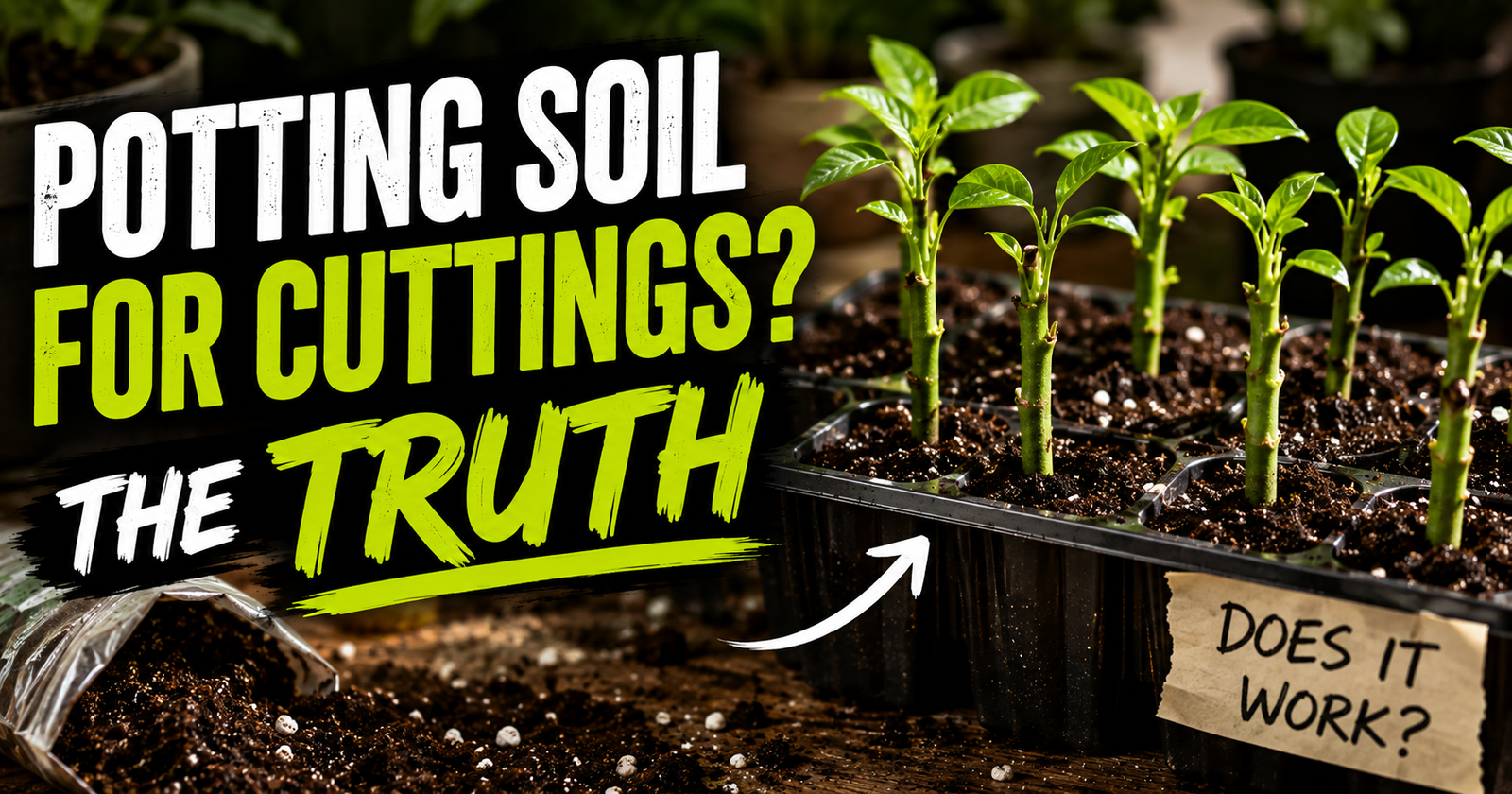
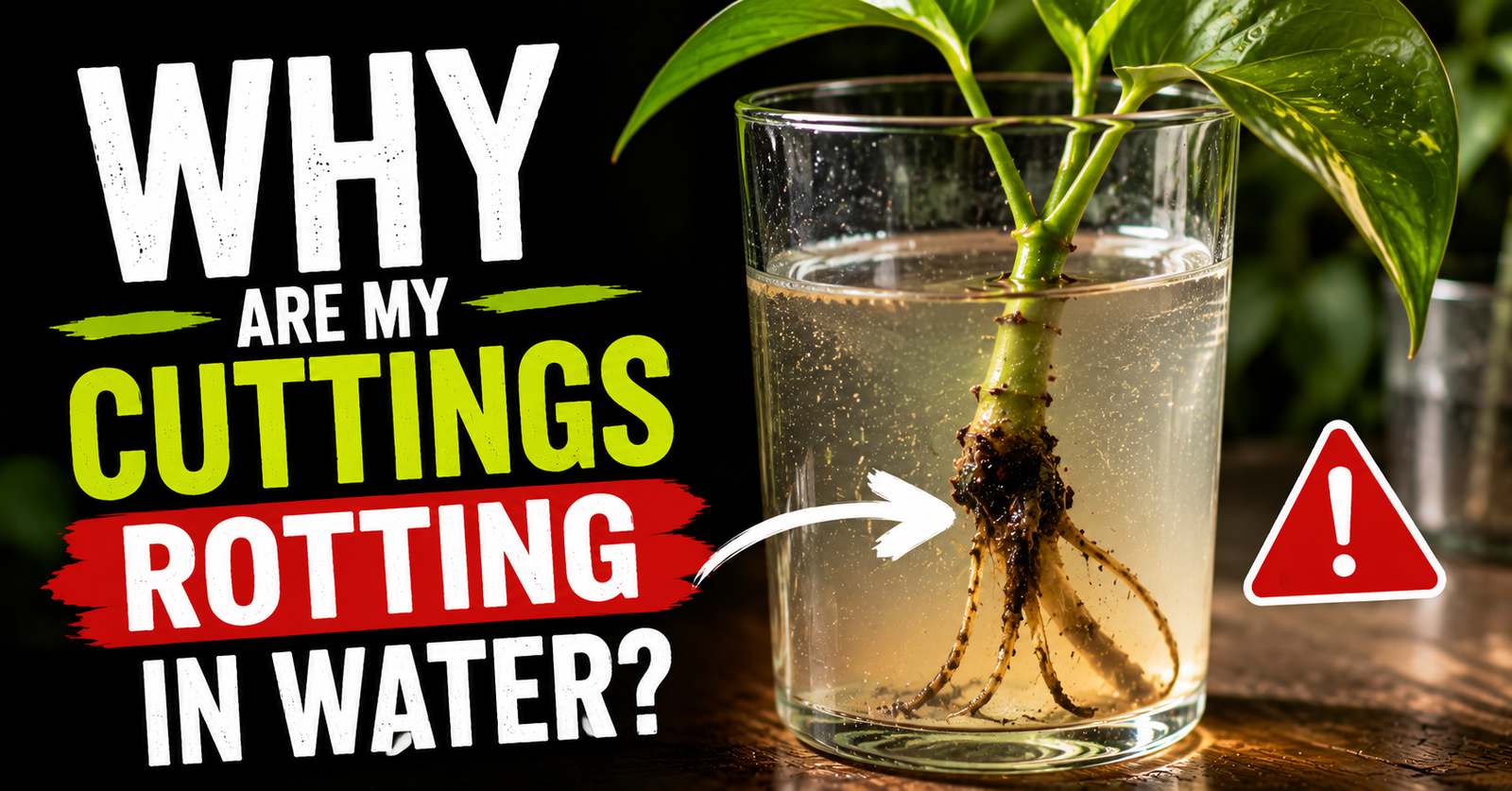
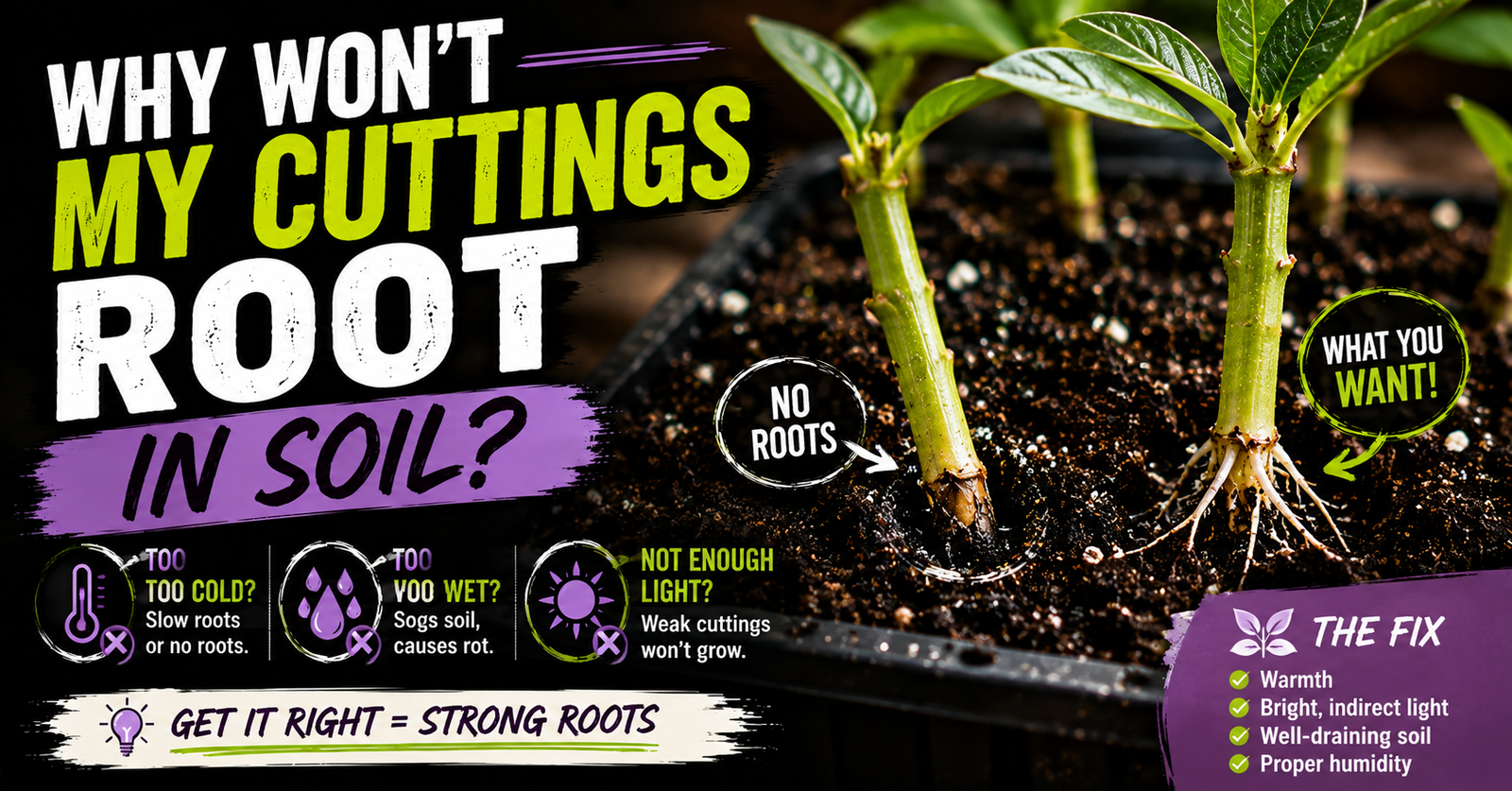
A cutting sitting in constantly saturated media isn’t necessarily happy.
In many cases it’s slowly running out of oxygen.
Once that happens, stem rot isn’t far behind.
That’s why I now think about moisture and airflow together instead of separately.
Perlite helps me create that balance.
The propagation mix stays moist enough for new roots while still allowing plenty of oxygen to reach the stem.
That’s the environment I’ve had the most success with over the years.
Can You Mix Perlite and Vermiculite Together?
Absolutely.
In fact, there are situations where combining them makes good sense.
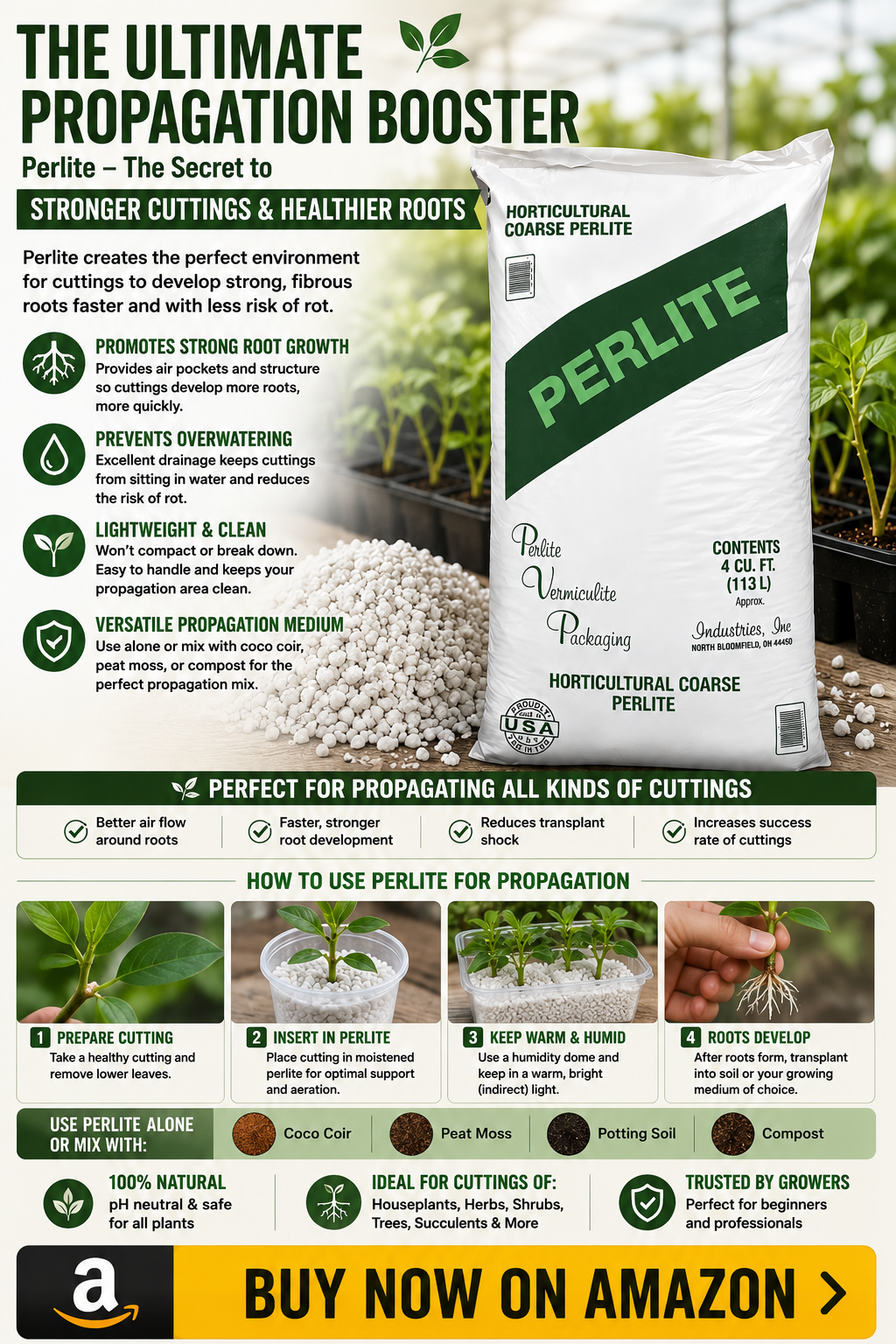
Perlite contributes drainage and aeration. If you need more of this material, horticultural perlite for propagation fits the drainage-focused approach described here.
Vermiculite contributes moisture retention.
Used together, they can create a nicely balanced propagation mix for plants that appreciate evenly moist conditions.
The key is remembering which ingredient is doing what.
If I’m already working with a propagation medium that holds plenty of water, I don’t see much benefit in adding even more moisture retention.
On the other hand, if I’m creating a mix that dries extremely quickly, adding a small amount of vermiculite can help reduce how often I need to water.
Like most things in gardening, the best answer depends on the plant you’re growing and the conditions you’re growing it in.
My Favorite Mix for Most Cuttings
People ask me all the time what propagation mix I actually use.
The answer changes a little depending on the plant, but one ingredient almost never changes.
Perlite.
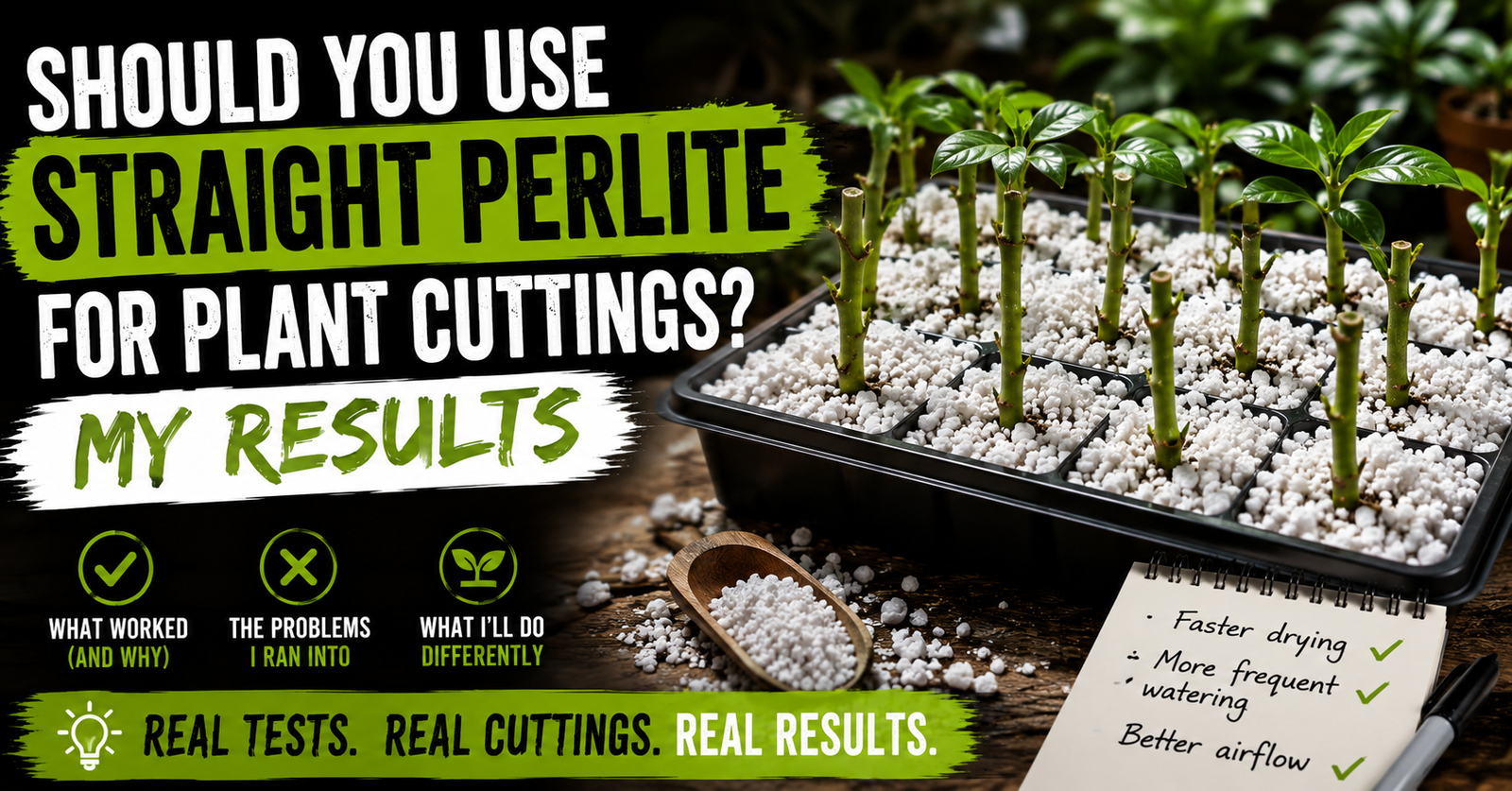
For many shrubs, fruit plants, and ornamental species, I like using a generous amount of perlite mixed with a quality propagation medium. If you are considering a simpler setup, using straight perlite for cuttings explains how this medium performed on its own.
That combination gives me excellent drainage while still holding enough moisture for developing roots.
I’ve used similar mixes while propagating hydrangeas, blueberries, roses, grapes, elderberries, figs, lavender, rosemary, and many other plants.
The exact ratio isn’t what matters most.
What matters is creating a rooting environment that stays moist without becoming waterlogged.
That’s where perlite consistently earns its place.
The Rest of Your Propagation Setup Matters Too
Even the best propagation medium can’t overcome poor growing conditions.
I’ve seen gardeners spend a lot of money chasing the “perfect” soil mix while overlooking the basics that make a much bigger difference.
Healthy cuttings begin with healthy parent plants.
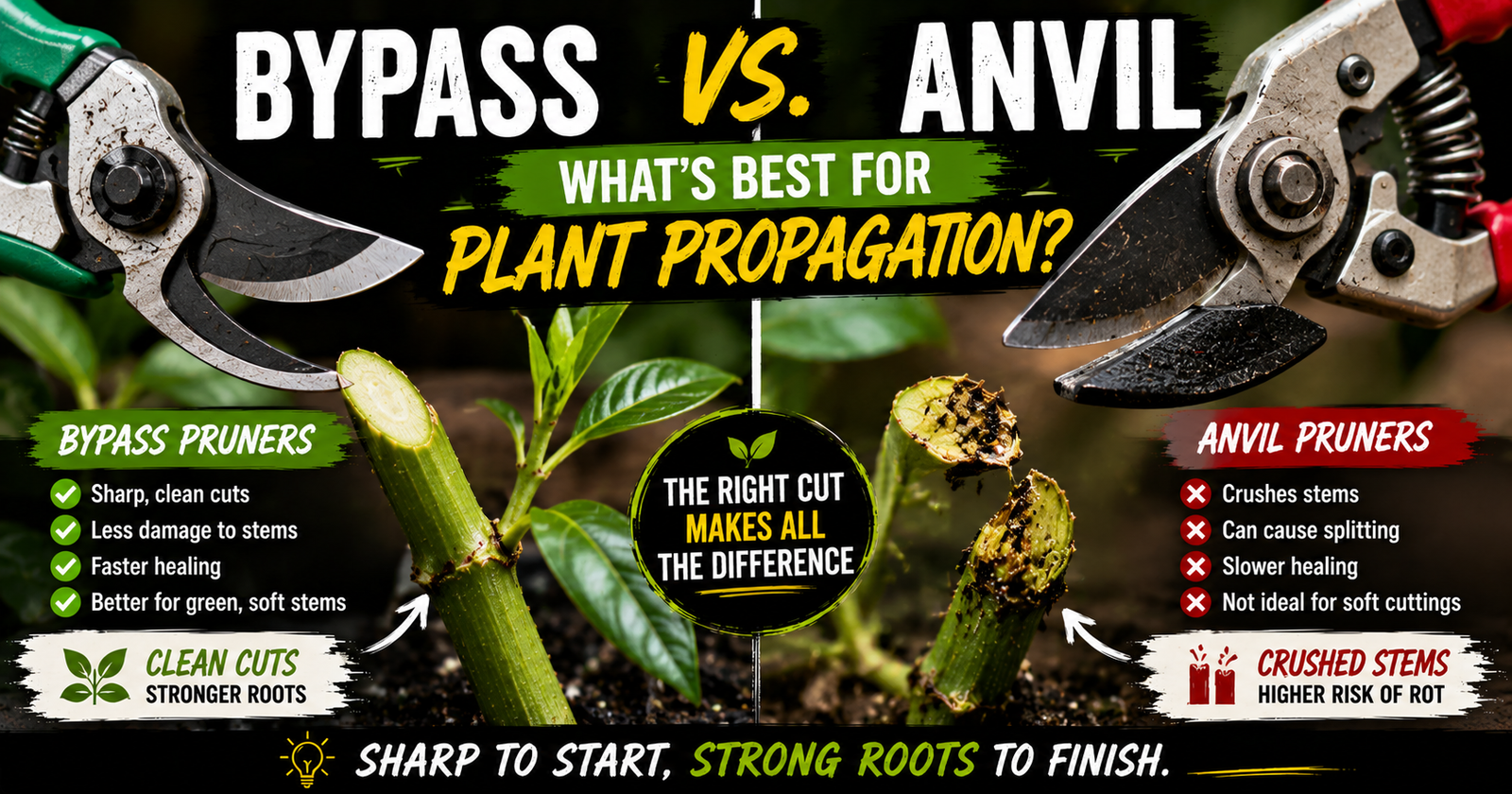
Clean cuts help reduce unnecessary damage to the stem.
Stable temperatures encourage more consistent root development.

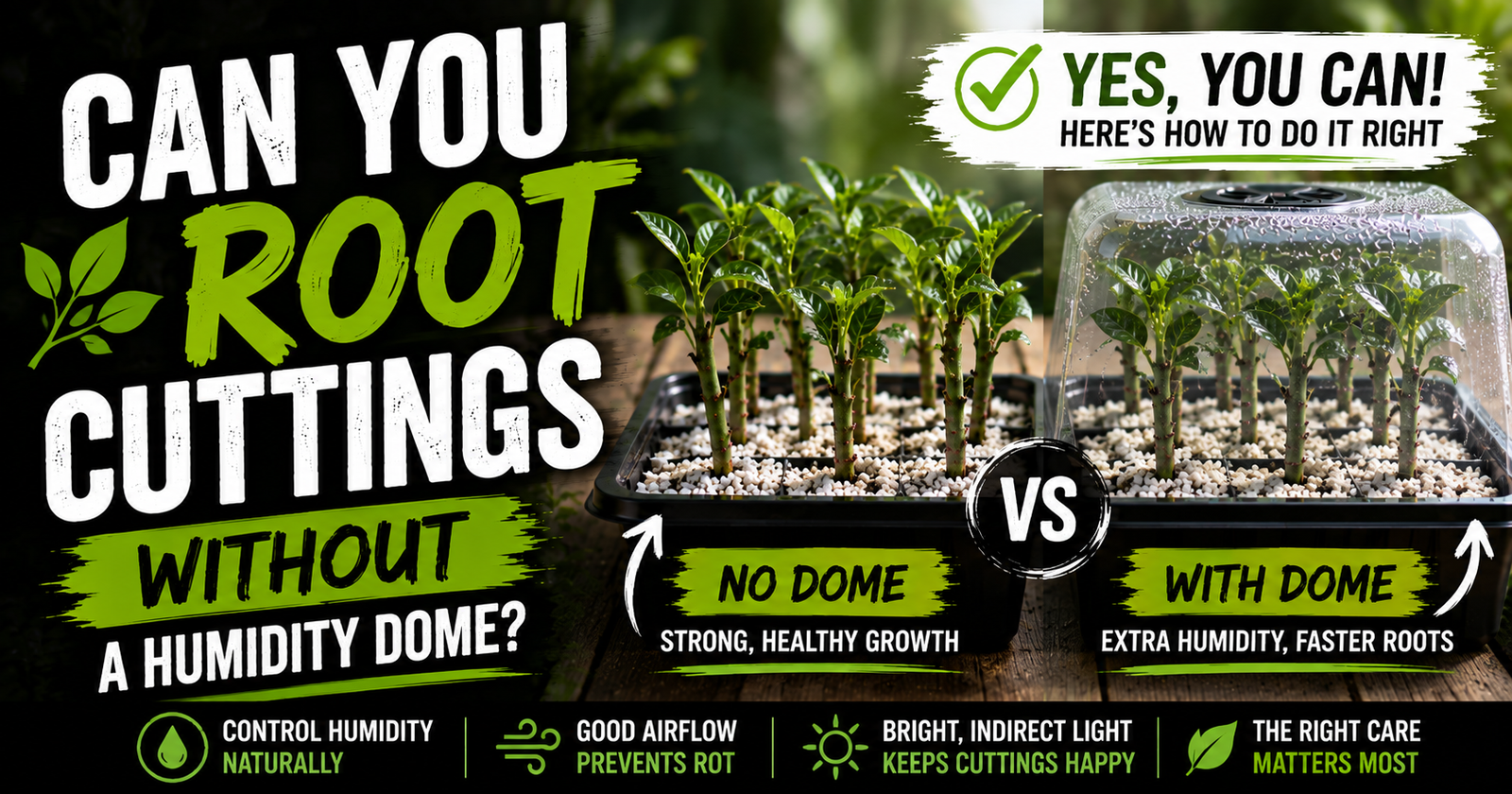
High humidity reduces moisture loss while the cutting waits for roots. A humidity dome can help readers apply this moisture-management approach, such as an adjustable humidity dome.
Every part of the process works together.
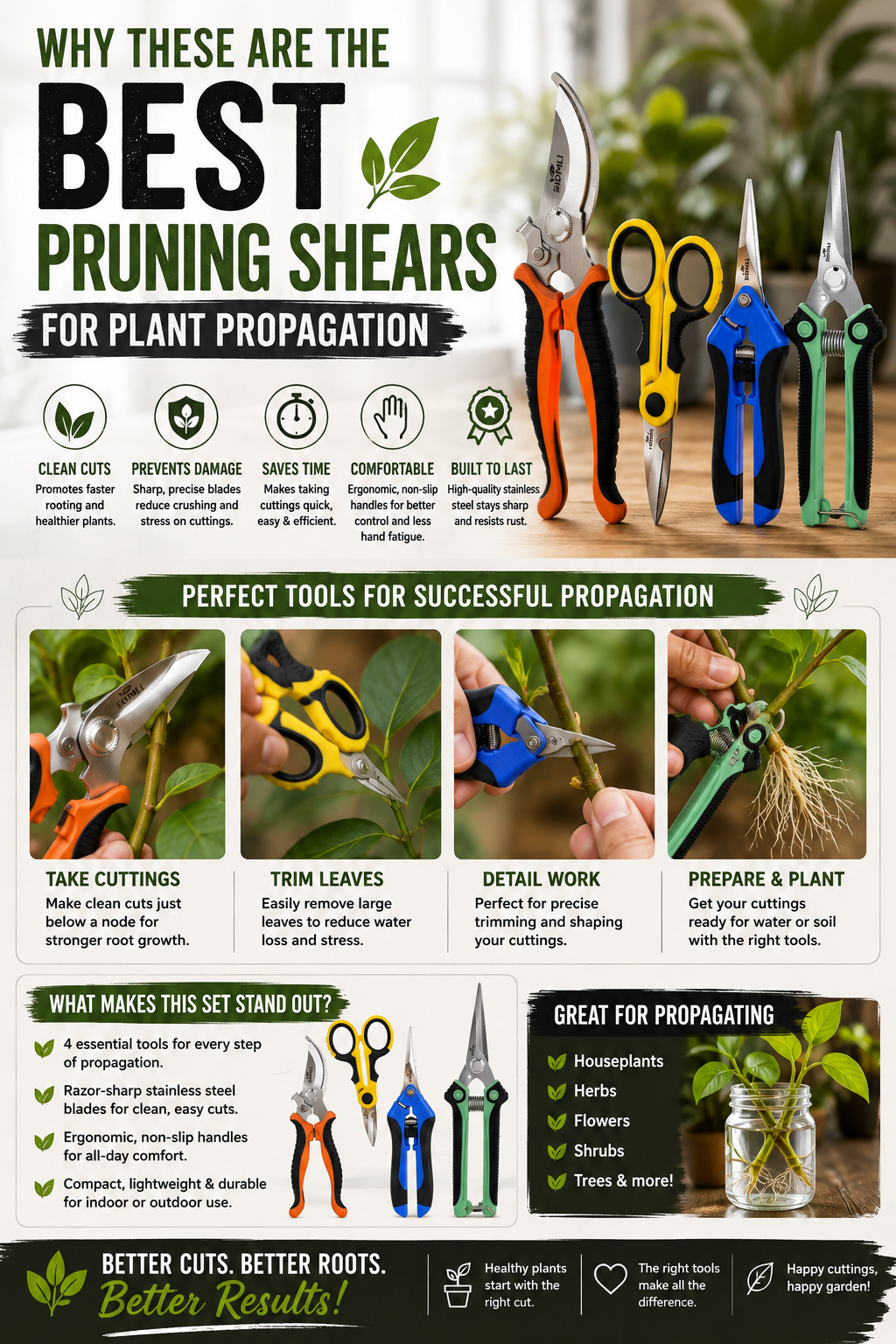
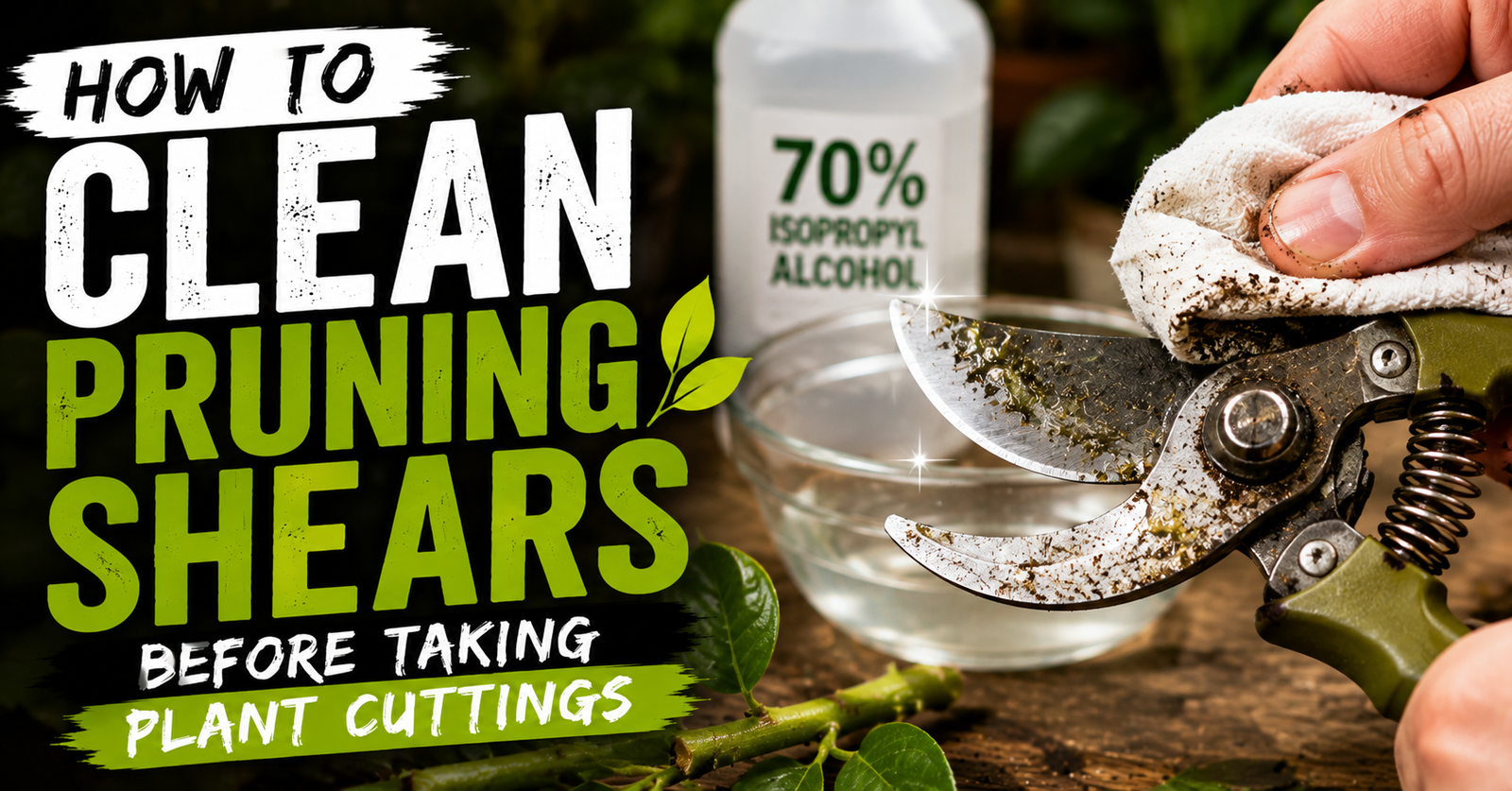
Before I ever fill a propagation tray, I make sure I’m starting with the pruning shears I rely on for propagation because healthy roots begin with a clean cut.
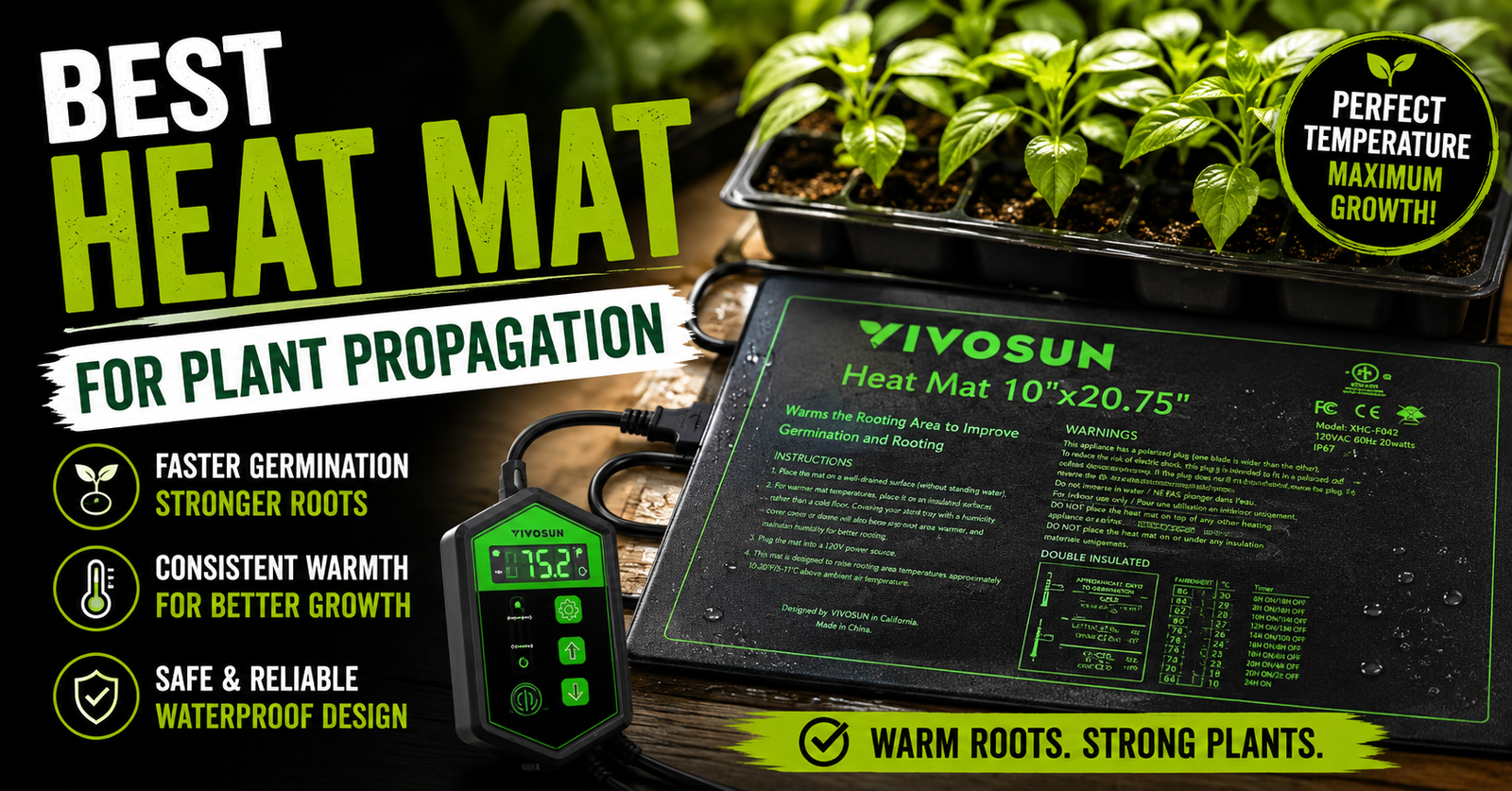
For slower-rooting plants, I usually place my trays on the propagation heat mat that’s earned a permanent place on my bench to keep the root zone consistently warm.
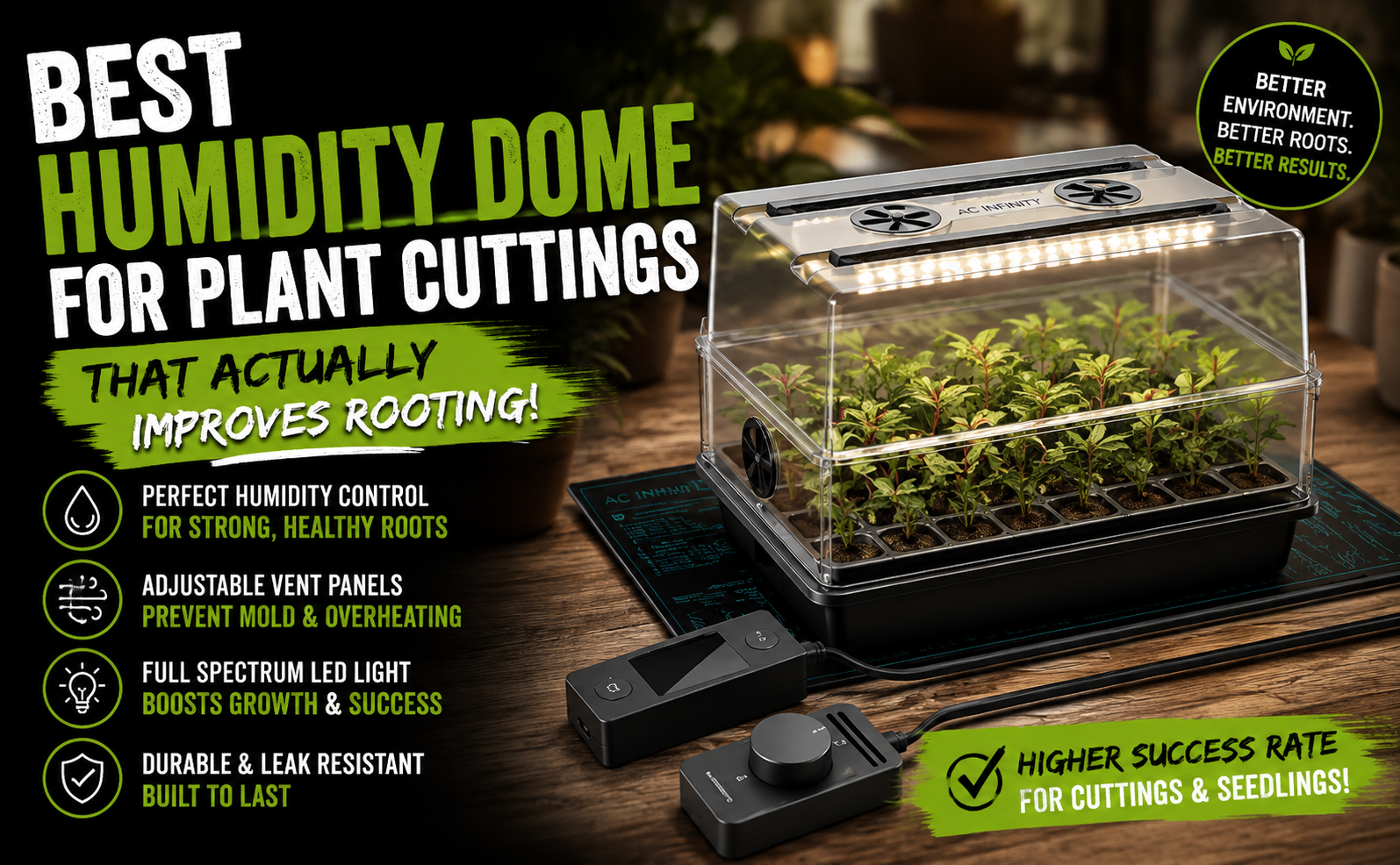
If the cuttings are likely to spend several weeks developing roots, I often cover them with the humidity dome system I trust for challenging propagation projects so they lose far less moisture through their leaves.
Those aren’t products I recommend because they’re popular.
They’re products I continue using because they’ve helped me build a much more reliable propagation system over the years.
Don’t Be Afraid to Experiment
One thing propagation has taught me is that plants don’t always read the gardening books.
I’ve had two cuttings from the same shrub behave completely differently even though they were rooted on the same day.
That’s one reason I encourage gardeners to experiment.
Try different propagation mixes.
Test different containers.
Compare rooting methods.
Pay attention to what actually works in your growing environment instead of assuming there’s only one correct answer.
The more observations you make yourself, the faster you’ll develop confidence in your own propagation techniques.
That’s exactly how I learned which media I trust today.
It wasn’t from reading one article.
It came from years of trying different approaches, making mistakes, and gradually figuring out what consistently produced healthier roots.
Does the Type of Plant Change the Answer?
It definitely can.
If someone asks me whether perlite or vermiculite is better, one of the first things I want to know is what they’re trying to propagate.
A pothos cutting is very different from a blueberry cutting.
A soft basil stem behaves differently than a hardwood fig cutting.
That’s why I don’t believe there’s one universal propagation mix that works perfectly for every plant.
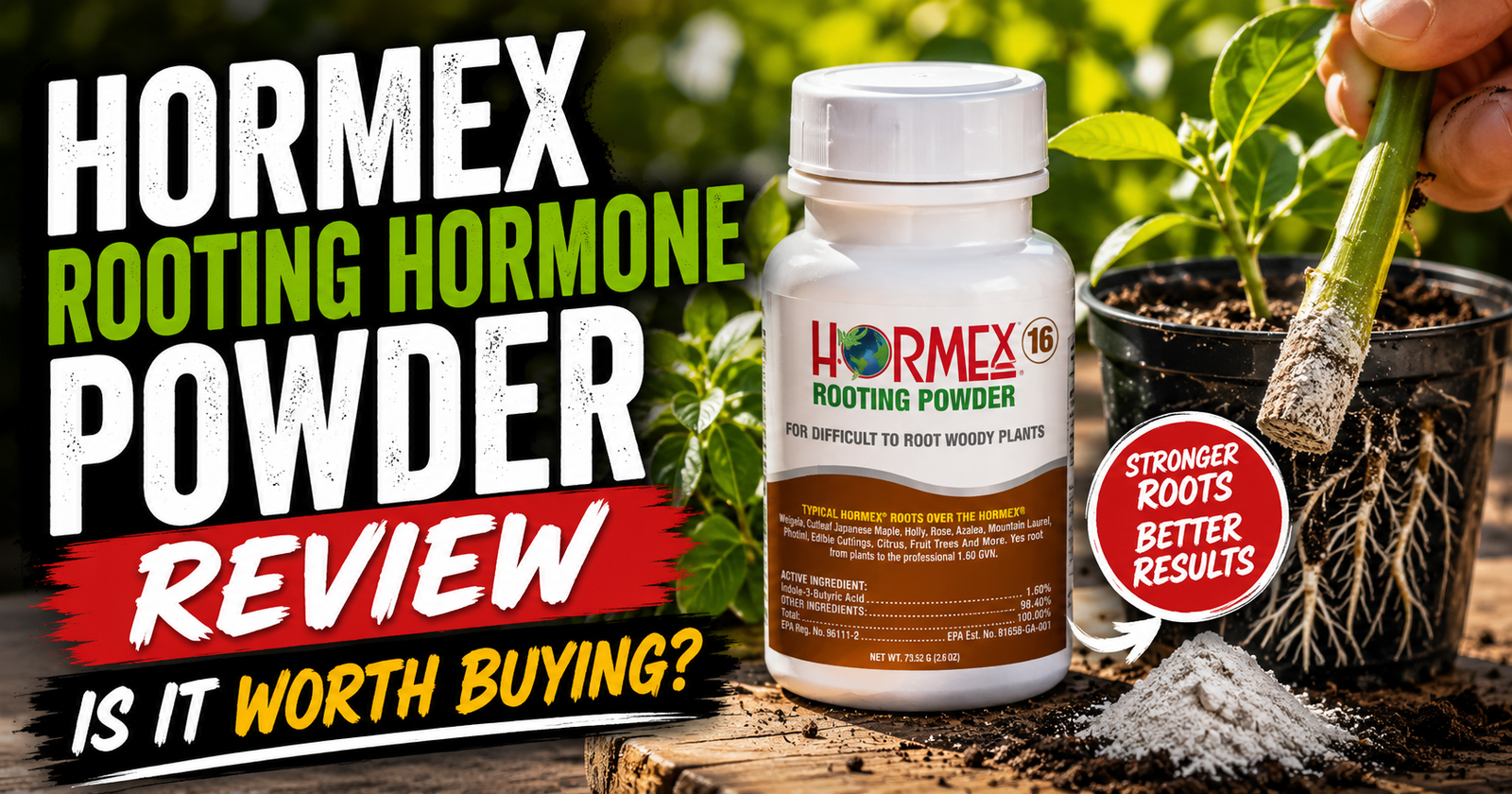
For woody shrubs and fruit plants, I’m usually trying to maximize airflow around the stem because these cuttings often spend much longer waiting for roots. Along with an airy medium, a suitable rooting hormone can be part of a propagation setup for slower-rooting woody cuttings.
For seedlings or plants that naturally prefer more moisture, vermiculite may deserve a larger role in the mix.
Matching the propagation medium to the plant almost always produces better results than forcing every cutting into the exact same recipe.
What I Would Buy if I Could Only Choose One
Gardeners ask me this question surprisingly often.
If I walked into a garden center today and had enough money for only one bag, I’d walk out with perlite.
That isn’t because vermiculite is a poor product.
It’s because perlite solves the problem I encounter most often.
Overwatering.
Poor drainage.
Lack of oxygen around developing roots.
Those are responsible for far more failed cuttings in my propagation area than media drying out too quickly.
Perlite gives me the flexibility to improve almost any propagation mix without making it heavy or compacted.
It’s also useful far beyond propagation.
I mix it into potting soil for houseplants.
I add it to container mixes.
I use it when potting up newly rooted cuttings.
It earns its space in my gardening shed year after year.
That’s why it’s one of the first propagation supplies I recommend to anyone who’s serious about learning how to root plants successfully.
Frequently Asked Questions
Is perlite better than vermiculite for rooting cuttings?
For most of the cuttings I propagate, yes.
Perlite creates better drainage and improves airflow around developing roots, which helps reduce the chances of stem rot.
That’s why I reach for it much more often when propagating shrubs, fruit plants, herbs, and many houseplants.
Can I root cuttings in straight vermiculite?
You can, and some gardeners have good success doing exactly that.
Personally, I rarely use vermiculite by itself because I prefer a propagation medium with more air space around the stem.
My results have simply been more consistent with perlite-based mixes.
Can you mix perlite into potting soil?
Absolutely.
In fact, I do it all the time.
Adding perlite is one of the easiest ways to improve drainage and loosen heavy potting mixes.
Many established plants appreciate that extra airflow just as much as fresh cuttings do.
Does perlite hold any water?
Yes, just not nearly as much as vermiculite.
That’s one reason it works so well for propagation.
It holds enough moisture to support developing roots while still creating the air pockets those roots need to stay healthy.
Which one lasts longer?
Perlite generally stays structurally stable for a very long time.
Vermiculite gradually breaks down more as it’s handled and reused.
For that reason, I find myself replacing vermiculite more often than perlite when I’m refreshing propagation supplies.
My Advice After Years of Propagating Plants
If there’s one thing I’ve learned, it’s that successful propagation usually comes from avoiding the extremes.
Too much water causes problems.
Too little water causes problems.
Too much humidity can create issues.
Too little humidity can dry out cuttings.
The same balanced approach applies to your propagation medium.
Perlite helps me maintain that balance better than almost any other amendment I use.
It improves drainage without making the mix bone dry.
It increases airflow without preventing moisture from reaching the stem.
Most importantly, it creates a rooting environment that has consistently worked for me across hundreds of propagation projects involving everything from easy houseplants to much more challenging woody shrubs.
That’s why, if someone new to propagation asked me which product to buy first, I’d confidently recommend starting with a good bag of horticultural perlite.
See the Horticultural Perlite I Use for Nearly Every Propagation Project
If you’re planning to build your propagation supplies over time, I think it’s one purchase you’ll continue appreciating long after the first bag is empty.
About the Author
Daxon Weaver is the founder of PropagationWorld and has spent years propagating houseplants, herbs, berry bushes, fruit trees, and ornamental shrubs. Through thousands of successful cuttings and plenty of lessons learned from failed ones, he enjoys sharing practical propagation advice that helps gardeners build healthier plants from the very beginning.