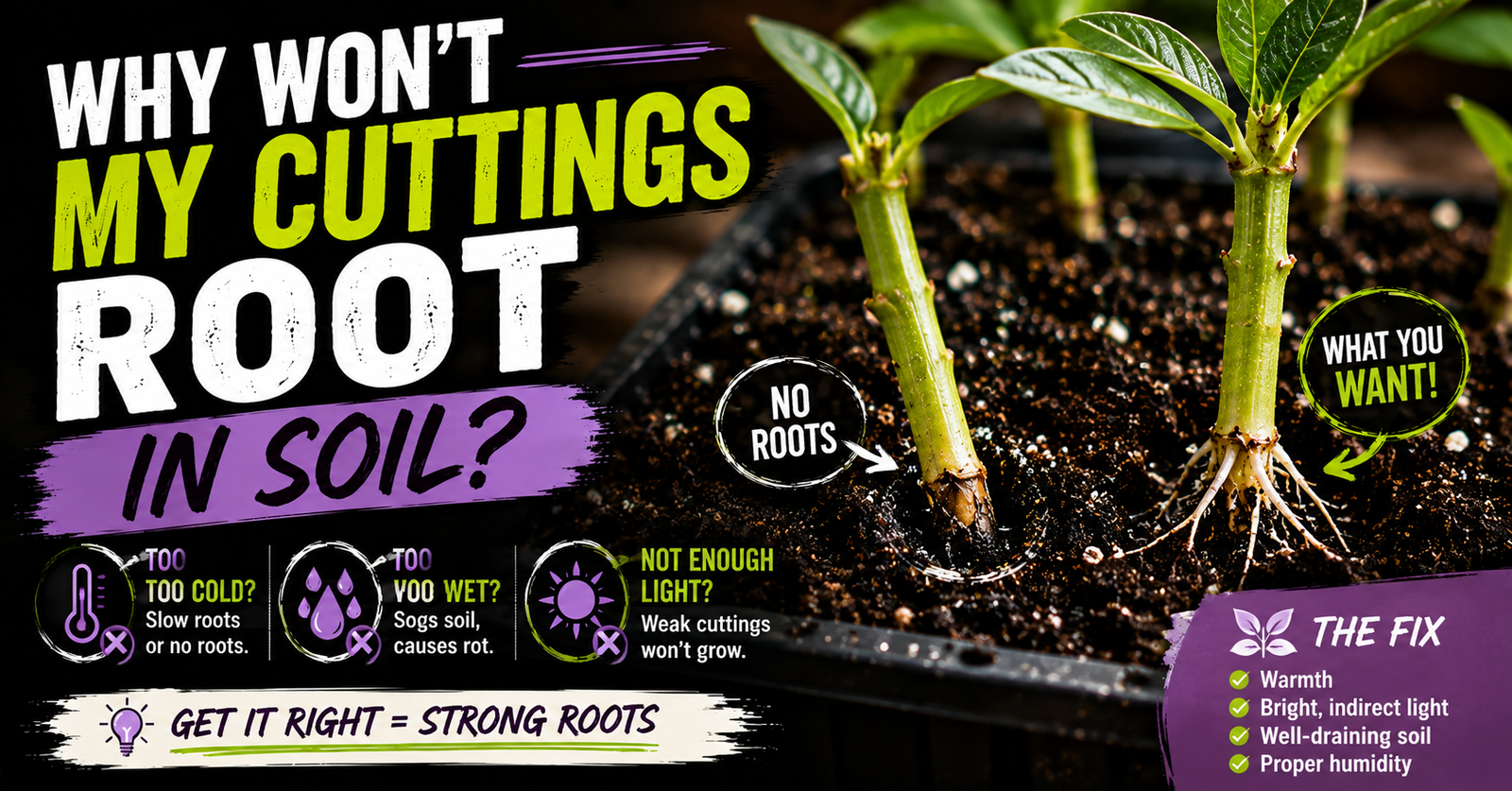
Few things test a gardener’s patience like a cutting that simply refuses to root.
The stem stays green.
The leaves may even look healthy.
Weeks pass.
Still no roots.
It’s tempting to think you’ve done something wrong, but in many cases the cutting is responding to one small problem that isn’t immediately obvious.
I’ve had propagation trays that rooted beautifully right beside trays that seemed to do absolutely nothing.
The difference usually wasn’t luck.
It came down to the overall environment.
Healthy propagation isn’t one single step.
It’s the result of many small decisions working together.
The cutting.
The growing medium.
The temperature.
The moisture.
The light.
The humidity.
When one of those pieces is missing, root development often slows to a crawl.
Some Plants Naturally Take Longer
One mistake I made years ago was expecting every cutting to root at about the same speed.
They don’t.
Some herbs and houseplants seem to produce roots almost overnight.
Hardwood shrubs and fruit trees often need weeks before anything happens below the surface.
That doesn’t mean they’re failing.
They’re simply following their own timeline.
Learning what to expect from each plant has probably made me more patient than anything else I’ve learned about propagation.
Healthy Stems Produce Better Roots
The best propagation media in the world can’t compensate for poor plant material.
Whenever I collect cuttings, I look for vigorous stems without obvious disease, insect damage, or severe stress.
Weak stems usually become weaker after they’re separated from the parent plant.
Healthy stems have much more stored energy available for producing new roots.
That simple observation has improved my success rate more than many expensive propagation gadgets ever have.
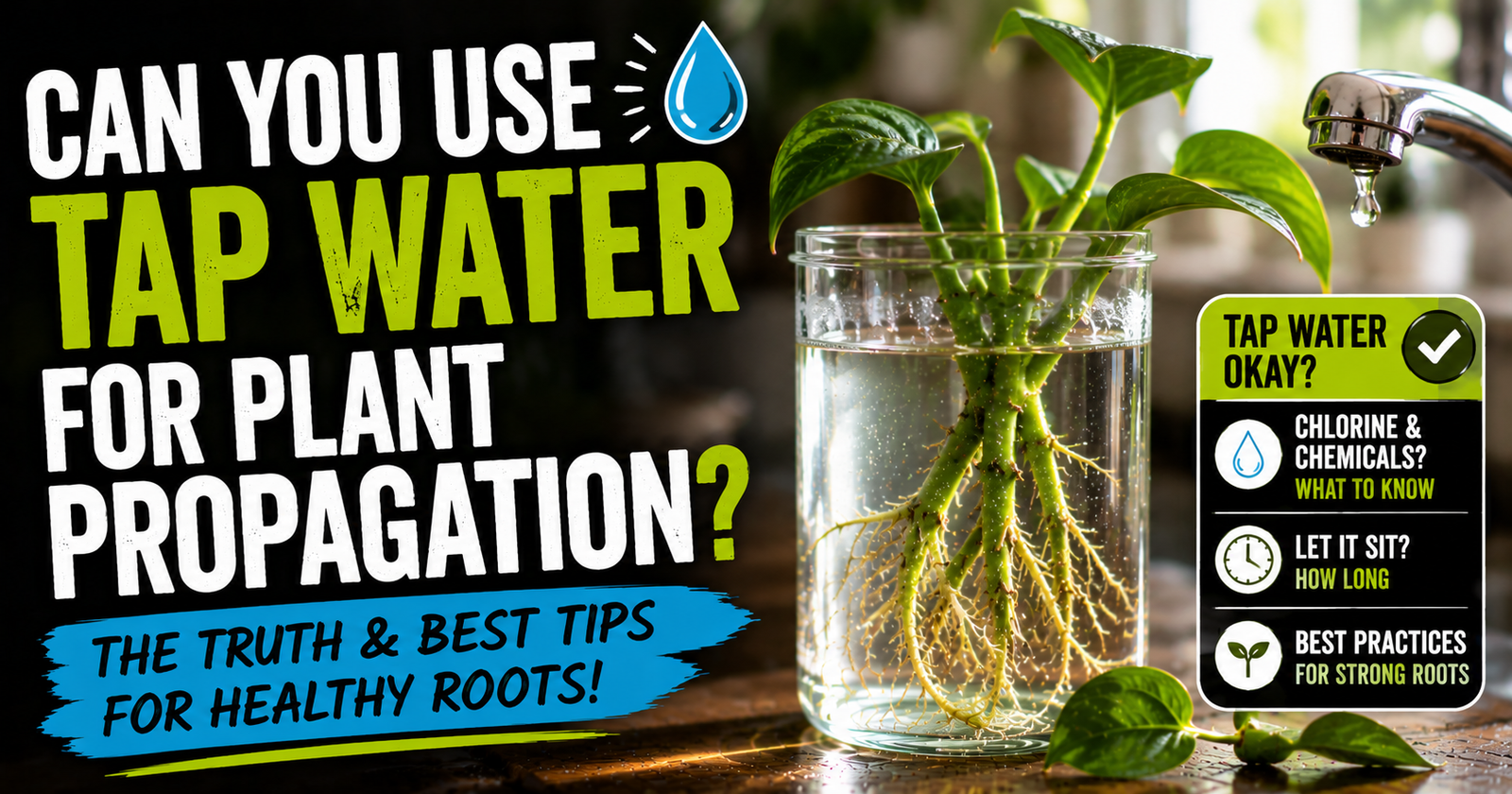
The Growing Medium Matters More Than People Think
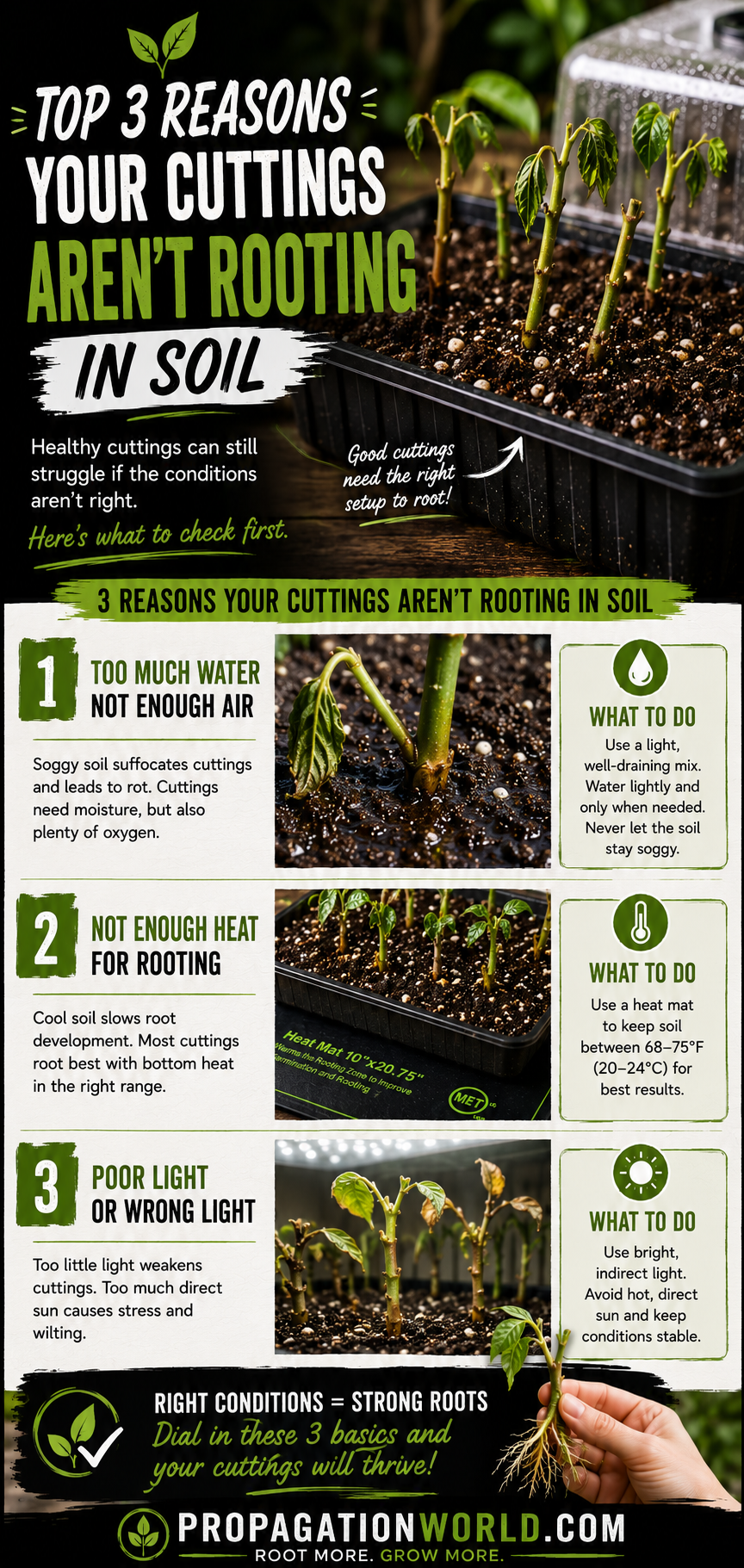
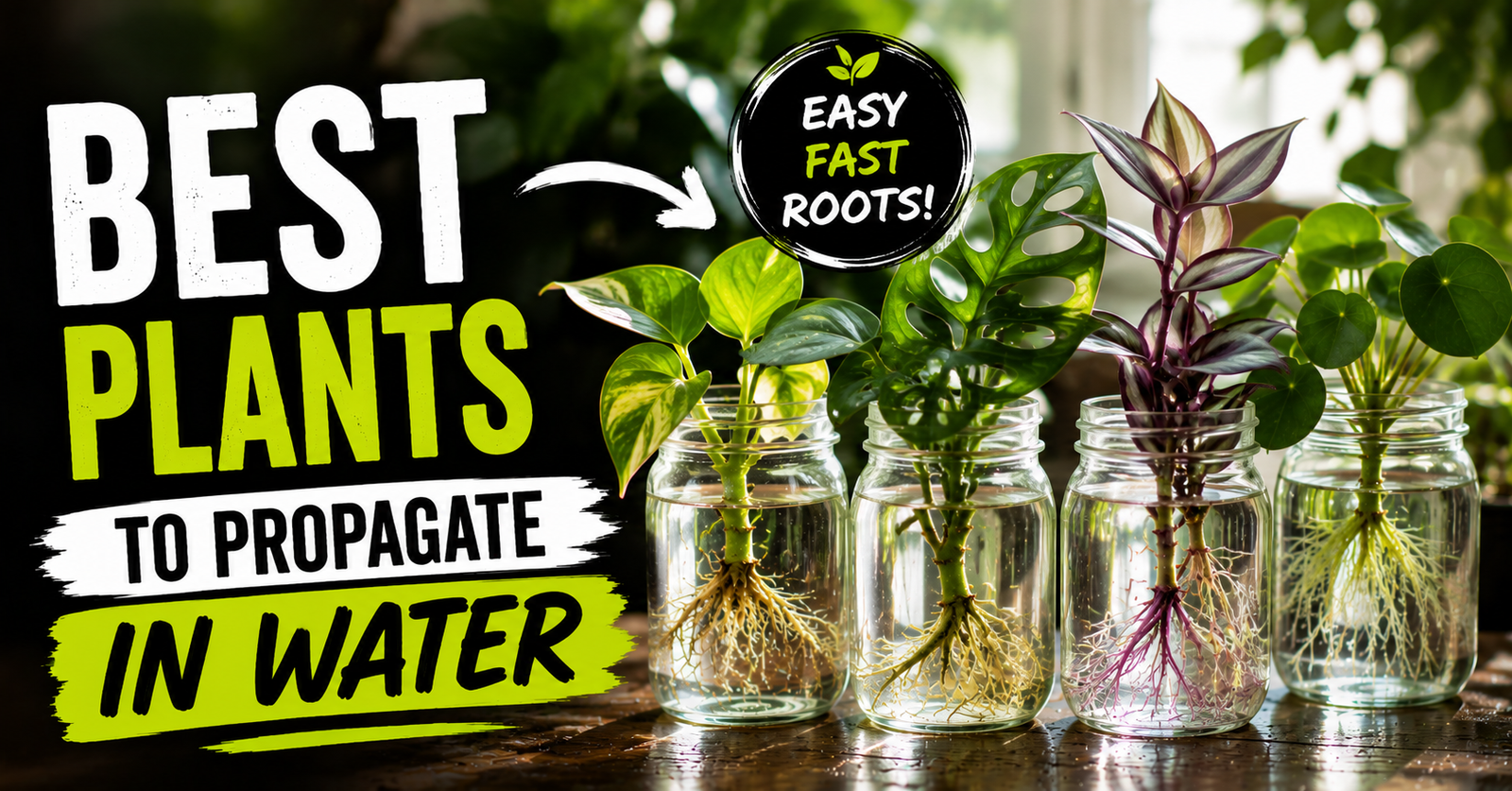
Roots need moisture.
They also need oxygen.
Dense soils often provide one while limiting the other.
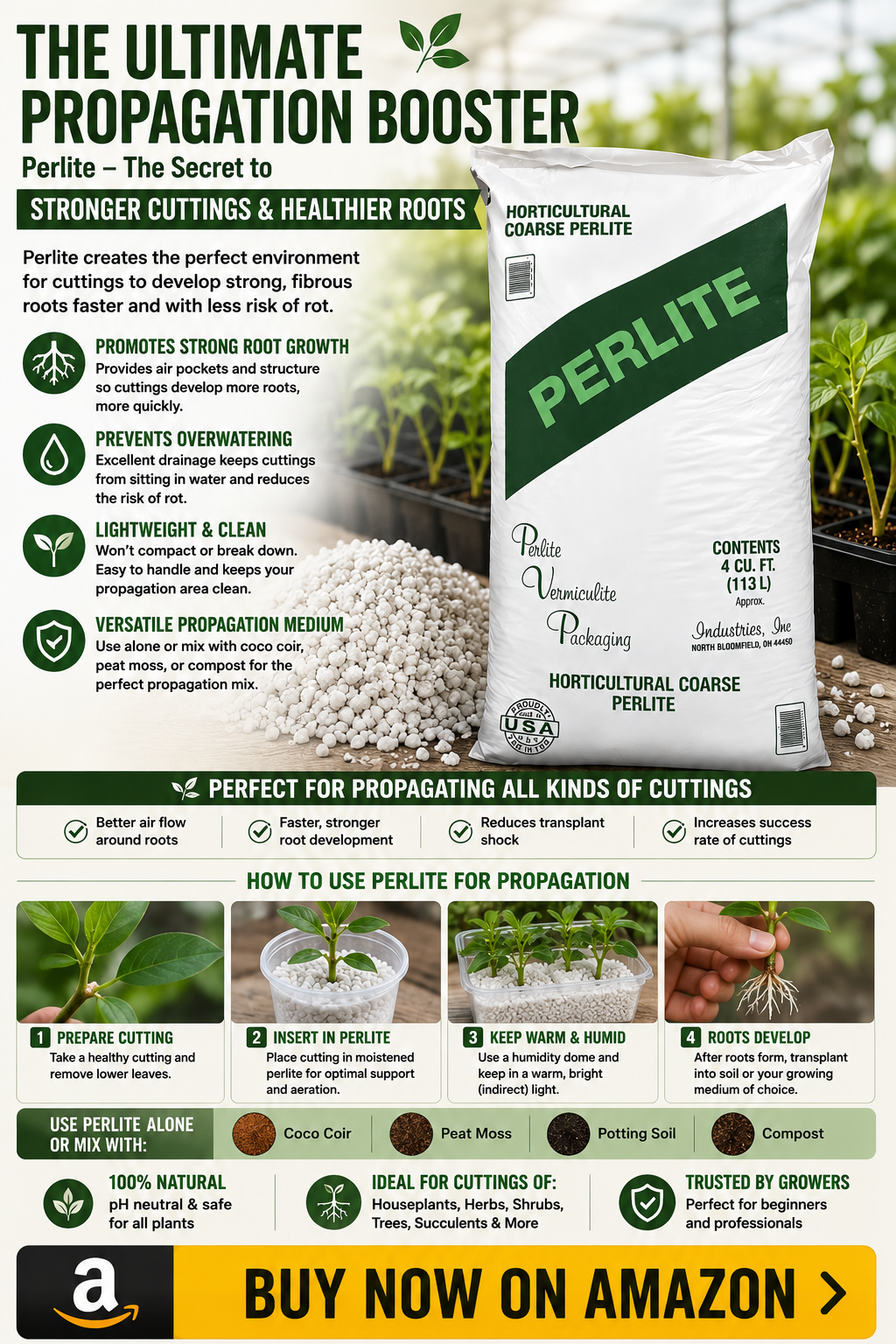
That’s why I prefer light propagation media that stay evenly moist without becoming heavy and compacted. A lightweight ingredient such as horticultural perlite for propagation can help create the open, evenly moist medium described here.
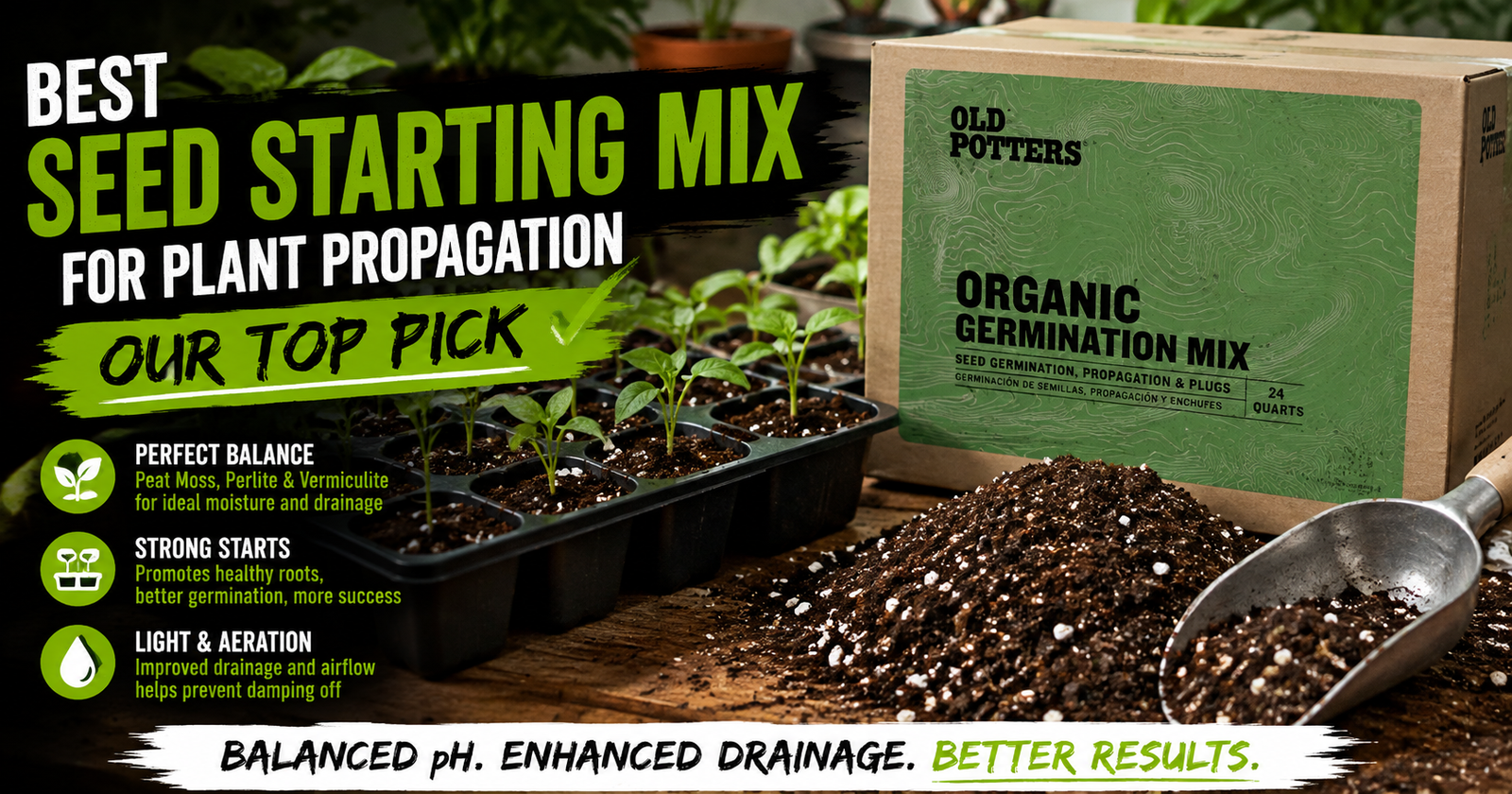
I’ve had consistently better results since switching to the seed starting mix I recommend for rooting plant cuttings.
Its texture makes it much easier to maintain the balance that developing roots need.
Instead of fighting soggy soil or constantly dry media, I can focus on keeping the environment stable, which is usually far more important than chasing the perfect watering schedule.
Temperature Quietly Influences Everything
One thing that surprised me when I first started propagating plants was how much temperature affects rooting speed.
A cutting can have perfect moisture, excellent lighting, and healthy stems, yet still refuse to root if the growing medium stays too cool.
That’s especially common during early spring, fall, or in air-conditioned rooms.
The cutting isn’t necessarily unhealthy.
It’s simply waiting for conditions to improve.
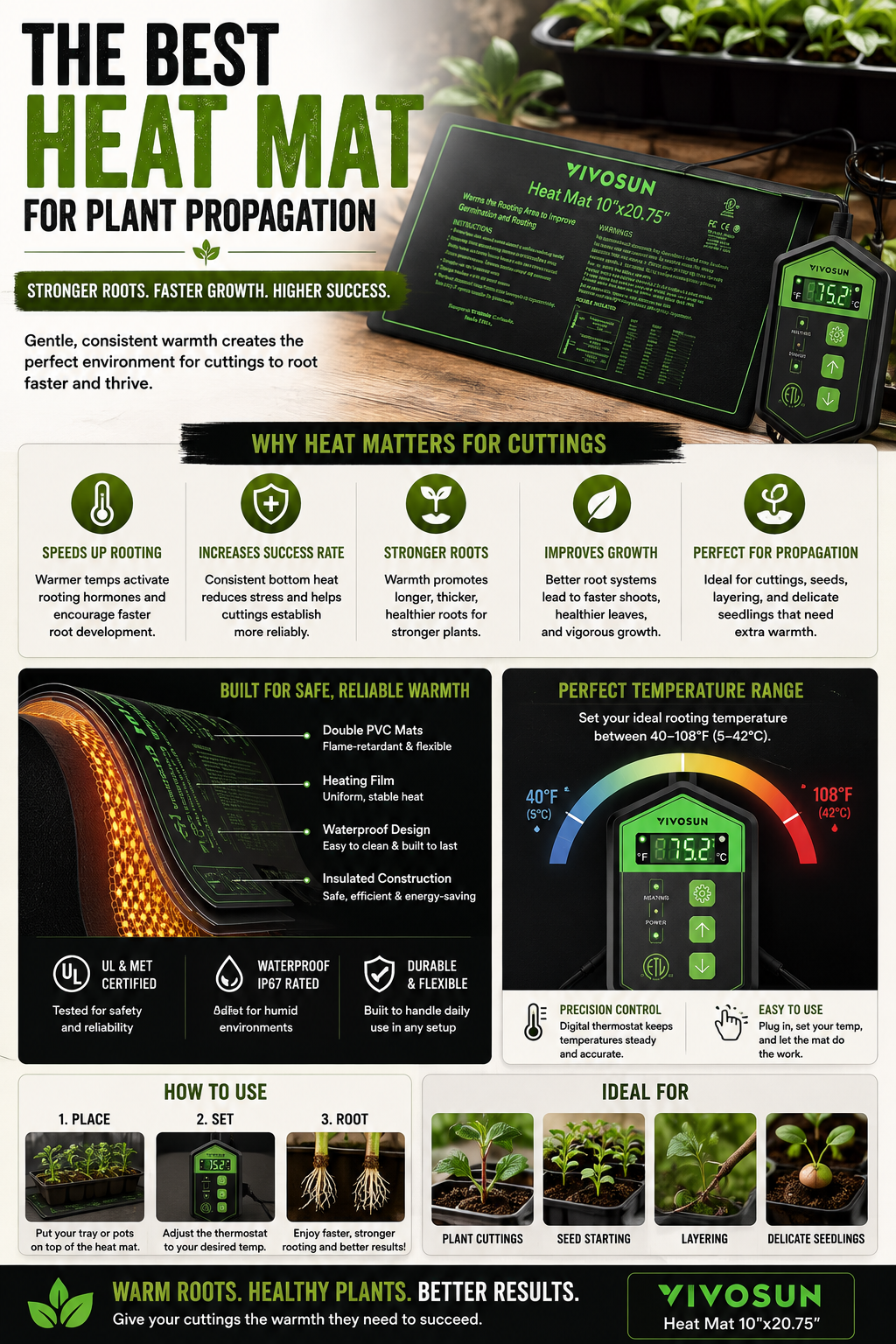
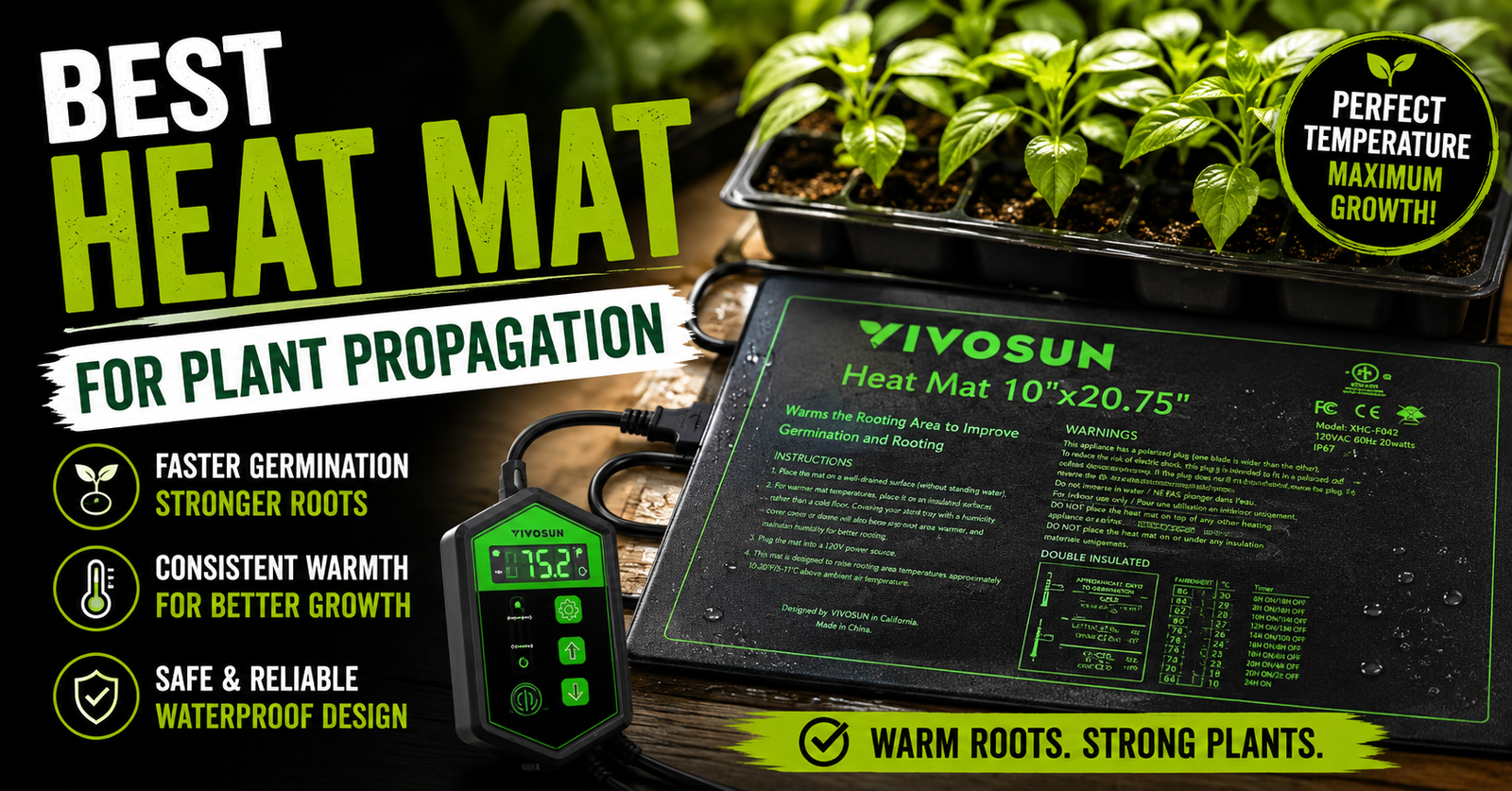
During cooler months, I often use the propagation heat mat that’s become part of my regular setup because maintaining a consistent root-zone temperature helps eliminate one more variable that can delay rooting.
Don’t Keep Disturbing the Cutting
Curiosity has probably ruined more cuttings than people realize.
It’s incredibly tempting to pull the cutting out every few days to check for roots.
I’ve done it myself.
The problem is that tiny new roots are extremely fragile.
Even a gentle inspection can break them before they’ve had time to establish themselves.
Now I let the cutting tell me when it’s making progress.
Healthy leaves.
New growth.
A little resistance if I very gently test the stem.
Those signs usually tell me everything I need to know without digging the plant out of the propagation mix.
Sometimes the Cutting Simply Needs More Humidity
Leafy cuttings lose moisture long before they develop roots.
If the surrounding air is very dry, the cutting spends so much energy trying to stay hydrated that root production often slows.
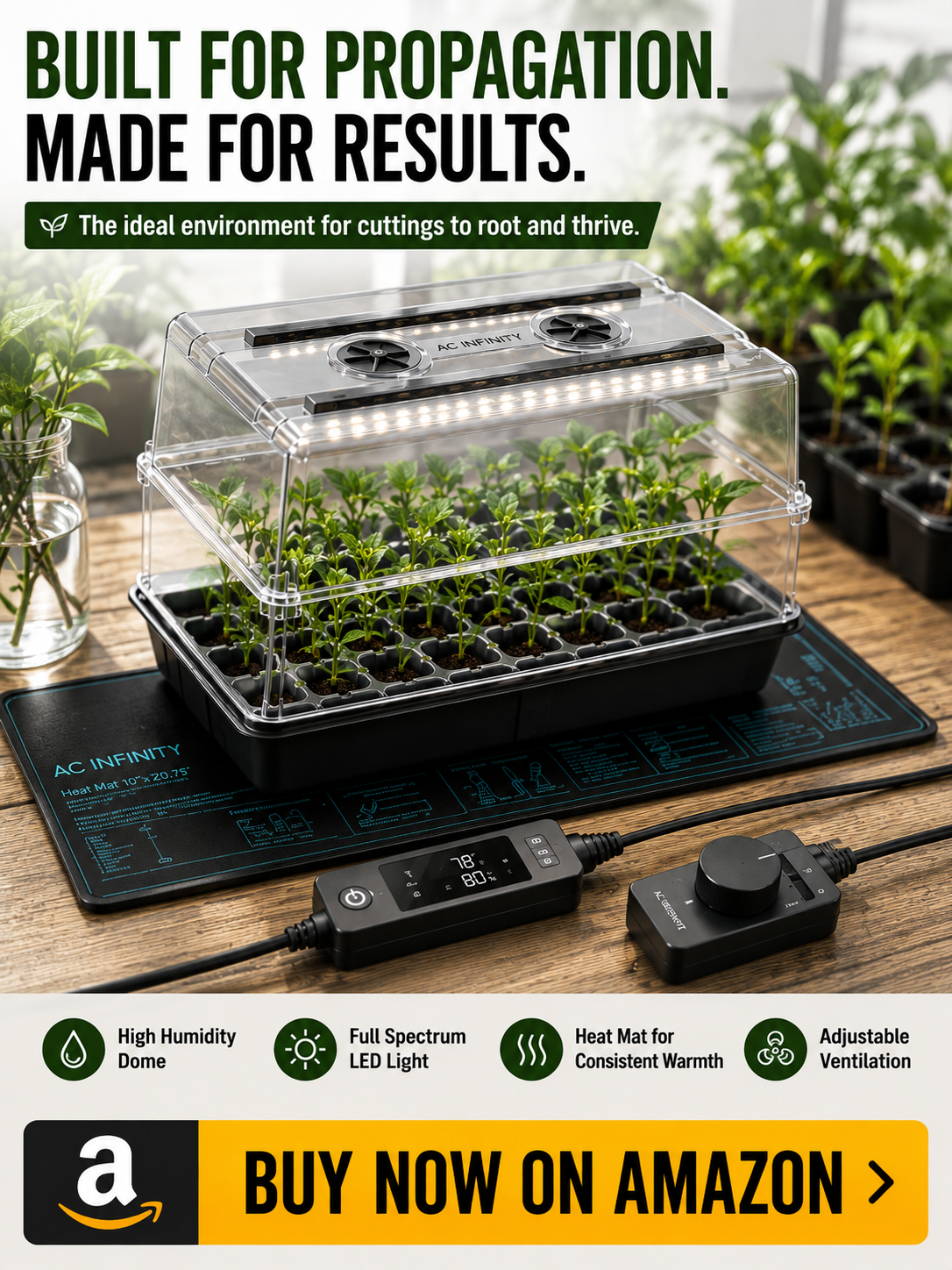
That’s one reason I use humidity domes for many softwood cuttings and tropical plants. For cuttings that need steadier humidity, an adjustable humidity dome can be a practical addition to the propagation setup.
The goal isn’t trapping stagnant air.
It’s slowing moisture loss while the roots are getting established.
Different plants need different levels of humidity, but creating a more stable environment has consistently improved my propagation success.
Several Small Improvements Usually Beat One Big Change
When a cutting refuses to root, I don’t immediately blame one thing.
Instead, I look at the entire propagation setup.
Is the growing medium draining well?
Is it staying evenly moist?
Are temperatures stable?
Is the humidity appropriate?
Was the cutting taken from a healthy parent plant?
Small improvements across several areas almost always produce better results than making one dramatic change while ignoring everything else.
Propagation is really a collection of good habits working together.
Give the Cutting Every Advantage
Some plants are naturally easy.
Others need every advantage you can give them.
When I’m propagating slower-rooting shrubs, fruit trees, or valuable ornamental plants, I don’t like leaving success to chance.
That’s why I combine healthy cuttings, clean tools, good propagation media, and stable growing conditions from the very beginning.
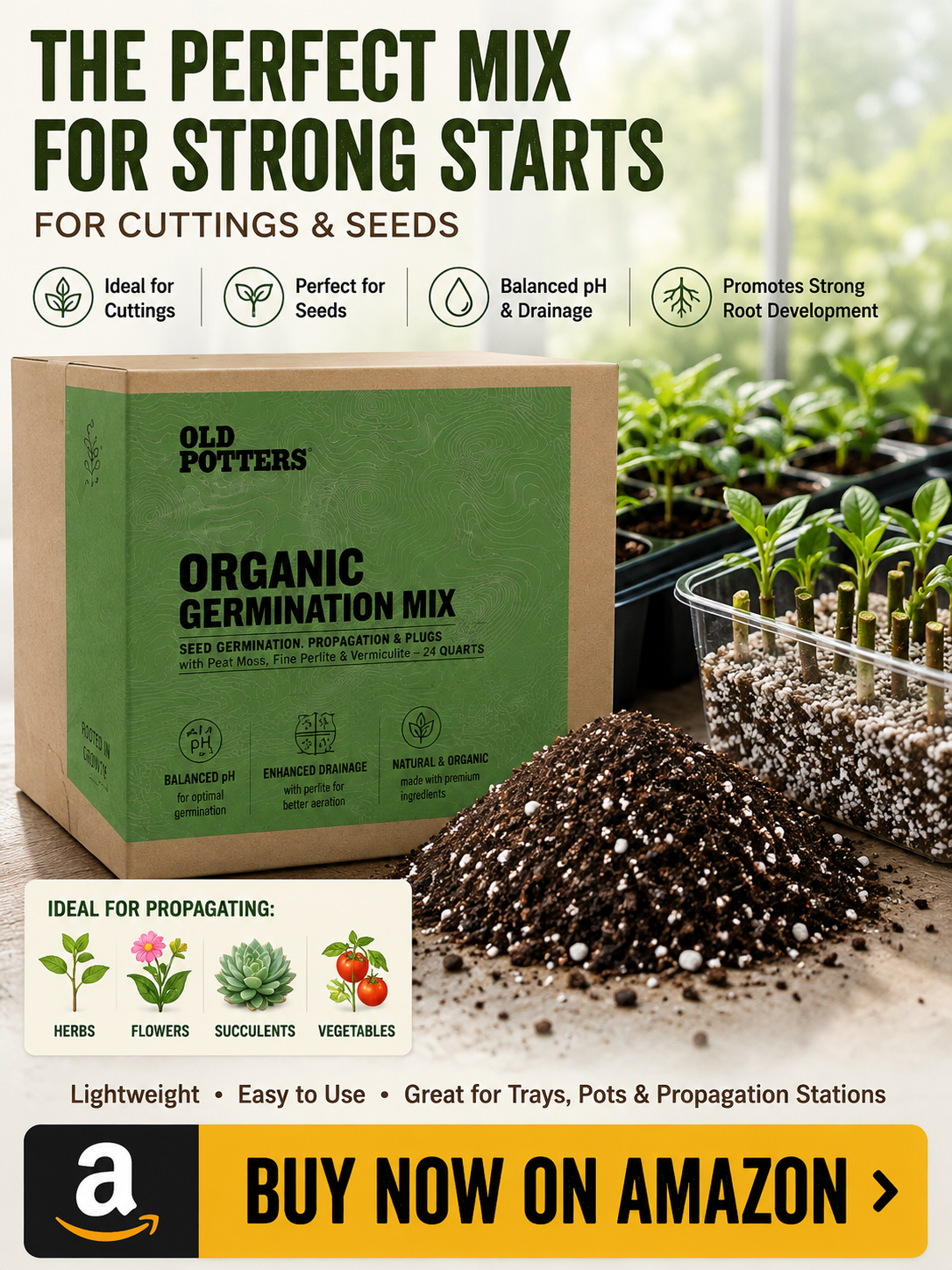
If you’re setting up a new propagation tray, I’d recommend checking out the seed starting mix I use on Amazon.
A quality propagation mix won’t guarantee success by itself, but it gives developing roots exactly the kind of environment they’re looking for, and that’s one less obstacle standing between you and a tray full of healthy new plants.
Frequently Asked Questions
Should I use rooting hormone if my cuttings won’t root?
It depends on the plant.
Many common houseplants root readily without it.
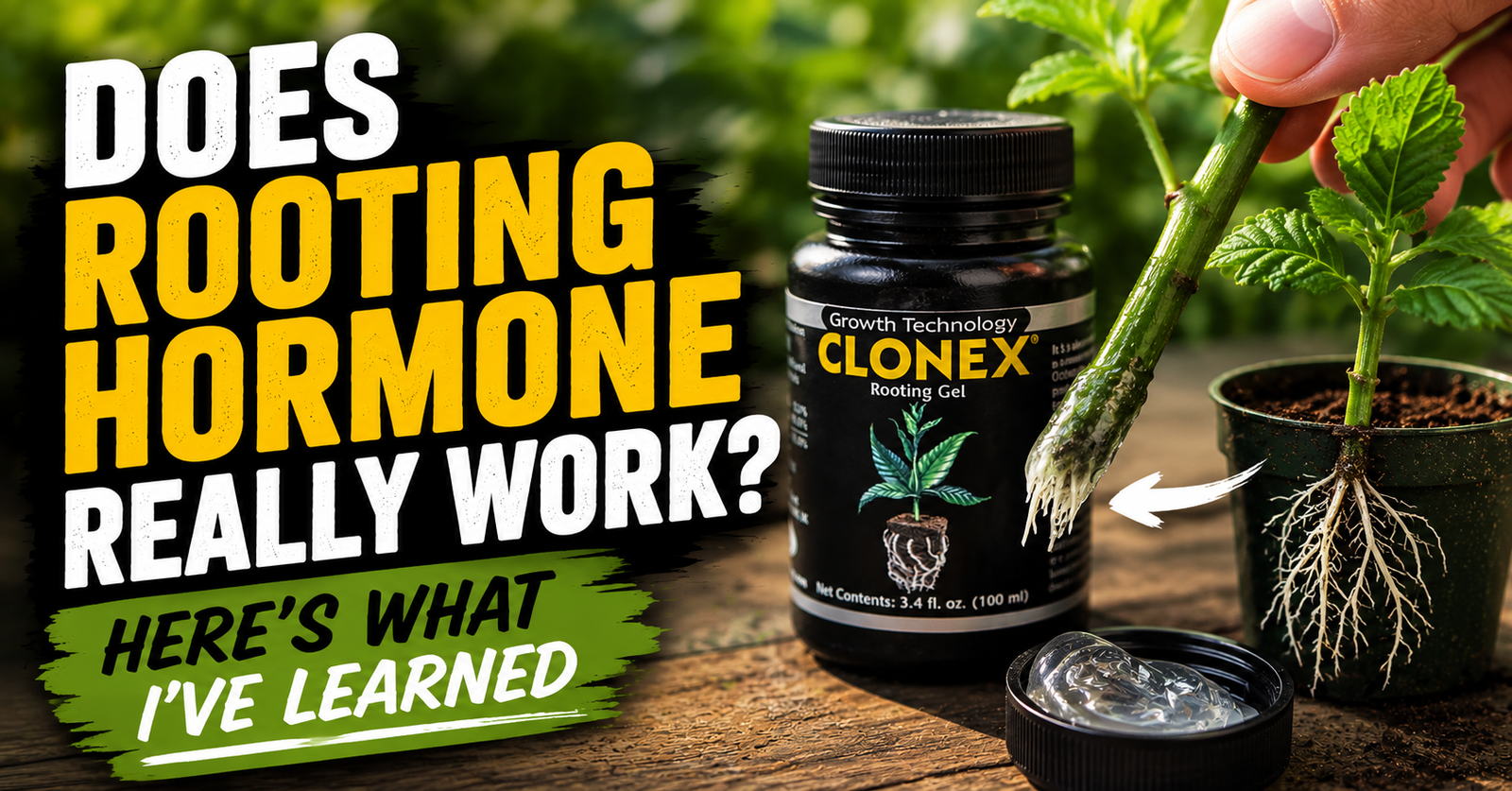
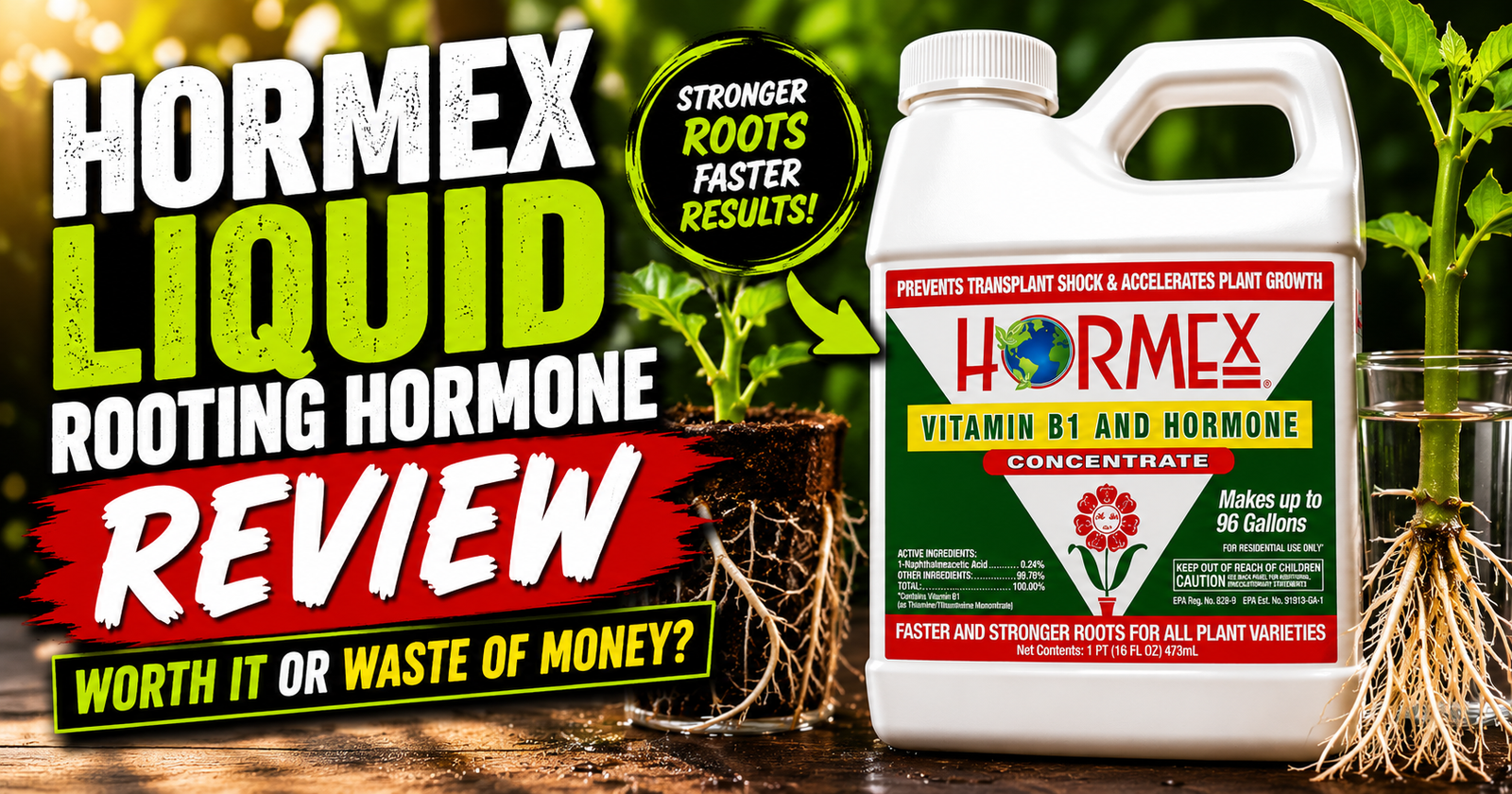
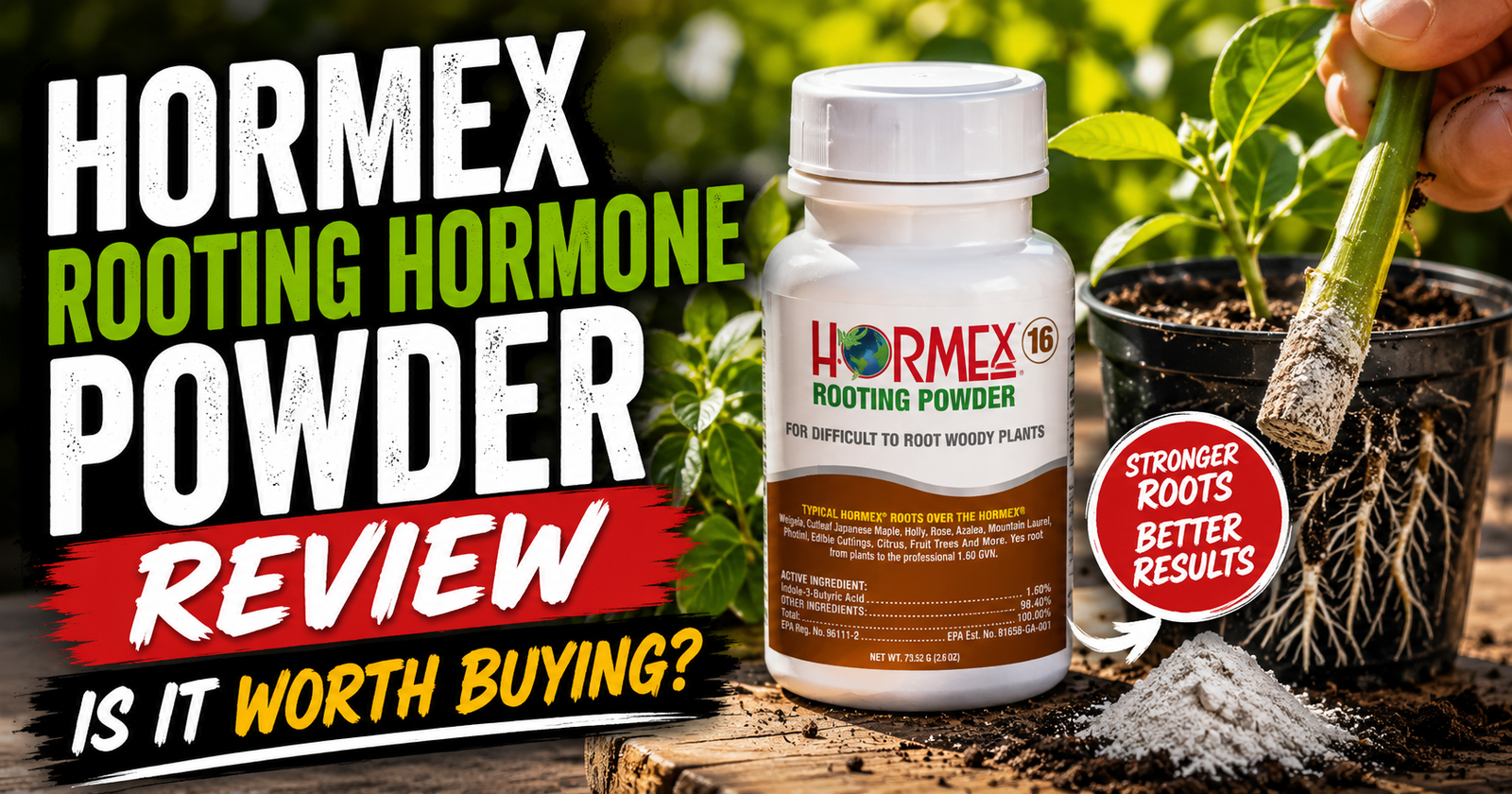
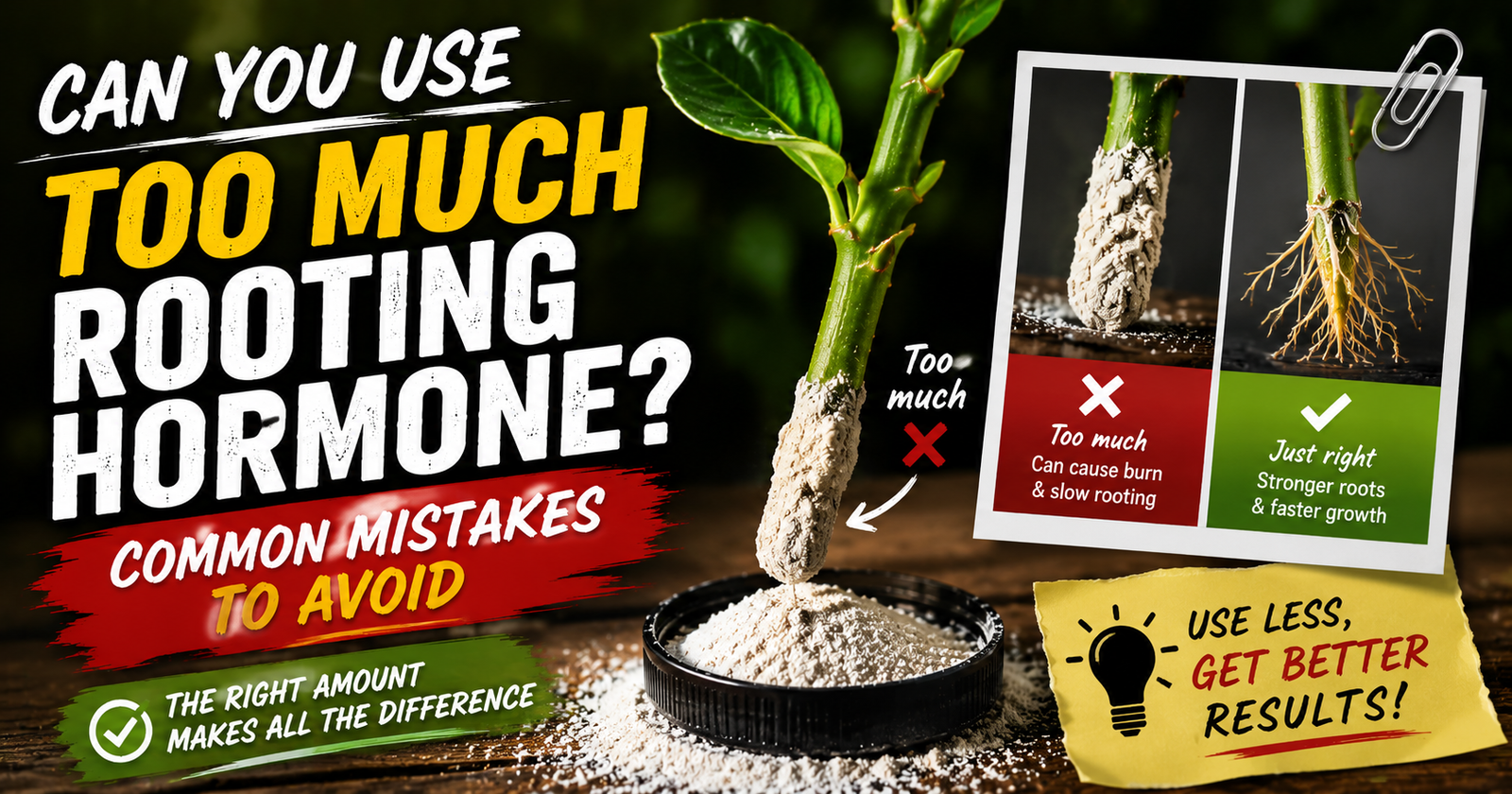
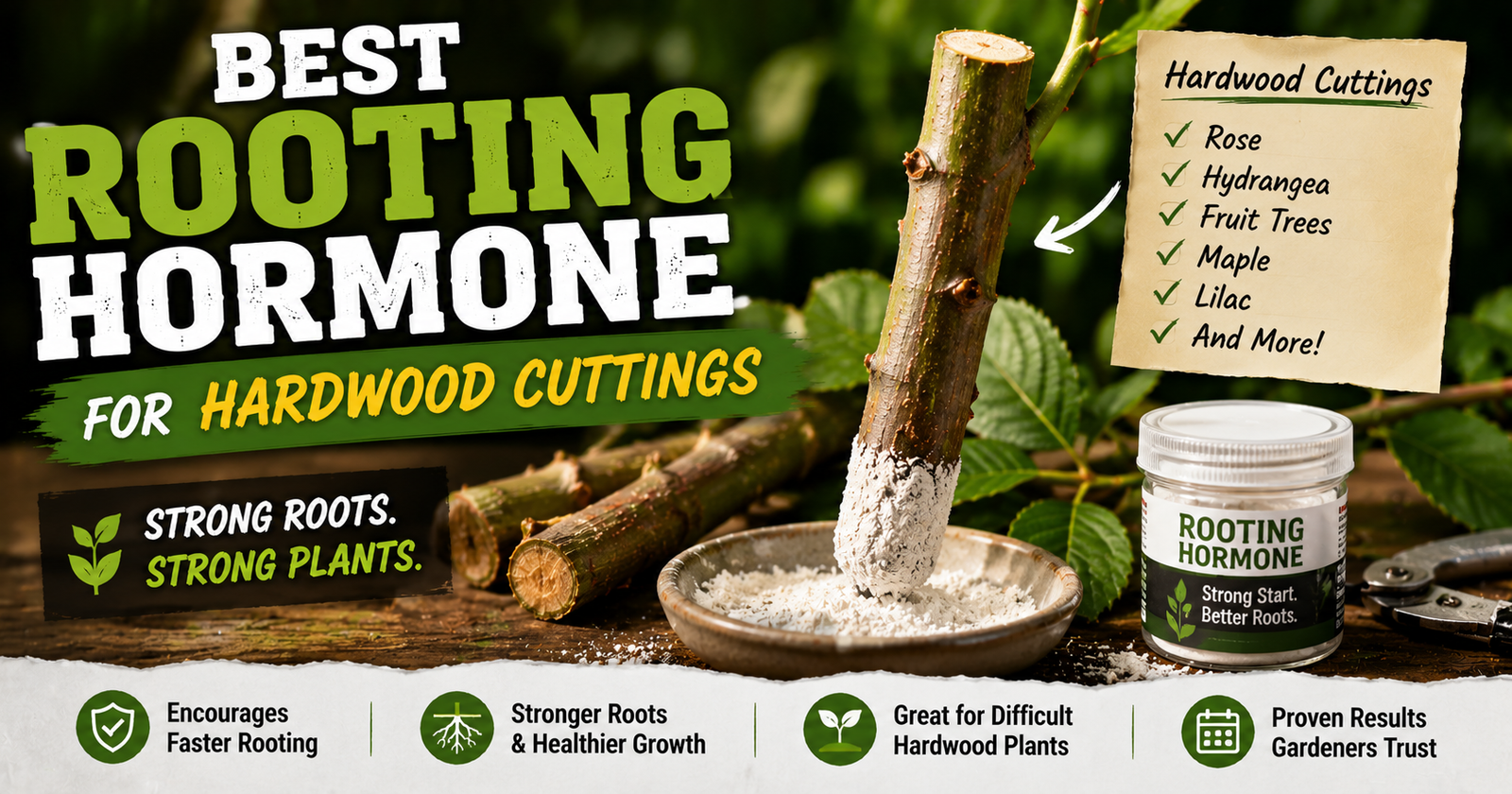
Woody shrubs, fruit trees, and more difficult species often benefit from rooting hormone because it encourages root initiation. The effectiveness of that added support depends on the plant and how the hormone is applied, as explained in how rooting hormone supports difficult cuttings.
Even then, rooting hormone isn’t a miracle product.
It works best when the rest of the propagation environment is already healthy.
Can old cuttings still grow roots?
Sometimes.
As long as the stem remains firm, green, and free of rot, there’s still a chance.
I’ve had cuttings surprise me after sitting quietly for weeks with almost no visible change.
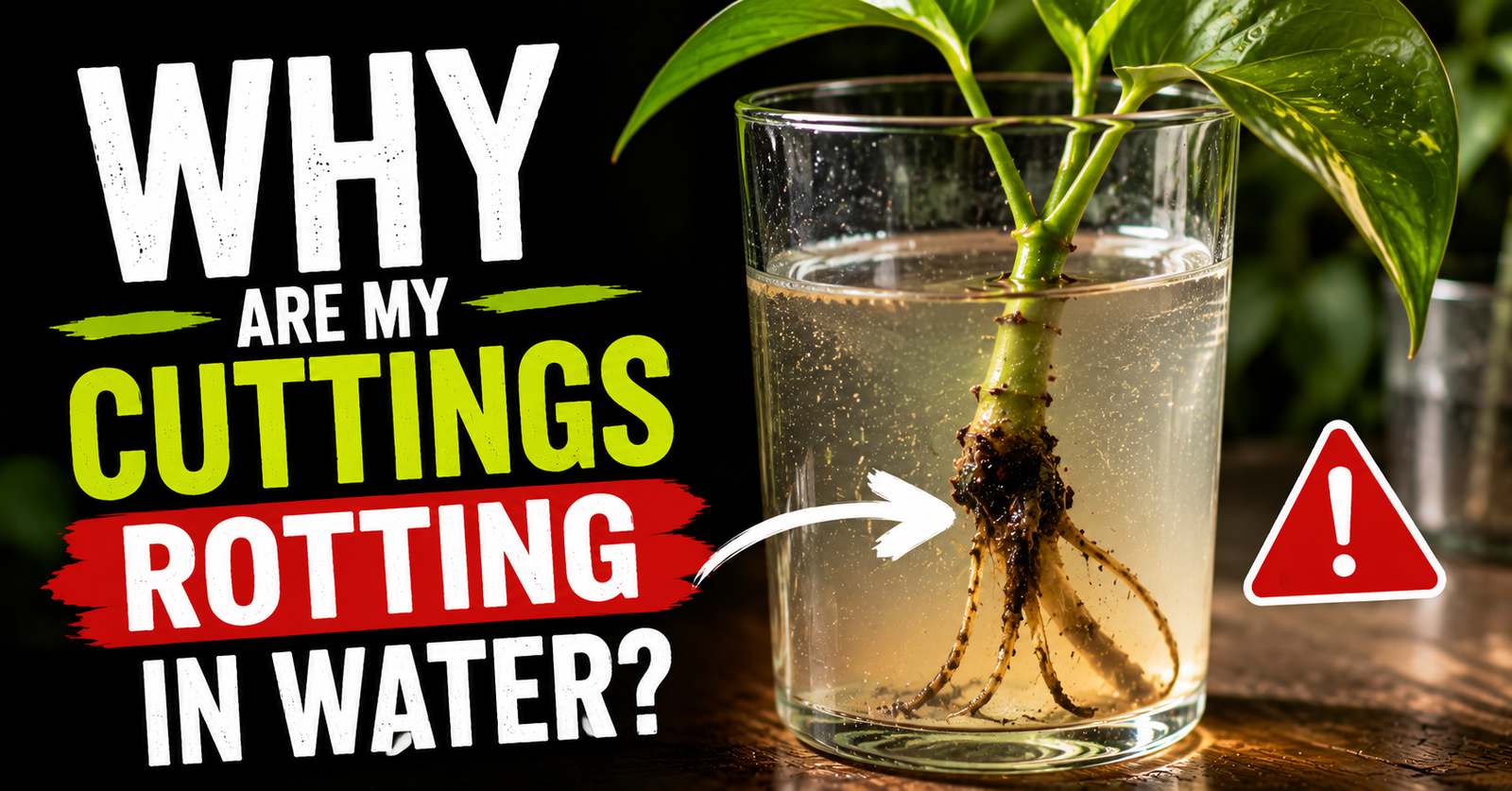
On the other hand, if the stem becomes soft, black, or mushy, it’s usually time to start over with fresh material.
Is direct sunlight good for rooting cuttings?
Usually not.
Bright indirect light is almost always the safer choice.
Strong afternoon sun increases leaf temperature, speeds up moisture loss, and can stress cuttings before they have a functioning root system.
I try to provide plenty of light without exposing fresh cuttings to intense heat.
Should I keep watering if nothing is happening?
Only when the propagation mix actually needs moisture.
Adding water simply because roots haven’t appeared yet often creates a much bigger problem.
Healthy cuttings can wait for roots.
They can’t survive long in waterlogged growing media.
Checking the moisture before watering has become one of the best habits I’ve developed.
When should I give up and start over?
There’s no exact timeline because every plant roots differently.
If the stem is still healthy, the leaves remain reasonably firm, and there are no signs of rot, I usually keep waiting.
If the cutting begins collapsing, develops stem rot, or clearly declines week after week, I’ll start again with a healthier cutting and reevaluate my propagation setup before making another attempt.
Better Rooting Starts Before the Cutting Is Taken
Looking back, I’ve realized that successful propagation begins long before the stem ever touches the propagation tray.
It starts with a healthy parent plant.
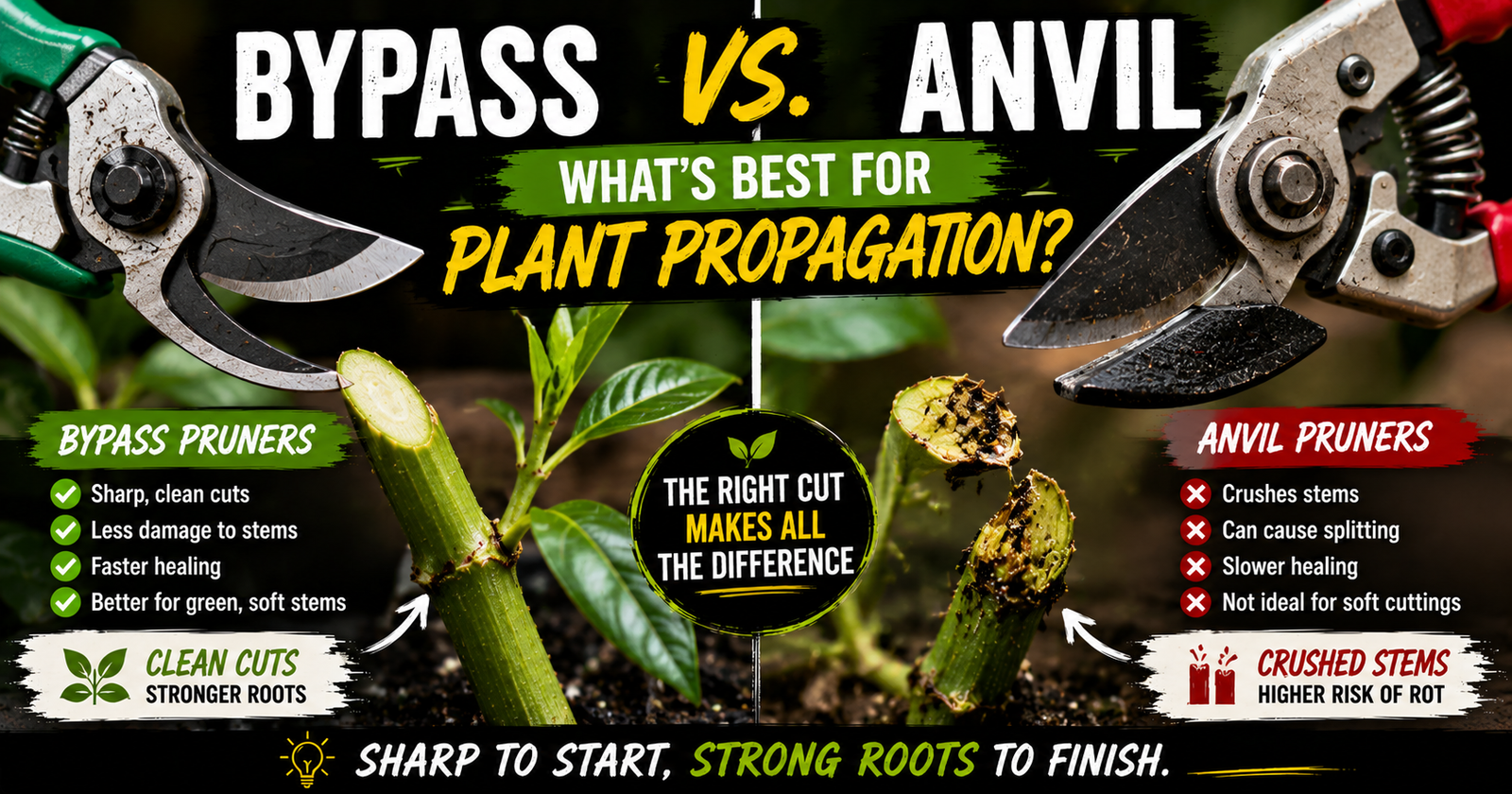
Sharp, clean pruning shears.
A quality rooting medium.
Good moisture.
Stable temperatures.
Patience.
When those pieces come together, rooting becomes much more predictable.
Instead of chasing one miracle solution, I’ve learned to build an environment where the cutting has every opportunity to succeed.
That approach has consistently produced stronger roots and healthier plants than any shortcut I’ve ever tried.
Strengthen Your Propagation Skills
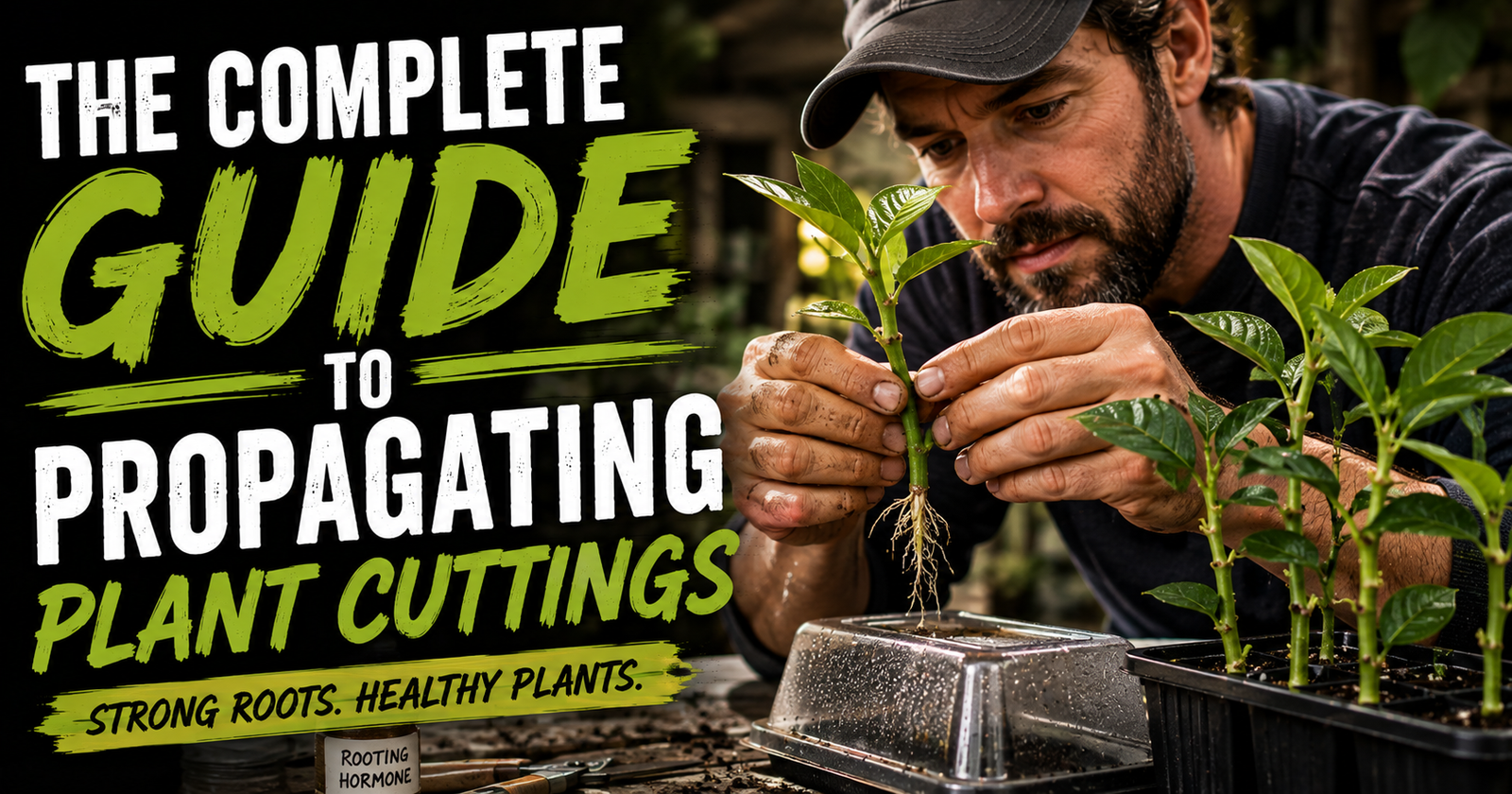
If your cuttings still aren’t rooting, the issue often involves several small factors working together rather than one major mistake. Learning how healthy cuttings, proper moisture, rooting media, humidity, and temperature all interact can dramatically improve your results. My Complete Guide to Propagating Plant Cuttings explains the entire propagation process from beginning to end and is a great next read.
About the Author
Daxon Weaver is the founder of PropagationWorld and has propagated thousands of houseplants, herbs, berry bushes, fruit trees, and ornamental shrubs. Years of hands-on propagation have taught him that healthy roots are rarely the result of luck. They’re usually the result of consistently providing the right growing conditions from the very beginning.