Walk through any greenhouse during propagation season and you’ll notice something interesting.
The healthiest cuttings usually aren’t sitting in random conditions.
The growers have worked hard to create a stable environment.
Good lighting.
Consistent moisture.
Healthy airflow.
And perhaps most importantly, steady temperatures around the developing roots.
Temperature is one of those factors that’s easy to overlook because you can’t actually see it.
You can see a wilted leaf.
You can see mold.
You can see new roots.
You can’t see a cutting quietly refusing to root because the growing medium stays too cool every night.
I’ve learned that many propagation problems aren’t caused by doing something wrong.
They’re caused by conditions that are just a little outside the plant’s comfort zone.
There’s No Single Perfect Number
One mistake I see quite often is gardeners searching for one magic temperature that works for every plant.
Propagation isn’t quite that simple.
Tropical houseplants generally appreciate warmer conditions than dormant hardwood cuttings.
Softwood cuttings taken during active growth may respond differently than hardwood cuttings collected during winter.
Even so, there is a temperature range where many common propagation projects perform very well.
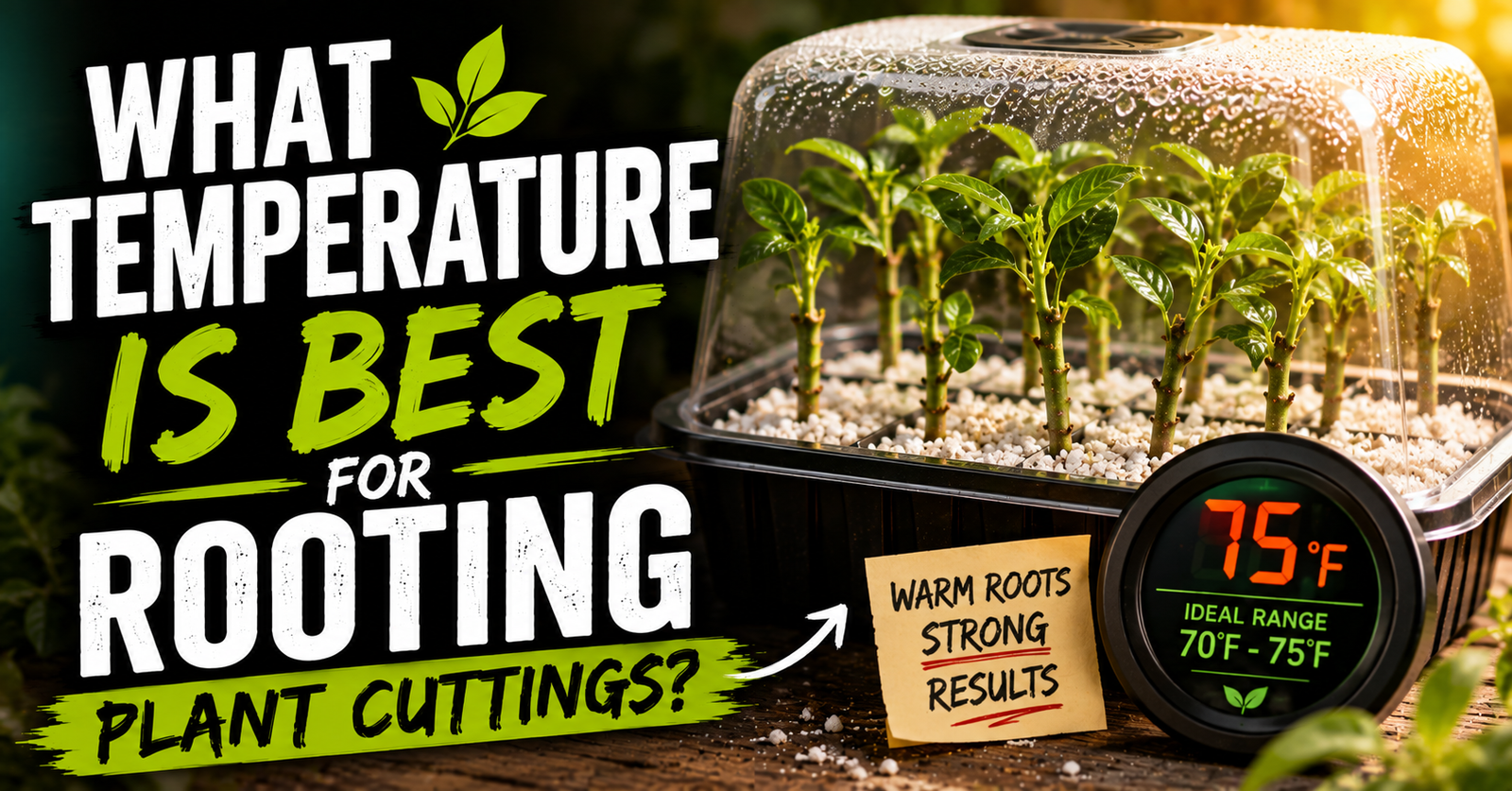
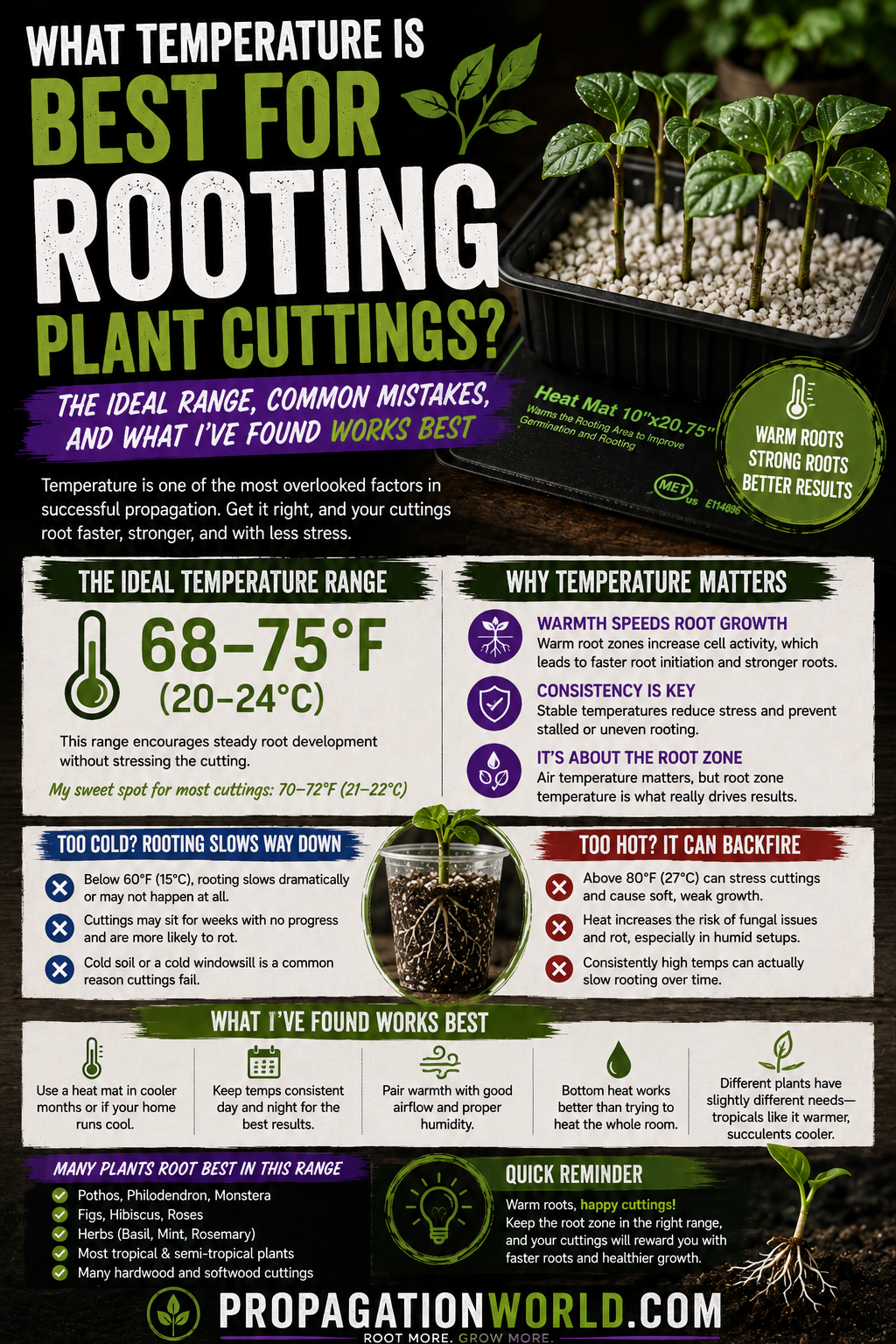
For most houseplants, herbs, shrubs, and ornamental plants, keeping the rooting medium somewhere around 68°F to 75°F provides excellent conditions for root development.
The important part isn’t hitting an exact number.
It’s avoiding large swings between warm afternoons and cool nights.
Why Root Temperature Matters More Than Air Temperature
This surprised me when I first began paying closer attention.
You can have a room that’s perfectly comfortable for people while the propagation tray sitting on a cool shelf is several degrees colder.
The air feels fine.
The roots don’t.
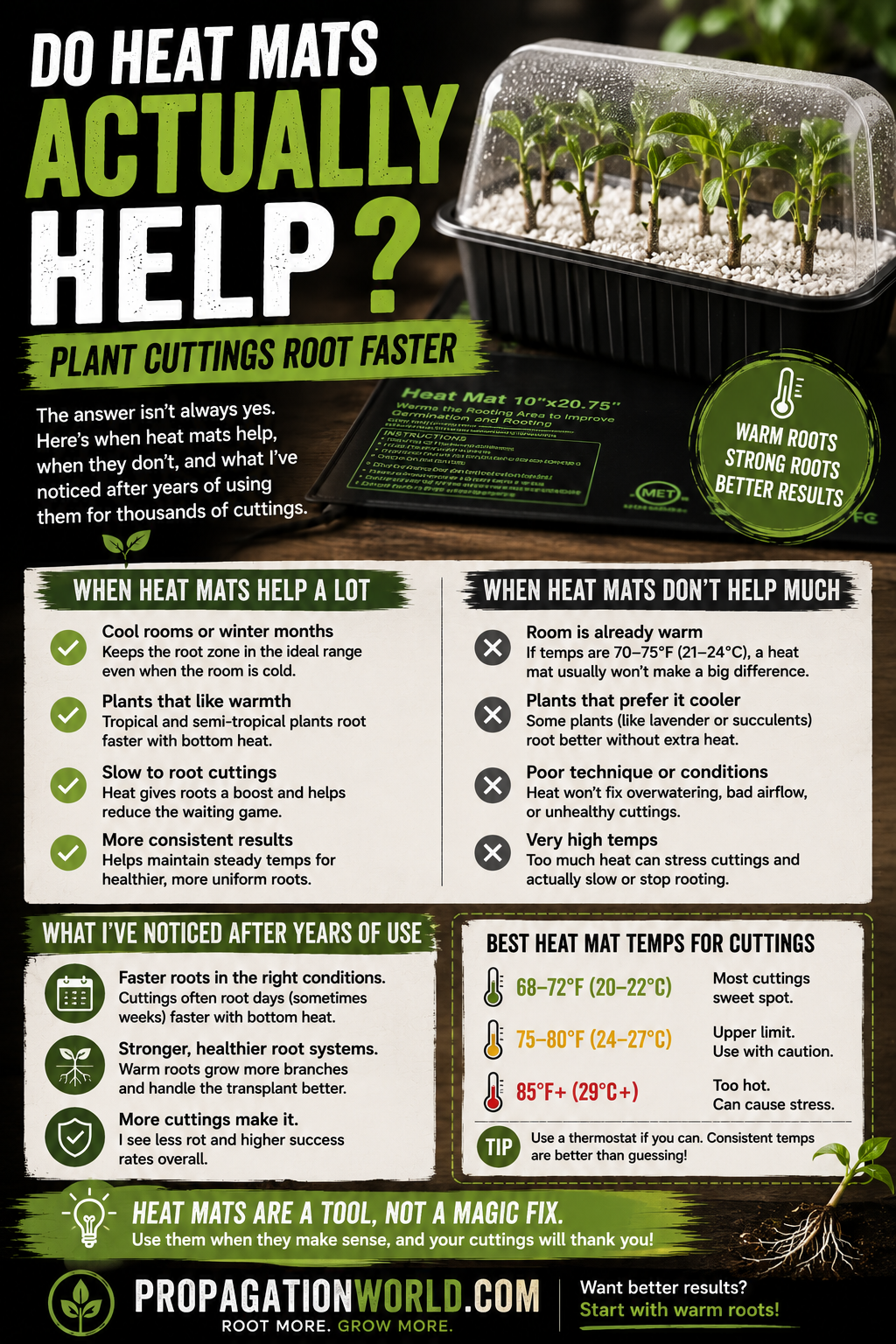
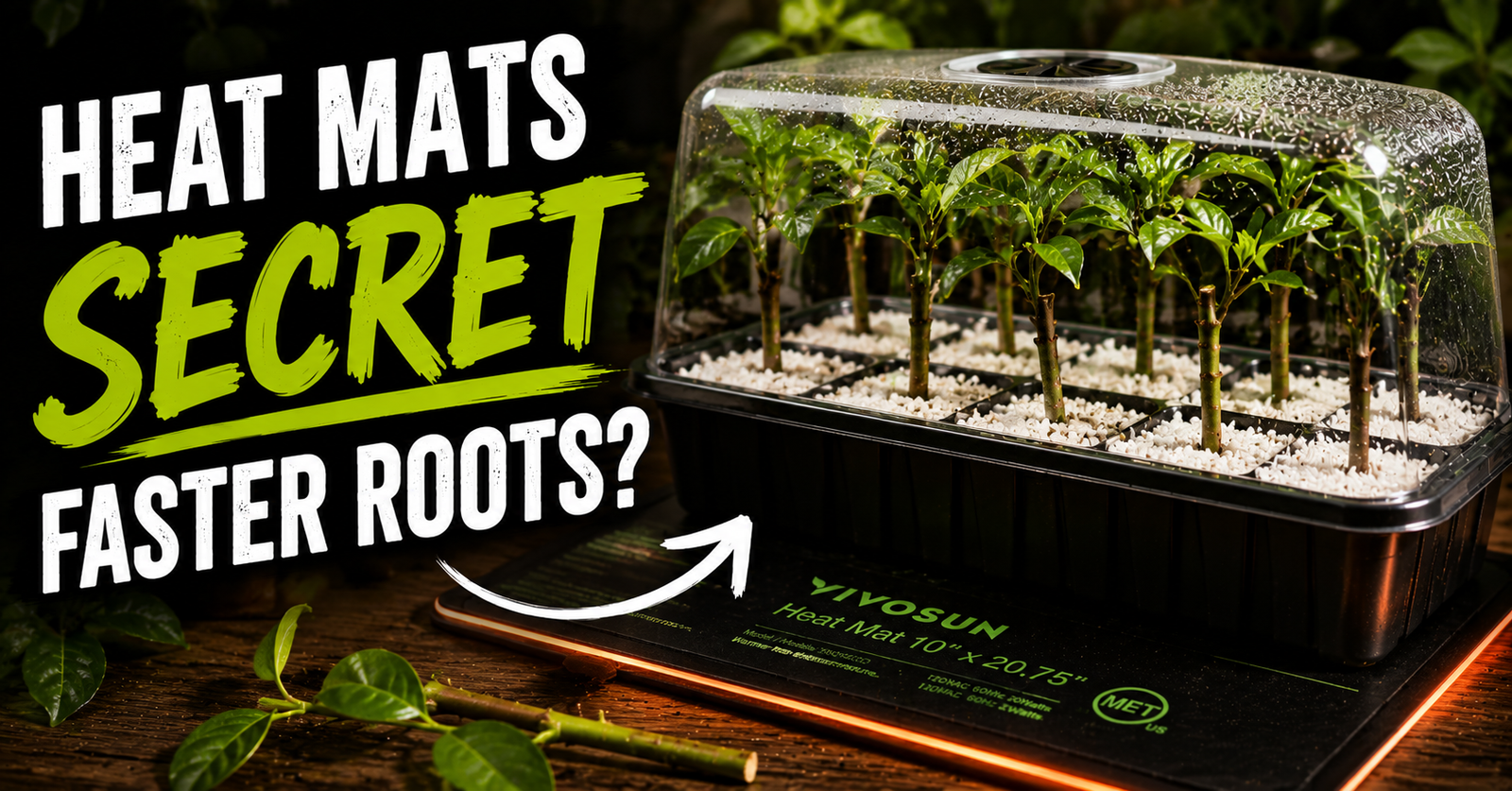
That’s one reason commercial growers often focus on bottom heat instead of simply raising the temperature throughout an entire greenhouse. The practical benefits and limitations of this approach are explained in how heat mats support root development.
Heating the root zone directly is usually far more efficient than trying to warm an entire room.
Once I started thinking about the roots instead of just the air around the leaves, my propagation setup became much easier to manage.
The Tool That Helped Me Stay Consistent
Trying to guess the temperature of a propagation tray isn’t very accurate.
I spent years doing exactly that.
Some days the trays stayed comfortably warm.
Other days they became much cooler than I realized.
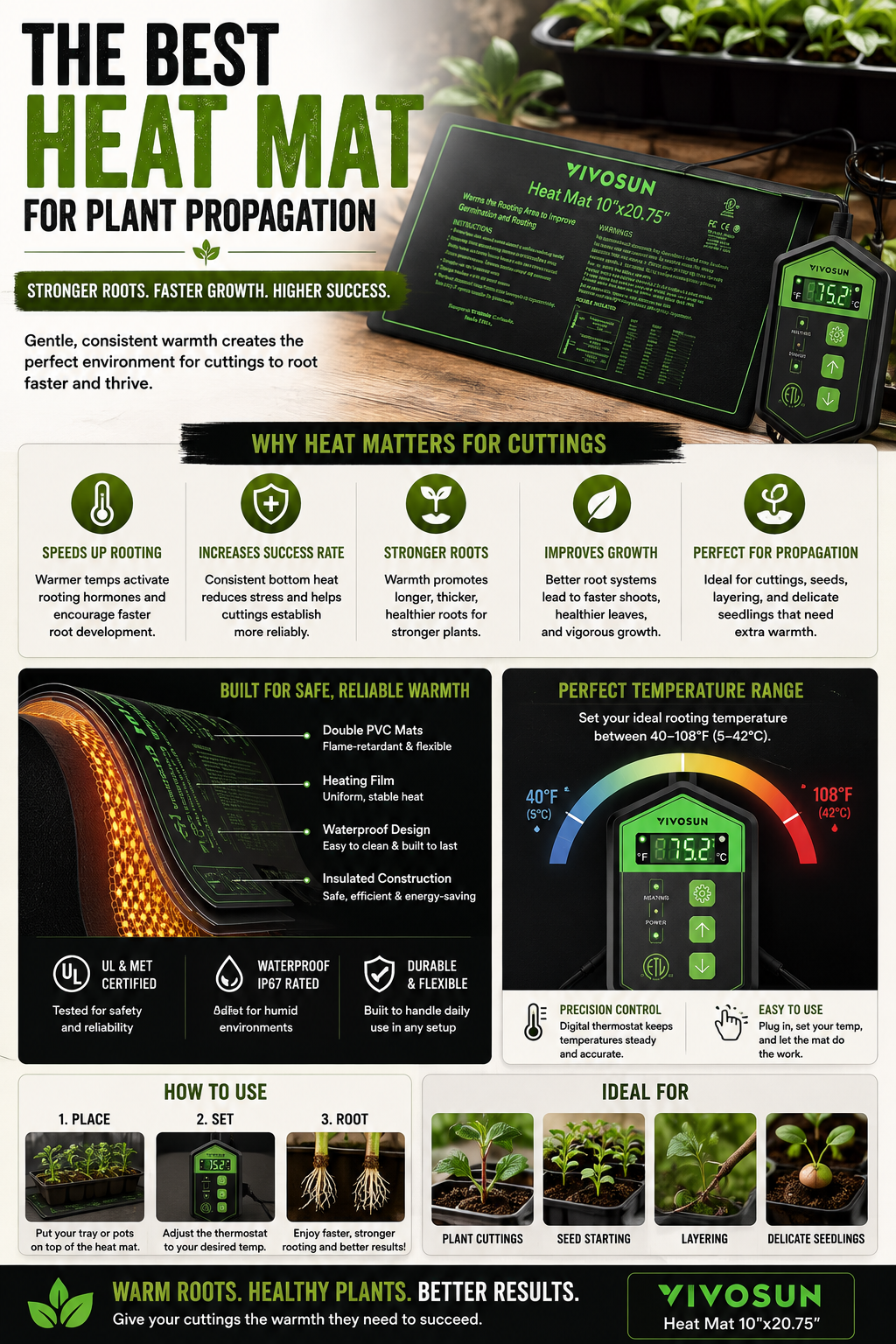
Eventually I switched to the propagation heat mat I recommend for maintaining steady root-zone temperatures.
What I appreciate most isn’t that it heats quickly.
It’s that it helps eliminate those constant temperature swings that can slow root development.
Once I removed that variable, my propagation routine became much more predictable throughout the cooler months.
Consistency Beats Chasing the Perfect Temperature
If there’s one lesson this topic has taught me, it’s that stability usually matters more than perfection.
A tray that stays near the ideal range day after day often performs better than one that’s constantly warming up, cooling down, and warming up again.
Plants are remarkably adaptable.
What they don’t enjoy is constant change.
That’s why I spend less time worrying about finding the “perfect” number and more time creating an environment where temperatures remain steady from morning until night.
That simple shift in thinking has improved my propagation results far more than obsessing over a single degree on the thermometer.
Cold Conditions Don’t Always Kill Cuttings
One thing I’ve noticed over the years is that gardeners often assume cool temperatures automatically mean failure.
That’s not usually what happens.
More often, cool conditions simply slow everything down.
A cutting that might produce roots in three weeks under ideal conditions could take five or six weeks if the rooting medium stays cooler than it prefers.
That can be frustrating because nothing appears to be happening.
The temptation is to water more, move the cutting repeatedly, or assume it has failed altogether.
Sometimes the best thing you can do is be patient.
As long as the cutting remains healthy, firm, and free of rot, it may simply be waiting for better conditions before putting energy into new roots.
Don’t Let Warm Temperatures Fool You
The opposite problem happens too.
Some gardeners try to speed things up by making the propagation tray as warm as possible.
Unfortunately, warmer isn’t always better.
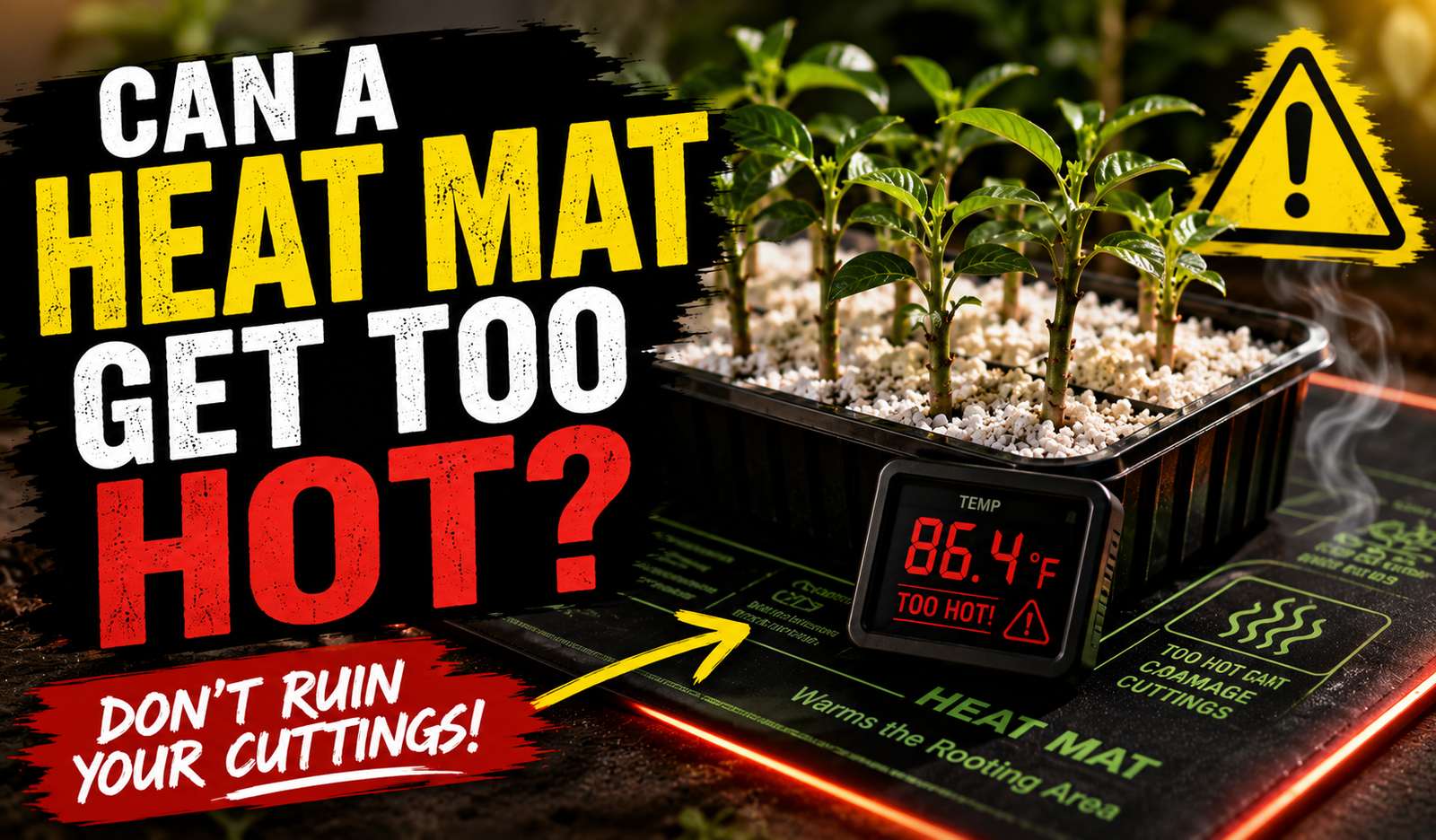
Excessive temperatures can dry the propagation mix much faster, increase stress on the cutting, and create conditions where problems develop more easily. For more context on the risks of excessive heat, consider how heat mats affect the entire rooting environment.
I’ve found that moderate, consistent warmth almost always outperforms extreme heat.
Propagation is rarely about pushing plants to their limits.
It’s about giving them an environment where they can root naturally without unnecessary stress.

Other Conditions Still Matter
Temperature is important, but it’s only one piece of the puzzle.
I’ve seen perfectly warmed propagation trays fail because the cuttings were taken from unhealthy plants.
I’ve also seen gardeners blame cool temperatures when the real issue was soggy growing media or low humidity.
Successful propagation usually comes from stacking several small advantages together.
Clean cuts.
Healthy parent plants.
A well-draining propagation mix.
Consistent moisture.
Stable temperatures.
Reasonable humidity.
Each one helps support the others.
When all of those pieces are working together, rooting becomes much more predictable.
My Propagation Bench Today
If you walked into my propagation area, you probably wouldn’t see anything particularly complicated.
That’s intentional.
I’ve gradually removed unnecessary gadgets and focused on the things that consistently improve results.
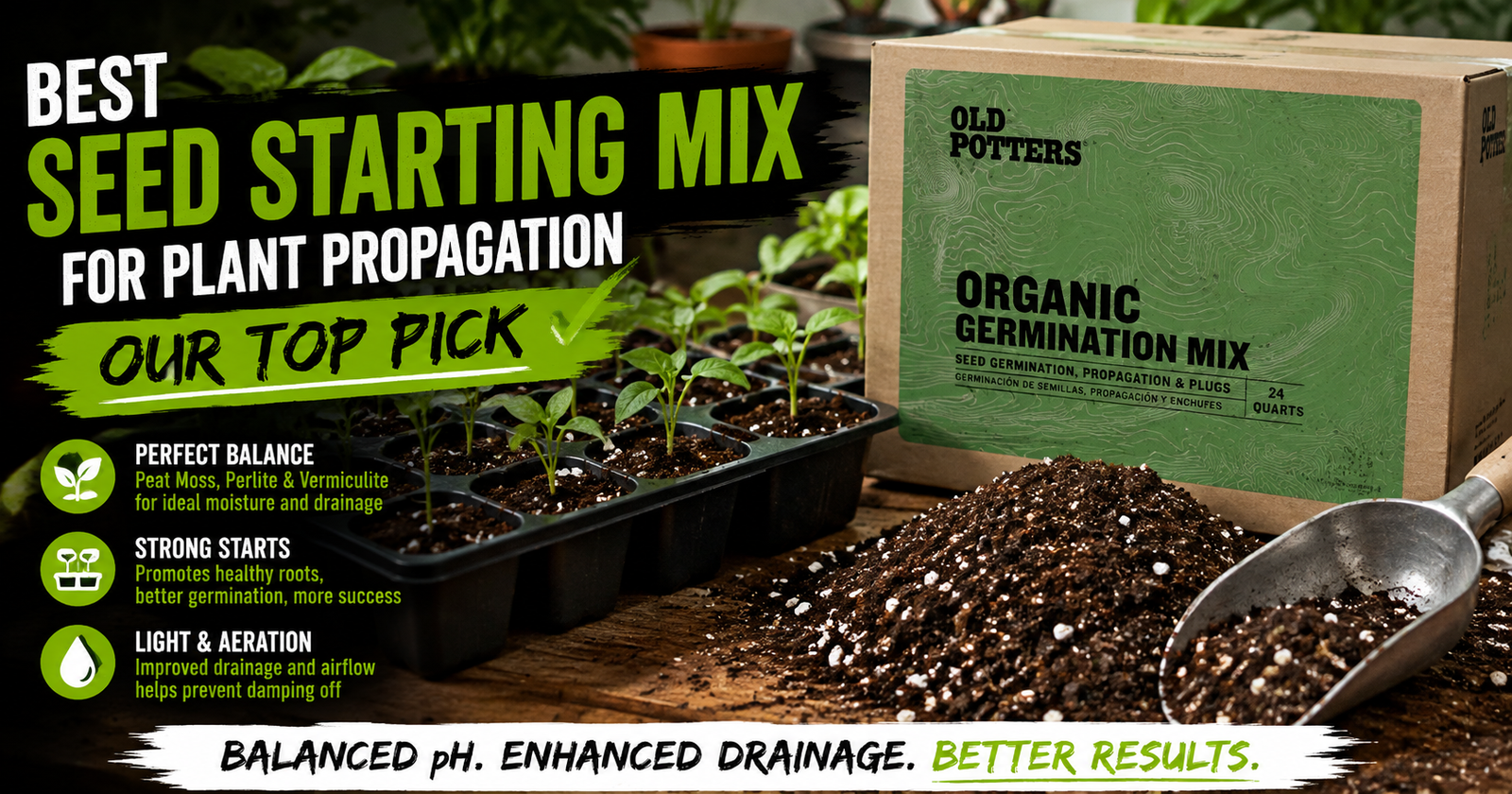
A quality propagation mix.
Clean pruning shears.
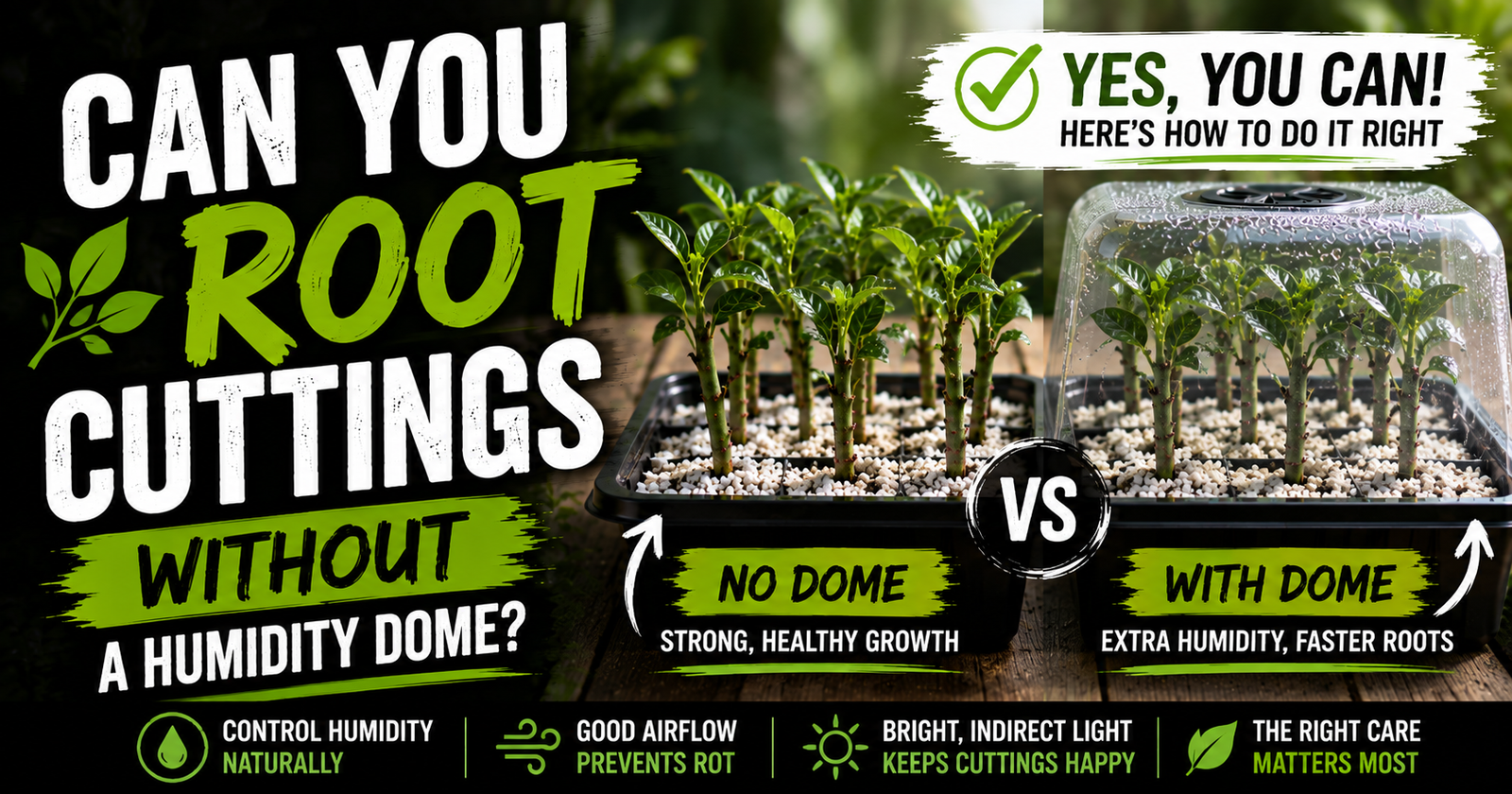
Good humidity when the plant needs it.
Steady bottom heat during cooler weather.
That’s about it.
Instead of constantly changing my setup, I try to keep the environment as stable as possible and let the plants do what they’ve evolved to do.
If You Propagate During Cool Weather
This is where I think a heat mat offers the most value.
Spring mornings.
Cool basements.
Unheated greenhouses.
Drafty spare rooms.
Those are the situations where root-zone temperatures can quietly slow everything down.
If you regularly propagate under those kinds of conditions, I’d recommend taking a look at the thermostat-controlled heat mat I use on my propagation bench.
It’s one of the few gardening tools I’ve purchased that I continue using year after year because it consistently solves a real problem instead of simply adding another gadget to the shelf.
More importantly, it helps me create the kind of steady rooting environment that healthy cuttings seem to appreciate.
Frequently Asked Questions
Is room temperature warm enough for plant cuttings?
Sometimes.
If your home stays around 70°F year-round, many common houseplants and herbs will root just fine without any additional heat.
The challenge is that room temperature doesn’t always match the temperature inside the propagation tray.
A tray sitting on a cool windowsill, basement shelf, or concrete floor can be much colder than the surrounding air.
That’s why I pay more attention to the rooting medium than the thermostat on the wall.
Should the leaves be warm too?
Not necessarily.
Most of my attention goes to the root zone.
Leaves generally prefer bright light without excessive heat, while developing roots benefit from stable temperatures beneath the propagation mix.
Trying to make the entire environment hot usually isn’t necessary and can sometimes create more problems than it solves.
Why are my cuttings taking so long to root?
Temperature could be part of the reason, but it’s rarely the only one.
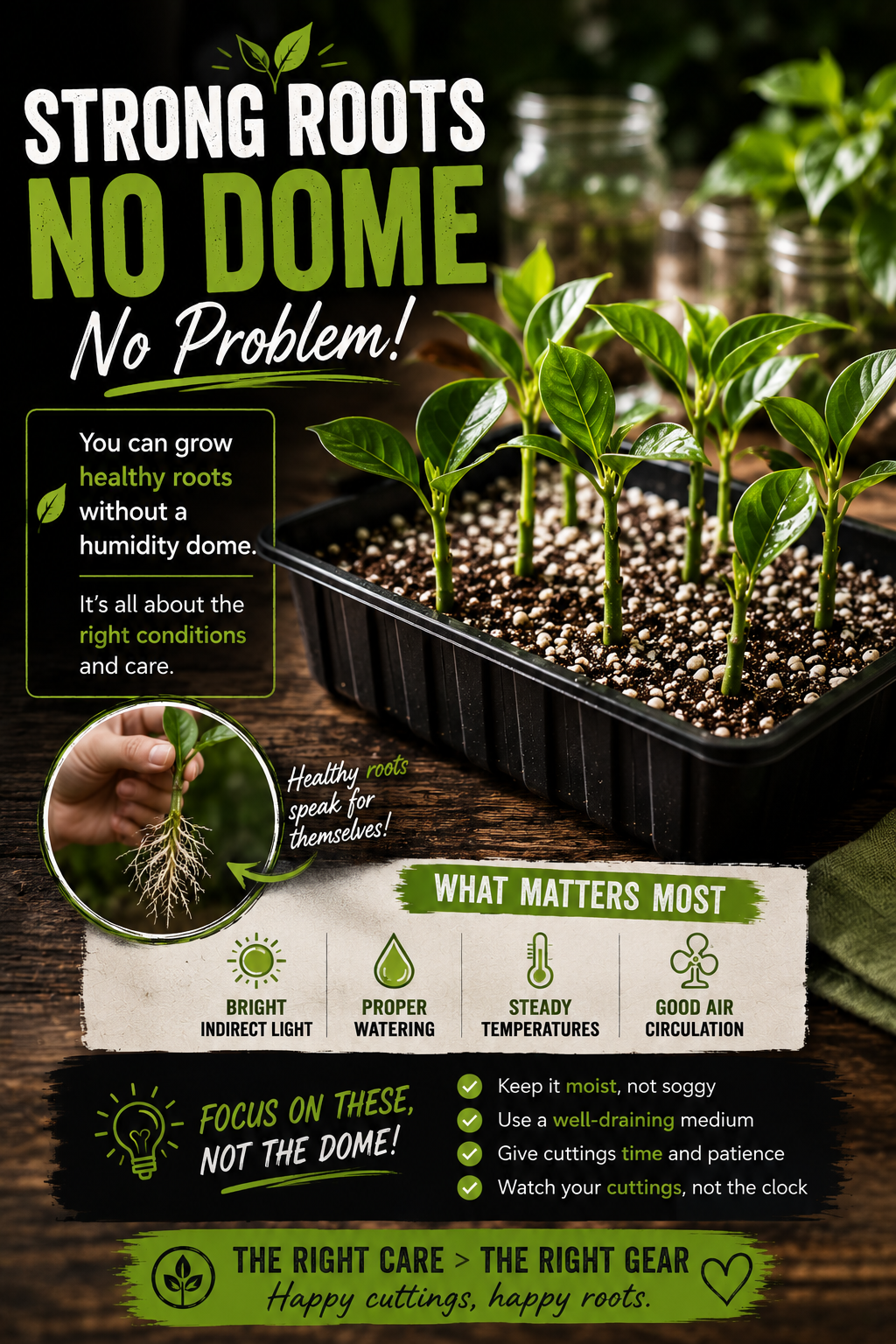
Slow rooting can also be caused by taking cuttings at the wrong time of year, using stems that aren’t healthy, overwatering, poor humidity, or simply propagating a plant that naturally develops roots slowly. The role of humidity becomes clearer when you consider when cuttings need extra humidity during the rooting process.
Before changing everything, I like to evaluate the entire setup instead of focusing on a single variable.
Does every propagation tray need a heat mat?
No.
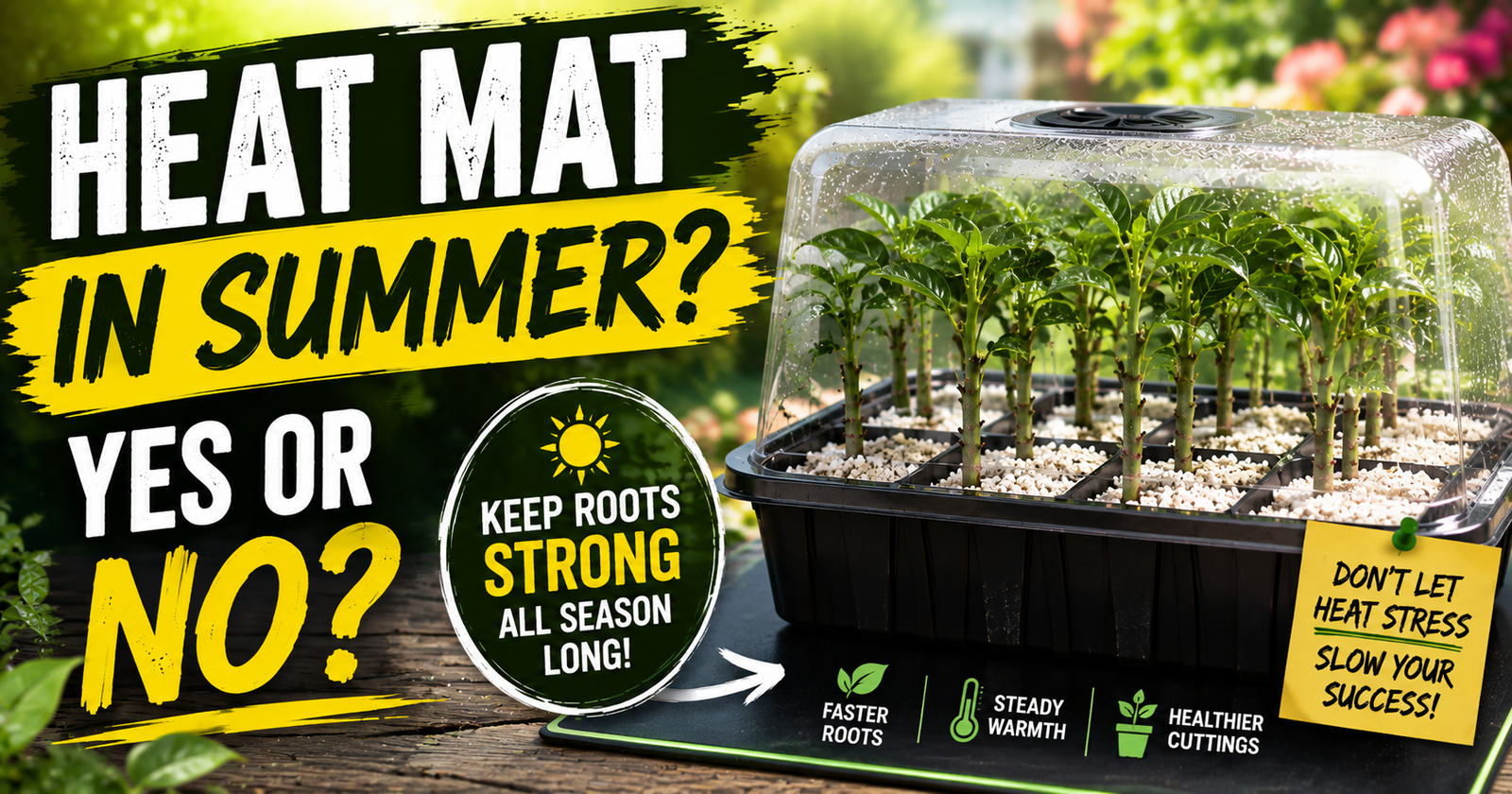
During warm summer weather, many gardeners never need one. Because the season alone does not tell the whole story, deciding on summer bottom heat requires looking at the conditions around the propagation tray: deciding on summer bottom heat.
Outdoor temperatures are often ideal on their own.
Where a heat mat becomes valuable is when nature isn’t providing those conditions consistently.
That’s why mine gets used most often during early spring, fall, winter, and indoor propagation projects.
Can temperature changes really make that much difference?
In my experience, yes.
Not because plants instantly fail when temperatures fluctuate, but because inconsistent conditions often slow root development and make propagation less predictable.
Once I started maintaining steadier root-zone temperatures, I noticed fewer trays that stalled for weeks waiting for roots to appear.
It’s About Creating the Right Environment
When people ask me for the secret to successful propagation, they’re often hoping for one simple answer.
The truth is a little less exciting.
There isn’t one secret.
Healthy propagation usually comes from creating an environment where plants can do what they naturally want to do.
The right propagation medium.
Clean tools.
Healthy cuttings.
Proper humidity.
Steady temperatures.
None of those things guarantee success by themselves.
Together, though, they consistently produce better results than relying on luck.
That’s why I continue paying attention to root-zone temperatures every time I start a new batch of cuttings.
It’s one of those small details that quietly makes almost every other part of propagation work a little better.
About the Author
Daxon Weaver is the founder of PropagationWorld and has propagated thousands of houseplants, herbs, berry bushes, fruit trees, and ornamental shrubs. Through years of hands-on experience, he has learned that consistent growing conditions often matter more than complicated techniques, and maintaining proper root-zone temperatures remains one of the simplest ways to improve propagation success.