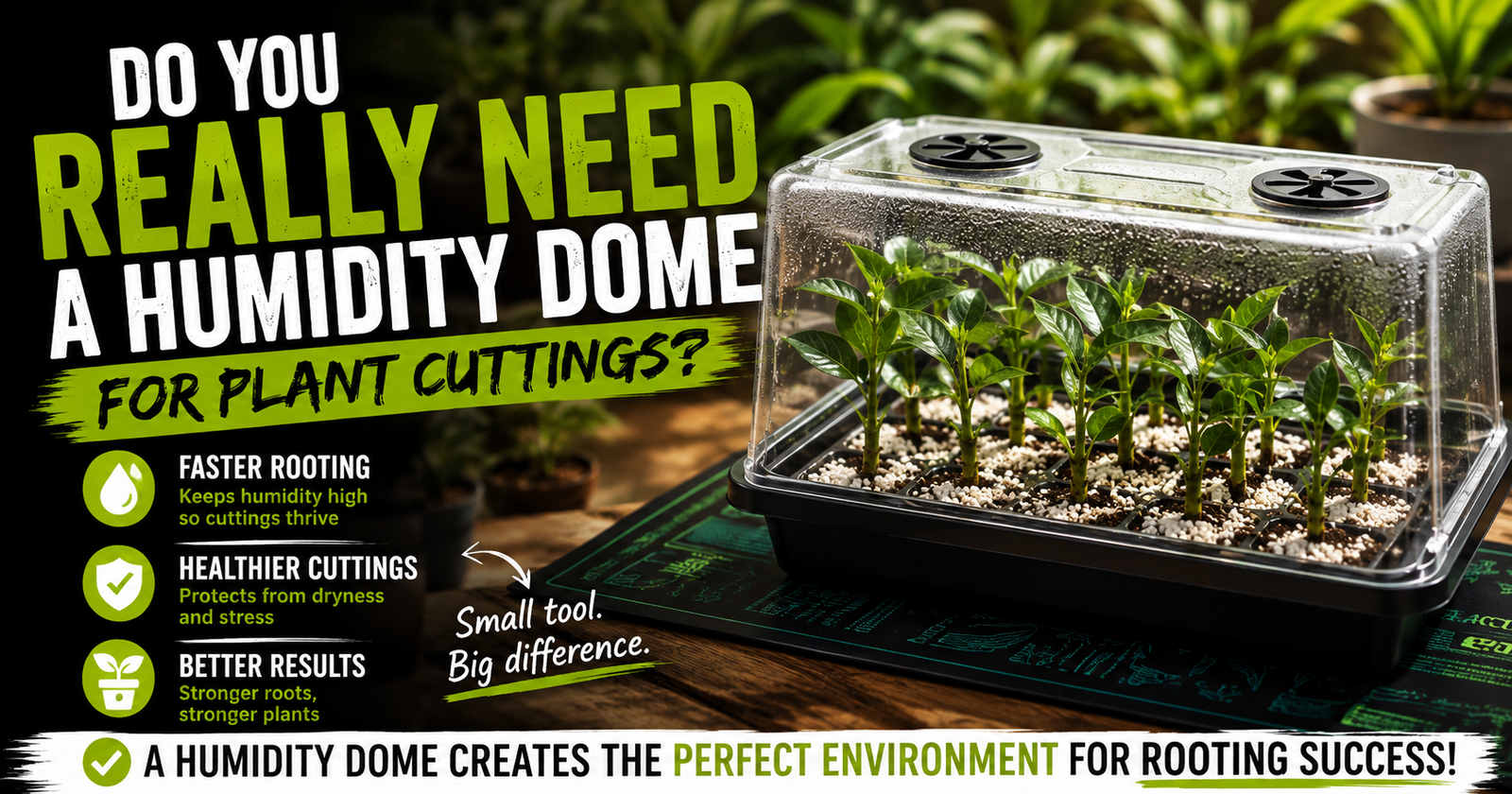
One of the questions I hear all the time is whether a humidity dome is actually necessary or if it’s just another gardening gadget people try to sell you.
The honest answer?
It depends on what you’re propagating.
I’ve rooted plenty of cuttings without a humidity dome.
I’ve also had trays of cuttings that would have struggled badly without one.
That’s why I don’t think of a humidity dome as something every gardener must own.
Instead, I think of it as a tool that solves a very specific problem.
Fresh cuttings don’t have roots.
Without roots, they can’t replace the moisture they’re constantly losing through their leaves.
The longer they stay without roots, the more stress they experience.
For plants that root quickly, that usually isn’t a major issue.
For plants that naturally take several weeks to root, it can become the difference between a healthy cutting and one that’s slowly drying out.
Over the years I’ve propagated thousands of cuttings ranging from easy houseplants to fruit trees and woody shrubs, and one thing has become very clear.
The more difficult the plant is to root, the more important humidity usually becomes.
That’s why you’ll often see professional nurseries and commercial propagators rooting cuttings inside enclosed propagation benches or misting systems.
They’re not doing it because the cuttings enjoy humid air.
They’re doing it because the cuttings don’t have another way to replace the moisture they’re losing every single day.
My Short Answer if you are in a hurry..
No, you don’t always need a humidity dome.
Easy plants like pothos, wandering dude, spider plants, coleus, basil, and mint often root perfectly well without one.
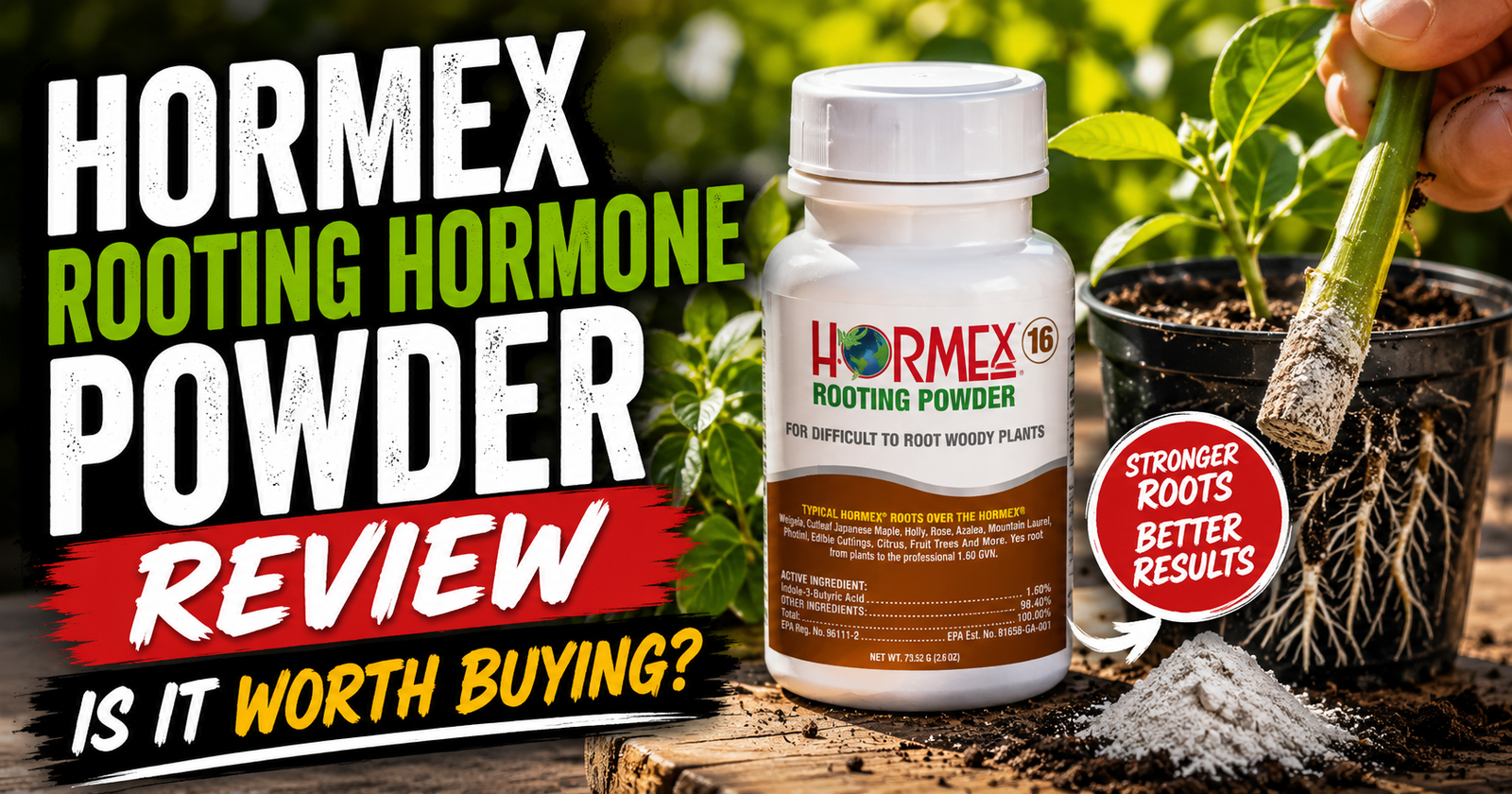
However, if you’re propagating hydrangeas, roses, blueberries, figs, elderberries, citrus, or other slower-rooting plants, a humidity dome can dramatically reduce stress while new roots develop. Pairing that added humidity with a rooting powder for difficult cuttings can give slower-rooting cuttings another useful advantage.
That’s why I consider it one of the best upgrades for anyone who propagates regularly.
Why Cuttings Lose So Much Water
This is probably the part of propagation that most beginners never think about.
The moment you remove a cutting from the parent plant, you’ve disconnected its water supply.
The leaves don’t know that.
They continue releasing moisture into the air exactly as they did before.
Normally the roots would replace that water almost immediately.
Fresh cuttings don’t have that luxury.
They’re surviving entirely on the moisture stored inside their stems.
Every sunny afternoon…
Every warm room…
Every dry day inside your house…
The cutting loses a little more water.
Eventually it reaches the point where it simply can’t keep up.
The leaves begin drooping.
Growth slows.
The stem becomes stressed.
If roots don’t develop soon enough, the cutting eventually dies.
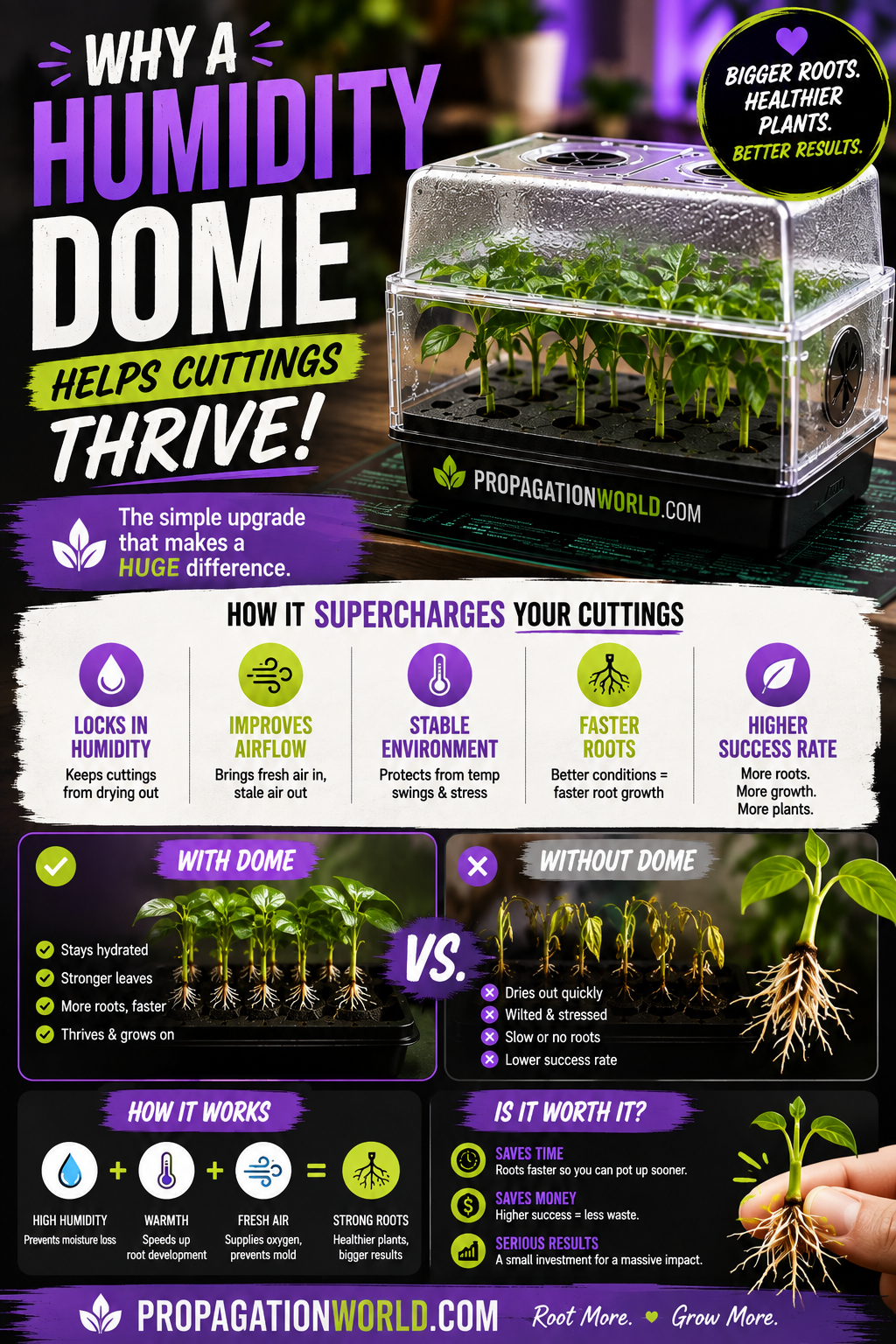
A humidity dome changes that equation.
Instead of surrounding the cutting with dry household air, it traps moisture around the foliage.
The leaves lose water much more slowly, giving the cutting valuable time to develop a healthy root system.
That’s the real purpose of a humidity dome.
It isn’t to make roots grow.
It’s to help the cutting survive long enough to produce them.
The Plants That Changed My Mind
Early on, I honestly didn’t think humidity domes were that important.
Most of what I propagated were common houseplants.
Pothos rooted.
Spider plants rooted.
Tradescantia rooted.
Philodendrons rooted.
Everything seemed easy.
Then I started propagating more challenging plants.
Hydrangeas.
Blueberries.
Grapes.
Roses.
Elderberries.
Fig trees.
Suddenly I wasn’t waiting ten days for roots.
Sometimes I was waiting a month or more.
Those extra weeks meant the cuttings spent much longer without a functioning root system.
That’s when I began experimenting with humidity domes.
The difference wasn’t subtle.
The cuttings stayed firmer.
Leaves wilted less often.
I lost fewer cuttings before roots ever appeared.
Did every cutting suddenly root?
Of course not.
Propagation never comes with guarantees.
But my overall success rate improved enough that I rarely propagate woody shrubs without a humidity dome anymore.
That experience completely changed my opinion of them.
When I Don’t Use a Humidity Dome
This might surprise you after everything I’ve said so far, but I don’t use a humidity dome for every propagation project.
In fact, there are plenty of times when I intentionally leave it on the shelf.
For example, if I’m rooting pothos, spider plants, wandering dude, many philodendrons, or herbs during warm, humid weather, I often don’t bother with one.
Those plants usually root so quickly that adding a humidity dome doesn’t noticeably improve my results.
I’ve also learned to pay attention to the environment.
If the air inside my greenhouse is already warm and humid, covering the tray sometimes creates more humidity than the cuttings actually need.
Propagation isn’t about following the exact same routine every time.
It’s about giving each plant what it needs under the conditions you’re working with.
That’s why I don’t think of a humidity dome as something you either always use or never use.
It’s simply another tool that becomes incredibly valuable when the situation calls for it.
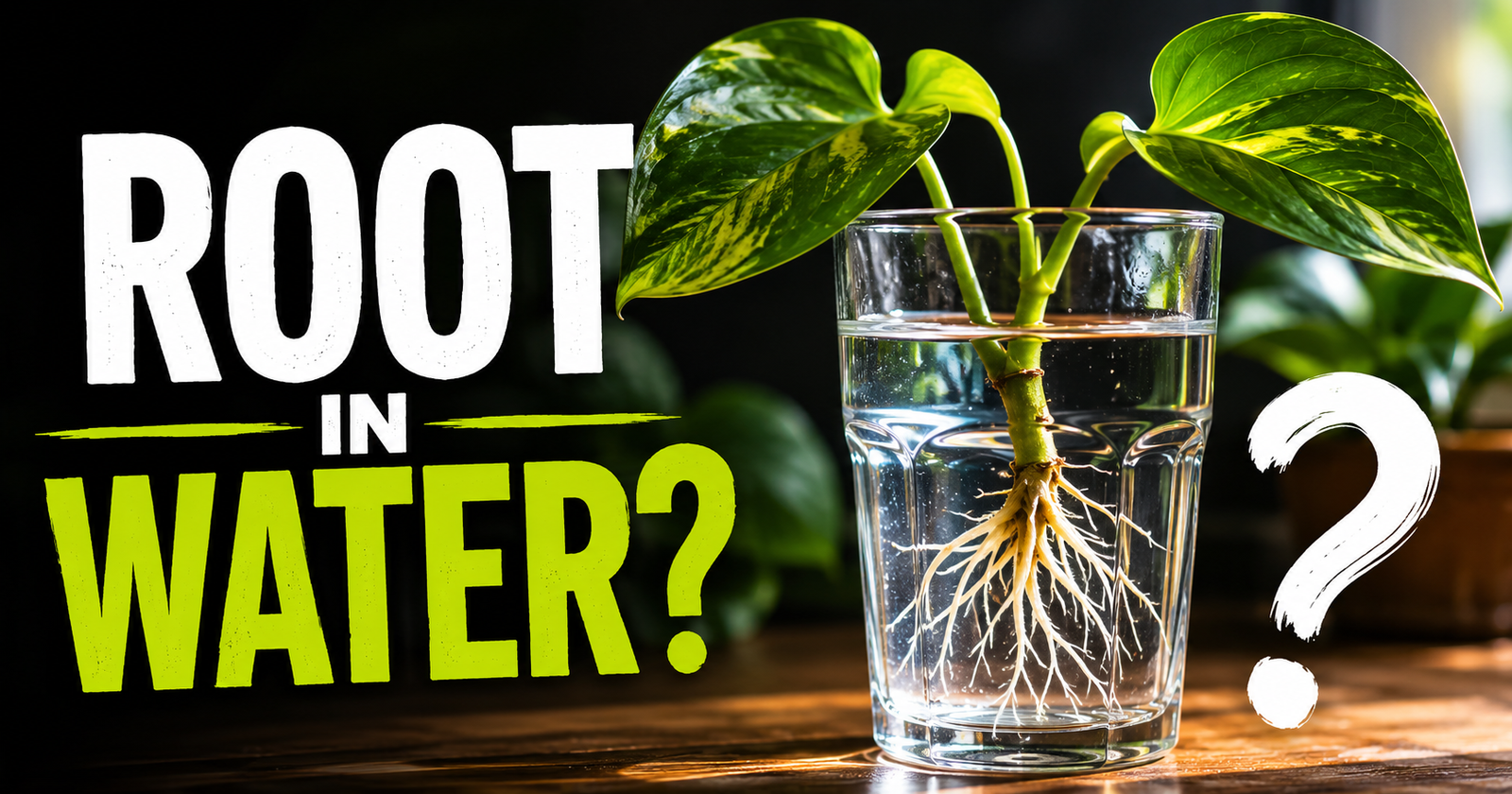
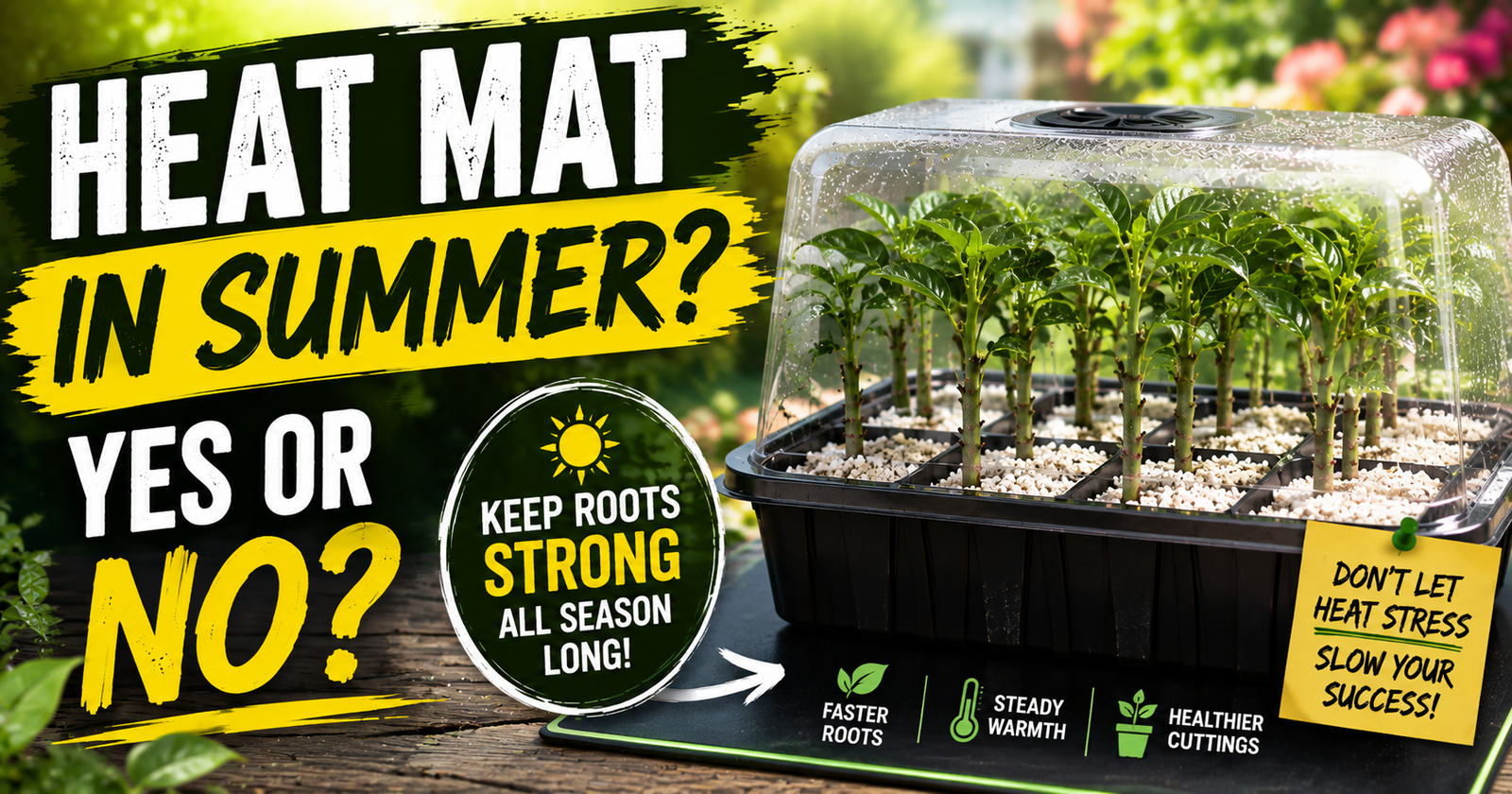
Signs Your Cuttings Would Benefit From a Humidity Dome
When I’m deciding whether to use a humidity dome, I usually ask myself a few simple questions.
Does this plant naturally take several weeks to root?
Does it have large leaves that lose a lot of moisture?
Am I propagating indoors where the air is dry?
Is it the middle of winter with the furnace running?
Am I trying to root valuable cuttings that I really don’t want to lose?
If I answer yes to several of those questions, the humidity dome almost always comes out.
The longer a cutting has to survive without roots, the more important humidity becomes.
That’s one lesson I’ve learned over and over again.
Why I Prefer a Complete Propagation System
I’ve built plenty of homemade propagation setups over the years.
Plastic storage containers.
Clear totes.
Plastic bags over nursery pots.
They all worked to some degree.
Eventually, though, I realized I was spending more time modifying equipment than propagating plants.
That’s one reason I eventually switched to a complete propagation system.
The humidity dome fits correctly.
The trays fit correctly.
The heat mat fits correctly.
The lighting is already designed for the setup.
Instead of piecing everything together, I can focus on taking healthy cuttings and monitoring their progress.
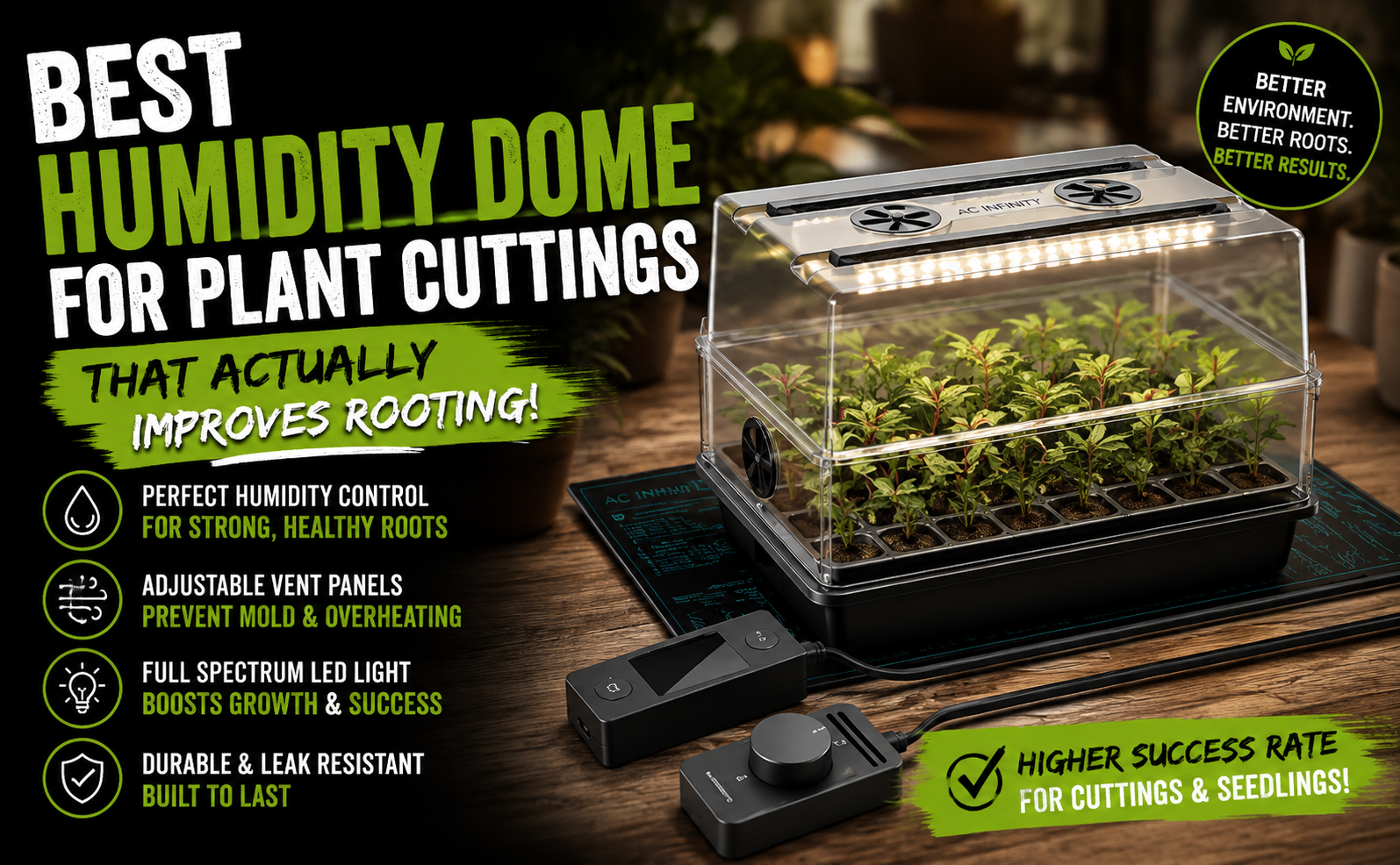
If you’re planning to propagate plants regularly, I think it’s worth looking at the humidity dome system I use for rooting plant cuttings. I explain exactly why I chose it, what I like about it, and the features that actually make a difference.
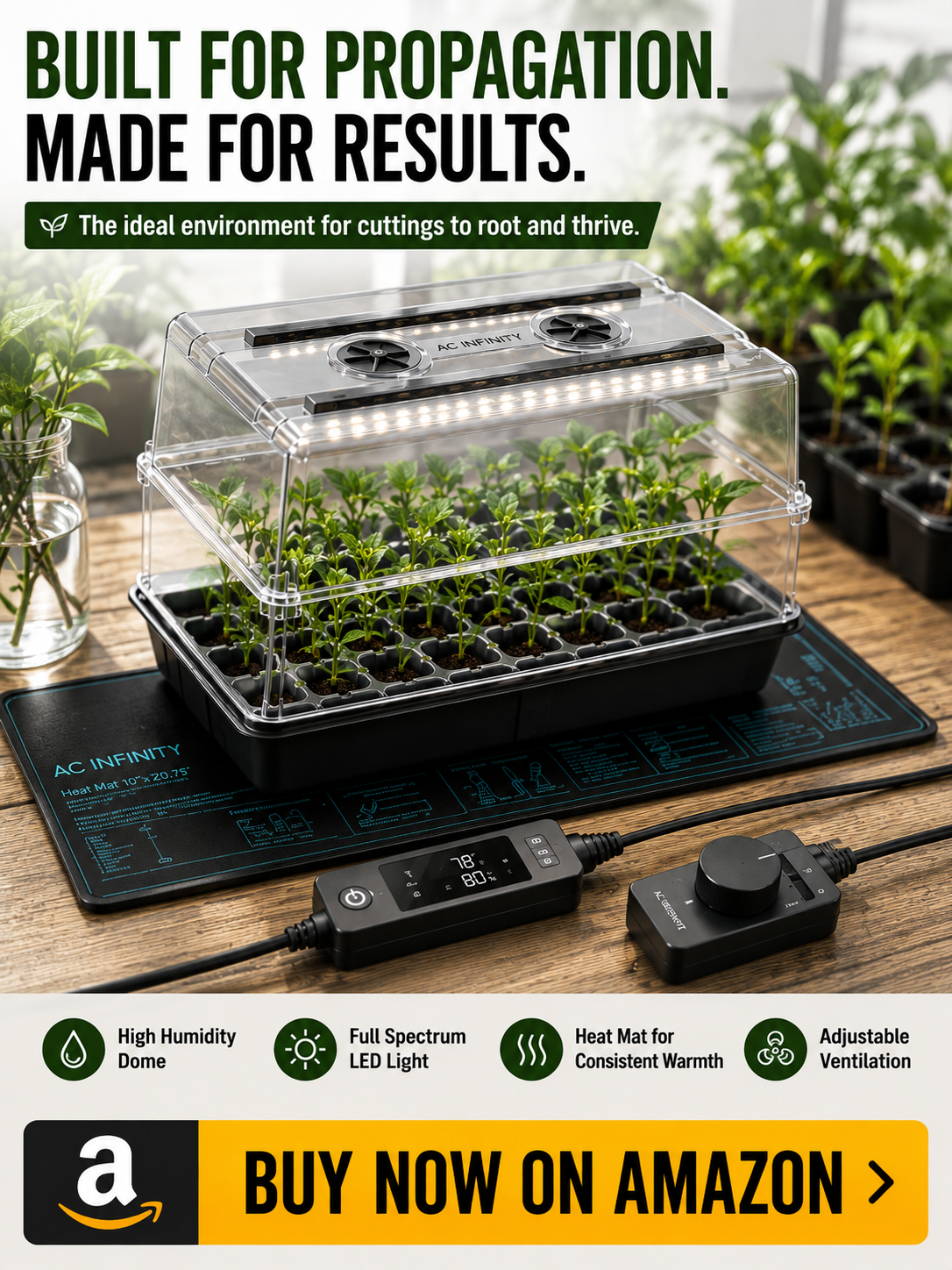
If you’re ready to see the complete setup, you can also check out the AC Infinity propagation system on Amazon. It’s one of the few propagation products I’ve purchased that genuinely simplified the entire process instead of adding another gadget to the shelf.
Humidity Alone Isn’t Enough
This is another mistake I see fairly often.
People buy a humidity dome expecting it to solve every propagation problem.
Unfortunately, it doesn’t work that way.
A humidity dome can’t make up for unhealthy cuttings.
It can’t compensate for poor sanitation.
It can’t fix a waterlogged propagation mix.
And it won’t replace patience.
Successful propagation comes from getting several small things right at the same time.
I start with healthy parent plants.
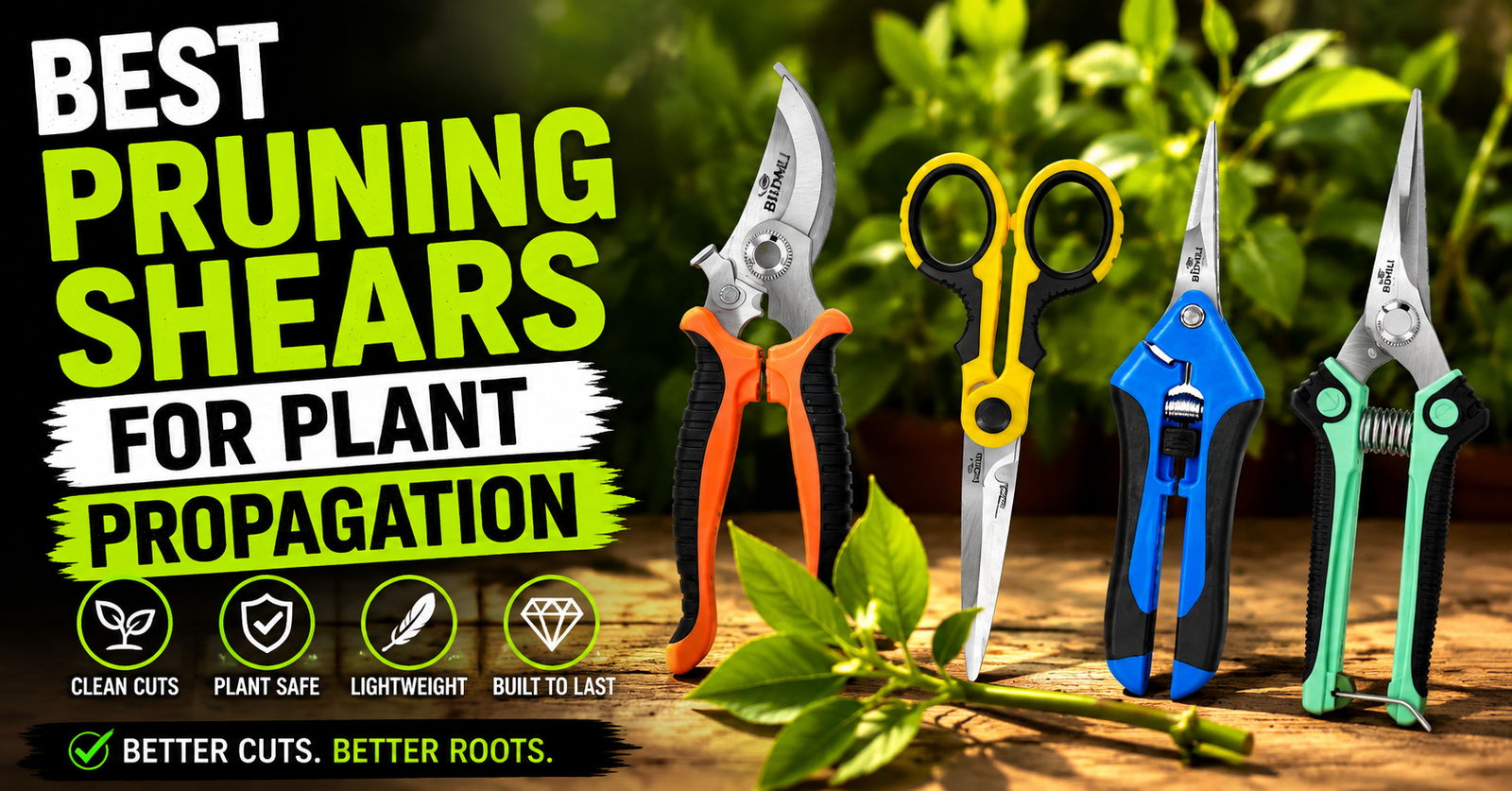
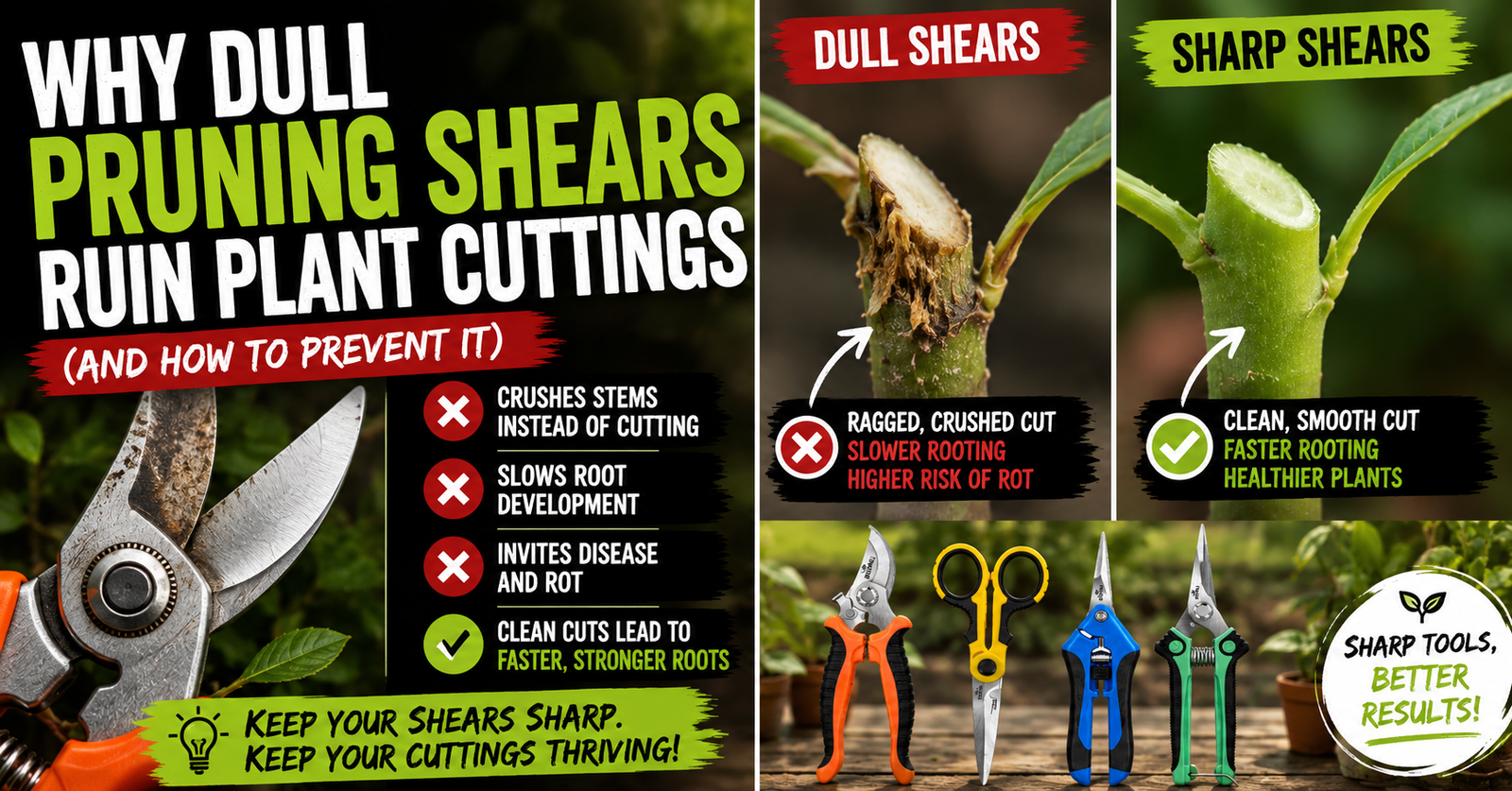
I make clean cuts using the pruning shears I trust for propagation because damaged stems never get off to a good start.
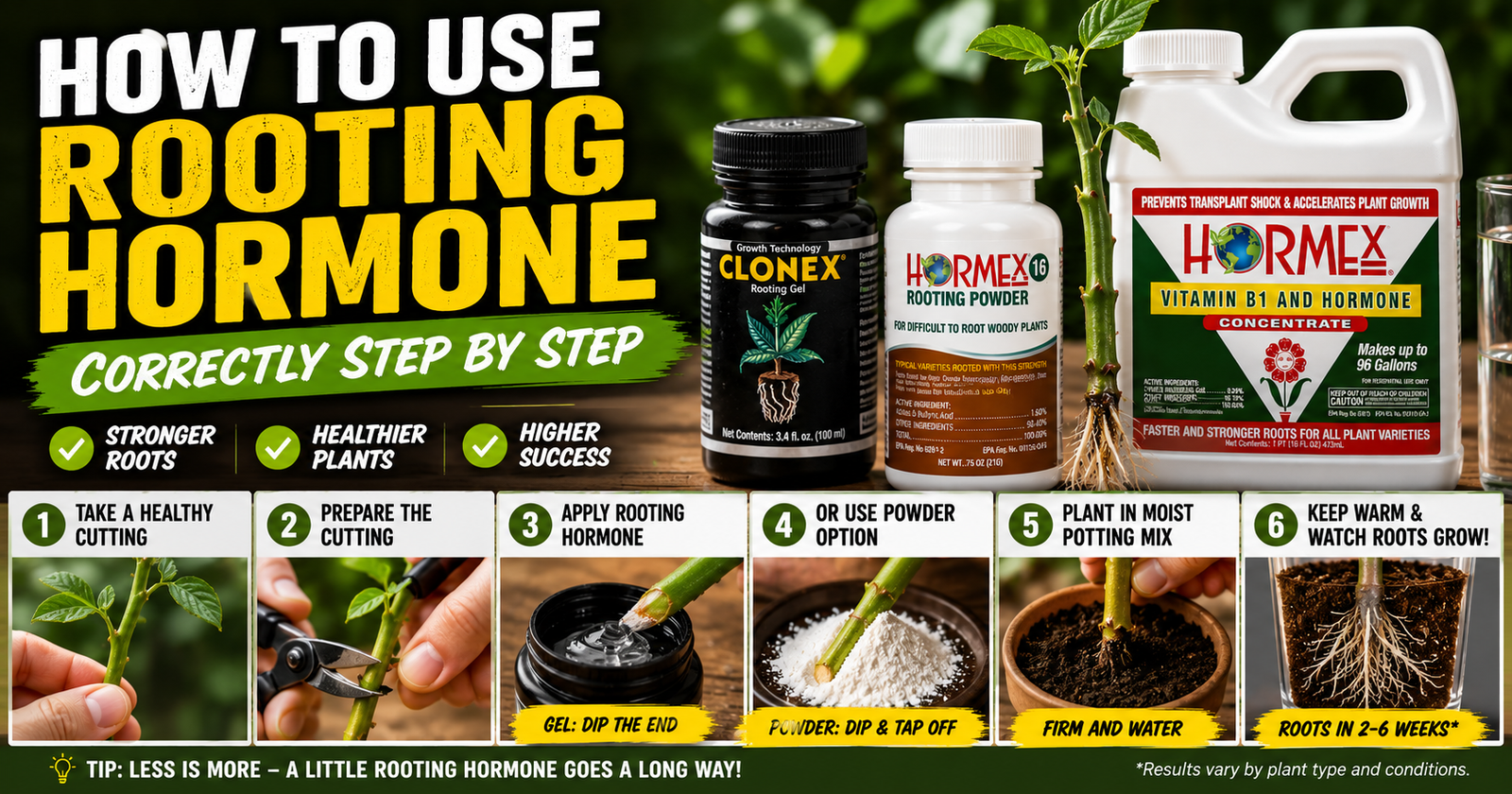
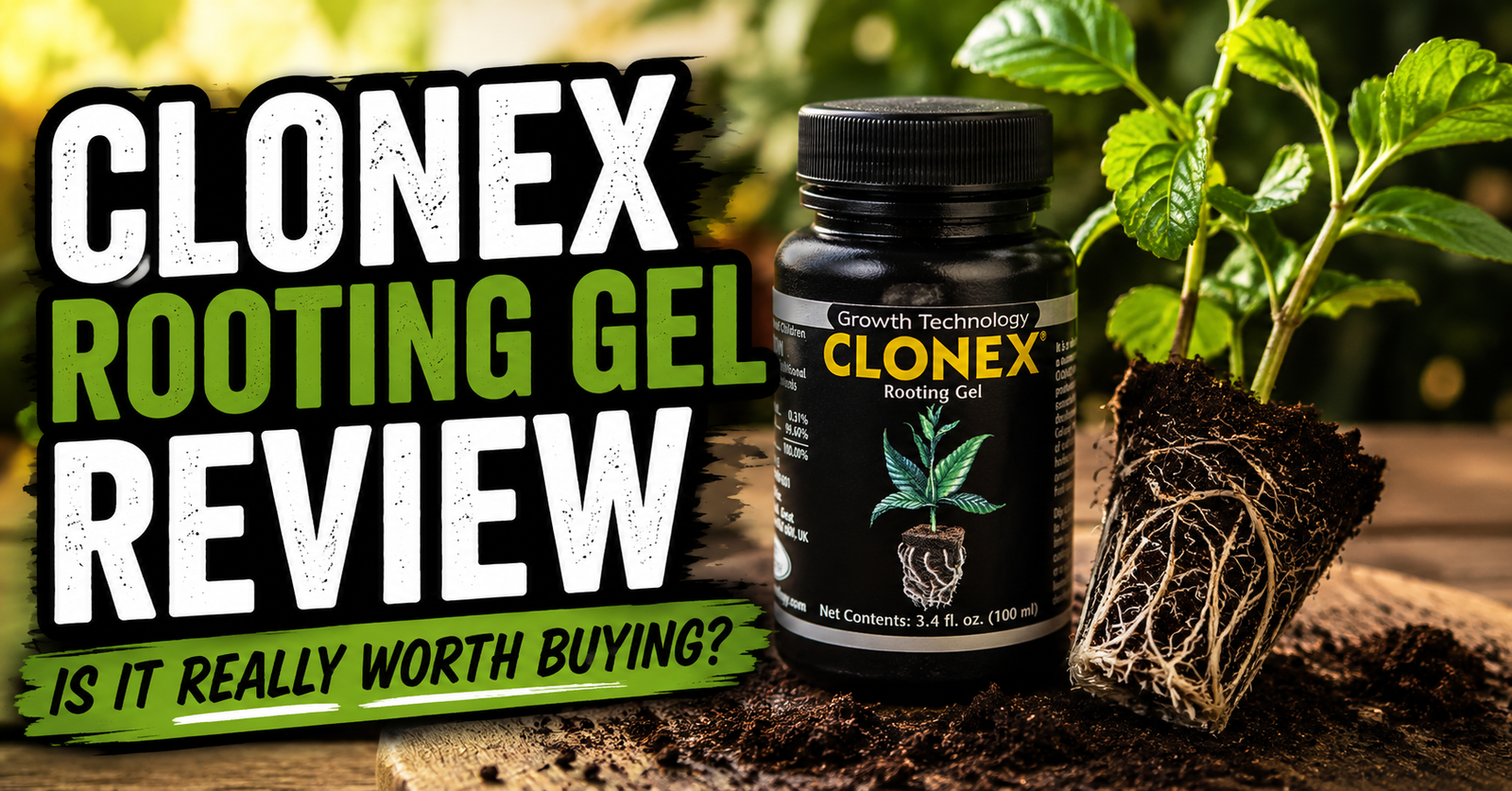
For plants that benefit from rooting hormone, I choose the type that’s appropriate for the cutting instead of automatically grabbing the first bottle I see. If you’re still trying to decide which one to buy, my comparison of rooting gel, powder, and liquid rooting hormone walks through where each one performs best.
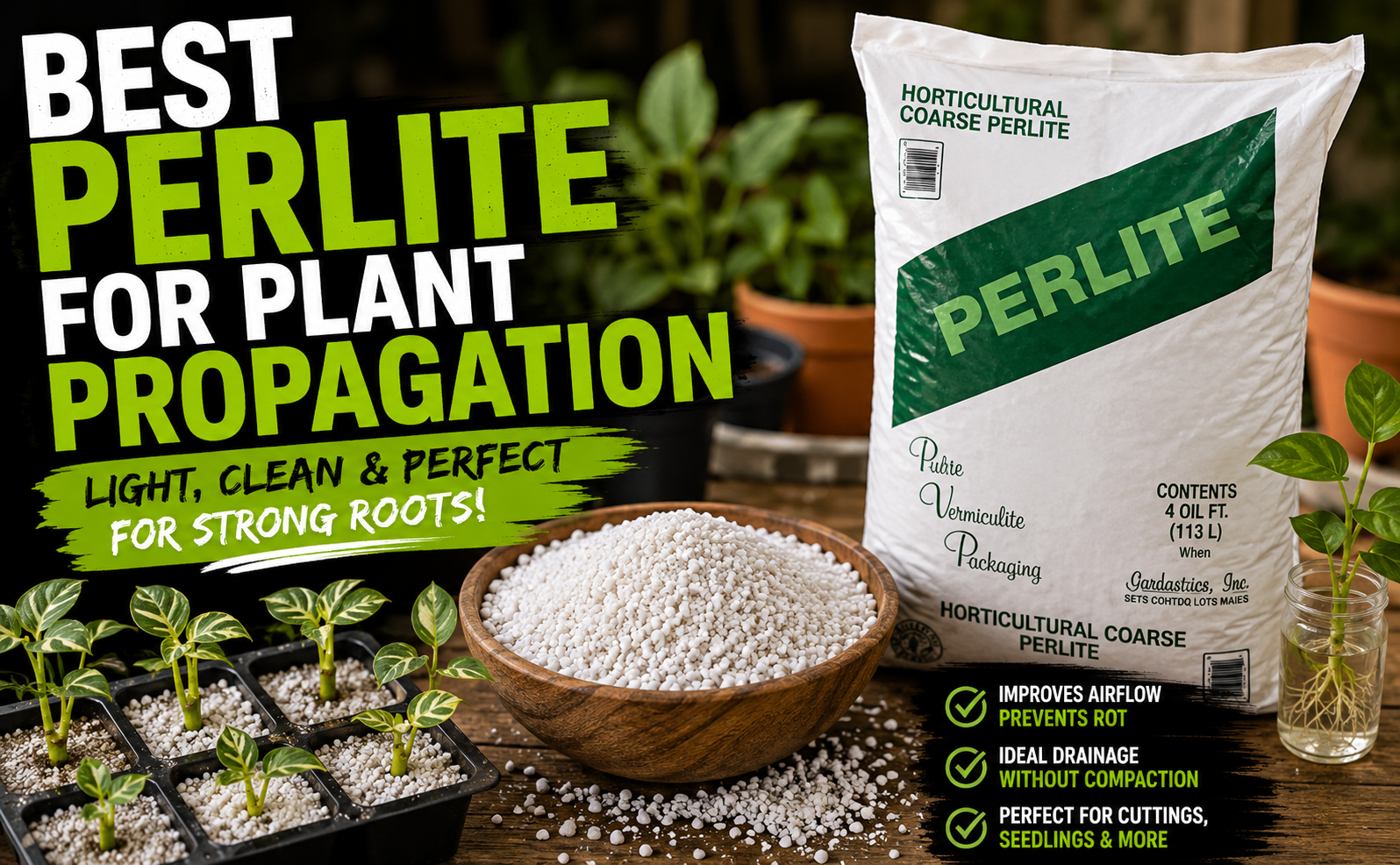
I also use the perlite I recommend for propagation whenever I want better drainage and more oxygen around developing roots.
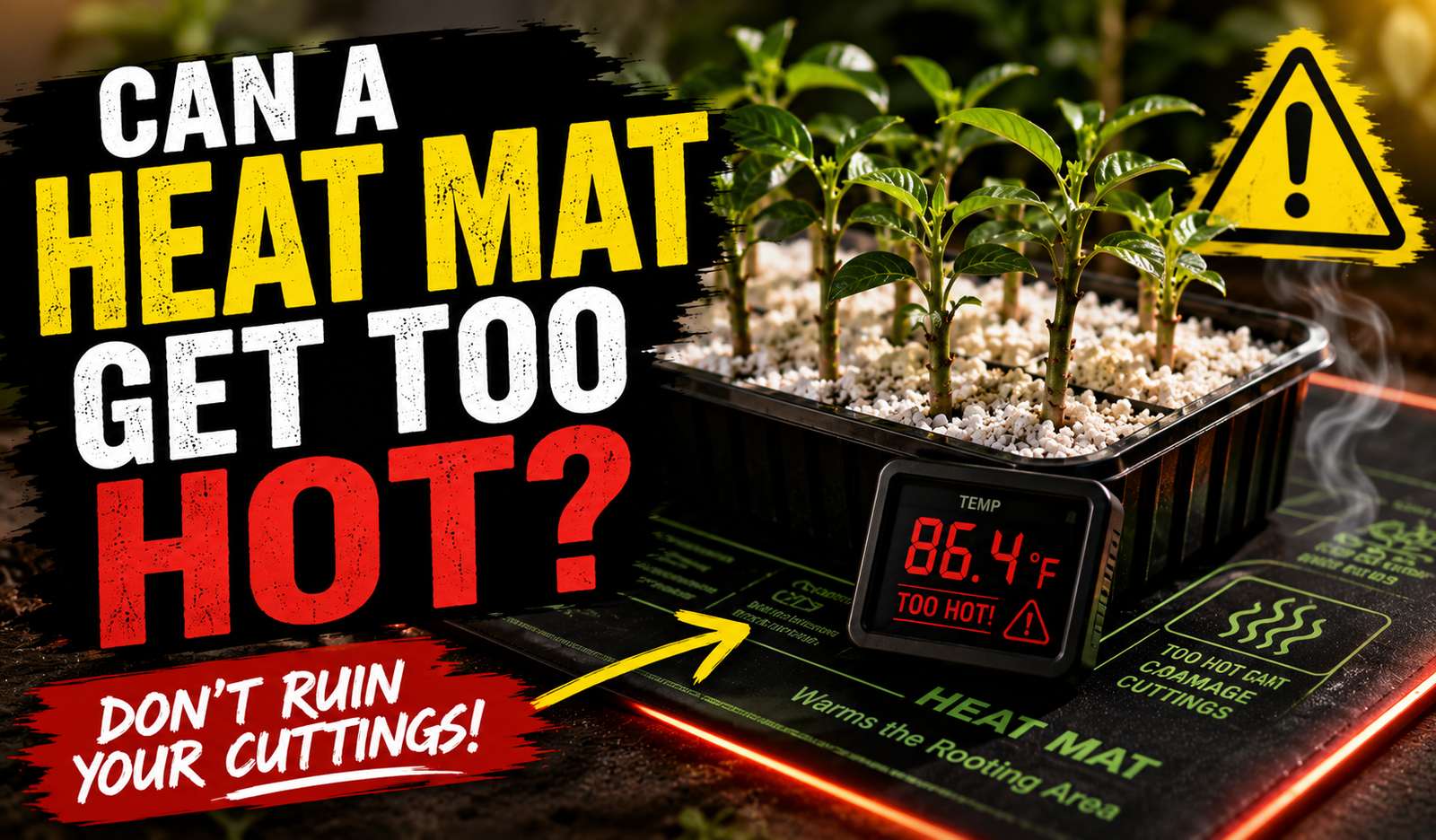
During cooler months, I often pair all of that with my favorite propagation heat mat to keep the rooting medium at a more consistent temperature.
None of those products guarantees success by itself.
Together, though, they create an environment where cuttings have a much better chance of developing into healthy young plants.
One Thing I Rarely Hear People Talk About
One lesson propagation has taught me is that every cutting is living on borrowed time.
The moment it’s removed from the parent plant, it’s using stored energy and stored moisture while waiting for roots to develop.
Everything we do during propagation should help conserve those limited resources.
That’s why I pay attention to seemingly small details.
A clean cut.
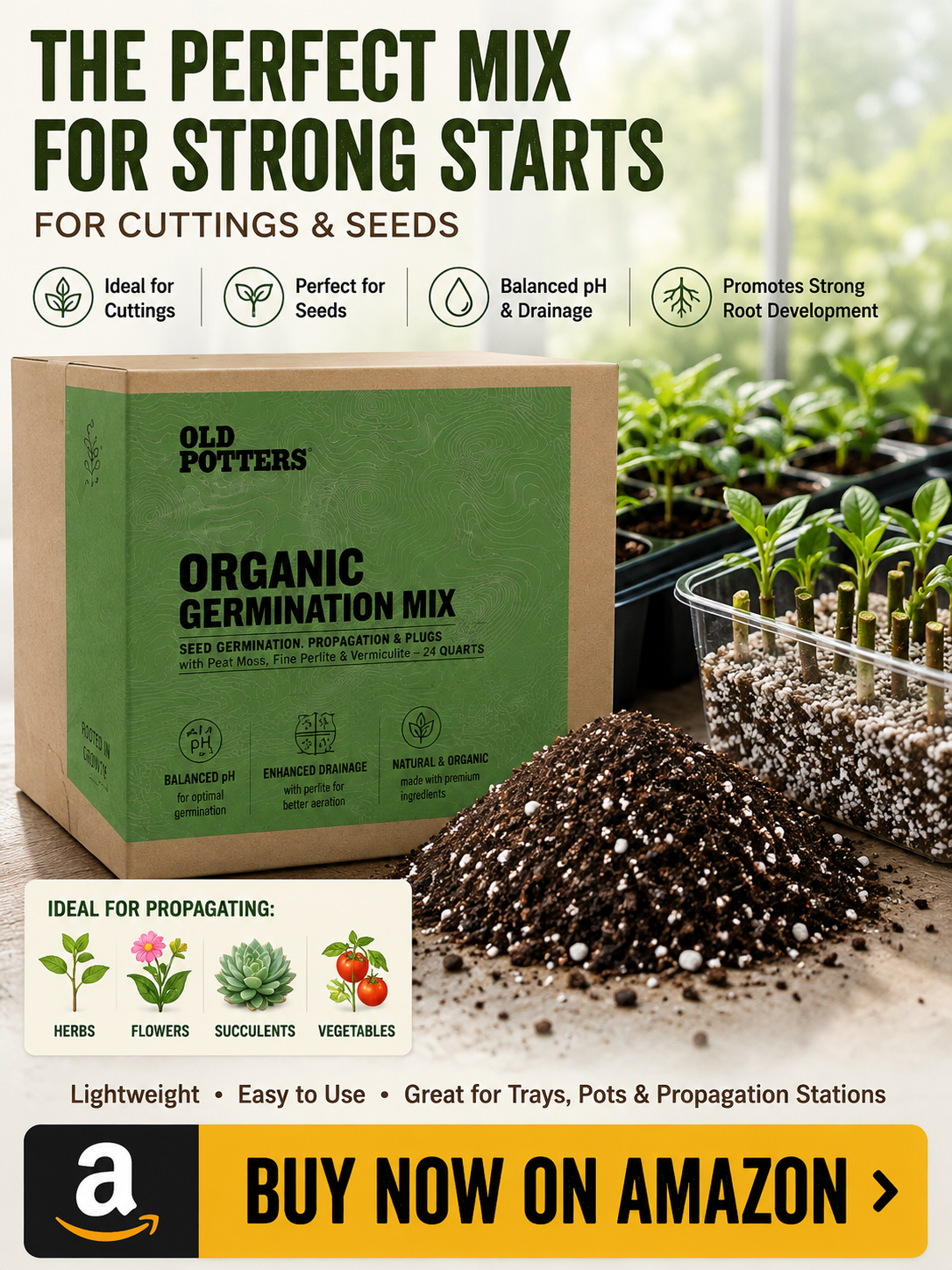
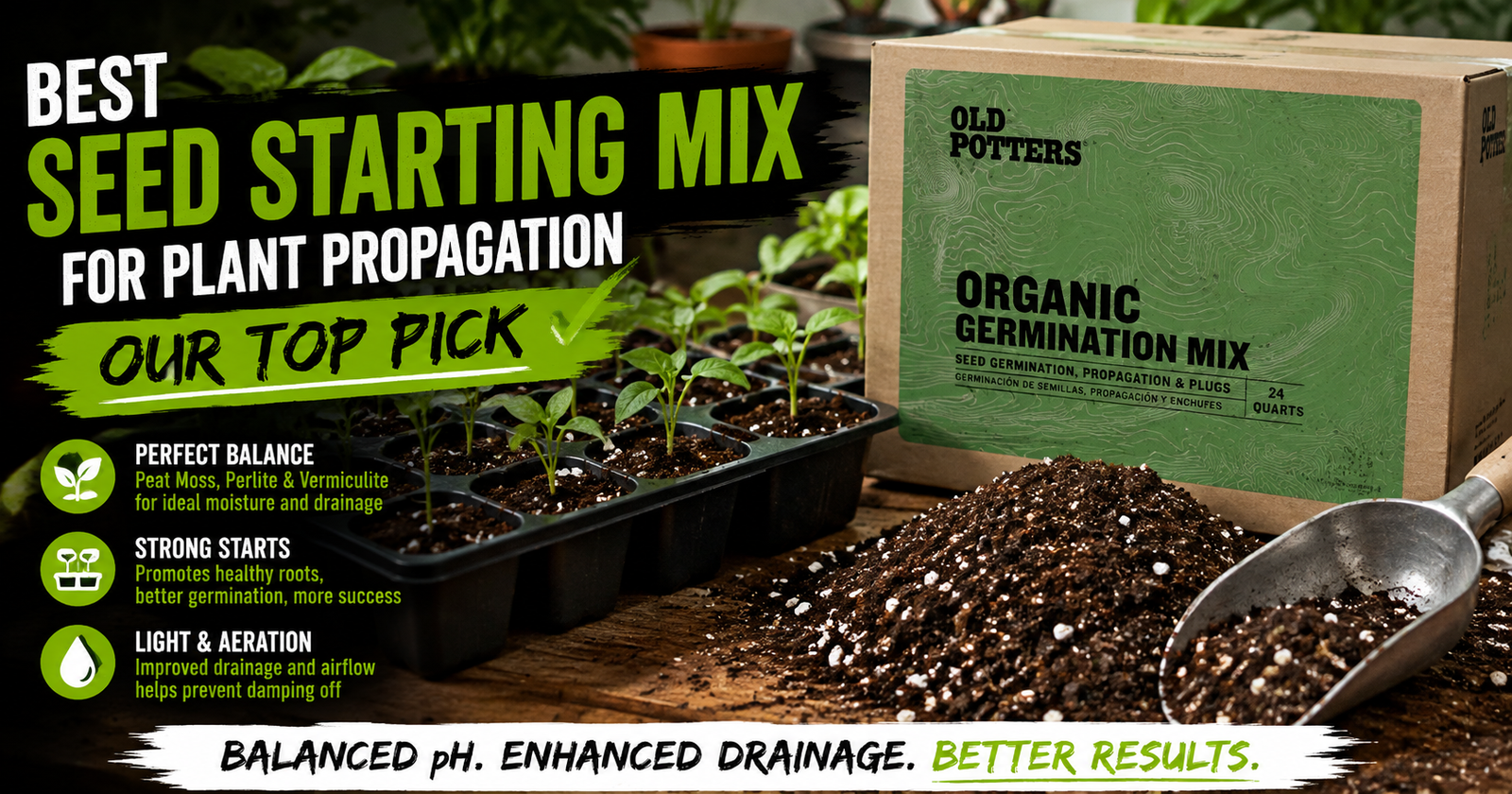
A well-draining propagation mix. A well-draining medium such as the propagation mix I trust for both seeds and cuttings on Amazon can support cuttings while they develop roots.
Consistent moisture.
Stable temperatures.
High humidity when it’s needed.
Individually those things might not seem dramatic.
Together, they often determine whether a cutting thrives or ends up in the compost pile.
That mindset has probably improved my propagation success more than any single product I’ve ever purchased.
Frequently Asked Questions
Can a humidity dome cause mold?
Yes, it can if it’s used incorrectly.
High humidity is great for helping cuttings stay hydrated, but constantly trapping stale, wet air can also encourage mold and fungal growth.
That’s why I like humidity domes with adjustable vents instead of completely sealed lids.
I usually start with the vents mostly closed while the cuttings are freshly taken, then gradually increase airflow as they begin rooting.
That simple habit has helped me avoid many of the mold problems I experienced years ago.
Should I mist cuttings inside a humidity dome?
Usually not very often.
One advantage of using a humidity dome is that it naturally traps moisture around the cuttings.
If condensation is forming inside the dome and the leaves look healthy, additional misting usually isn’t necessary.
If the foliage starts looking dry or humidity drops because you’ve opened the vents more, a light misting may help.
I try not to mist simply because it’s part of my routine.
Instead, I let the condition of the cuttings tell me what they need.
How long should cuttings stay under a humidity dome?
There’s no calendar that works for every plant.
I watch the cuttings instead.
Once they have developed a healthy root system and begin producing fresh new growth, I slowly reduce the humidity over several days.
Opening the vents a little more each day gives the plants time to adjust before the dome comes off completely.
Removing it too quickly often causes unnecessary wilting because the leaves suddenly have to cope with much drier air.
Can you make your own humidity dome?
Absolutely.
I’ve seen gardeners use everything from clear plastic storage totes to large zip-top bags and even upside-down clear containers.
Many homemade setups work surprisingly well.
If you’re only rooting a few cuttings every year, there’s nothing wrong with using what you already have.
However, if propagation has become a regular hobby or part of your gardening routine, I think a purpose-built system is much easier to live with.
The adjustable vents, sturdy trays, integrated lighting, and proper fit simply make the entire process more enjoyable.
Do humidity domes work for houseplants?
They certainly can.
Many common houseplants root so easily that a humidity dome isn’t absolutely necessary, but I’ve still found them useful for larger cuttings, expensive plants, and species that naturally take longer to root.
They’re especially helpful if your home has dry indoor air during the winter months.
So… Do You Really Need One?
If you only root a pothos cutting once every few years, probably not.
You can likely get by without buying a humidity dome.
But if you’re the kind of gardener who enjoys propagating shrubs, fruit plants, herbs, rare houseplants, or simply likes experimenting with different species, I think you’ll eventually wonder why you waited so long to buy one.
That’s exactly what happened to me.
I spent years trying homemade setups, balancing plastic bags over pots, and improvising with storage containers.
They worked.
Most of the time.
Eventually I realized I wanted something more dependable.
Something designed specifically for propagation.
After making that switch, I spent less time fighting my setup and more time enjoying the process of growing new plants.
For me, that’s been the biggest benefit of a quality humidity dome.
It doesn’t make propagation effortless.
It simply removes one more obstacle standing between a healthy cutting and a healthy root system.
About the Author
Daxon Weaver is the founder of PropagationWorld and has propagated thousands of plants ranging from common houseplants and herbs to fruit trees, berry bushes, and ornamental shrubs. Through years of trial, error, and hands-on experience, he enjoys helping gardeners build practical propagation setups that consistently produce healthier roots and stronger plants.